In 2026, homeowners across the United States are increasingly looking for effective, practical ways to reduce energy consumption and enhance indoor comfort. With fluctuating energy prices and a growing awareness of environmental impact, optimizing your home’s thermal envelope isn’t just a smart move, it’s a necessity. Among the myriad of insulation options available, the foil insulation roll stands out as a powerful, often misunderstood, tool in this endeavor. Unlike traditional batt or blown-in insulation that primarily slows conductive and convective heat flow, foil insulation specifically targets radiant heat – the often-overlooked culprit behind sweltering attics in summer and heat loss through ceilings in winter. This guide will demystify foil insulation rolls, explaining how they work, what types are available, and how to select and install the best option for your home to achieve significant, lasting energy savings.
The Science Behind Foil Insulation: How Radiant Barriers Work
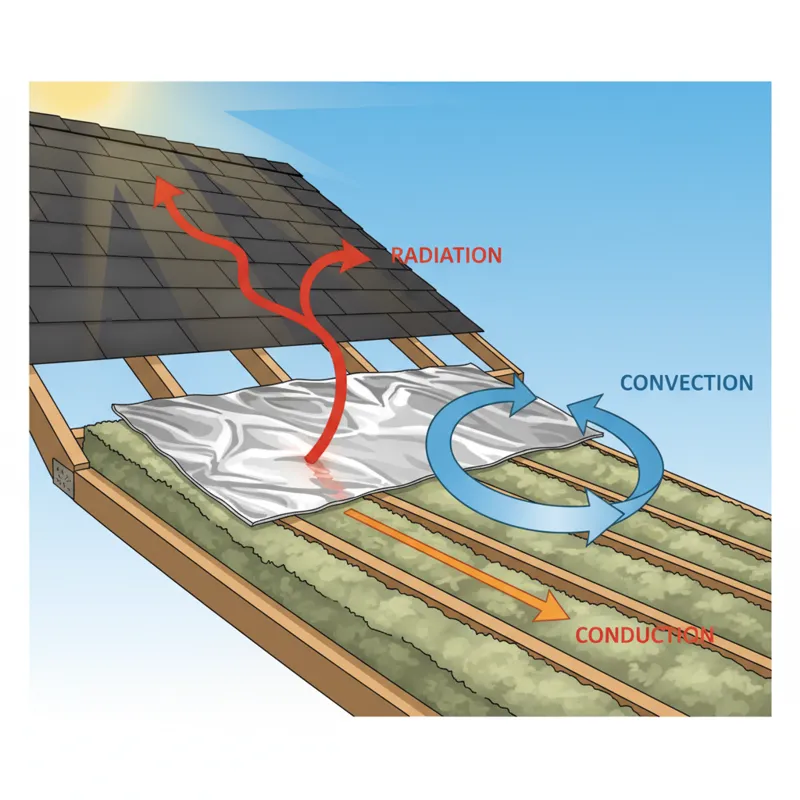
To truly appreciate a foil insulation roll, you first need a foundational understanding of how heat moves. There are three primary mechanisms:
- Conduction: Heat transfer through direct contact. Think of a metal spoon heating up in a hot soup.
- Convection: Heat transfer through the movement of fluids (liquids or gases). Warm air rising and cool air sinking is a classic example.
- Radiation: Heat transfer through electromagnetic waves, even through a vacuum. The warmth you feel from the sun or a hot stove burner is radiant heat.
Traditional insulation, like fiberglass or cellulose, excels at slowing conduction and convection by trapping air. However, these materials do little to stop radiant heat transfer. This is where a radiant barrier, essentially a foil insulation roll, comes into play. These materials are designed with highly reflective surfaces, typically aluminum, to reflect radiant heat rather than absorb it. The effectiveness of a radiant barrier is measured by its “emissivity” – its ability to emit, or release, radiant heat – and its “reflectivity” – its ability to reflect it. A low emissivity value (close to zero) means the material emits very little radiant heat, while high reflectivity means it bounces most of it away. Aluminum foil, for instance, has an emissivity of about 0.03 to 0.05, meaning it only emits 3-5% of the radiant heat it encounters, reflecting the other 95-97%. For a deeper dive into the physics of radiant heat, Wikipedia offers a comprehensive explanation of radiant barriers and how they function. In an attic during summer, the sun beats down on your roof, heating the shingles and then the roof deck. This hot roof deck radiates heat downward into your attic space. A foil insulation roll, installed on the attic floor or rafters, reflects this radiant heat back towards the roof, preventing it from penetrating further into your home’s living spaces. The same principle applies in winter, though less dramatically, as it can help reflect some of your home’s internal heat back down, preventing it from radiating up into a cold attic.
Why Consider Foil Insulation Rolls in 2026?
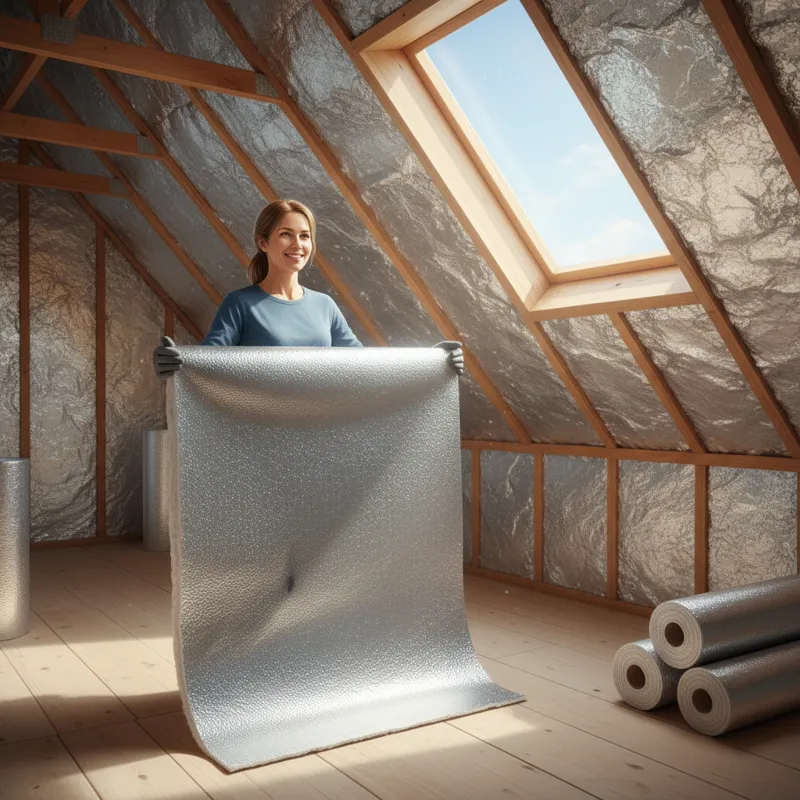
The landscape of home energy efficiency is constantly evolving, and in 2026, the arguments for incorporating foil insulation into your home are stronger than ever. First, consider the ongoing push for energy cost reduction. Heating and cooling account for a significant portion of a typical U. S. household’s utility bills. By addressing radiant heat transfer, particularly in attics, you can lighten the load on your HVAC system, leading to measurable savings. The U. S. Department of Energy provides excellent resources on how insulation reduces energy costs, and radiant barriers are a key component. Secondly, foil insulation rolls are remarkably DIY-friendly. Many homeowners can install these systems themselves, especially in accessible attics or crawl spaces, saving on labor costs and giving them direct control over their home’s energy performance. This accessibility makes them an attractive upgrade for those looking to improve their home without a major professional renovation. Beyond the immediate financial benefits, there’s the undeniable improvement in indoor comfort. A properly installed radiant barrier can significantly reduce attic temperatures in the summer, sometimes by as much as 30-40 degrees Fahrenheit. This translates to cooler ceilings, a less stressed air conditioner, and a more pleasant living environment below. This stable indoor climate can make your home a more enjoyable space for everyday activities. You’ll find yourself enjoying indoor activities, perhaps even while savoring the 5 Proven Benefits of Irish Breakfast Tea without battling drafts or heat soak from the attic. Finally, integrating this type of energy efficient reflective insulation contributes to the longevity of your HVAC equipment. When your air conditioner doesn’t have to work as hard to counteract heat gain from the attic, it experiences less wear and tear, potentially extending its operational life and reducing maintenance needs. It’s a pragmatic investment in your home’s future.
Types of Foil Insulation Rolls: What’s Right for Your Project?
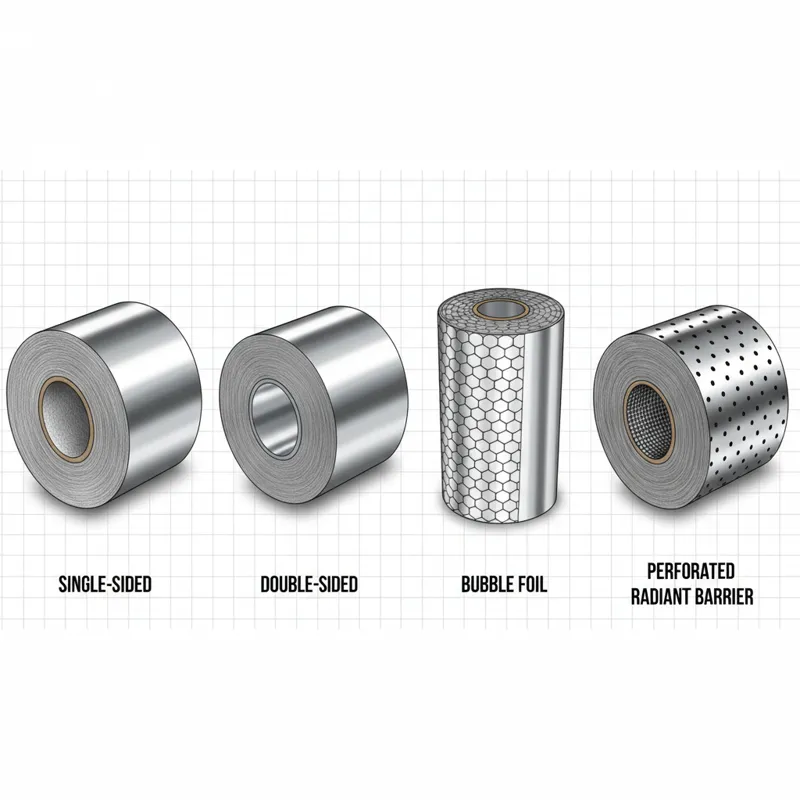
When you start looking for a foil insulation roll, you’ll encounter a few variations. Understanding these differences is key to choosing the right material for your specific application.
Single vs. Double-Sided Reflective Foil
As the name suggests, single-sided foil has a reflective surface on one side and a non-reflective backing (often kraft paper) on the other. This type is generally used where you only need to reflect heat from one direction, such as stapled to the underside of rafters with the reflective side facing the attic space. Double-sided foil, conversely, has reflective surfaces on both sides. This makes it more versatile, as it can reflect heat from either direction. It’s often used when suspended in an air gap, maximizing its radiant barrier effect. For instance, if you’re installing it over existing insulation on the attic floor, both sides would be contributing to reflection (downwards from the attic heat, and upwards from any internal heat trying to escape).
Foil-Faced Bubble Insulation
This type of foil insulation roll integrates a layer (or layers) of air-filled bubbles between two sheets of reflective foil. The bubbles trap air, providing a small amount of traditional R-value (resistance to heat flow by conduction/convection) in addition to the radiant barrier properties of the foil. This makes it a hybrid solution. While the R-value of the bubble layer itself isn’t huge, it complements the radiant barrier significantly, especially in applications where a dedicated air gap might be harder to maintain, or where some level of conductive/convective resistance is also desired. Think of it as a step up from plain foil sheeting for certain applications, offering a more robust DIY thermal insulation material.
Foil-Faced Foam Board (brief comparison)
While not strictly a “roll,” foil-faced foam board insulation is worth mentioning for comparison. These are rigid panels of extruded polystyrene (XPS), expanded polystyrene (EPS), or polyisocyanurate (polyiso) with a reflective foil facing. They offer substantial R-value from the foam core, combined with the radiant barrier properties of the foil. They are typically used in wall cavities, exterior sheathing, or basement walls where structural rigidity and higher R-value are paramount. A foil insulation roll is typically more flexible and better suited for irregular surfaces or large attic spaces where rolls are easier to handle.
Perforated vs. Non-Perforated
This is a critical distinction, especially for attic applications.
- Perforated Foil: This type has tiny holes poked through the material, allowing moisture vapor to pass through. This is essential for preventing moisture buildup in attics, particularly when installed directly over existing insulation or on the attic floor. Without perforation, trapped moisture could lead to mold or mildew issues, especially in humid climates or homes with poor ventilation. When considering reflective attic insulation, always verify if it’s perforated for attics.
- Non-Perforated Foil: This acts as a true vapor barrier, completely blocking moisture transmission. It’s suitable for applications where you want to block moisture, such as in crawl spaces (above a dirt floor) or certain wall assemblies, but it should generally be avoided in attics that rely on ventilation to dry out moisture.
Choosing the correct perforation is paramount for the long-term health and efficiency of your home.
5 Best Foil Insulation Rolls on the Market (2026 Edition)
Identifying the “best” foil insulation roll isn’t about naming specific brands, which often change and vary by region, but rather understanding the optimal characteristics for different needs in 2026. What’s best for one application might be less suitable for another. Here are five categories representing top choices based on common homeowner requirements and performance expectations.1. Heavy-Duty Double-Sided Reflective Foil: For maximum radiant heat blockage, especially in attics or cathedral ceilings where an air gap can be easily maintained. These rolls typically feature industrial-grade aluminum on both sides, often reinforced with fiberglass scrim for tear resistance. They are highly effective at reflecting up to 97% of radiant heat. Look for options with a low emissivity rating (0.03-0.05). This is the go-to for primary radiant barrier sheeting cost effectiveness in a straightforward attic install.2. Perforated Bubble Foil Insulation (Double Bubble): This option provides an excellent balance of radiant barrier and a small, inherent R-value due to its trapped air pockets. The perforation is crucial for attic installations to prevent moisture issues, allowing vapor to escape while still blocking radiant heat. It’s particularly good for applications where you might lay it over existing insulation on the attic floor or staple it to rafters, providing a slight conductive barrier in addition to the radiant block. Many bubble foil insulation reviews highlight its ease of installation and noticeable temperature reduction.3. Multi-Layered Reflective Insulation with Thin Foam Core: For those seeking a hybrid approach that offers both a significant radiant barrier and a more pronounced R-value within a relatively thin profile. These rolls might feature multiple layers of foil and bubble, often sandwiching a thin layer of closed-cell foam. This design provides superior performance in tighter spaces where traditional thick insulation isn’t feasible, or as an added layer of thermal protection. It’s a premium DIY thermal insulation material for comprehensive thermal envelope improvement.4. Integrated Radiant Barrier Sheathing: While not a “roll” in the traditional sense, this is a top-tier solution for new construction or major roof renovations. This product integrates a reflective layer directly onto OSB (oriented strand board) sheathing. When installed as part of the roof deck, it creates an effective radiant barrier right at the source of heat gain. This eliminates the need to install a separate radiant barrier later, offering a highly efficient and durable solution. When considering overall aluminum insulation R-value properties, this approach is often cited for its effectiveness.5. Reflective Insulation for Ductwork (Duct Wrap): While often overlooked, insulating your HVAC ductwork, especially in unconditioned spaces like attics or crawl spaces, is critical for energy efficiency. Dedicated reflective duct insulation rolls are designed to wrap around ducts, preventing heat gain into cool air in summer and heat loss from warm air in winter. These rolls are typically more flexible and might feature an adhesive backing or reinforced edges for easy sealing. This specialized application of foil insulation roll directly impacts the efficiency of your heating and cooling distribution. When evaluating any of these, always check for third-party certifications, fire ratings, and clear installation instructions. Don’t simply look at the radiant barrier sheeting cost; consider the overall effectiveness and suitability for your specific project.
DIY Installation Guide: Maximizing Performance of Your Foil Insulation Roll
Installing a foil insulation roll correctly is crucial for its performance. While the process is generally straightforward for a DIY enthusiast, precision and attention to detail make all the difference. Remember, safety first!
Safety First
Before you even think about cutting material, prioritize your safety. Attics can be hot, dusty, and have sharp edges or exposed nails.
- Wear Safety Glasses: Protect your eyes from dust, debris, and insulation fibers.
- Gloves: Heavy-duty work gloves will protect your hands from cuts and abrasions.
- Dust Mask/Respirator: Attics are often dusty; a mask prevents inhalation of particles.
- Long Sleeves and Pants: To avoid skin irritation from existing insulation or contact with rough surfaces.
- Hard Hat: Protects against bumping your head on low rafters or protruding nails.
- Sturdy Footwear: Good grip is essential on joists and uneven surfaces.
- Adequate Lighting: Don’t rely solely on a flashlight; set up temporary work lights.
- Partner System: If possible, work with a partner, especially in a large or difficult attic space.
Preparing the Area
A clean and sealed attic or crawl space sets the stage for optimal insulation performance.
- Clean Debris: Remove any old insulation scraps, wood pieces, or general clutter.
- Seal Air Leaks: This is paramount. A radiant barrier won’t stop airflow. Use caulk, expanding foam, or weatherstripping to seal gaps around plumbing stacks, electrical penetrations, ceiling fixtures, and attic hatches. This is often the most impactful step you can take for energy efficiency.
- Ensure Ventilation: Confirm your attic has proper soffit and ridge ventilation. If you’re blocking soffit vents with insulation, install baffles to maintain airflow.
Attic Installation Steps (Common Methods)
Most foil insulation rolls for attics are installed in one of two ways:
Method 1: Laying Over Existing Insulation (Attic Floor)
This method is common for perforated foil.
- Roll Out: Start at one end of your attic, unrolling the foil insulation parallel to the ceiling joists.
- Cut to Length: Use a utility knife or sharp scissors to cut the material to fit each bay between the joists, allowing a slight overlap if possible.
- Overlapping Edges: If you have wide bays or need multiple runs, overlap edges by a few inches and use reflective tape to seal seams.
- Air Gap (Optional but Recommended): For maximum effect, try to maintain a small air gap (at least 3/4 inch) between the top surface of your existing insulation and the foil. You can achieve this by stapling the foil to the underside of 1×2 furring strips laid across the top of the joists, or by using a product specifically designed with stand-offs. However, laying it directly on existing insulation will still provide significant benefits, especially if it’s a perforated bubble foil insulation roll.
- Work Around Obstructions: Carefully cut and fit the foil around vents, pipes, and electrical boxes. Seal any gaps with reflective tape.
- Attic Access Hatch: Insulate the attic hatch from the attic side, extending the radiant barrier effect.
Method 2: Stapling to Rafters/Trusses (Underside of Roof Deck)
This method is usually for non-perforated foil (if specific instructions allow, or if you’re certain about ventilation) or double-sided foil designed for this purpose. An air gap is critical here.
- Measure and Cut: Measure the distance between rafters and cut the foil insulation roll to length, allowing for a slight sag (1-2 inches) in the middle of each bay. This sag helps create the necessary air gap.
- Staple in Place: Start at the ridge of the roof. Staple the foil to the underside of the rafters using a hammer tacker or staple gun with 1/2-inch staples. Ensure the reflective side faces down towards the attic floor.
- Maintain Air Gap: The sag created in step 1, combined with the depth of the rafters, will create an air gap between the roof deck and the foil. This gap is vital for the radiant barrier to function correctly.
- Overlap and Seal: Overlap adjacent sections by 2-3 inches and seal seams with reflective tape.
- Ventilation: Ensure you do NOT block soffit vents. Install rafter vents or baffles if necessary to maintain a clear air channel from the soffit to the ridge for proper attic ventilation.
Crawl Space/Wall Installation
In crawl spaces, foil insulation rolls can be stapled to the underside of floor joists, reflective side facing down, to prevent heat loss downwards into the cold crawl space or radiant heat gain upwards from a hot ground. Ensure you use non-perforated foil if you need a vapor barrier to prevent ground moisture from entering the home. If there’s any concern about moisture, ensure proper ground cover and ventilation. For walls, flexible foil rolls are typically installed in conjunction with traditional cavity insulation, or as part of a continuous insulation system, always ensuring an air gap is maintained for the radiant barrier to work.
Common Mistakes to Avoid
- Not Maintaining an Air Gap: This is arguably the biggest mistake. Foil insulation requires an air gap (ideally 3/4 inch to several inches) on at least one side to be effective as a radiant barrier. If the foil is in direct contact with another material on both sides, it acts as a conductor, and its radiant barrier properties are nullified.
- Improper Sealing: Gaps and unsealed seams compromise the radiant barrier and can allow air leaks. Use reflective tape specifically designed for insulation to seal all seams and penetrations.
- Blocking Ventilation: In attics, never block existing soffit or ridge vents. Proper attic ventilation is critical for moisture control and overall roof health. Always use perforated foil in ventilated attic applications.
- Using Non-Perforated Foil in Attics: Unless specifically instructed by a building science professional for a very specific, sealed attic assembly, perforated foil is almost always the correct choice for attics to allow moisture vapor to escape.
- Not Sealing Air Leaks First: A radiant barrier does not stop air movement. Seal all air leaks into the attic before installing foil to maximize overall energy savings.
What Most People Get Wrong About Foil Insulation
Despite its effectiveness, foil insulation rolls are often misunderstood. Correcting these common misconceptions can help homeowners make better decisions and achieve optimal results.
It’s Not a Replacement for R-Value Insulation
This is the most critical point. A foil insulation roll is primarily a radiant barrier, not an R-value insulation in the traditional sense. It doesn’t primarily stop conductive or convective heat transfer on its own; it reflects radiant heat. While bubble foil insulation does offer some R-value due to the trapped air, it’s typically much lower than fiberglass or cellulose. You should not remove existing R-value insulation to install a radiant barrier. Instead, they work synergistically. Think of it as an additive layer, enhancing your existing thermal envelope by tackling a different form of heat transfer.
The Importance of the Air Gap
As mentioned in the installation guide, this cannot be overstated. A foil insulation roll relies on an air gap to function. Without an air gap, the reflective surface directly touches another material, and the heat simply conducts through it. The foil becomes part of the conductive pathway rather than a reflective barrier. This is why flexible rolls often have a slight sag when installed on rafters or why a small space is left when laying it over existing insulation.
Misunderstanding Perforation
Many homeowners overlook the distinction between perforated and non-perforated foil. Using non-perforated foil in a ventilated attic can trap moisture vapor that migrates from the living space below. This trapped moisture can condense, leading to mold, mildew, and structural damage over time. Always use perforated radiant barrier sheeting in attics unless you have a completely sealed, conditioned attic space and have consulted with a building science expert.
Not Addressing Air Leaks First
People often think that installing a radiant barrier will solve all their temperature problems. However, if your home has significant air leaks (e.g., around electrical outlets, plumbing penetrations, or attic hatches), air movement will continue to carry heat in and out of your home, circumventing the radiant barrier. Prioritize air sealing before or during any insulation project, including the installation of a foil insulation roll, to truly maximize energy savings and comfort. You’ll find the process much more rewarding when addressing both issues. Just as you might consider the nutritional details like Chai Tea Latte Calories: The Ultimate 2026 Guide when making dietary choices, understanding the specific properties of different insulation types is crucial for optimizing your home’s energy performance.
Long-Term Benefits and ROI of a Foil Insulation Roll Investment
The decision to invest in a foil insulation roll for your home in 2026 is a forward-thinking one, offering a compelling return on investment (ROI) through various long-term benefits. The most direct and measurable benefit is the reduction in your energy bills. By effectively blocking radiant heat, particularly in hot climates, your air conditioning system won’t have to work as hard, leading to noticeable drops in electricity consumption. While specific savings vary based on climate, existing insulation levels, and installation quality, many homeowners report 5-10% reductions in overall heating and cooling costs, with some seeing even higher savings during peak summer months. Over years, these percentages accumulate into substantial financial savings. Beyond the immediate financial returns, improved indoor comfort is a significant, albeit less quantifiable, benefit. Imagine stepping into your home on a scorching summer day and not feeling a “heat sink” radiating from the ceiling. A cooler attic translates directly to cooler living spaces, reducing hot spots and making your home consistently more comfortable throughout the year. This reduced workload on your HVAC system extends its lifespan. When your furnace and air conditioner aren’t constantly cycling to maintain desired temperatures, their components experience less wear and tear, deferring expensive repairs or premature replacement. This alone can save thousands of dollars over the decades. Moreover, investing in energy efficient reflective insulation contributes to your home’s overall value. Prospective buyers in 2026 are increasingly aware of energy performance, and a home with a well-insulated attic and crawl space presents as a more desirable, cost-effective property. It’s an upgrade that pays dividends both in utility savings and potential resale value. Investing in your home’s efficiency is as much about comfort and long-term value as selecting beautiful decor. Just as you might curate your living space with the 7 Best Porcelain Tea Set Designs for 2026, choosing the right foil insulation roll is a deliberate step towards a more functional and enjoyable home. Finally, there’s the environmental impact. Lower energy consumption means a reduced carbon footprint, contributing to a more sustainable lifestyle and supporting broader environmental goals. It’s a small step that collectively makes a big difference.
Frequently Asked Questions About Reflective Insulation
Here are some common questions people have about foil insulation rolls and radiant barriers:
Can I combine foil insulation with traditional insulation?
Absolutely, and it’s highly recommended! Traditional insulation (fiberglass, cellulose, foam) primarily handles conductive and convective heat, while foil insulation handles radiant heat. They complement each other to create a more comprehensive thermal barrier for your home.
What’s the R-value of foil insulation?
This is a common misconception. A foil insulation roll, as a radiant barrier, doesn’t have an R-value in the same way bulk insulation does when measured in isolation. Its effectiveness depends entirely on the air space adjacent to its reflective surface. When properly installed with an air gap, it can effectively reduce heat transfer that would be equivalent to adding several points of R-value, but it’s not a direct R-value measurement of the material itself. Bubble foil products do have a nominal R-value due to the trapped air, typically R-2 to R-7, but their primary benefit is still their radiant reflectivity.
Does it work in cold climates?
Yes, a foil insulation roll can still be beneficial in cold climates, though its impact is generally less dramatic than in hot climates. In winter, heat radiates from your warm ceiling up into a cold attic. A radiant barrier can help reflect some of that heat back into your living space, reducing heat loss. However, its primary role remains in mitigating heat gain.
How long does it last?
High-quality foil insulation rolls, especially those made with durable aluminum and reinforced backing, are designed to last for decades, often for the lifetime of the home. They are resistant to degradation from moisture (if properly installed, especially perforated in attics) and temperature fluctuations.
Is it mold resistant?
The aluminum surface of foil insulation itself does not support mold growth. However, if non-perforated foil is used incorrectly in a ventilated attic, it can trap moisture, leading to condensation and potential mold growth on other materials (like wood rafters or existing insulation). Proper installation with perforation in att attics is key to preventing moisture issues.
Does it attract rodents or insects?
No, foil insulation does not provide food or nesting material for rodents or insects. In fact, its smooth, slick surface can sometimes act as a deterrent.—Disclaimer: This article provides general information and guidance for educational purposes only. Home improvement projects, especially those involving insulation and structural components, can be complex and may require specific knowledge of local building codes, safety regulations, and construction practices. Always consult with a qualified professional or local building authority before undertaking any significant DIY project. Ensure you prioritize safety by wearing appropriate personal protective equipment and following all manufacturer instructions. The author and publisher are not liable for any injury or damage resulting from the application of this information.