In 2026, homeowners increasingly prioritize energy efficiency and long-term reliability for their essential home systems. Tankless water heaters, a staple in modern, efficient homes, exemplify this trend by providing on-demand hot water without the energy waste of a storage tank. However, to truly unlock their potential for efficiency and extend their lifespan, a critical, often overlooked component is required: a dedicated filter for tankless water heater systems. This isn’t merely an accessory; it’s an integral part of maintaining peak performance and protecting your investment against the invisible threats lurking in your household water supply.
Understanding the Enemy: Why Tankless Heaters Need Protection
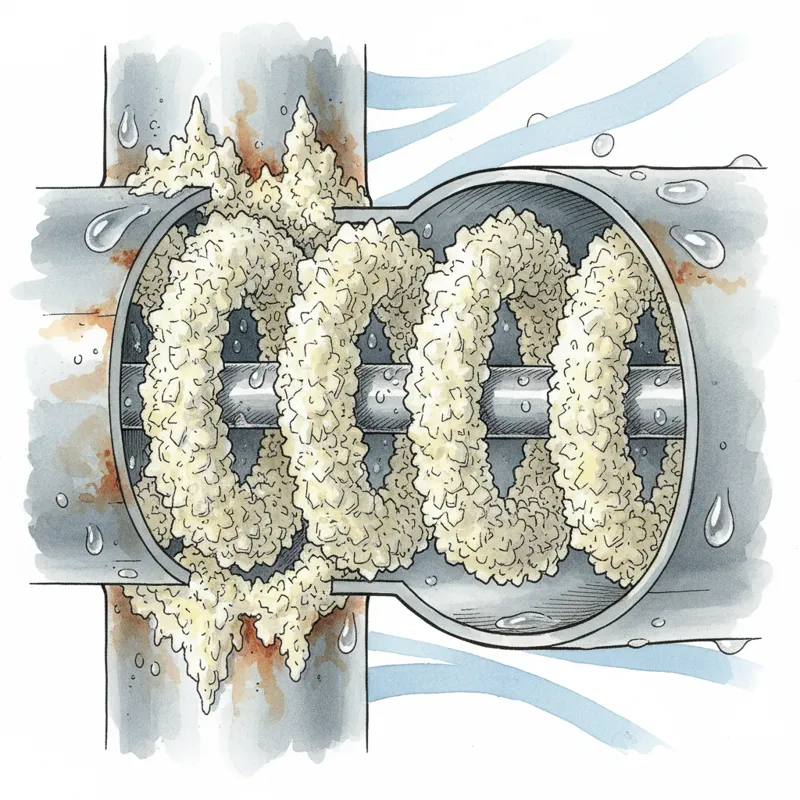
Tankless water heaters are sophisticated machines designed to heat water rapidly as it flows through. Unlike traditional tank heaters, they don’t have a large reservoir to store and accumulate sediment over time. This design, while efficient, also makes them particularly vulnerable to water quality issues. The internal passageways are narrow, and the heat exchangers operate at high temperatures, creating an ideal environment for mineral deposition and sediment accumulation.
Hard Water and Scale Formation
Across vast regions of the United States, water is naturally “hard,” meaning it contains elevated concentrations of dissolved minerals, primarily calcium and magnesium. When this hard water is heated, these minerals precipitate out of the solution and form a hard, crystalline deposit known as scale. This scale readily adheres to the hot surfaces of the heat exchanger within your tankless unit. The accumulation of scale acts as an insulating layer, much like plaque in an artery. This layer prevents efficient heat transfer from the burner to the water. As scale builds up, the heater has to work harder and longer to achieve the desired water temperature, directly leading to increased energy consumption and higher utility bills. More severely, it can restrict water flow, causing significant pressure drop and potentially damaging the heat exchanger itself, leading to costly repairs or even premature unit failure. The U. S. Geological Survey provides detailed maps showing water hardness levels across the country, highlighting how widespread this issue is.
Sediment and Particulate Matter
Beyond dissolved minerals, your home’s water supply can carry various suspended solids – rust flakes from aging pipes, sand, silt, and other particulate matter. While often microscopic, these sediments are abrasive and can cause physical damage to the intricate components of a tankless water heater, particularly within the heat exchanger. These particles can erode internal surfaces or clog the narrow channels, reducing water flow and causing hot spots within the heat exchanger. Over time, this mechanical wear and obstruction compromise the heater’s ability to function properly, reducing its overall lifespan and making it less reliable. It’s a different kind of threat than scale, but equally detrimental to the long-term health of the appliance.
The Mechanistic Impact on Efficiency and Longevity
The design of a tankless water heater relies on a precise balance of water flow and heat exchange. Any disruption to this balance, whether from insulating scale or abrasive sediment, has immediate and long-term consequences. Mechanistically, scale forces the heat exchanger to operate at higher internal temperatures for longer periods to achieve the setpoint, accelerating material fatigue. Sediment physically impedes flow, demanding more from the pump (if applicable) and leading to uneven heating. Both issues directly undermine the very advantages of a tankless system: its efficiency, reliability, and extended lifespan. Without proper protection, a tankless unit designed to last 20 years might only deliver half that, while costing you more in energy and repairs along the way.
The Core Solution: What a Filter for Tankless Water Heater Does
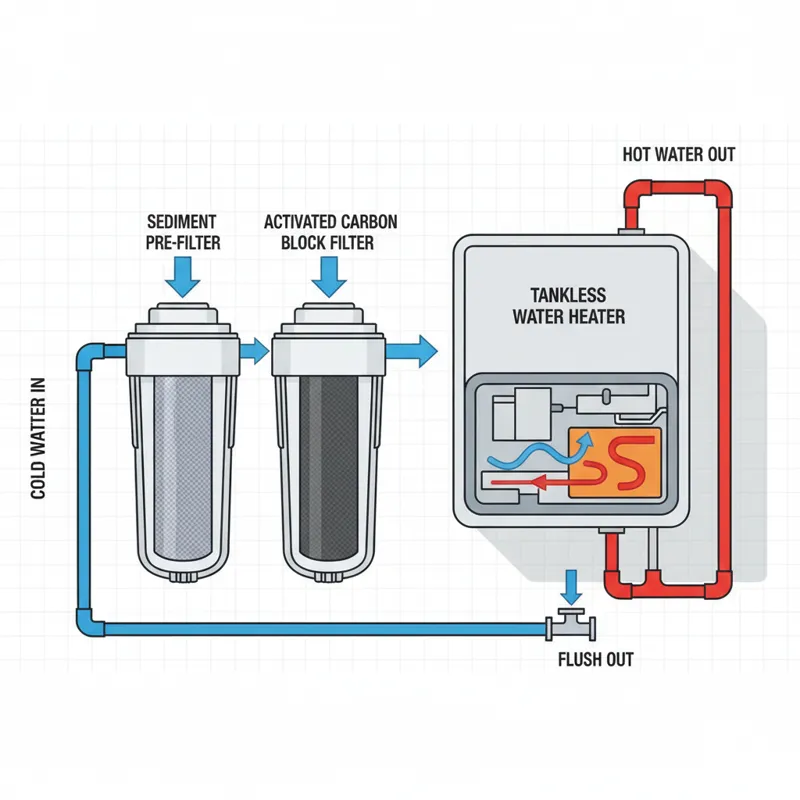
Implementing a filtration system is not just a recommendation; for many homes, it’s a necessity. The right filter for tankless water heater installation actively works to mitigate the threats posed by hard water minerals and suspended sediments, safeguarding your appliance’s performance and longevity.
How Filters Protect Your Investment
A dedicated filtration system acts as the first line of defense, intercepting harmful substances before they ever reach the delicate internal components of your tankless heater. This proactive approach prevents the problems from even starting, rather than just treating their symptoms. By removing scale-forming minerals and abrasive sediment, the filter allows the tankless unit to operate as designed, ensuring optimal heat transfer and unimpeded water flow. This protection translates directly into quantifiable benefits: consistent hot water delivery, sustained energy efficiency (which often qualifies for energy rebates, much like looking into efficient appliances like a new white coffee maker), and significantly reduced risk of premature component failure or costly repairs. It preserves the factory-engineered specifications of your appliance.
The Different Types of Filtration Explained
When considering a filter for tankless water heater applications, it’s important to understand that “filtration” isn’t a monolithic concept. Different types of filters address different water quality issues. Some focus purely on removing physical particles, while others target dissolved minerals that cause hardness and scale. Often, a multi-stage approach combining several technologies offers the most comprehensive protection. The goal is always to match the filtration solution to the specific challenges presented by your local water supply.
Types of Filters for Tankless Water Heaters: A Detailed Look
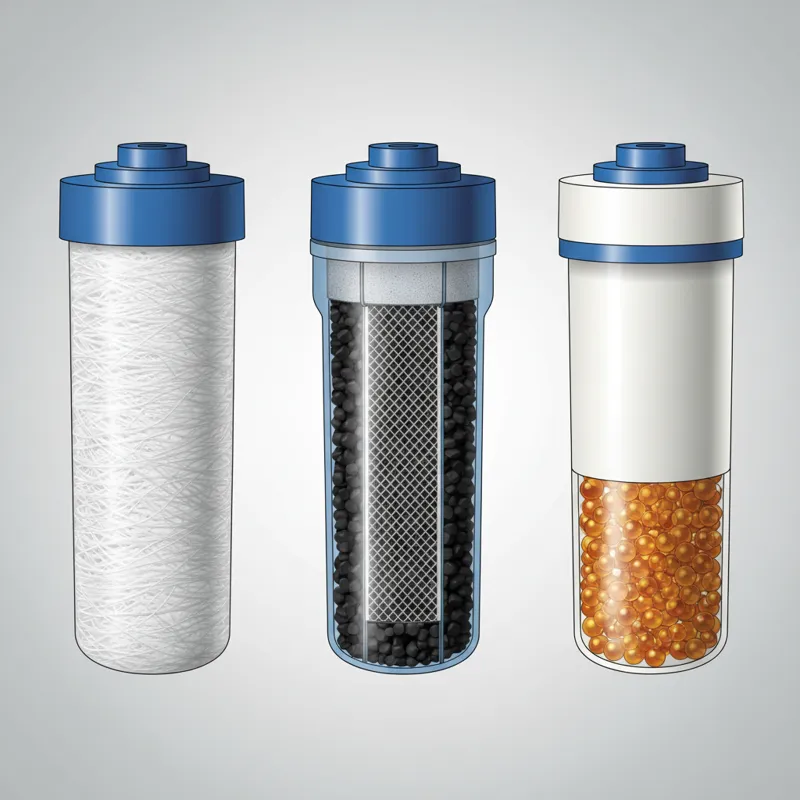
Selecting the appropriate filter for your tankless water heater hinges on understanding your water quality and the specific contaminants you need to address. Each type of filter serves a distinct purpose.
Sediment Filters
Sediment filters are foundational components in almost any water filtration strategy, particularly for tankless heaters. They are designed to physically block and capture suspended particles.
Mechanism and Function
These filters work by creating a physical barrier. Water flows through a porous material, and particles larger than the filter’s micron rating are trapped. Common ratings range from 5 microns down to 1 micron, with lower numbers indicating finer filtration. By removing sediment, these filters prevent blockages in the tankless unit’s narrow water paths and protect sensitive components from abrasive wear.
Common Media Types
Sediment filters come in various forms, each suited for different applications:
- Spun Polypropylene: A common and cost-effective option, these filters are made from melt-blown polypropylene fibers that become denser towards the core, allowing for graded filtration.
- Pleated Sediment Filters: These offer a larger surface area, which can extend filter life and reduce pressure drop compared to spun filters. They are often washable and reusable.
- Multi-Layered Filters: Some advanced sediment filters incorporate multiple layers of different materials, providing more effective depth filtration.
Maintenance Considerations
The primary maintenance for sediment filters is regular replacement of the cartridge. The frequency depends entirely on your water quality and water usage. A clogged sediment filter will lead to reduced water flow and pressure throughout your home, indicating it’s time for a change. It’s a straightforward DIY task for most homeowners.
Scale Prevention Filters / Conditioners
While sediment filters deal with physical particles, scale prevention filters address dissolved minerals that cause hardness. These are often non-salt-based alternatives to traditional water softeners.
Understanding Non-Salt-Based Solutions
These systems don’t remove hard minerals from the water. Instead, they condition the minerals, altering their crystalline structure so they lose their ability to “stick” and form hard scale on surfaces like heat exchangers. They essentially render the minerals inert in terms of scale formation. This approach is gaining popularity due to its low maintenance, no salt usage, and no wastewater discharge.
Template Assisted Crystallization (TAC)
TAC technology is a highly effective, salt-free scale prevention method. Water flows through a bed of specialized polymeric beads that provide nucleation sites. When hard water minerals (calcium and magnesium ions) come into contact with these beads, they are transformed into microscopic, inert crystal structures. These crystals remain suspended in the water but cannot bond to surfaces or form scale.
TAC systems typically have a high capacity and do not require regeneration, making them an excellent choice for tankless heaters. Reputable manufacturers often provide third-party certifications for their TAC media’s scale prevention efficacy, often exceeding 90%.
Polyphosphate Systems
Polyphosphate filters release small, controlled amounts of food-grade polyphosphate into the water. This substance sequesters calcium and magnesium ions, effectively binding them so they cannot precipitate out and form scale. It also helps to prevent corrosion in pipes.
While effective, polyphosphate systems typically have lower scale prevention efficacy than TAC and require regular replacement of the polyphosphate media (often in cartridge form). They are generally more suited for moderate hardness levels rather than very hard water.
Magnetic/Electronic Descalers
These devices claim to alter the mineral properties using magnetic fields or electronic pulses, preventing scale formation. While some users report anecdotal success, scientific consensus on their consistent effectiveness is often debated, particularly for residential applications. Most professionals would recommend TAC or polyphosphate systems over magnetic descalers for reliable scale prevention.
Water Softeners
For homes with significantly hard water (typically above 7-10 grains per gallon, or 120-170 mg/L), a traditional salt-based water softener might be the most comprehensive solution.
When Softening is Necessary
A water softener is ideal when addressing extreme hardness that impacts not just your tankless heater but also all water-using appliances, plumbing fixtures, and even personal care. Softened water also leaves fewer spots on dishes (perhaps making your coffee filter cleaner) and makes soap and detergents more effective.
Ion Exchange Process
Water softeners work through a process called ion exchange. As hard water flows through a resin bed, calcium and magnesium ions (which cause hardness) are exchanged for sodium or potassium ions. These resin beads are negatively charged and attract the positively charged hard mineral ions.
Maintenance and Salt Usage
Water softeners require regular replenishment of salt (or potassium chloride) in their brine tank, typically every few weeks or months, depending on water usage and hardness. The system also periodically goes through a regeneration cycle, flushing the accumulated hard minerals down the drain, which means some wastewater is produced.
Pros and Cons for Tankless Heaters
- Pros: Eliminates hardness completely, providing the best protection against scale for the tankless heater and all other appliances. Reduces soap usage and improves cleaning.
- Cons: Requires salt, regular maintenance, and generates wastewater. Some tankless manufacturers recommend against excessively soft water, as it can sometimes be corrosive to certain metals, though this is often mitigated by proper sizing and water chemistry. Consulting your tankless heater’s manual and a water treatment professional is crucial here.
Choosing the Right Filter System for Your Home
Making an informed decision about a filter for tankless water heater requires a methodical approach, starting with understanding your specific water challenges.
Water Quality Testing: The First Step
Before investing in any filtration system, you absolutely must test your water. You can purchase DIY test kits that measure hardness, pH, chlorine, and other common parameters, or you can send a sample to a professional lab for a comprehensive analysis. Many municipal water providers also publish annual water quality reports. Knowing your water’s hardness level (measured in grains per gallon or parts per million) is paramount, as this will dictate whether you need a softener, a scale prevention filter, or simply a sediment filter.
Considering Flow Rate and Pressure Drop
Any filter placed in your water line will introduce some degree of pressure drop. Tankless water heaters require a minimum flow rate to activate and maintain consistent hot water delivery. It’s critical to select a filter system, particularly a whole-house one, that is adequately sized for your home’s water demands and the specific flow rate requirements of your tankless heater. Undersized filters can severely restrict flow, leading to cold water “surprises” or the tankless unit struggling to keep up. Always check the filter’s maximum flow rate (GPM) and its pressure drop specifications.
Whole-House vs. Point-of-Use
- Whole-House Filtration: A whole-house filter for tankless water heater protection often means installing the filter system on the main water line entering your home. This protects all water-using appliances, not just the tankless heater. This is generally the recommended approach for scale prevention or sediment issues.
- Point-of-Use Filtration: While less common for tankless heaters, a point-of-use filter would be installed directly on the cold water inlet line to the tankless unit. This is suitable if your only concern is the tankless heater and other appliances aren’t affected by water quality, but it’s often more efficient to address water quality challenges holistically.
Installation Complexity
The complexity of installing a filter for tankless water heater varies. A simple inline sediment filter might be a relatively easy DIY project for someone with basic plumbing skills. However, installing a whole-house water softener or a comprehensive TAC system often involves modifying main water lines, requiring soldering or PEX crimping, and potentially rerouting plumbing. For these more involved installations, especially if you’re not comfortable working with plumbing, engaging a licensed plumber is advisable to ensure proper installation, leak-free connections, and adherence to local codes.
Installation and Maintenance: Keeping Your System Running Smoothly
Even the best filtration system is only as effective as its installation and ongoing maintenance. Neglecting these aspects can quickly undermine its protective benefits.
DIY vs. Professional Installation
For basic inline sediment filters, many homeowners with moderate DIY plumbing experience can handle the installation. Ensure you have the right tools, turn off the main water supply, relieve pressure, and use appropriate thread sealant. However, for whole-house systems, especially water softeners or more complex scale prevention units, professional installation is strongly recommended. A licensed plumber can ensure correct sizing, proper bypass valve installation, and compliance with local plumbing codes. Incorrect installation can lead to leaks, pressure issues, or ineffective filtration.
Regular Filter Cartridge Replacement
This is the most frequent maintenance task. Sediment filters, polyphosphate cartridges, and often even pre-filters for TAC systems need regular replacement. The exact frequency depends on:
- Your water quality (how much sediment or minerals are present).
- Your household’s water usage.
- The specific filter’s capacity and micron rating.
Manufacturers typically provide guidelines (e.g., every 3-6 months), but visual inspection and monitoring water pressure will give you the best indication. A clogged filter restricts flow, leading to a noticeable drop in water pressure at your taps or a decrease in your tankless heater’s performance. Consider setting a reminder on your calendar or smart home system.
Periodic Descaling/Flushing of the Tankless Heater
Even with a highly effective filter for tankless water heater in place, periodic maintenance of the tankless unit itself is still crucial. Manufacturers universally recommend flushing and descaling your tankless water heater annually, or even more frequently in areas with very hard water.
This process involves circulating a vinegar solution or a specialized descaling chemical through the heat exchanger to dissolve any residual scale that might have formed. It’s a vital step to ensure any bypass of the filtration system or minor scale build-up is addressed before it becomes problematic. Many tankless units come with isolation valves and a built-in flushing port to facilitate this process, similar to the importance of regular cleaning for appliances like an ultimate coffee brewer.
Monitoring System Performance
Keep an eye on key indicators. Are you still seeing scale buildup on fixtures or around the dishwasher? Is your hot water flow consistent? Has your energy bill for water heating changed unexpectedly? These observations can signal that your filter system might not be performing optimally, indicating a need for filter replacement or a deeper system check.
What Most People Get Wrong About Tankless Water Heater Filtration
Despite the clear benefits, many homeowners make common mistakes when it comes to filtering their tankless water heater. These oversights can negate the investment or lead to frustrating performance issues.
Underestimating Water Hardness
One of the most frequent errors is assuming tap water is “fine” without actual testing. Water that tastes good or looks clear can still be very hard. Relying on generalized regional data is also insufficient; water hardness can vary even within the same municipality due to different source wells or pipe infrastructure. Without a precise understanding of your water’s mineral content, you risk selecting an inadequate filter, or worse, none at all.
Ignoring Flow Rate Implications
Another significant misstep is choosing a filter system without considering its impact on water flow and pressure. As previously mentioned, tankless heaters require specific flow rates to operate effectively. An undersized filter or one with a high-pressure drop can starve the tankless unit, causing temperature fluctuations or preventing it from activating at all, leading to cold showers. Always match the filter’s GPM rating to your home’s peak demand and the tankless heater’s requirements.
Believing One Filter Solves All Problems
No single filter solves every water quality issue. A sediment filter won’t address hardness, and a scale prevention filter won’t remove chlorine or harmful chemicals. Many homes benefit from a multi-stage approach, combining a sediment filter with a scale prevention filter or a water softener. Trying to force one type of filter to do a job it’s not designed for is a recipe for disappointment and continued appliance degradation.
Neglecting Regular Maintenance
Even with the perfect system installed, neglecting cartridge changes or softener salt replenishment renders the system useless. A clogged sediment filter is no longer a filter; it’s a flow restrictor. An expired polyphosphate cartridge offers no scale protection. Consistent, timely maintenance is non-negotiable for maximizing the benefits of any filtration system. Ignoring it will lead to the very problems you sought to prevent.
Benefits Beyond Longevity: Efficiency and Performance
While protecting your investment is a primary driver for installing a filter for tankless water heater, the advantages extend into daily comfort and long-term financial savings.
Sustained Energy Efficiency
The most compelling long-term benefit of effective filtration is sustained energy efficiency. A tankless water heater’s energy consumption is directly tied to its ability to transfer heat efficiently. When scale builds up, the heater works harder, consumes more gas or electricity, and performs less effectively. By preventing scale, a good filter ensures the heat exchanger remains pristine, allowing for optimal heat transfer and keeping your energy bills consistently lower over the appliance’s entire lifespan. This is critical in 2026, with energy costs remaining a significant household expense.
Consistent Hot Water Delivery
Scale and sediment don’t just reduce efficiency; they can also disrupt the consistent flow and temperature of hot water. Clogged pathways mean reduced water volume, and impaired heat transfer can lead to unexpected temperature drops or “cold sandwiches” in your shower. A properly filtered system ensures that water flows freely and is heated consistently, providing the reliable on-demand hot water experience you invested in.
Reduced Repair Costs
The primary cause of premature tankless water heater failure and expensive repairs is damage due to scale and sediment. Replacing a heat exchanger or repairing internal valves clogged with mineral deposits can be incredibly costly, sometimes approaching the price of a new unit. Investing in a quality filter system is a proactive measure that drastically reduces the likelihood of these major breakdowns, saving you significant repair bills down the line. It’s a preventative expense that pays for itself many times over. The U. S. Environmental Protection Agency (EPA) emphasizes how water quality directly impacts the lifespan and efficiency of home appliances, underscoring the value of such preventative measures.
Frequently Asked Questions
Addressing common queries helps solidify understanding and provides practical guidance.
Do tankless water heaters really need filters?
In most cases, yes, especially if you have hard water or a municipal supply with noticeable sediment. While tankless units are robust, their design makes them highly susceptible to scale buildup and sediment damage. A filter for tankless water heater systems is an essential preventative measure for longevity and efficiency.
How often should I change my tankless water heater filter?
It varies greatly depending on your water quality and usage. For sediment filters, typical recommendations are every 3-6 months. For scale prevention cartridges (like polyphosphate), it might be 6-12 months. Always refer to the manufacturer’s guidelines, but also monitor your water pressure – a noticeable drop is a clear sign it’s time for a change.
Can I use a whole-house filter for my tankless heater?
Absolutely, and it’s often the most effective approach. A whole-house filtration system installed on your main water line will protect your tankless water heater along with all other water-using appliances and plumbing throughout your home. Just ensure it’s properly sized for flow rate and addresses the specific contaminants in your water.
Is a water softener better than a scale prevention filter?
It depends on your water hardness. For very hard water, a traditional salt-based water softener provides the most comprehensive removal of hardness minerals. For moderate hardness, or if you prefer a salt-free solution, a high-quality Template Assisted Crystallization (TAC) scale prevention filter can be very effective at preventing scale buildup without removing minerals. Your water test results should guide this decision.
What are the signs my tankless heater filter needs changing?
The most common signs include a noticeable drop in hot water pressure, the tankless heater struggling to maintain desired temperatures, longer heating times, or even the unit shutting off intermittently (due to flow restrictions or scale buildup making it overheat). If you have a clear filter housing, you might also visually see a buildup of sediment.
Conclusion
In the landscape of modern home efficiency, a tankless water heater stands out as a smart investment. Yet, its true potential for energy savings and long-term reliability is inextricably linked to the quality of the water it processes. Installing the right filter for tankless water heater applications isn’t an optional upgrade; it’s a fundamental requirement for protecting your appliance and ensuring it delivers consistent, efficient hot water for decades to come. By understanding your water quality, choosing an appropriate filtration technology, and committing to simple, regular maintenance, you’ll safeguard your investment, reduce energy consumption, and enjoy the full benefits of on-demand hot water, well into 2026 and beyond. This proactive approach ensures your tankless heater remains a cornerstone of your home’s comfort and efficiency, not a source of frustration and unexpected repair bills.