

In 2026, the emphasis on proactive personal health management continues to grow, extending well beyond diet and exercise into areas like at-home oral care. While brushing and flossing are foundational, truly understanding the state of your oral health requires a clear view of areas your eyes simply can’t reach. This is where a quality dental mirror becomes an indispensable tool, transitioning from a professional diagnostic instrument to a practical home oral health examination device. It’s not about replacing your dentist, but about empowering you to spot potential issues early, improve your cleaning habits, and gain a deeper appreciation for your own oral cavity. This guide will walk you through the essential aspects of choosing and using the best dental mirror, offering insights on various types, key features, and practical applications, so you can approach your oral hygiene with newfound clarity and confidence.
Why a Dental Mirror Isn’t Just for the Dentist’s Office
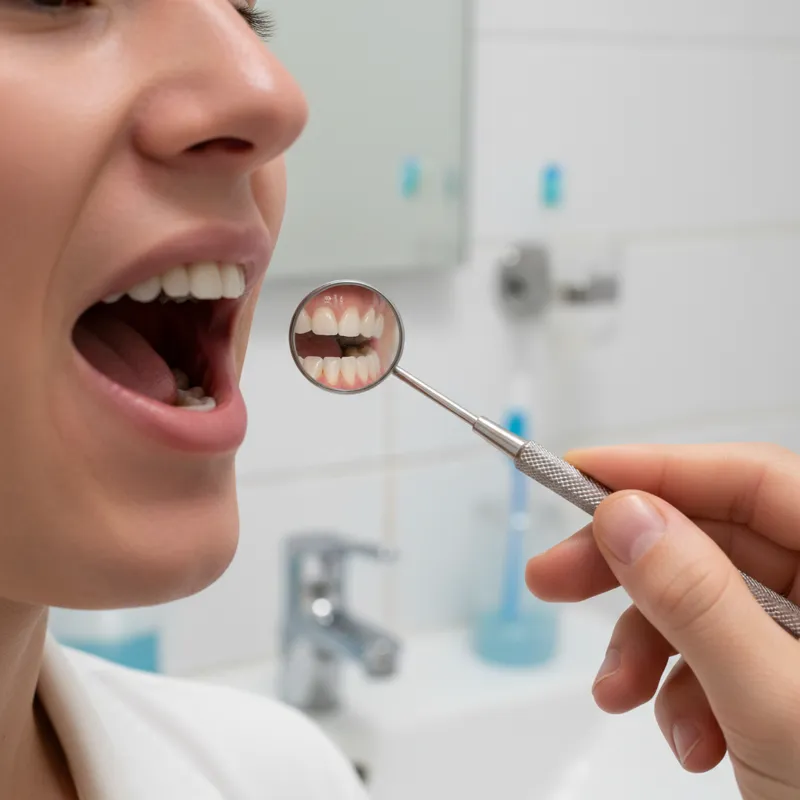
You might associate a dental mirror exclusively with that annual or bi-annual trip to the dentist, a necessary prop in their array of intraoral inspection tools. However, for everyday oral hygiene, a personal dental mirror offers significant, often overlooked, advantages. It provides a means to systematically inspect parts of your mouth that are otherwise invisible, like the lingual surfaces of your lower front teeth or the distal surfaces of your molars. Catching early signs of plaque buildup, tartar, gingivitis, or even minor chips and cracks can make a substantial difference in preventing more serious problems down the line. It allows you to assess the effectiveness of your brushing and flossing technique, identifying missed spots and adjusting your routine accordingly. Think of it as a quality control check for your daily efforts. This isn’t about self-diagnosis or replacing professional care; it’s about informed self-awareness and proactive maintenance. Always consult your dental professional for any concerns or definitive diagnoses. They are the only ones qualified to offer professional dental diagnostic instruments and make clinical assessments.
Understanding Dental Mirror Types: What You’ll Encounter
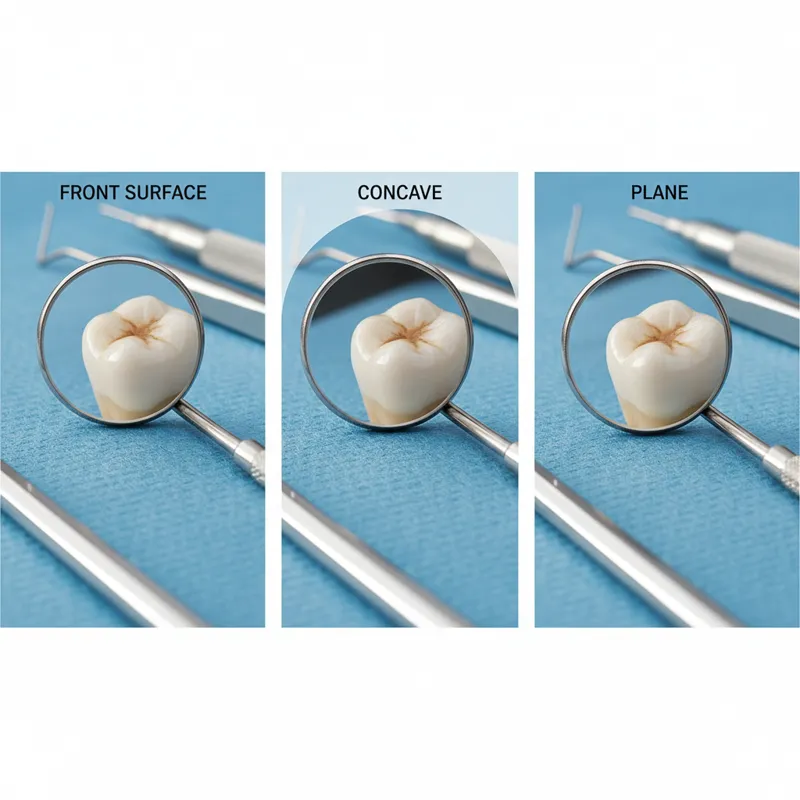
When you start looking for a dental mirror, you’ll quickly discover that they aren’t all built the same. The primary differentiation lies in the type of reflective surface used, which impacts clarity, magnification, and the presence of optical distortions. Understanding these types is crucial for selecting a mirror that meets your specific needs for home oral health examination devices.
Front Surface Mirrors: The Gold Standard
Front surface mirrors are widely considered the best choice for both professional and home use, especially when precision is key. The reflective coating is applied directly to the front surface of the glass, preventing what’s known as “ghosting” or double images. This means the reflection you see is a true, undistorted representation of the area. Without the extra layer of glass between the eye and the reflective surface, light bounces off only once, providing unparalleled clarity and sharpness. For meticulous at-home inspection, a front surface dental mirror delivers the most accurate view, allowing you to discern fine details like early plaque accumulation or the precise margin of a restoration. This type is generally pricier but well worth the investment for its superior visual fidelity.
Plane (Flat) Mirrors: The Basic Option
Plane, or flat, mirrors are the simplest and most common type found in many basic dental kits. Their reflective coating is on the back surface of the glass, similar to a standard bathroom mirror. While more affordable, this design introduces a slight separation between the object being viewed and its reflection. This can lead to a phenomenon called “ghosting”—a faint secondary image that appears slightly offset from the primary reflection. For general viewing and identifying large areas of plaque, a plane mirror might suffice. However, for detailed inspection or discerning subtle changes, the ghosting can be distracting and reduce overall clarity. If precision isn’t your absolute top priority and budget is a major concern, a good quality plane mirror can still be a functional intraoral inspection tool.
Concave (Magnifying) Mirrors: For Detailed Views
Concave mirrors, as their name suggests, have a curved inward reflective surface. This curvature provides a magnified view of the object, making them useful for zooming in on specific areas. If you’re trying to spot a minuscule chip, a barely visible crack, or the very beginning of a cavity, the magnification can be a significant advantage. However, the trade-off with concave mirrors is distortion. The magnified image isn’t perfectly flat; it can curve or stretch objects, especially towards the edges of the mirror. This distortion can make it challenging to accurately gauge distances or the true shape of an object. While excellent for focusing on small details, they are generally not ideal for broad, general inspections where an accurate, non-magnified view is preferred.
Key Features That Make a Dental Mirror Stand Out for Home Use
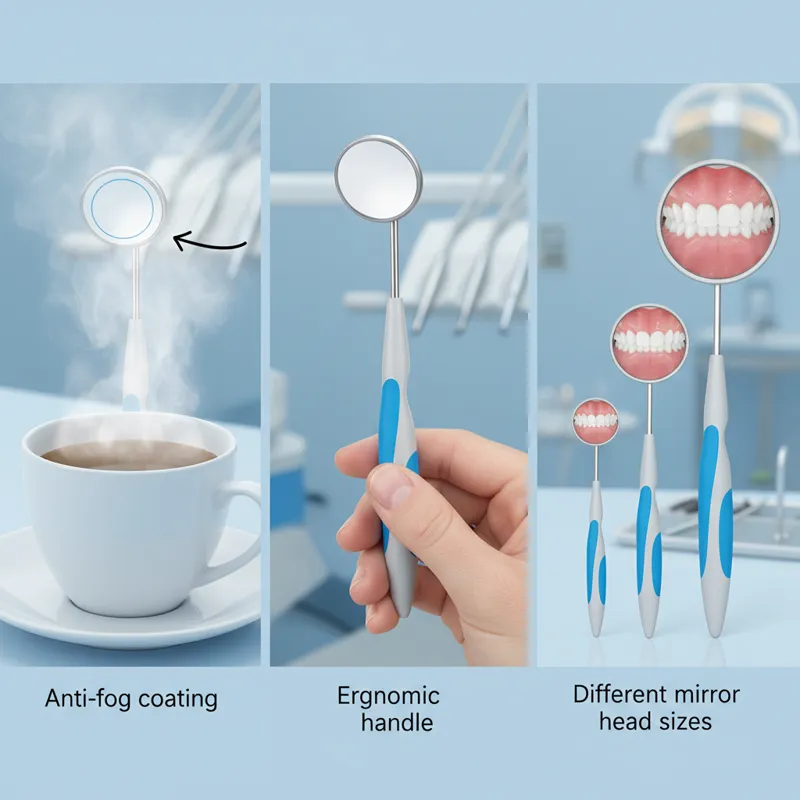
Beyond the basic mirror type, several features significantly enhance the usability and effectiveness of a dental mirror for home use. These considerations can elevate your experience from frustrating fumbling to clear, confident inspection.
Anti-Fog Capabilities
This is arguably one of the most critical features for any dental mirror, especially for at-home use where you might not have access to professional air or water sprays. As soon as you place a mirror in your warm, moist mouth, it’s prone to fogging up, rendering it useless. Good anti-fog mouth mirrors either incorporate a special coating on the mirror surface or are designed to be heated (often by warm water) to prevent condensation. Some advanced versions even feature active defogging mechanisms, although these are less common for consumer models. Without effective anti-fogging, you’ll spend more time wiping the mirror than actually inspecting your teeth.
Handle Ergonomics and Material
A mirror is only as good as your ability to hold and maneuver it. The handle’s design, length, and material play a huge role in comfort and control. Look for a handle that feels balanced in your hand, offers a secure grip, and is long enough to reach all areas of your mouth without straining. Stainless steel handles are durable, easy to sterilize, and often preferred by professionals. Plastic handles are lighter and typically more affordable, but ensure the plastic is medical-grade and robust. A textured or ribbed grip can also prevent slippage, particularly when your hands might be wet.
Mirror Head Size and Shape
Dental mirrors come with various head sizes, typically ranging from 3 (small) to 5 (standard) or even larger. Smaller heads are excellent for navigating tight spaces and reaching posterior molars, while larger heads provide a broader view but can be harder to maneuver. Some mirrors also offer different shapes, like oval instead of round, which can sometimes provide a slightly better field of view in certain areas. Consider starting with a standard size (e.g., #4 or #5) for general use, and if you find yourself struggling to reach certain spots, a smaller head might be beneficial.
Integrated Lighting
Adequate lighting is paramount for effective oral inspection. While you can always use an external light source, an integrated LED light built into the mirror handle or head offers direct, shadow-free illumination precisely where you need it. These illuminated dental mirrors dramatically improve visibility, especially in the darker recesses of your mouth. They typically run on small button-cell batteries, making them convenient and portable. For serious at-home inspection, an LED-equipped mirror is a significant upgrade, offering a level of clarity that simply isn’t achievable with ambient light alone.
Our Top 6 Considerations for Dental Mirrors in 2026 (Beyond Generic Categories)
When evaluating dental mirrors for home use, it’s not just about picking a type; it’s about identifying the specific combination of features that best supports your goals. Here are six ideal mirror profiles that encompass the best characteristics we see in 2026, helping you choose a home oral health examination device that truly performs.
1. The Precision Enthusiast’s Choice: High-Grade Front Surface with Micro-LED
For those who demand uncompromising clarity and precision, this setup is paramount. A truly high-grade front surface mirror eliminates ghosting and provides a crystal-clear, true-to-life reflection. When paired with a powerful, compact LED light source integrated into the handle or head, it illuminates every crevice without casting shadows. This combination allows for meticulous inspection, making it easier to spot the earliest signs of plaque, calculus, or even subtle changes in gum tissue. It’s an ideal choice for anyone committed to detailed self-monitoring and enhancing their daily cleaning efficacy.
2. The Ergonomic Explorer: Long-Reach, Angled Handle with Anti-Fog Coating
Reaching the far corners of your mouth can be a challenge. The ergonomic explorer mirror features a thoughtfully designed handle—often with a comfortable grip, an optimized length, and a slight angle to the mirror head itself. This design minimizes hand fatigue and allows for easier access to posterior areas like wisdom tooth sites and the backs of molars. Crucially, a reliable, long-lasting anti-fog coating is essential here, ensuring your view remains unobstructed during extended explorations. This is an excellent choice for individuals who prioritize comfort and accessibility for a thorough inspection.
3. The Travel-Friendly Compact: Durable, Small-Head, Battery-Powered Light
For those constantly on the go, a portable yet effective solution is key. This profile emphasizes a compact design without sacrificing functionality. A small-head mirror (e.g., #3 or #4 size) is easier to maneuver and pack. It must be durable, perhaps with a robust stainless steel construction, to withstand travel. Crucially, it includes an efficient, battery-powered LED light to ensure you have adequate illumination regardless of your location. This mirror fits perfectly into a toiletry bag, making it easy to maintain your oral hygiene standards away from home. Think about how maintaining your personal appearance, including your smile, contributes to your confidence when you travel, much like using a quality tea tree shaping cream for your hair.
4. The Budget-Conscious but Capable: Quality Plane Mirror with Solid Grip
Not everyone needs the absolute top-tier, and a well-selected budget option can still be highly effective. This category focuses on a good quality plane mirror—meaning the glass and reflective coating are well-made, minimizing ghosting as much as possible for a back-surface mirror. The key here is also a solid, comfortable handle that provides good control. While it may lack integrated lighting or advanced anti-fog features (though you can always warm it in water to help), its reliability and clear, if not perfect, reflection make it a practical choice for general checks and learning proper mirror manipulation without a significant investment. This is an excellent entry point for beginners.
5. The Magnification Maven: Concave Mirror for Spotting the Smallest Details
If your primary goal is to examine very specific, small areas or to track the progress of a tiny chip or a suspicious spot, a dedicated concave mirror is invaluable. While acknowledging the inherent distortion, the magnification it offers can reveal details that a flat or front-surface mirror might miss. This isn’t your everyday general inspection mirror, but rather a specialized tool for focused, zoomed-in examinations. It’s particularly useful for individuals with specific dental concerns they are monitoring under professional guidance, offering an enhanced view into fine textures or early signs.
6. The Versatile Kit Builder: Interchangeable Heads with Dedicated Anti-Fog
For those who want flexibility, a kit with interchangeable mirror heads provides options for different tasks. You might have a smaller head for tight areas, a larger one for general overview, and perhaps even a specialized angled head. The critical aspect here is that each head (or the system itself) features dedicated and effective anti-fog technology, ensuring consistent clarity no matter which head you attach. This versatility allows you to customize your inspection for various needs, from a quick check of your front teeth to a thorough examination of your posterior dentition. This approach recognizes that one size doesn’t always fit all when it comes to oral exploration. Maintaining a comprehensive self-care kit, whether for oral hygiene or for personal grooming like using tea tree body wash, is a smart strategy.
How to Effectively Use Your Dental Mirror at Home
Using a dental mirror effectively is a learned skill that improves with practice. It’s not just about looking, but about seeing. Proper technique enhances your ability to spot issues and improve your cleaning habits.
Optimal Lighting and Position
The first step to any effective inspection is ample light. Position yourself in a well-lit bathroom, ideally with natural light or a bright overhead fixture. An illuminated dental mirror makes this even easier, providing focused light directly where you need it. Sit or stand comfortably in front of a larger bathroom mirror, which can help you see your hands and the general positioning of the dental mirror. This allows for better coordination and fewer awkward angles.
Mastering the Grip and Angle
Hold the dental mirror like a pen or pencil, using a firm but gentle grip. Use your free hand, or even a finger from the hand holding the mirror, to gently retract your cheek, lip, or tongue to improve your field of view. The trick is to position the mirror so that it reflects the area you want to see, rather than trying to look directly into the mirror itself. For example, to view the back of your upper molars, place the mirror against your cheek or palate, angling it to reflect the tooth surface. Slowly move the mirror and your head to change your perspective. Start with easily accessible areas to build confidence before moving to harder-to-reach spots. Wikipedia offers a good foundational understanding of dental instruments, including the dental mirror, and its basic principles of use. Learn more about dental mirrors on Wikipedia.
What to Look For: Red Flags and Normal Variations
Once you’ve mastered the angles, train your eye on what to observe. Look for:
- Plaque and Tartar: White, sticky film (plaque) or hard, yellowish deposits (tartar/calculus), especially along the gum line and between teeth.
- Gum Health: Bright pink, firm gums are healthy. Look for redness, swelling, bleeding (even a little), or recession where the gum tissue pulls away from the tooth.
- Tooth Structure: Any chips, cracks, discolored spots (especially dark or grey areas which might indicate cavities), or wear patterns. Check existing fillings or crowns for any signs of damage or gaps.
- Oral Tissues: Examine your tongue, inner cheeks, and palate for any unusual bumps, lesions, white patches, or persistent sores.
Remember, your goal is observation, not diagnosis. If you see anything unusual or concerning, make an appointment with your dentist. This is a powerful self-awareness tool, but it doesn’t replace professional expertise.
Things People Usually Miss When Choosing a Dental Mirror
When people first venture into buying a dental mirror for home use, it’s easy to focus solely on the price or whether it “looks” like what the dentist uses. However, several critical details are often overlooked, which can significantly impact the mirror’s usability and your overall satisfaction.
The True Cost of Cheap Mirrors
It’s tempting to grab the cheapest multi-pack you find online. However, ultra-low-cost mirrors often come with significant drawbacks. The reflective coating might be of poor quality, leading to dull, hazy reflections. The glass itself can be prone to scratching. Handles might be flimsy, breaking easily or providing a terrible grip, making effective maneuvering impossible. Furthermore, very cheap mirrors rarely have effective anti-fog properties, turning your inspection into a constant battle against condensation. Investing a little more in a quality mirror, especially a front-surface one, pays dividends in clarity, durability, and a far less frustrating user experience.
Neglecting Sterilization/Cleaning
A dental mirror, like any intraoral tool, needs to be scrupulously clean before and after each use. Many assume a quick rinse is enough. However, proper cleaning involves washing with soap and water, followed by a disinfectant, especially if it’s shared or if you’ve touched it with unwashed hands during use. Medical-grade stainless steel mirrors are often autoclavable (though not for home use), but at home, a good antimicrobial soap and careful drying are essential. Overlooking this step can introduce bacteria into your mouth or onto the mirror, which defeats the purpose of improved hygiene. For maintaining overall personal hygiene, understanding product efficacy is key, whether it’s for cleaning your dental mirror or selecting an effective tea tree conditioner.
Underestimating Anti-Fog Importance
As mentioned, anti-fog capability is paramount, yet it’s often undervalued until you’re struggling to see anything beyond a cloud of mist. Many budget mirrors boast “anti-fog” properties that are, in practice, ineffective or require constant re-application of an anti-fog solution. A truly effective anti-fog mirror, especially one with a durable coating, will save you immense frustration and allow for uninterrupted inspection. Without it, your dental mirror quickly becomes a decorative item rather than a functional intraoral inspection tool. Always prioritize genuine, reliable anti-fog technology.
Maintaining Your Dental Mirror: Longevity and Hygiene
Proper care of your dental mirror is crucial for both hygiene and longevity. A well-maintained mirror will serve you reliably for years, providing clear views for your home oral health examination. After each use, immediately clean your dental mirror. Start by rinsing it thoroughly under warm running water to remove any saliva or debris. Then, use a mild soap (dish soap works well) and a soft brush or cloth to gently clean the mirror surface and handle. Pay attention to any crevices where residue might accumulate. Rinse again to remove all soap. For disinfection, you can use an isopropyl alcohol wipe or spray, allowing it to air dry, or follow the instructions provided by the manufacturer. Ensure the mirror is completely dry before storing it to prevent water spots or bacterial growth. Store your dental mirror in a clean, dry place, ideally in a protective case or pouch to prevent scratches to the mirror surface. Avoiding abrasive cleaners or harsh scrubbing will help preserve any anti-fog coatings and the mirror’s reflective quality over time.
Frequently Asked Questions About Dental Mirrors
Can a dental mirror replace professional dental check-ups?
Absolutely not. A dental mirror is an excellent home oral health examination device for personal vigilance and improving your brushing and flossing technique. However, it cannot replace the expertise, diagnostic tools, and professional treatment provided by a licensed dentist. Dentists can detect issues you might miss, perform X-rays, and provide necessary interventions. Think of your mirror as a complement to, not a substitute for, professional care. Reputable health organizations like the National Institute of Dental and Craniofacial Research (NIDCR) consistently emphasize the importance of regular dental visits for comprehensive oral health. You can find more information about maintaining oral health at NIDCR. NIH.gov.
How often should I use a dental mirror?
There’s no strict rule, but a good practice is to use it a few times a week, or at least weekly, as part of your comprehensive oral hygiene routine. This frequency allows you to monitor your cleaning effectiveness and spot any changes early without becoming obsessive. Consistent use builds your skill and familiarity with your own oral cavity.
What’s the best way to clean my dental mirror?
Wash it with warm water and mild soap immediately after each use. Rinse thoroughly and then wipe it down with an alcohol swab or an appropriate disinfectant. Allow it to air dry completely or dry with a clean, lint-free cloth before storing it in a protective case. This prevents contamination and keeps the mirror pristine.
Are illuminated dental mirrors worth it?
For many, yes, they are well worth the investment. Integrated LED lighting dramatically improves visibility in the darker areas of the mouth, making it easier to spot plaque, calculus, or other concerns that might be missed with ambient light alone. They offer convenience and superior clarity, especially if your bathroom lighting isn’t optimal. For detailed oral cavity viewing tools, illumination can be a game-changer. Forbes often features articles on investing in personal health tools; it’s worth noting how smart investments, like a good illuminated mirror, can contribute to overall wellness. Check Forbes Health for more insights.
Conclusion: Empowering Your At-Home Oral Health Journey
In 2026, taking control of your health means being proactive and informed, and your oral health is no exception. A quality dental mirror is far more than a novelty; it’s a powerful intraoral inspection tool that empowers you to become an active participant in your dental well-being. By choosing the right type of mirror – prioritizing features like front-surface clarity, anti-fog capabilities, and ergonomic design – you equip yourself to better understand, monitor, and maintain your oral hygiene. Remember, the goal isn’t self-diagnosis, but rather enhanced awareness and early detection, which can lead to better outcomes and fewer surprises at your dentist’s office. By integrating a dental mirror into your regular routine, you’re not just looking at your teeth; you’re cultivating a deeper connection to your overall health, ensuring that your smile remains healthy and confident for years to come. Invest wisely, use it regularly, and always partner with your dental professional for comprehensive care.
Disclaimer: The information provided on bangladeshcountry.com regarding advanced skincare tools, microneedling, tattoo equipment, hair removal devices, and dental accessories is based on general internet research and is intended for informational and educational purposes only.
We are independent publishers and are not licensed dermatologists, medical estheticians, dentists, or healthcare professionals. The content on this site is strictly not a substitute for professional medical, dermatological, or dental advice, diagnosis, or treatment.
Invasive cosmetic procedures, including the use of skin penetration tools (such as microneedling or tattoo pens) and at-home dental tools, carry inherent risks of infection, scarring, allergic reactions, and severe tissue damage if used incorrectly. Always consult with a board-certified dermatologist, dentist, or qualified healthcare provider before using any advanced cosmetic or medical tools at home.
Reliance on any information provided on this site is strictly at your own risk. We assume no liability for any adverse physical effects, skin damage, infections, or injuries resulting from the use of these tools, products, or information.


