

The coffee table is often the gravitational center of a living room, the piece of furniture that anchors the entire seating area. But in a small space, it can quickly become the opposite: a bulky obstacle that kills traffic flow and makes the room feel cramped. For years, the default solution was to simply skip it, leaving a void in the middle of the room. Thankfully, design has evolved. In 2026, choosing a small coffee table isn’t about compromise; it’s a strategic decision to maximize both function and the perception of space. The right compact table can serve its purpose—holding drinks, books, and remotes—while enhancing the room’s style and making it feel more open and intentional.
Why a Small Coffee Table is a Strategic Choice, Not a Compromise
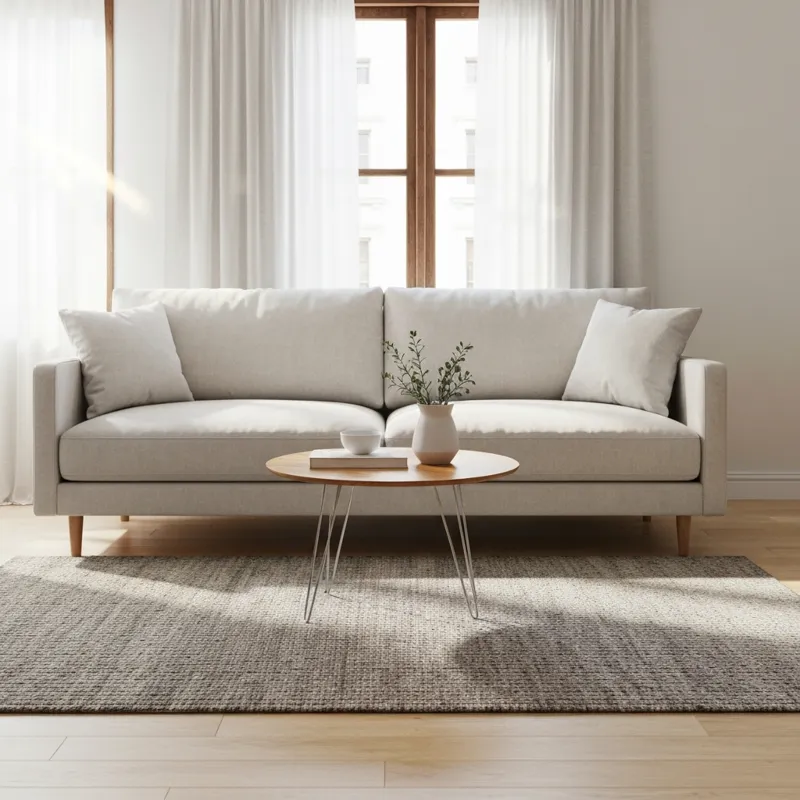
The most common mistake in furnishing a small living room is trying to use scaled-down versions of furniture meant for large rooms. Instead of creating a sense of grandeur, this often results in a cluttered, miniaturized look. The key is to think about furniture in terms of its visual weight and footprint, not just its literal dimensions.
A well-chosen small coffee table improves a room in several distinct ways:
- Improves Traffic Flow: The most immediate benefit is creating clear pathways. You should be able to walk around your seating area without turning sideways or bumping your shins. This functional improvement makes the room more comfortable and usable on a daily basis.
- Reduces Visual Weight: Visual weight is the perceived heaviness of an object. A solid, dark, blocky table consumes a lot of visual space, making the room feel crowded. Smaller tables, especially those with slender legs or transparent surfaces, have low visual weight and allow your eye to see more of the floor, creating an illusion of spaciousness.
- Defines the Zone Without Dominating It: A coffee table helps define the conversational area. A small one does this job effectively without overpowering the sofa and chairs around it. It completes the picture rather than becoming the entire focus.
Instead of viewing it as a concession, think of a small coffee table as a precision tool. It’s about selecting the exact right piece for the job, rather than using a sledgehammer where a scalpel is needed. While a large coffee table can be a stunning centerpiece in a spacious room, in a compact area it just creates problems a smaller table is designed to solve.
The Right Shape for Your Space: Deconstructing the Options

The shape of your coffee table has a dramatic impact on both the aesthetics and the functionality of a small living room. Each one interacts differently with the surrounding furniture and the flow of movement.
Round and Oval Tables
Round and oval tables are often the heroes of tight spaces. Their lack of sharp corners creates softer lines and makes them much easier to navigate around. If you have a narrow path between your sofa and your TV stand, a round table is far more forgiving than a rectangular one. This is especially true in homes with small children, where sharp corners are a safety concern.
From a design perspective, a circle or oval can break up the monotony of a room filled with rectangular shapes (the sofa, the rug, the TV, the windows). This creates a more dynamic and visually interesting layout. They also encourage a more communal, conversational feel, as everyone seated around it is more or less equidistant from the center.
Square and Rectangular Tables
While round tables are great for flow, rectangular tables often offer more usable surface area for their footprint. A narrow center table can be a perfect solution for long, thin rooms or when placed in front of a sectional sofa. The straight lines of a square or rectangular table can create a sense of order and alignment, echoing the lines of the sofa and rug.
The key is proportion. Look for options that aren’t too deep. A table that’s 18 inches deep is much more space-efficient than one that’s 30 inches deep, even if they are the same length. This gives you the surface you need without encroaching too far into the room’s open space.
Nesting Tables
For the ultimate in flexibility, nothing beats a set of nesting tables. This concept provides a multi-layered solution that can adapt to your needs in real time. You can keep them tucked together for daily use to maximize floor space, then pull them apart when guests arrive to give everyone a convenient spot for their drink.
This modular approach is incredibly powerful in small apartments or multi-purpose rooms. It’s like having three tables in one footprint. You’ll find that exploring the versatility of a nesting coffee table set opens up a lot of possibilities for dynamic living room arrangements.
Abstract and Organic Shapes
Gaining popularity in 2026 are tables with more organic, freeform shapes—think kidney-bean, pebble, or other asymmetrical designs. These tables function similarly to oval tables by avoiding harsh corners, but they add a distinct sculptural element to the room. They feel less formal and can make a space feel more curated and artistic. Their irregular shape often means they have a smaller overall footprint while still providing useful surface areas where you need them.
Material Matters: How Composition Affects Perceived Space
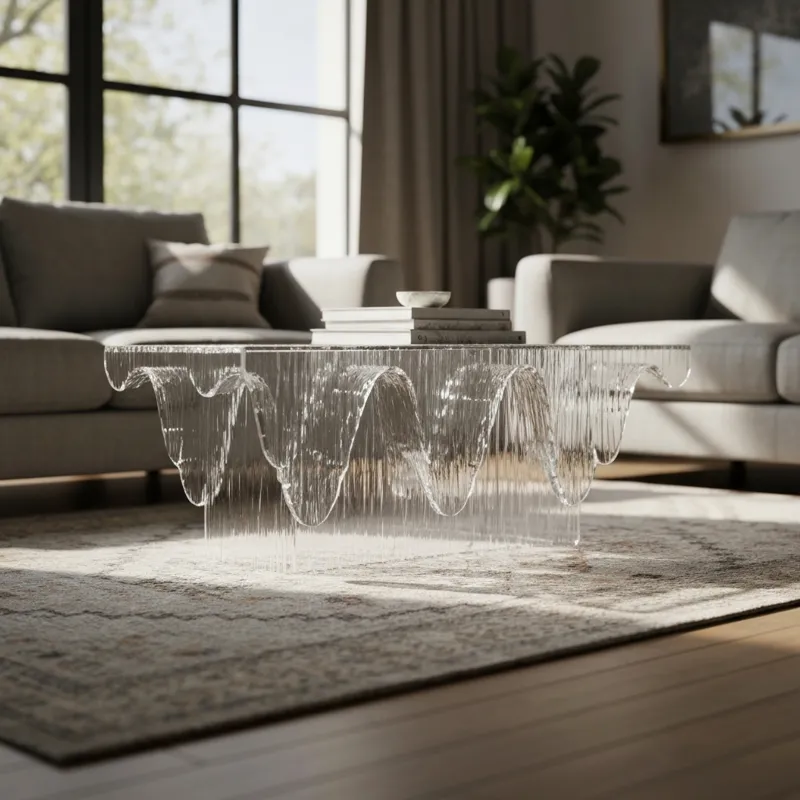
The material your coffee table is made from is just as important as its shape and size. Different materials carry different visual weights, and choosing the right one can trick the eye into seeing more space than is actually there.
The “Invisible” Choice: Glass, Acrylic, and Lucite
Tables made from transparent or translucent materials are a classic designer trick for small spaces. A glass or acrylic table takes up zero visual space. Your eye passes right through it to the floor or rug beneath, which prevents the table from visually segmenting the room. This continuous sightline makes the entire floor plan feel more open and expansive.
The primary downside is maintenance—glass and acrylic show fingerprints, dust, and smudges easily. They also require more careful use to avoid scratches. However, for pure space-saving illusion, they are unmatched. The material Lucite (a type of acrylic), popularized in the mid-20th century, continues to be a go-to for designers aiming for a light, airy feel.
The Warmth of Wood
Wood brings warmth and a natural texture that can make a room feel cozy and grounded. In a small space, the key is to avoid bulky, heavy wooden tables. Instead, opt for designs with slender, tapered legs that lift the tabletop off the ground. A table with “air” underneath it always feels lighter than a solid block.
Lighter wood tones like oak, maple, or ash will also feel less heavy than dark woods like espresso or walnut. If you love the look of dark wood, make sure the table’s design is exceptionally slim and minimalist to compensate.
The Modern Edge of Metal
Metal-framed tables, often with wood, glass, or stone tops, are excellent for small rooms. The frames are typically very thin, minimizing their visual footprint. Finishes like black, brass, or chrome can add a touch of industrial, glam, or modern style without adding bulk. A metal C-frame table, for example, has one of the smallest footprints possible while offering maximum utility.
The Softness of Upholstered Ottomans
A storage ottoman used as a coffee table is a multi-functional powerhouse. It provides a soft surface (no sharp corners), offers hidden storage for blankets or magazines, and can even serve as extra seating in a pinch. To use it as a coffee table, simply place a large, sturdy tray on top to create a stable surface for drinks and decor. This dual-purpose approach is one of the smartest strategies for furnishing a space-challenged home.
What Most People Get Wrong with Small Coffee Tables
Choosing a small coffee table isn’t just about picking the one with the smallest dimensions. There’s a fine line between “appropriately scaled” and “comically tiny.” Avoiding these common missteps is crucial for a successful layout.
- Ignoring Scale: The biggest mistake is getting a table that is too small for the sofa. A tiny table can look like a forgotten accent piece rather than the anchor it’s meant to be. A good rule of thumb is that your coffee table should be about one-half to two-thirds the length of your sofa.
- Getting the Height Wrong: A coffee table that is too high or too low is awkward both visually and functionally. The ideal height is at or just below the height of your sofa’s seat cushions (typically 1-2 inches lower). This makes it easy to reach for items from a seated position.
- Forgetting Traffic Flow: You must leave adequate clearance. According to interior design standards, you need about 14 to 18 inches of space between the edge of your coffee table and your sofa. As a Forbes Home article on furniture arrangement points out, this is the sweet spot—close enough to be useful, but far enough to allow for legroom and easy passage.
- Prioritizing Form Over Function: It’s easy to fall for a beautiful, sculptural table that offers almost no usable surface. Be honest about your needs. If you need storage, a beautiful but bare-bones table isn’t the right choice. A table with a lower shelf or a built-in drawer can be a lifesaver for stashing remotes, coasters, and magazines, keeping the top surface clear.
Beyond the Traditional: Smart Alternatives for Tight Spaces
Sometimes, even the smallest coffee table is too much for a particularly tight spot. In these cases, it’s time to think outside the box with coffee table alternatives that offer function with a minimal footprint.
C-Tables
A C-table is designed so its base can slide under a sofa or chair, allowing the tabletop to hover over your lap. It’s the perfect perch for a laptop, a snack, or a drink. You can use a single C-table or a pair of them in place of a central coffee table. They can be pushed to the side when not in use, freeing up floor space completely.
Grouped Accent Tables or Stools
Instead of one central table, consider grouping two or three small accent tables or sturdy stools together. This creates a flexible, modular surface that can be reconfigured or separated as needed. It’s a playful, modern look that offers incredible versatility. You could use two small round tables of different heights for a layered effect.
Storage Ottomans and Trunks
As mentioned earlier, a storage ottoman is a brilliant double-duty solution. A vintage trunk can serve the same purpose, adding character and a wealth of hidden storage. This is particularly effective for those who need to hide clutter. For those who love this idea, opting for a round coffee table with storage combines the benefits of a space-saving shape with essential functionality.
Measuring for Success: A Practical Guide
Before you start shopping, take out a tape measure. Getting the proportions right is a game of inches, and guessing is a recipe for disappointment. Here are the three critical measurements to guide your search:
- Height: Measure from the floor to the top of your sofa’s seat cushions. Your coffee table should be no more than 2 inches lower than this measurement. For a 17-inch high sofa seat, look for tables between 15 and 17 inches tall.
- Length: Measure the length of your sofa between the arms. Your coffee table should be approximately two-thirds of this length. For a 72-inch sofa, a table around 48 inches long would be ideal. For a smaller 60-inch loveseat, aim for a 40-inch table.
- Clearance: Use painter’s tape to mark out the potential footprint of a table on your floor. Ensure you leave 14-18 inches between the table and the sofa, and at least 30 inches for major walkways on the other sides.
Mapping it out with tape is the single best way to visualize how a table will impact your space before you buy it. You’ll instantly see if it feels too crowded or blocks a natural pathway.
Frequently Asked Questions (FAQ)
What is the best size for a small coffee table?
The best size is relative to your sofa. Aim for a table that is about two-thirds the length of your sofa and is equal to or 1-2 inches shorter than your sofa’s seat height. Crucially, it must allow for 14-18 inches of clearance between it and the sofa.
Can I use an end table as a coffee table?
You can, but be mindful of height and proportion. Most end tables are taller than coffee tables, designed to sit next to the arm of a sofa. Using a too-tall end table as a coffee table can look and feel awkward. However, a lower, wider accent table could work perfectly.
How do I make my small living room look bigger?
Use furniture with legs to create a sense of openness (letting you see the floor underneath). Choose light colors for walls and large furniture pieces. Opt for coffee tables made of glass or acrylic to reduce visual clutter. And finally, ensure every piece is appropriately scaled to the room—nothing oversized.
What do you put on a small coffee table to avoid clutter?
Follow the “Rule of Three.” Style with a small stack of books, a single decorative object (like a small vase or candle), and a tray to corral small items like remotes. The tray is key; it creates a defined zone for clutter, making the entire surface feel more organized.


