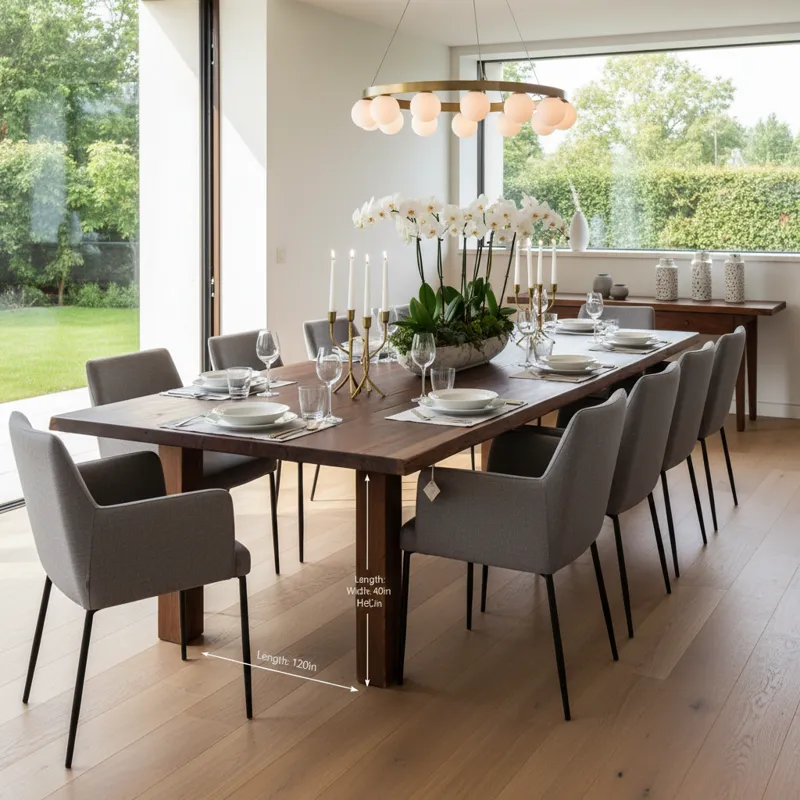
Choosing a new dining table goes beyond just aesthetics; the right big family dining tables and their precise dimensions are fundamental to comfort and function. If you’re looking for large dining table sets, understanding the exact dimensions of dining table options available is the first critical step. A well-proportioned table ensures everyone has enough elbow room, allows for easy movement around the dining area, and creates a harmonious flow within your home. Get it wrong, and you might end up with a beautiful piece that simply doesn’t fit your life or space.
Understanding Your Space: The Foundation of Table Sizing
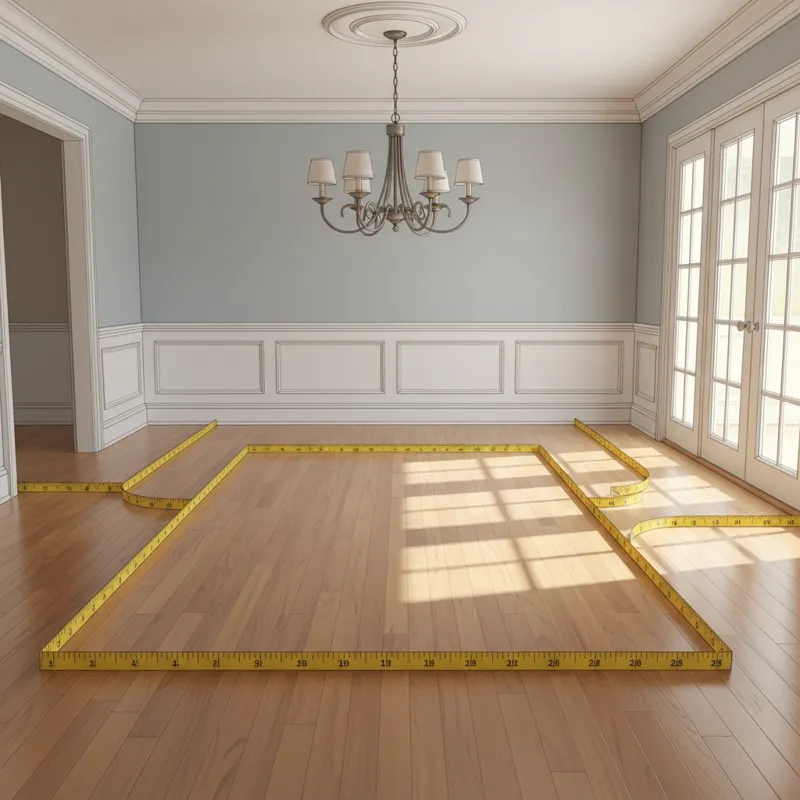
Before you even start looking at tables, you need to thoroughly understand the space where it will live. This isn’t just about the table itself, but how it interacts with the room’s boundaries and daily traffic. Many people rush this step, leading to tables that feel either too cramped or dwarfed by the environment.
Room Dimensions and Clearance Requirements
The most common mistake is measuring only the table’s footprint. You must account for the chairs and the space needed to pull them out. A good rule of thumb for comfortable dining and easy chair movement is to allow at least 36 to 48 inches of clearance between the table’s edge and the nearest wall or furniture piece. This ensures guests can pull chairs out, sit down, and get up without bumping into things or each other. For high-traffic areas, lean towards the 48-inch mark.
Traffic Flow and Walkways
Think about how people move through your dining room. Is it a thoroughfare to other parts of the house? If so, you’ll need to maintain clear pathways. A table that obstructs a primary walkway will be a constant source of frustration. Map out your typical movement patterns. This often means ensuring that the 36-48 inch clearance extends not just to walls but also to doorways, buffets, or other furniture. A helpful tip is to mark out the potential table dimensions on your floor with painter’s tape to visualize the space it will occupy, along with the chair pull-out area.
Standard Dining Table Dimensions by Shape
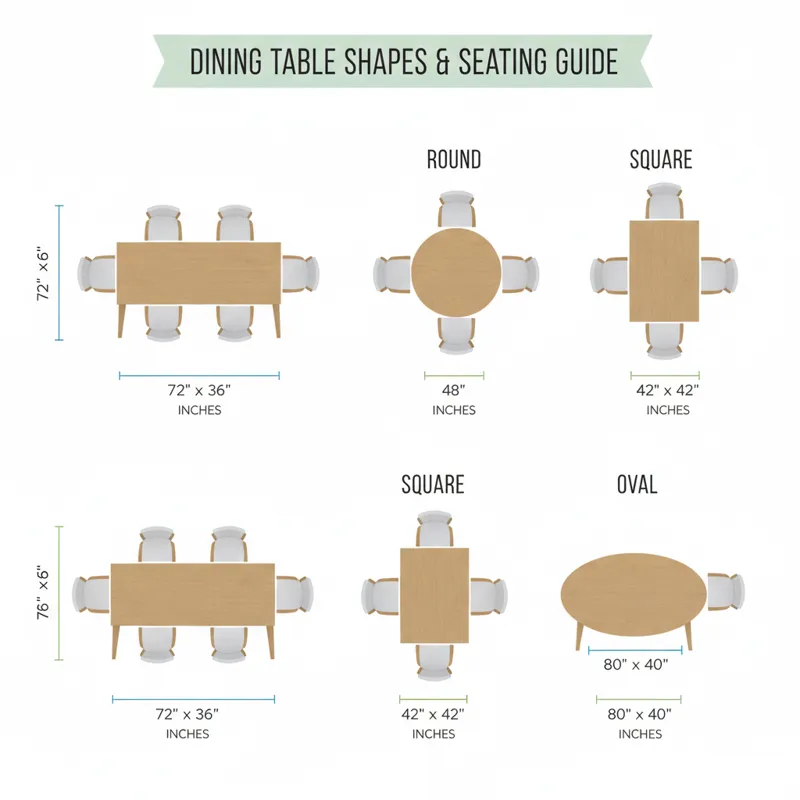
Dining tables come in various shapes, each with its own dimensional considerations and suitability for different spaces and gatherings. Understanding these standards is crucial when planning your purchase.
Rectangular Dining Tables
Rectangular tables are the most popular choice, offering versatile seating arrangements and fitting well into most dining rooms. They are efficient for seating larger groups and can often be extended.
- Small (2-4 people): Typically range from 48 to 60 inches long and 30 to 36 inches wide. A 48×30 inch table is snug for four, while a 60×36 inch table offers more comfort.
- Medium (4-6 people): These tables are usually 60 to 72 inches long and 36 to 40 inches wide. A 72×36 inch table is often considered the ideal dining table dimensions for 6, providing ample space for place settings and serving dishes.
- Large (6-8+ people): For bigger families or frequent entertainers, tables range from 72 to 96 inches long and 40 to 48 inches wide. An 8-seater might be 96×42 inches. For tables seating 10 or more, lengths can extend well beyond 100 inches, sometimes reaching 120 inches or more. You’ll often see a mid century modern dining table for 8 falling into this larger range.
Round Dining Tables
Round tables foster conversation, as everyone can see each other, making them excellent for intimate gatherings. They also tend to feel less obtrusive in smaller square rooms.
- Small (2-4 people): A diameter of 36 to 48 inches is common. A 40-inch round table can comfortably seat four.
- Medium (4-6 people): Diameters typically range from 48 to 60 inches. A 54-inch round table is a good sweet spot for six.
- Large (6-8+ people): For more people, diameters start at 60 inches and can go up to 72 inches or even 84 inches. A 72-inch round table can seat eight, though it requires a substantial amount of room. Keep in mind that as round tables get larger, the center becomes harder to reach, sometimes necessitating a lazy Susan.
Square Dining Tables
Square tables are great for square rooms and create a symmetrical, balanced feel. They are often chosen for smaller, more intimate dining spaces.
- Small (2-4 people): Common dimensions are 36×36 inches to 48×48 inches. A 42×42 inch table works well for four.
- Medium (4 people): A 48×48 inch table is comfortable for four, allowing for more elbow room and serving space.
- Large (6-8+ people): For larger groups, square tables can become quite expansive. A 60×60 inch table can seat eight, though it can feel very wide. For a square dining room table for 12, you’d be looking at dimensions upwards of 72×72 inches, which can be an impressive focal point but requires a very large room.
Oval Dining Tables
Oval tables combine the communal feel of a round table with the elongated capacity of a rectangular one. Their curved edges can make a room feel softer and allow for easier navigation around the table compared to sharp corners.
- Dimensions: Similar to rectangular tables in length, but with widths that might be slightly narrower at the ends, gradually widening in the middle. For example, an oval table might be 72 inches long and 40 inches wide at its widest point, tapering slightly at the ends. They typically seat the same number of people as their rectangular counterparts of similar length.
Seating Capacity: How Many People Can Truly Fit?
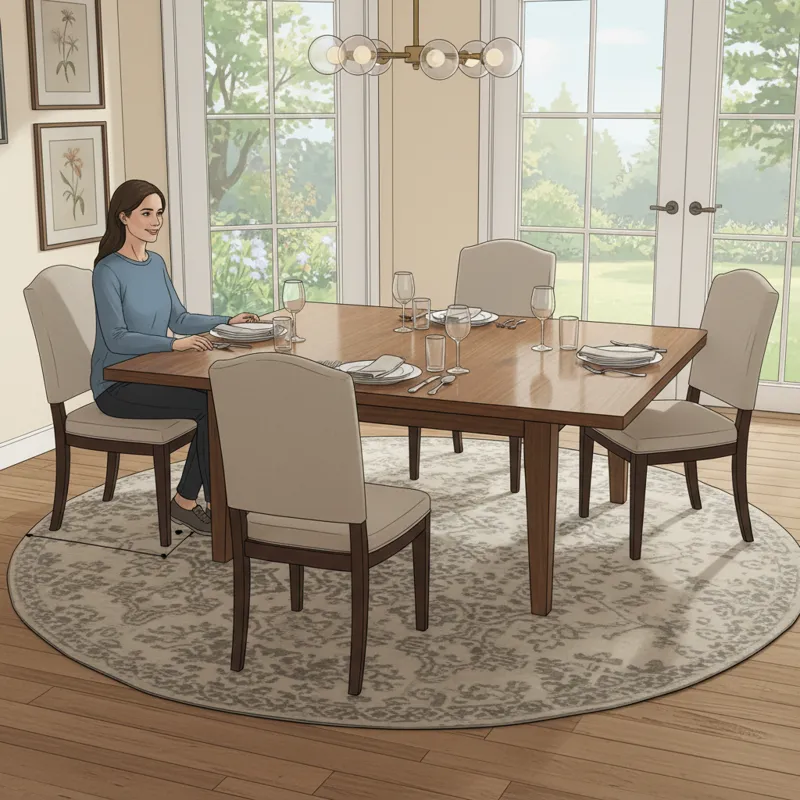
Determining how many people can realistically sit at a dining table goes beyond simply counting chairs. Comfort, chair design, and personal space all play significant roles.
Personal Space and Elbow Room
For comfortable dining, each person needs adequate elbow room. A good standard is to allocate between 24 and 30 inches of table edge per person. If you’re often serving elaborate meals with multiple dishes and glassware, lean towards the 30-inch mark. Skimping on this means people will be bumping elbows, feeling cramped, and not enjoying their meal as much. This is particularly important for the ends of rectangular or oval tables, where two people might share a shorter edge.
Chair Design Impact
The chairs you choose significantly impact the effective seating capacity. Chairs with wide armrests or bulky designs will require more space than sleek, armless chairs. If your chairs are particularly wide (over 20 inches), you might need to adjust your per-person allocation upwards, perhaps to 28-30 inches, to maintain comfort. Conversely, if you plan to use benches on one or both sides, you can often fit more people, especially children, as benches don’t have individual chair legs that restrict movement.
When to Consider an Extendable Table
An extendable dining table is a highly practical solution for homes that regularly host different-sized gatherings. A compact table for daily use can transform into a larger one for entertaining. This flexibility allows you to optimize your everyday living space while still having the capacity for special occasions. Look for smooth extension mechanisms and sturdy construction. Many modern designs, like a gray extendable dining table, offer both functionality and style, seamlessly blending into various decor themes.
Beyond the Top: Height and Apron Considerations
While the length and width of the tabletop are usually the primary focus, two other dimensions are equally critical for comfort and functionality: table height and apron clearance. Overlooking these can lead to uncomfortable seating or chairs that simply don’t fit.
Standard Dining Table Height
Most dining tables in the United States are designed to be between 29 and 30 inches high from the floor to the top of the table surface. This height is standardized to pair comfortably with standard dining chairs, which typically have a seat height of 18 to 19 inches. This combination allows for ample legroom and a natural position for eating. If you’re considering a counter-height or bar-height table, remember that these require taller chairs or stools with different seat heights (e.g., 24-26 inches for counter height, 28-30 inches for bar height). Sticking to standard dining height generally provides the most versatile and comfortable experience for the widest range of people.
Apron Clearance
The table apron is the wooden or metal trim that runs underneath the tabletop, connecting the legs. While it adds structural integrity and often aesthetic appeal, it reduces the effective clearance between the floor and the underside of the table. Standard apron clearance should ideally be at least 25 inches from the floor to allow most dining chairs, especially those with armrests, to slide underneath comfortably.
Before purchasing, measure the height of your chair’s armrests (if applicable). If the chair arms are higher than the table’s apron clearance, the chairs won’t push in fully, leaving them protruding and potentially obstructing traffic flow. This is a common oversight that leads to daily frustration, so always double-check this dimension against your chosen chairs.
Material and Construction: How They Influence Dimensions and Durability
The materials and construction methods used in a dining table can significantly impact its perceived dimensions, actual weight, and long-term durability. These factors are worth considering as you finalize your choice.
Solid Wood vs. Engineered Wood
Solid wood tables, like those made from oak, maple, or walnut, are often substantial. They convey a sense of gravitas and sturdiness. While their dimensions might be identical to an engineered wood table, their visual weight and physical bulk can make them feel larger and more imposing in a room. Solid wood is incredibly durable and can be refinished multiple times, offering a lifetime of use if properly cared for. However, they are heavier and generally more expensive.
Engineered wood products, such as MDF (medium-density fiberboard) or particleboard with veneers, are lighter and typically more budget-friendly. They allow for a wider variety of finishes and styles and can often achieve thinner profiles, which might make a table feel less dominant in a smaller space. While durable, they are not as forgiving as solid wood when it comes to deep scratches or water damage and generally cannot be refinished.
Glass and Metal Tables
Glass tabletops, often paired with metal or minimalist wood bases, offer a visually lighter presence. The transparency of glass allows light to pass through, making a dining area feel more open and spacious, even with a larger table. This is an excellent option for smaller rooms where you want to maintain an airy feel. Glass is durable and easy to clean but can show fingerprints and scratches more readily.
Metal bases, common in industrial or contemporary designs, can be sleek and strong. They allow for intricate designs without adding excessive bulk. Metal construction generally offers excellent stability and durability, sometimes providing a more compact footprint for the legs compared to traditional solid wood pedestals or four-legged designs. For a comprehensive look at furniture dimensions and their impact on interior design, resources like Wikipedia’s entry on furniture can provide broader context.
Things People Usually Miss When Measuring for a Dining Table
Even with all the guidelines, some crucial details often slip through the cracks during the planning phase. These oversights can lead to a table that, despite being “the right size,” still feels wrong in the space.
Forgetting Chair Push-Out Space
As mentioned, the 36-48 inch clearance is vital, but many only consider the static footprint of the chairs tucked in. The real test is when someone is actively sitting and pulling their chair out. An often overlooked aspect is that when people rise from the table, they typically push their chair back even further than when first seating themselves. Ensure there’s enough room for this dynamic movement, especially if your dining area borders a wall, another piece of furniture, or a primary walkway. This is where marking your floor with tape truly helps.
Ignoring Room Architecture
Doors, windows, built-in cabinetry, fireplaces, and even radiator covers all impact how a dining table fits. A table might technically fit the dimensions, but if it blocks a doorway from opening fully, obstructs a window view, or makes a built-in buffet inaccessible, it’s not truly fitting. Consider sightlines too; a very tall or wide table might block natural light or make a room feel boxy. For advice on integrating furniture with existing architectural elements, design-focused publications like those found on Forbes Home Improvement can offer useful perspectives.
Underestimating the Visual Weight
A table isn’t just its physical dimensions; it’s also its visual presence. A chunky, dark solid wood table will appear larger and more dominant than a slender, glass-topped table of the exact same dimensions. If your room is small or lacks natural light, a table with heavy visual weight can make the space feel cramped and overwhelmed. Conversely, a minimalist design might feel too insubstantial in a grand, spacious dining room. Match the visual weight of the table to the overall scale and style of your room.
Not Accounting for Future Needs
While it’s impossible to predict everything, try to consider your lifestyle over the next few years. Are you planning to expand your family? Do you foresee hosting more frequently? Buying a table that only just fits your current needs might leave you wanting a new one sooner than you’d like. This is where an extendable table truly shines, providing flexibility for evolving circumstances. Thinking a little ahead can save you the hassle and expense of replacing a table too soon. Even government resources on home organization, such as those from the U. S. government on housing and home services, indirectly support the idea of planning for functional space.
Choosing the Right Dining Table Dimensions: A Practical Checklist
Making the final decision on your dining table dimensions can feel like a big commitment. Use this practical checklist to ensure you’ve considered all the critical factors.
Measure Your Room Accurately
Start by measuring the full length and width of your dining space. Note any architectural obstructions like doorways, windows, or built-ins. Use painter’s tape on the floor to visualize potential table footprints, including chair pull-out space.
Determine Your Seating Needs
Realistically assess how many people you need to seat daily and how many you’ll host on special occasions. If these numbers differ significantly, an extendable table might be your best option. Remember the 24-30 inches per person rule.
Consider Traffic Flow
Ensure there’s at least 36-48 inches of clearance around the table’s perimeter for comfortable movement and chair usage, especially in high-traffic areas. This includes paths to other rooms and around existing furniture.
Factor in Table Shape
Match the table shape to your room’s shape and your entertaining style. Rectangular for long rooms and large groups, round for smaller, squarer rooms and intimate conversations, square for square rooms, and oval for a blend of both.
Check Chair Compatibility
Always measure your chair’s seat height and, crucially, the height of its armrests. Compare this to the table’s apron clearance (the distance from the floor to the bottom of the table’s apron) to ensure chairs can slide underneath completely.
Frequently Asked Questions about Dining Table Dimensions
Here are some common questions people ask when trying to figure out the perfect dining table dimensions for their space.
How much space do I need around a dining table?
You should ideally allow 36 to 48 inches (90-120 cm) of clearance between the edge of your dining table and any wall or furniture. This ensures enough space for chairs to be pulled out comfortably and for people to walk around the table without feeling cramped.
What are the ideal dimensions for a dining table for 6 people?
For a rectangular table, ideal dining table dimensions for 6 people are typically 60 to 72 inches (152-183 cm) long and 36 to 40 inches (91-102 cm) wide. For a round table, a diameter of 48 to 54 inches (122-137 cm) is generally suitable for seating six comfortably.
What is the standard height of a dining table?
The standard height for most dining tables is between 29 and 30 inches (74-76 cm) from the floor to the top of the table surface. This height is designed to pair with standard dining chairs that have a seat height of 18 to 19 inches (46-48 cm).
Can a round table seat more people than a square table of similar dimensions?
Generally, a round table can often seat more people than a square table of a similar footprint, especially if you’re willing to be a little cozy. This is because there are no corners to contend with, allowing for more flexible placement of chairs around the perimeter. However, as round tables get very large, reaching the center becomes difficult.
How do I know if my chairs will fit under the table apron?
Measure the height from the floor to the top of your chair’s armrests (if it has them). Then, measure the clearance from the floor to the bottom of the table’s apron. Your chair’s armrest height must be less than the table’s apron clearance for the chair to push in fully under the table. A general minimum for apron clearance is 25 inches (63.5 cm).