If you’re looking for big family dining tables, finding quality extendable dining table and chairs can be challenging, but it’s often the most practical solution for many homes today. In 2026, where living spaces frequently demand versatility and efficiency, an extendable dining table set isn’t just a convenience; it’s a strategic investment. These sets offer the unique ability to adapt to your immediate needs, transforming from a compact daily dining spot for four into a grand feasting area for six, eight, or even more, all within minutes. This adaptability is particularly crucial for US households that value both everyday functionality and the joy of hosting gatherings without a permanent, oversized fixture dominating their floor plan.
The Functional Core: How Extendable Dining Tables Work

An extendable dining table and chairs set earns its name by featuring a tabletop that can physically expand its surface area. This expansion is typically achieved through one of several clever mechanisms, each designed to make the table more versatile. Understanding these core mechanics is fundamental to choosing a set that will perform reliably over years of use.
Common Extension Mechanisms
Manufacturers employ various methods to allow a table to extend. Each has its own benefits and operational quirks:
- Butterfly Leaf: This self-storing leaf mechanism is highly popular for its convenience. The leaf is hinged in the middle and folds inward, storing itself neatly underneath the tabletop when not in use. To extend, you simply pull the table ends apart, unfold the leaf, and lock it into place. It’s ideal for those who prefer not to store separate leaves.
- Removable Leaf (Drop-In): This is perhaps the most common type. The table usually comes with one or more separate leaves that you insert into the center of the table after pulling the two halves apart. While effective, it requires dedicated storage space for the leaves when they’re not in use, which is a key consideration many people overlook.
- Drop-Leaf: Often found on smaller kitchen or console tables, drop-leaf mechanisms involve sections of the tabletop that are hinged to the main surface. You can lift and support these leaves with a gateleg or swing-out support to extend the table. When not needed, they simply drop down, shrinking the table significantly. This is excellent for very tight spaces.
- Synchronized Slide Mechanism: High-quality extendable tables often feature synchronized slides, where pulling one end of the table automatically moves the other end simultaneously. This creates a smoother, more effortless extension process, often found in conjunction with butterfly or removable leaves.
- Gear-Driven Extension: Similar to synchronized slides, gear-driven systems provide a very fluid and controlled extension. They minimize friction and ensure the table halves move in perfect alignment, contributing to the table’s overall stability when extended.
Why Opt for an Extendable Dining Table and Chairs in 2026?
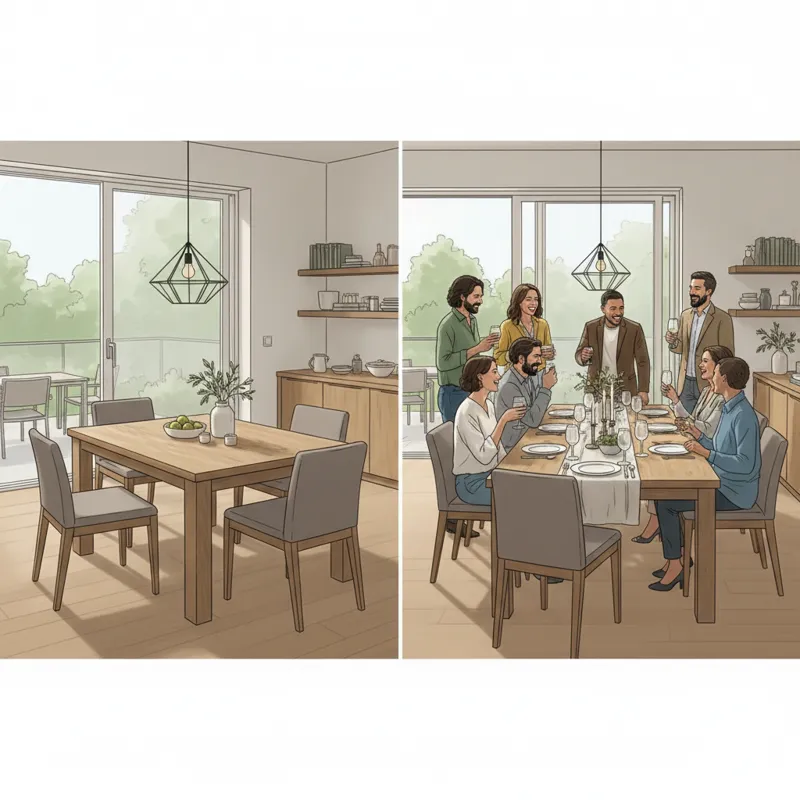
The decision to invest in an extendable dining table and chairs in 2026 aligns perfectly with contemporary lifestyle demands. Homes are often designed with multi-functional spaces, where a dining area might also serve as a workspace, a craft table, or a family game zone. A fixed, oversized dining table would restrict these possibilities, whereas an expandable kitchen table and chairs provides unmatched flexibility.
Optimizing Space and Versatility
Modern homes, whether urban apartments or suburban houses, frequently face space constraints. An extendable dining table set directly addresses this by allowing you to reclaim floor space for daily living, then effortlessly expand for special occasions. Imagine hosting Thanksgiving dinner or a holiday party without having to rent extra tables or squeeze guests uncomfortably around a too-small surface. The ability to transform your dining area makes your home more adaptable and welcoming.
Cost-Effectiveness and Sustainability
From a financial standpoint, buying an extendable dining table and chairs can be more cost-effective than purchasing multiple tables for different needs. Instead of a small everyday table and a separate large one for entertaining, you get both functionalities in one unit. This also ties into a broader move towards more sustainable consumption. Investing in a durable, versatile piece of furniture that serves multiple purposes reduces the need for additional purchases and contributes to a less wasteful approach to home furnishings.
Essential Features to Consider When Buying an Extendable Set

When you’re in the market for an extendable dining table and chairs, several key features dictate its functionality, durability, and aesthetic appeal. A thoughtful evaluation of these aspects ensures you pick a set that meets your specific needs and stands the test of time.
Mechanism Durability and Ease of Use
The extension mechanism is the heart of an extendable table. Inspect the quality of the slides, gears, and locking latches. Smooth, robust metal slides are preferable to less sturdy plastic components. A good mechanism should operate smoothly, without excessive force or sticking. Test it multiple times if possible. You want to extend and retract the table without frustration or fear of damage, particularly if you plan frequent transformations.
Material Choices: Balancing Aesthetics and Longevity
The materials chosen for both the table and chairs significantly impact their look, feel, and durability. Furniture materials have evolved, offering a wide range of options:
- Solid Wood: Options like oak, maple, walnut, or cherry offer exceptional durability, a classic aesthetic, and the ability to be refinished over time. They are generally more expensive but provide long-term value.
- Engineered Wood (MDF, Particleboard with Veneer): More affordable and stable in varied humidity, engineered wood tables often have a real wood veneer for a similar look to solid wood. Their longevity depends heavily on the quality of the core material and the veneer application.
- Metal: Steel or aluminum frames offer a contemporary or industrial look. They are often very sturdy and easy to maintain. Some extendable kitchen dining table and chairs sets combine metal bases with wood or glass tops.
- Glass: A glass top can make a smaller space feel larger and more open. However, glass is heavier, more prone to scratches and fingerprints, and less forgiving of impact.
Chair Compatibility and Comfort
An extendable dining table and chairs set isn’t complete without the chairs. Consider not just the number of chairs that come with the set, but also their comfort, construction, and how they store. If the set includes a 10 piece dinette set, ensure all ten chairs are comfortable for extended use. Think about ergonomics – seat height, depth, and back support. If you need to store extra chairs, consider stackable or nesting designs, or chairs that fold compactly. A set often includes chairs designed to fit comfortably under the table, even when extended.
Size and Seating Capacity
Carefully measure your dining area both in its everyday configuration and with the table fully extended. An extendable dining table set with 6 chairs might start as a 4-seater and expand to accommodate 6, or even 8. Some larger models, like an 108 dining table, might offer an expansive 8-10 seat capacity when fully open. Always leave ample room (at least 36-42 inches) between the edge of the table and any walls or other furniture to allow chairs to pull out comfortably and people to walk around.
Aesthetic Integration and Finish
Your dining set should complement your home’s overall style. Whether you prefer modern, farmhouse, traditional, or industrial, there’s an extendable option available. Pay attention to the finish – a durable finish will resist scratches, spills, and daily wear, simplifying maintenance. For instance, a matte finish might hide minor imperfections better than a high-gloss one.
Deep Dive: Understanding Different Extension Mechanisms
The ingenuity behind extendable dining tables lies in their mechanisms. Knowing the specifics helps you gauge not just the convenience but also the potential for long-term reliability.
The Convenience of Butterfly Leaf Tables
Butterfly leaf tables are a marvel of engineering for compact living. The leaf itself is stored internally, hinged in the middle to fold neatly away. When you pull the table ends apart, the leaf springs up and unfolds, then locks into place. This design eliminates the need for external leaf storage, making it exceptionally user-friendly. It’s a clean, integrated solution, but ensure the hinges and internal sliding mechanisms are robust enough for repeated use.
Traditional Removable Leaf Systems
Many extendable dining table and chairs sets utilize removable leaves. These are separate panels you insert into the table’s center or ends. The main table often splits in the middle, revealing a gap where the leaf or leaves fit. While straightforward, the primary consideration here is where you will store the leaves when not in use. They can be bulky and, if not stored correctly, can get damaged or warped. Some high-end dining room sets with extendable table designs include custom storage bags or even built-in cabinets for leaves.
The Space-Saving Drop-Leaf Design
Drop-leaf tables are the ultimate space-saver for smaller kitchens or apartments. They have one or more sections of the tabletop that hang down when not needed. Hinges and supportive arms (often gate legs) allow you to lift these sections and lock them into a flat position, instantly increasing the table’s surface. These are excellent as an expandable kitchen table and chairs for small spaces or as an occasional use table. While usually smaller, some creative designs can expand quite significantly.
Sophisticated Synchronized and Gear-Driven Mechanisms
For a truly premium experience, look for tables with synchronized or gear-driven extension systems. With these, you only need to pull one end of the table, and the other end moves in unison, opening the gap for the leaf. This smooth, controlled movement prevents jamming and ensures the table remains stable and aligned. These mechanisms typically employ high-quality metal components and precision engineering, contributing to a higher price point but also superior longevity and ease of operation.
Extendable Dining Table and Chairs: Material Choices and Their Impact
The materials that comprise your dining set influence its aesthetics, resilience, and required maintenance. Understanding these choices empowers you to make an informed decision for your home.
The Enduring Appeal of Solid Wood
Solid wood, such as oak, maple, walnut, or cherry, remains a top choice for its natural beauty, warmth, and exceptional durability. A solid wood extendable dining table set with 6 chairs can last for generations, developing a rich patina over time. It resists dents and scratches reasonably well and can be sanded and refinished if needed. However, solid wood is susceptible to changes in humidity, which can cause expansion or contraction, and it generally carries a higher price tag.
Practicality and Affordability with Engineered Wood
Engineered wood products, including MDF (Medium-Density Fiberboard) or particleboard, are often used as the core material, topped with a wood veneer or laminate. These options are typically more affordable than solid wood. They offer excellent stability, resisting warping from humidity changes. The quality varies significantly based on the core material density and the thickness and application of the veneer. Good quality engineered wood can mimic the look of solid wood quite convincingly and offer a practical solution for a dining table set for 6 extendable.
Modern Edge with Metal and Glass
Metal, particularly steel or aluminum, provides a sleek, modern, or industrial aesthetic. Metal bases are extremely durable and stable, often paired with wood, glass, or stone tops. A black high top kitchen table, for example, might feature a sturdy metal base. Glass tops offer a light, airy feel, making rooms appear larger. They are easy to clean but show fingerprints readily and can be prone to scratching or chipping if not tempered properly. Combinations of materials, such as a solid wood top on a metal base, are also common, blending the best attributes of each.
What Most People Get Wrong When Buying an Extendable Dining Set
Even with careful research, some critical details often slip through the cracks when people purchase extendable dining table and chairs. Overlooking these aspects can lead to frustration and regret down the line.
The Hidden Challenge of Leaf Storage
Unless you opt for a butterfly leaf design, your extendable table will likely come with one or more separate leaves. The most common oversight is failing to plan for their storage. These leaves are often bulky and need a dry, stable environment to prevent warping or damage. Shoving them under a bed or in a dusty corner can lead to issues. If the set doesn’t offer self-storing leaves, consider if you have a suitable closet, cabinet, or even a dedicated storage bag to keep them safe and accessible.
Underestimating Seating Requirements and Chair Ergonomics
People often focus on the table’s extension capabilities but neglect the accompanying chairs. An extending dining table 6 chair set may come with four chairs and imply room for two more. Will those extra two chairs match? Are they comfortable enough for a long meal? Do they fit under the table comfortably when extended, considering the apron height? Furthermore, ensure sufficient clearance around the table when fully extended. You need space not just for the chairs, but also for people to pull them out and move around comfortably. Forbes, for instance, emphasizes the importance of proper clearance in dining room design.
Ignoring Table Apron and Leg Clearance
The table apron (the frame directly beneath the tabletop) can be a significant issue for taller individuals or those with larger chairs. When a table is extended, the apron usually runs the length of the table. Measure the distance from the floor to the bottom of the apron. Insufficient clearance means guests might struggle to cross their legs or sit comfortably, even with ample tabletop space. Similarly, ensure the table legs don’t interfere with seating positions, especially at the extended ends.
Overlooking Weight and Mobility
Extendable dining table sets, especially those made of solid wood, can be quite heavy. When fully extended, they become even more substantial. Consider if you’ll ever need to move the table. If you rearrange furniture frequently or live in an upstairs apartment, a lighter construction or one with casters (lockable) might be a better choice. The weight also impacts assembly; larger, heavier tables might require professional installation.
Matching Chairs to Your Extendable Table
While many extendable dining table and chairs come as a complete set, you might opt to purchase the table and chairs separately, or expand on an existing set. Matching chairs correctly is crucial for both aesthetics and functionality.
Integrated Sets: The Easiest Option
Buying a complete extendable dining room table and chairs set is often the simplest approach. Manufacturers design these sets to ensure the chairs complement the table’s style, finish, and dimensions perfectly. The chairs typically fit under the table without issue, and the overall aesthetic is cohesive. This is especially true for an extendable dining table set with 6 chairs, where the design ensures all six chairs fit comfortably around the table both in its compact and extended forms.
Mixing and Matching: A Design Opportunity
For those who enjoy a more curated look, mixing and matching chairs with your extendable table offers a chance to express personal style. When doing this, pay attention to:
- Height: Ensure the chair seat height works with the table’s height, allowing for comfortable leg room.
- Scale: The chairs should be proportionate to the table, not dwarfing it or appearing too small.
- Style & Finish: While not identical, the chairs and table should share a common design element or color palette to create harmony. For example, a rustic wood table might pair well with industrial metal chairs, or a modern white table with Scandinavian-style chairs.
- Quantity & Storage: Don’t forget how many chairs you’ll need when the table is extended. If you plan for an 14 seat dining table when fully open, you’ll need to account for twelve to fourteen chairs. Where will you store the extra seating?
Budgeting for Your Extendable Dining Table and Chairs
The cost of an extendable dining table and chairs can vary widely, influenced by materials, complexity of the extension mechanism, brand reputation, and the number of chairs included. Setting a realistic budget from the outset helps streamline your search.
Factors Influencing Cost
Expect to find basic, smaller extendable kitchen table and chairs sets starting from a few hundred dollars. These often feature engineered wood with simpler mechanisms. Mid-range options, typically featuring better quality engineered wood or a combination of solid wood and veneers, and more refined mechanisms, can range from $800 to $2,500. Premium extendable dining table and chairs, often crafted from solid hardwoods with sophisticated, smooth-gliding synchronized mechanisms, can easily exceed $3,000 to $5,000, and even higher for custom pieces or high-end brands. The inclusion of 4 to 6 extendable dining table set chairs, or more, will also factor into the overall price.
Investing in Long-Term Value
While an initial higher investment might seem daunting, a well-made extendable dining set offers significant long-term value. A durable table made from quality materials with a robust mechanism will serve your family for many years, reducing the need for replacements. Consider the cost-per-use over its lifespan, rather than just the upfront price. A good quality set also often retains more resale value.
Maintenance and Care for Longevity
Proper maintenance is key to preserving the beauty and functionality of your extendable dining table and chairs. Different materials require specific care routines.
Caring for Wood Surfaces
For solid wood or veneered tables, regularly wipe them down with a damp cloth and then dry immediately. Avoid harsh chemical cleaners, which can strip finishes. Use coasters and placemats to protect against heat, moisture rings, and scratches. For solid wood, occasional polishing with a wood-specific product can help maintain its luster and prevent drying. When storing removable leaves, ensure they are kept in a climate-controlled area to prevent warping.
Maintaining Metal and Glass
Metal bases can typically be cleaned with a damp cloth and mild soap. Avoid abrasive cleaners that might scratch or dull the finish. For glass tops, use a streak-free glass cleaner and a microfiber cloth. Clean spills promptly, as acidic substances can etch glass over time. Regularly check and tighten any bolts or screws on metal components, as vibration from daily use can sometimes loosen them.
Mechanism Care
The extension mechanism itself benefits from occasional attention. Periodically clean the slides or gears of any dust or debris. If the mechanism feels stiff, a small amount of silicone lubricant (check the manufacturer’s recommendations first) can improve smoothness. Never force the mechanism; if it’s sticking, investigate the cause rather than applying excessive pressure.
FAQ: Common Questions About Extendable Dining Table and Chairs
Many people have similar questions when considering an extendable dining table and chairs. Here are some common inquiries and their practical answers.
Are extendable dining tables sturdy?
Yes, good quality extendable dining tables are very sturdy. Their stability depends on the design, materials, and the quality of the extension mechanism. Tables with robust slides, strong locking latches, and solid construction (especially in the legs and frame) will be just as stable as fixed tables, even when fully extended. Avoid flimsy designs with weak connections or thin materials.
What is the best type of extendable dining table?
The “best” type depends entirely on your needs. For convenience and no external leaf storage, a butterfly leaf design is excellent. For maximum seating flexibility and often a more traditional aesthetic, a removable leaf system works well if you have storage space. For small spaces needing extreme compactness, a drop-leaf table is ideal. The best choice balances your space, budget, aesthetic preference, and how frequently you plan to extend it.
How do you store extendable dining table leaves?
If your table doesn’t have a self-storing (e.g., butterfly) leaf, you need to store them externally. The best options include:
- In a dedicated storage cabinet or closet.
- Under a bed, protected by a dust cover or custom bag.
- Against a wall in a rarely used room, again, protected.
Crucially, store leaves flat or standing vertically against a wall to prevent warping. Avoid damp or excessively hot areas. Manufacturers often sell protective bags for their leaves.
What is a butterfly leaf table?
A butterfly leaf table is a type of extendable dining table where the extension leaf is hinged and folds in half, storing itself neatly underneath the tabletop when not in use. When you pull the table ends apart, the folded leaf pops up and unfolds like a butterfly’s wings, locking into place to create an extended surface. It’s highly valued for its self-storing convenience.
How much space do I need for an extendable table?
You need to consider the table’s dimensions both when compact and when fully extended. As a rule of thumb, allow at least 36 to 42 inches of clearance between the table’s edge and any walls or other furniture. This allows enough space for chairs to be pulled out and for people to comfortably walk around the table, especially when it’s extended for larger gatherings. Always measure your room carefully before purchasing.