

Achieving that perfectly crispy, golden-brown fried fish at home can feel like a culinary quest. While many attempt it with a regular pot or pan, a dedicated fish fryer significantly elevates your results, bringing restaurant-quality texture and taste right to your kitchen or patio. In 2026, as we reflect on the best models that dominated the market in 2025, the options for both deep and air frying technologies offer specialized advantages. Whether you’re an avid angler wanting to cook your catch, or simply a seafood lover aiming for consistently delicious fried fillets, choosing the right equipment is paramount. This guide cuts through the noise to help you understand the mechanics, identify key features, and ultimately select a fish fryer that delivers exceptional crispiness, ease of use, and reliable performance.
Why a Dedicated Fish Fryer Matters for Crispy Seafood
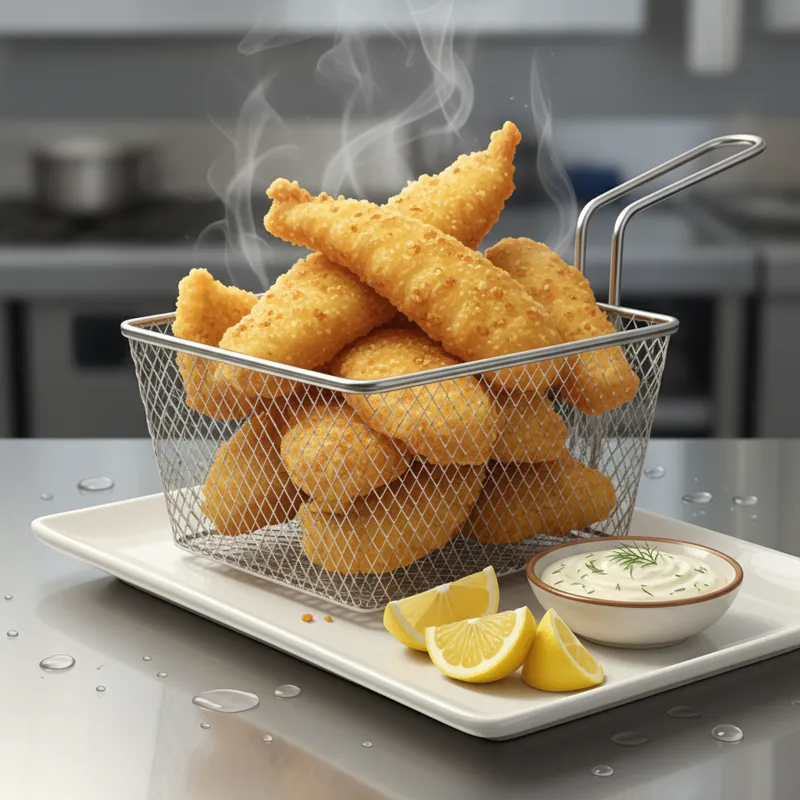
Many home cooks might wonder if a specialized fish fryer is truly necessary when a large pot and a stovetop can technically deep-fry. The answer, for consistently superior results, is a resounding yes. Dedicated fish fryers offer precise control over variables that are critical for perfectly crispy fish, which a standard pot simply can’t match. Firstly, temperature regulation is crucial. Fish, especially delicate fillets, requires a very specific oil temperature to cook through evenly without becoming greasy or burning the exterior. Most dedicated deep fryers feature thermostats that maintain oil within a tight range, often between 350-375°F (175-190°C), ensuring optimal Maillard reaction for browning and crisping. This prevents the oil temperature from dropping excessively when cold food is added, a common issue with stovetop frying that leads to soggy results. Secondly, safety and capacity are significant considerations. Frying large batches of fish in an open pot of hot oil poses a splash risk and makes temperature management difficult. Specialized fryers often come with splatter guards, lid closures, and sturdy baskets that make submersion and retrieval of food much safer and cleaner. Outdoor propane fish cookers, in particular, are designed for high-volume frying away from indoor hazards. Finally, the design of a fish fryer is optimized for the task. Deep fryer baskets are engineered to hold food securely and allow for efficient oil drainage. Air fryers use powerful convection fans and specific basket designs to maximize airflow around the fish, achieving a crispy exterior with minimal oil. This thoughtful design leads to a better end product: fish that is cooked through, flaky on the inside, and dependably crispy on the outside, every single time.
Deep Fryer vs. Air Fryer for Fish: Understanding the Mechanisms
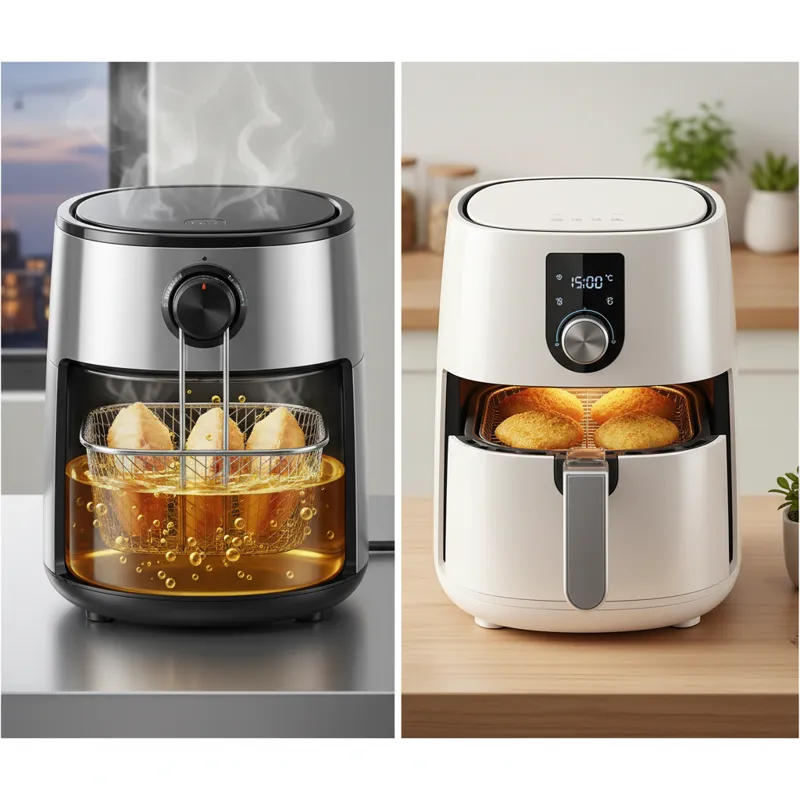
Choosing between a deep fryer and an air fryer for fish comes down to understanding their fundamental operational mechanisms and what results you prioritize. Both can deliver crispy fish, but they do it in distinct ways.
The Deep Fryer: Classic Crispness Through Oil Conduction
A traditional deep fryer works by submerging food entirely in hot cooking oil. The primary heat transfer mechanism is conduction from the hot oil directly to the surface of the fish, combined with some convection as the oil circulates. When fish is introduced into hot oil (typically 350-375°F), the surface moisture rapidly vaporizes, creating a crust. This rapid water displacement allows the starches and proteins in the batter or breading to undergo the Maillard reaction, resulting in a golden-brown, intensely flavorful, and audibly crispy exterior. The oil’s high thermal mass and even contact ensure rapid, consistent cooking across the entire surface. This method is unmatched for achieving a truly rich, satisfying crunch and often leads to a more succulent interior because the quick crust formation locks in moisture.
The Air Fryer: Convection-Powered Crispness with Less Oil
An air fryer operates more like a powerful, compact convection oven. It circulates super-heated air (again, around 350-400°F) rapidly around the food using a fan. This intense convection heating browns and crisps the food’s exterior. While it typically uses a fraction of the oil compared to deep frying – often just a light coating or spray – the high heat and forced air flow mimic some aspects of deep frying by dehydrating the surface and promoting crispness. For fish, an air fryer can yield a very good crispy texture, often described as ‘crunchy baked,’ but it rarely replicates the specific, deep-fried mouthfeel and richness derived from direct oil contact. It’s an excellent choice for those seeking a healthier alternative or wanting to avoid the mess and oil consumption of deep frying.
Practical Pros and Cons for Fish
- Deep Fryer Pros: Unrivaled crispiness and flavor, juicy interior due to rapid cooking, consistent browning, excellent for battered fish.
- Deep Fryer Cons: Uses a significant amount of oil, requires careful oil disposal, potential for mess and lingering odors, generally higher calorie count.
- Air Fryer Pros: Significantly less oil (healthier option), easier cleanup, faster preheat, versatile for other foods, less mess and odor.
- Air Fryer Cons: Crispy texture can be slightly different (more ‘baked’ than ‘fried’), smaller capacity usually, not ideal for very wet batters, may require flipping for even crisping.
Understanding these distinctions is key to choosing the right tool for your preferred style of crispy fish.
Factors to Consider When Choosing a Fish Fryer
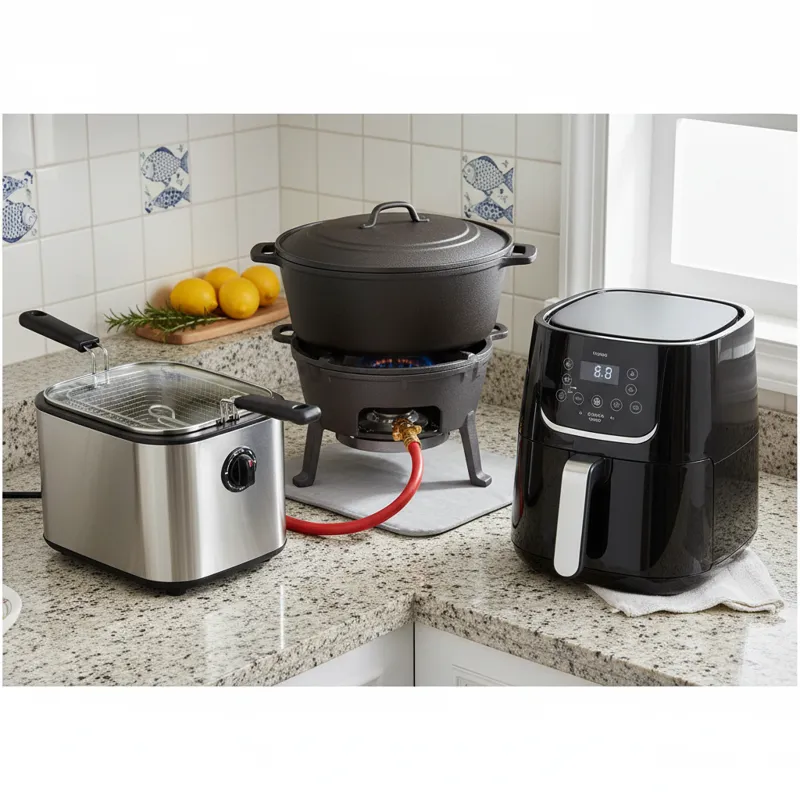
Selecting the ideal fish fryer isn’t a one-size-fits-all decision. Your cooking habits, available space, desired capacity, and preferred level of oil use will all influence the best choice. Here’s a breakdown of the critical factors:
Capacity and Size
How much fish do you typically fry at once?
- Small (1-2 servings): Compact electric deep fryers or smaller air fryers (2-4 quart) are perfect for individuals or couples. They heat up quickly and take up minimal counter space.
- Medium (3-6 servings): Mid-sized electric deep fryers (3-4 liters oil capacity) or larger air fryers (5-7 quart) balance performance with footprint, suitable for families.
- Large/Party Size (7+ servings): This is where outdoor propane fish cookers shine. With large pots (often 30+ quarts), they can handle substantial batches, ideal for gatherings or backyard fish fries. Some larger electric deep fryers (4-6 liters) can also manage this, but outdoor options are generally preferred for safety and odor.
Power Source: Electric or Propane/Gas
- Electric Deep Fryers:
- Pros: Designed for indoor use, precise temperature control, self-contained, often include safety features like cool-touch exteriors and automatic shut-off. Clean-up can be easier with drain spouts and removable parts.
- Cons: Slower heat recovery with larger batches, generally smaller capacity than propane, can cause lingering odors indoors.
- Propane/Gas Fish Cookers (Outdoor):
- Pros: Extremely powerful burners mean rapid heating and excellent temperature recovery, ideal for very large batches, keeps cooking odors outside, often more durable for outdoor environments.
- Cons: Requires propane tank (and refills), outdoor use only, less precise temperature control (manual adjustment of flame), can be bulkier to store.
- Electric Air Fryers:
- Pros: Indoor use, extremely low oil requirement, versatile, compact, generally very easy to clean.
- Cons: Smaller capacity than most deep fryers, takes longer for deep-fried texture, can’t handle wet batters as well.
Temperature Control and Recovery
Precise temperature control is vital. Look for fryers with adjustable thermostats that accurately maintain the set temperature. For deep fryers, ‘temperature recovery’ refers to how quickly the oil returns to the desired temperature after cold food is added. Better recovery prevents soggy, oil-logged fish. Propane units generally excel here due to higher BTUs.
Safety Features
Hot oil poses risks. Essential safety features include:
- Cool-touch exteriors: Reduces burn risk.
- Automatic shut-off: Prevents overheating.
- Breakaway magnetic cords: Disconnects if tugged, preventing spills.
- Lids with viewing windows: Allows monitoring without opening.
- Sturdy baskets with cool-touch handles: For safe food retrieval.
- Splash guards: Especially for outdoor units.
Ease of Cleaning
Cleaning can be the most dreaded part of frying. Look for:
- Drain valves: For easy oil emptying (essential for deep fryers).
- Removable components: Baskets, heating elements, oil reservoirs that are dishwasher safe.
- Non-stick coatings: Makes residue easier to wipe away.
- Oil filtration systems: Some advanced deep fryers can filter and store oil for reuse, greatly simplifying the process.
Material and Durability
Stainless steel is durable, easy to clean, and resists corrosion, making it a popular choice for both deep and air fryers. Aluminum pots for propane fryers are lightweight and conduct heat well. Consider the overall build quality for longevity, especially if it’s an outdoor unit exposed to elements.
Additional Features
- Timers: Many air fryers and some electric deep fryers have integrated timers.
- Pre-set cooking programs: Common on air fryers for various foods.
- Odor filters: Some indoor electric deep fryers include charcoal filters to minimize lingering smells.
- Baskets: Multiple baskets or dividers can be useful for cooking different items simultaneously or for smaller batches.
Location of Use (Indoor vs. Outdoor)
This is a primary decision. Electric and air fryers are designed for indoor use. Propane fryers are strictly for outdoor use due to carbon monoxide risks and fire hazards associated with open flames and large volumes of hot oil. When setting up an outdoor fryer, ensure it’s on a stable, non-combustible surface away from structures and children.
Our Top 10 Best Fish Fryers for 2025
Based on performance, features, safety, and user satisfaction trends observed throughout 2025, here are the top 10 fish fryers that continue to deliver exceptional results in 2026. This selection includes a mix of electric deep fryers, outdoor propane cookers, and air fryers, catering to various needs and preferences.
1. Cuisinart CDF-200 Compact Deep Fryer
A fantastic entry-level electric deep fryer for indoor use, known for its rapid heat-up and efficient temperature recovery. It holds 3.4 liters of oil and can fry up to 2.3 pounds of food. Its compact stainless steel design fits well on most countertops, and the removable components make cleaning straightforward. It’s ideal for smaller families or couples who want a quick, dependable indoor deep-fried fish.
2. Masterbuilt MB20010124 Electric Fryer, Boiler, Steamer (XL)
This versatile electric unit is a true multi-tasker, but it excels as an indoor deep fryer for larger batches. With a 30-cup oil capacity (about 7 liters), it’s capable of frying whole fish or large quantities of fillets. The dual cooking baskets are a major plus. Its magnetic breakaway cord and thermostat control enhance safety, making it a solid choice for those needing more capacity indoors.
3. Presto DualDaddy Electric Deep Fryer
The Presto DualDaddy stands out for its unique design: two separate frying compartments, each with a 1.5-liter oil capacity. This allows you to fry different types of fish or even fish and chips simultaneously without flavor transfer, at optimal temperatures. It’s simple, efficient, and lacks complex controls, making it user-friendly. Cleaning is easy with its non-stick surface.
4. Bayou Classic 42-Quart Stainless Steel Fryer/Boiler
For serious outdoor frying, the Bayou Classic 42-Quart is a powerhouse. This robust stainless steel pot and high-pressure propane burner system is designed for massive quantities, making it perfect for large gatherings or commercial-style fish fries. Its sheer capacity and powerful heat make it an undisputed champion for outdoor cooking. Just be sure to set it up on a stable, heat-resistant surface away from any flammable materials. This setup is a classic for a reason, delivering results that are hard to beat in terms of speed and volume.
5. Char-Broil The Big Easy Oil-less Liquid Propane Turkey Fryer (also great for fish)
While marketed for turkeys, “The Big Easy” is an excellent oil-less fryer for fish. It uses infrared heat from a propane burner to cook food evenly and crispy without any oil, significantly reducing calories and cleanup. The lack of an oil bath makes it incredibly safe and simple to use outdoors, perfect for whole fish or larger fillets that benefit from radiant heat for crisping.
6. Ninja Foodi Smart XL 6-in-1 Air Fryer
As an air fryer, the Ninja Foodi Smart XL is a standout for fish. Its large 10-quart capacity can handle substantial batches, and its Smart Cook System with an integrated thermometer ensures precise cooking every time. It uses powerful convection to create a crisp exterior on fish with minimal oil, and its multiple functions (roast, bake, dehydrate) add to its versatility in a busy kitchen.
7. Philips Premium Digital Air Fryer XXL with Fat Removal Technology
The Philips XXL continues to be a top contender for air frying, thanks to its patented “fat removal technology” that captures excess fat from food. For fish, this means an even healthier result without sacrificing crispiness. Its large capacity and precise digital controls make it easy to achieve perfectly cooked, flaky, and crispy fish fillets or even fish tacos.
8. T-fal Easy Pro FR1014001 Stainless Steel Deep Fryer
A highly regarded electric deep fryer, the T-fal Easy Pro is praised for its compact size, powerful 1500-watt heating element, and 3-liter oil capacity. It heats up quickly and maintains temperature well, making it efficient for frying fish. The professional-grade immersion heating element ensures consistent results, and its stainless steel finish is both durable and easy to maintain.
9. KRUPS KJ5000 Deep Fryer with Odor Filter
The KRUPS KJ5000 is an excellent choice for indoor frying, specifically addressing the common complaint of lingering oil odors. It features an integrated active carbon filter that significantly reduces cooking smells. With a 3.5-liter oil capacity, it’s suitable for family-sized portions of fish, and its convenient lifting handle for the basket makes operation safe and easy.
10. Gotham Steel Large Air Fryer with Digital Controls
For an affordable yet effective air frying option, the Gotham Steel Large Air Fryer delivers. Its non-stick interior, digital touch controls, and 7-quart capacity make it a practical choice for everyday fish preparation. It consistently produces crispy results for breaded and unbreaded fish, proving that you don’t need to break the bank for quality air-fried seafood.
Getting Perfectly Crispy Fish Every Time: Tips and Techniques
Having the best fish fryer is only half the battle. Mastering the technique ensures restaurant-quality crispiness every time. Here’s how:
1. Oil Selection and Management
The right oil is crucial. High smoke point oils like peanut, canola, sunflower, or vegetable oil are ideal for deep frying fish because they can withstand the high temperatures (350-375°F or 175-190°C) without breaking down or imparting off-flavors. Avoid olive oil or butter for deep frying due to their low smoke points. For more on how heat can impact different foods, you might be interested in specialized cooking methods like those described for Sous Vide Cookers.Filtering: After each use, let the oil cool completely, then strain it through a fine-mesh sieve or cheesecloth to remove food particles. This extends the oil’s life and prevents residual bits from burning in subsequent uses, which can impart bitter flavors.Disposal: Never pour used oil down the drain. Collect it in a sealed container and dispose of it with your regular trash or check local recycling options.
2. Precise Temperature Control
This is non-negotiable for crispy fish.
- Deep Fryer: Ensure your oil is fully preheated to the target temperature (350-375°F) before adding fish. Too cold, and the fish absorbs too much oil, becoming greasy. Too hot, and the exterior burns before the inside cooks. Many fryers have indicator lights for this.
- Air Fryer: Preheat the air fryer for at least 5 minutes to ensure consistent heat. Most fish cooks well between 375-400°F (190-200°C).
A good rule of thumb is to maintain the oil temperature for cooking fish within the 350-375°F range. According to FoodSafety.gov, ensuring proper cooking temperatures is vital not just for texture but also for food safety.
3. Batter/Breading Consistency
The right coating makes all the difference.
- For Deep Frying: A light, thin batter (like beer batter) or a well-adhered breading (flour-egg-breadcrumb sequence) will crisp up beautifully. Ensure the fish is patted very dry before coating to help the batter adhere and prevent excess moisture from rapidly dropping oil temperature.
- For Air Frying: Avoid very wet batters as they tend to drip and not crisp well in an air fryer. Dry breadings or a light flour coating work best. A spray of oil on the breaded fish before air frying helps achieve extra crispiness.
4. Avoid Overcrowding the Basket
This is one of the most common mistakes. Overcrowding significantly drops the oil or air temperature, leading to soggy, poorly cooked fish. Fry fish in small batches, allowing ample space around each piece for even cooking and browning. This ensures the temperature quickly recovers, vital for a crisp crust.
5. Doneness Checks
Fish is cooked when it flakes easily with a fork and reaches an internal temperature of 145°F (63°C). While the crispy exterior is a good visual cue, always confirm doneness, especially with thicker fillets, to ensure food safety and optimal texture.
6. Safety Practices
Always place your fryer on a stable, flat surface away from the edge of the counter or any flammable materials. Never leave a deep fryer unattended when it’s on. Be careful when lowering and raising the basket to avoid splashes. For a deeper understanding of food preparation and kitchen safety, resources like Wikipedia’s article on Food Safety offer comprehensive details.
What Most People Get Wrong When Frying Fish
Even with a top-tier fish fryer, certain fundamental errors can derail your quest for crispy perfection. Recognizing these common pitfalls can dramatically improve your results.1. Not Preheating the Oil Enough: This is perhaps the biggest culprit for greasy, soggy fish. If the oil isn’t hot enough (350-375°F), the fish’s exterior won’t immediately seal, and it will absorb too much oil before a crust forms. Always wait for the fryer’s indicator light or use a thermometer to confirm the correct temperature.2. Overcrowding the Fryer Basket: As mentioned earlier, dumping too much cold fish into hot oil rapidly lowers the oil’s temperature. This causes a drastic slowdown in cooking, leading to oil-logged, less crispy results. Fry in smaller batches, allowing the oil temperature to recover between additions.3. Not Drying the Fish Properly: Any surface moisture on your fish, even if breaded, will instantly cool the oil and steam the fish rather than fry it. Pat fish thoroughly dry with paper towels before applying batter or breading. This step is critical for a truly crispy crust.4. Using the Wrong Type of Oil: Oils with low smoke points (like extra virgin olive oil) will break down, burn, and impart unpleasant flavors at deep frying temperatures. Stick to high smoke point, neutral-flavored oils like peanut, canola, or vegetable oil.5. Neglecting Oil Maintenance: Using old, dirty oil (full of burned food particles) will negatively affect the flavor and appearance of your fish. The oil can also break down further, leading to more absorption and less crispiness. Filter your oil after each use and replace it regularly.6. Not Seasoning the Batter/Breading: Bland fish is a common complaint. Don’t rely solely on seasoning the fish itself. Incorporate salt, pepper, garlic powder, onion powder, or your favorite spices directly into your batter or breading for an extra layer of flavor.7. Rushing the Cook Time: Pulling fish out too early results in undercooked, potentially unsafe fish, or a crust that hasn’t fully developed its crispness. While speed is a benefit of frying, ensure the fish is golden brown and flakes easily before removing it. By avoiding these common mistakes, you’ll be well on your way to consistently producing perfectly crispy, flavorful fried fish.
Maintenance and Longevity of Your Fish Fryer
Proper care and maintenance significantly extend the life of your fish fryer and ensure it continues to deliver optimal performance.1. Immediate Post-Frying Cleanup (After Cooling): Once the oil has completely cooled, drain it (if your fryer has a valve) or carefully pour it out for filtering and storage/disposal. Do this as soon as the oil is cool enough to handle safely. Don’t let oil sit in the fryer for days; residual food particles can degrade it faster and make cleaning harder.2. Disassembly and Washing: Most modern fryers have removable components like the oil reservoir, heating element (on electric models), baskets, and lids. Refer to your manual, but typically, non-electric parts can be washed with hot, soapy water. Some may even be dishwasher-safe. For the main unit (especially electric ones), wipe down the exterior with a damp cloth. Avoid submerging any electrical components in water.3. Stubborn Residue: For baked-on grease or batter, a mixture of hot water and a strong dish soap, allowed to soak, can work wonders. A plastic scrubber or non-abrasive sponge is usually sufficient. Avoid steel wool or harsh abrasive cleaners that can scratch non-stick surfaces or stainless steel.4. Oil Management: If you reuse oil, ensure it’s filtered after each use and stored in an airtight container in a cool, dark place. The oil should be replaced after 3-5 uses, or sooner if it darkens significantly, foams excessively, or develops an off-odor. You’ll find many more kitchen storage tips for things like bulk tea or specialized teaware, similar to those for a Porcelain Tea Set, that emphasize cleanliness and organization.5. Propane Fryer Care: For outdoor propane units, clean the pot thoroughly after each use. Store the burner and hose assembly in a dry, protected area. Periodically check hoses for cracks or leaks and ensure burner ports are clear of debris.6. Air Fryer Specifics: For air fryers, ensure the basket and crisper plate are cleaned after every use to prevent buildup that can affect performance and cleanliness. Wipe down the interior heating element and fan area occasionally with a damp cloth once completely cooled. By integrating these simple steps into your routine, your fish fryer will remain a reliable tool for delicious, crispy fish for years to come.
Frequently Asked Questions (FAQ)
Can I use an air fryer for frozen fish?
Yes, absolutely! Air fryers are excellent for cooking frozen breaded fish fillets or fish sticks. The circulating hot air crisps the exterior beautifully while cooking the interior evenly. You usually don’t need to thaw them first; just follow the package directions, often adding a few extra minutes to the cooking time and flipping halfway for even crisping.
What’s the best oil for deep frying fish?
For deep frying fish, high smoke point, neutral-flavored oils are best. Popular choices include peanut oil, canola oil, vegetable oil, and sunflower oil. These oils can withstand the high temperatures (350-375°F) required for frying without smoking or imparting unwanted flavors to your fish.
How do I dispose of used frying oil?
Never pour used cooking oil down the drain, as it can clog pipes. Instead, let the oil cool completely, then pour it into an old, non-recyclable container (like a milk carton, plastic bottle, or coffee can) with a lid. Once sealed, you can throw it in your regular trash. Some communities also have recycling programs for cooking oil.
Is deep frying fish healthy?
Deep frying, by its nature, involves cooking food in a significant amount of oil, which adds calories and fat. While delicious, it’s generally not considered the “healthiest” cooking method compared to baking, grilling, or steaming. Using an air fryer or an oil-less fryer like the Char-Broil Big Easy is a much healthier alternative if you want crispy fish with less fat.
Can I use my indoor electric fryer outdoors?
It’s generally not recommended to use indoor electric fryers outdoors unless the manufacturer specifically states it’s safe for outdoor use and you have a weatherproof outlet. They are not designed to withstand outdoor elements like humidity or rain, and their electrical components may not be suited for such conditions. For outdoor frying, a dedicated propane fish cooker is the safest and most effective option. For another example of specialized kitchen equipment, consider the design and function of a Tea Ball – it’s designed for a very specific indoor task, just as electric fryers are for indoor cooking.
Conclusion
Choosing the right fish fryer is a pivotal step towards enjoying consistently crispy, perfectly cooked fish at home. Whether your preference leans towards the classic, rich crunch of deep-fried fish or the healthier, less oily crispness achieved with an air fryer, the market offers exceptional models for every need. By understanding the mechanistic differences between deep and air frying, considering crucial factors like capacity, power source, safety features, and committing to proper techniques and maintenance, you’re well-equipped to make an informed decision.
The top fryers from 2025, ranging from robust outdoor propane setups to sleek indoor electric and air fryers, continue to deliver outstanding performance in 2026. Invest wisely, follow the best practices, and you’ll soon be serving up restaurant-quality fried fish that’s a true delight for family and friends. Happy frying!


