

The world of comic books has always been fascinating, a vibrant tapestry of storytelling and imagination. For most, collecting is a hobby, a way to connect with beloved characters and narratives. But for a select few, it’s an investment, an intense hunt for rare artifacts that command astonishing prices. As we navigate 2026, the market for vintage comics continues its remarkable ascent, with certain issues consistently shattering previous sales records. When people ask, “what is the most expensive comic book?” they’re often surprised to learn that these aren’t just high-value collectibles; they’re bona fide cultural relics, often trading hands for figures that rival luxury real estate or fine art.
Understanding the Mechanics Behind Comic Book Value

To truly grasp why certain comic books reach astronomical prices, we need to look beyond mere sentimentality. It’s a confluence of factors, each contributing significantly to market demand and scarcity. This isn’t just about nostalgia; it’s a sophisticated market driven by historical significance, verifiable rarity, and impeccable condition.
The Pillars of Value: Rarity, Condition, and Significance
At the heart of any collectible’s value is scarcity. For comic books, true rarity comes from a combination of low print runs, poor preservation over decades, and the simple fact that many were read, abused, and discarded. Unlike fine art or rare coins, comic books were ephemeral, printed on cheap paper, and not meant to last. Those that survived, especially in high grades, are therefore inherently rare.
Condition is paramount. The difference between a “good” copy and a “near mint” copy of the same rare comic can literally be millions of dollars. This is where professional grading services like Certified Guaranty Company (CGC) and Comic Book Certification Service (CBCS) come in. They meticulously inspect and assign a numerical grade (from 0.5 to 10.0) to a comic, then encapsulate it in a tamper-evident slab. This objective, third-party authentication provides confidence to buyers and is non-negotiable for high-value transactions. A single crease, a missing staple, or even faded colors can drastically reduce a book’s grade and, consequently, its market value.
Historical and cultural significance are the final, often intangible, drivers. The first appearance of an iconic character (Superman, Batman, Spider-Man), a pivotal story event, or the debut of a major publisher all imbue a comic with historical weight. These aren’t just stories; they’re the foundational myths of modern pop culture, pieces of Americana that define generations.
The Grading Standard: CGC and the Slab

In the high-stakes world of vintage comic collecting, the concept of a “slabbed” book is everything. Before the turn of the millennium, condition assessment was subjective and often led to disputes. CGC, founded in 2000, revolutionized the market by providing an impartial, standardized grading system. They examine every aspect of a comic: cover gloss, staple rust, page quality, presence of restoration, and more.
A high-grade comic, say a 9.0 or 9.4, is exceedingly rare for golden age issues (1930s-1950s) because of their age and the quality of materials used. These grades represent copies that have been preserved with astonishing care. The slab itself protects the comic from further damage and verifies its authenticity and grade, acting as a crucial trust factor in multi-million dollar transactions. Without this standardized system, the current market for ultra-high-value comics simply wouldn’t exist as it does in 2026.
What is the Most Expensive Comic Book? 5 Record-Breaking Sales
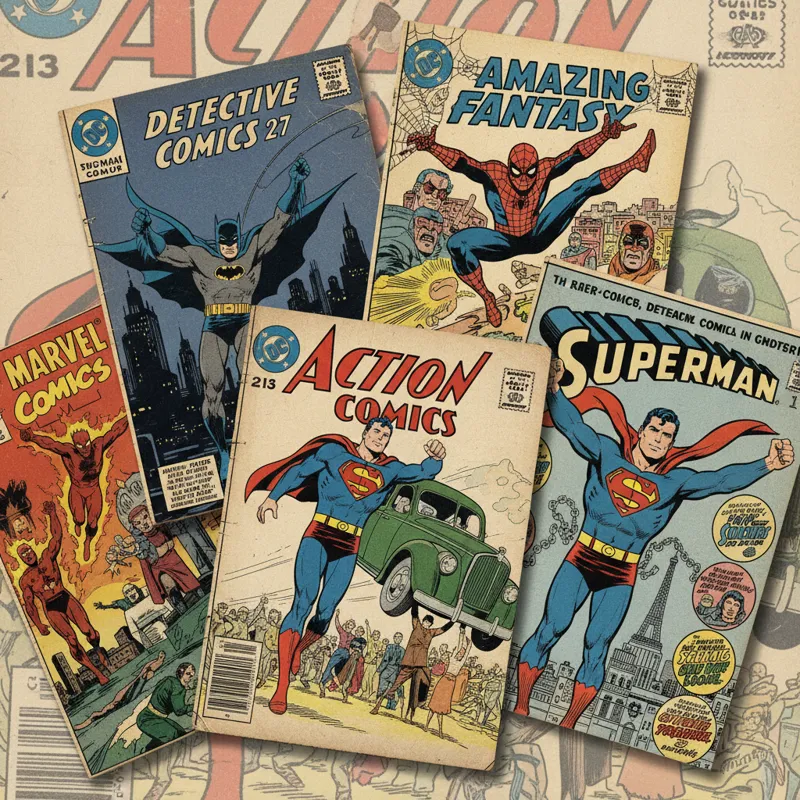
Determining “what is the most expensive comic book” isn’t always a straightforward answer, as records are consistently challenged and broken. The title often shifts between a handful of incredibly rare and historically significant issues. While specific sales figures fluctuate based on the particular grade of the book sold, certain titles consistently dominate the top tier. Here, we delve into five of the most iconic, record-breaking sales that define the apex of the comic book collecting market.
1. Action Comics #1 (1938) — The Dawn of Superheroes
Significance: This is it. The undeniable genesis. Action Comics #1 introduced the world to Superman, the first true superhero, setting the template for virtually every costumed crime-fighter that followed. Published by National Allied Publications (later DC Comics) in June 1938, it marks the beginning of the Golden Age of Comics. Its cultural impact is immeasurable, birthing an entire genre.
Record Sales: Action Comics #1 has repeatedly held the title of the most expensive comic book ever sold.
- In April 2021, a CGC 8.0 copy (known as the “Rocket Copy”) sold for an astounding $3.25 million via ComicConnect.
- However, this record was eclipsed in January 2022 when a different, slightly lower-grade copy (CGC 6.0) that had been restored with a new cover, fetched an eye-watering $3.18 million in a private sale, highlighting the complex factors of restoration.
- The current reigning champion is a CGC 9.0 copy, which sold for $6 million in April 2024 through Heritage Auctions. This particular copy, from the pedigree “Kansas City Collection,” is one of the highest-graded copies known, making its staggering price reflective of its incredible condition and rarity. Only a handful of copies are known to exist in this superior condition.
With an estimated print run of just 200,000 copies and even fewer surviving, let alone in high grade, it’s no wonder this comic continues to push market boundaries. Each sale is a testament to its singular place in history.
2. Detective Comics #27 (1939) — Introducing the Dark Knight
Significance: Following closely on Superman’s heels, Detective Comics #27, published in May 1939, gave the world Batman, a character who would become Superman’s thematic counterpoint and an enduring icon in his own right. This comic, published by Detective Comics, Inc. (also later part of DC Comics), debuted Batman in “The Case of the Chemical Syndicate.” While Superman was an alien god, Batman was a human driven by vengeance and intellect, a concept that resonated deeply and expanded the superhero archetype.
Record Sales: Detective Comics #27 has seen its value skyrocket, particularly for pristine copies.
- The highest public sale to date was in November 2020, when a CGC 7.0 copy sold for $1.5 million at Heritage Auctions.
- While a definitive higher-grade sale hasn’t publicly topped Action Comics #1’s recent peak, experts widely believe that a CGC 9.0 or higher Detective Comics #27 would easily command multiple millions, potentially rivaling or even exceeding the $6 million mark, if one ever came to market. As of early 2026, very few high-grade copies are known to exist, making any potential sale a monumental event.
The dark, mysterious nature of Batman has captivated generations, ensuring that his debut issue remains one of the most coveted and valuable comics on the planet. Its historical importance as the second major superhero debut is undeniable.
3. Superman #1 (1939) — The First Solo Superhero Title
Significance: While Superman debuted in Action Comics #1, his first self-titled comic, Superman #1, published in Summer 1939, solidified his status as a standalone cultural phenomenon. This issue retells his origin story and features additional adventures, cementing the character’s appeal and proving the viability of a single character carrying an entire publication. It’s a landmark for showing the market could sustain solo superhero titles, a critical step in the industry’s evolution.
Record Sales: Superman #1 has also commanded impressive prices, underscoring its pivotal role in comic history.
- In January 2022, a CGC 7.0 copy (which had a restored cover) sold for $2.6 million through ComicConnect. This specific book has an interesting story, having been part of the “pedigree” collection of Nicolas Cage before it was stolen and later recovered. The fact it sold for such a high price even with restoration speaks volumes about its inherent value.
- Another significant sale occurred in December 2021, when an unrestored CGC 8.0 copy fetched $1.62 million at Heritage Auctions.
The market clearly differentiates between unrestored and restored comics, but the immense demand for key issues like Superman #1 ensures that even high-grade restored copies can reach seven figures. It truly embodies what is the most expensive comic book in terms of character legacy.
4. Amazing Fantasy #15 (1962) — The Marvel Age Begins
Significance: Shifting from DC’s Golden Age dominance, Amazing Fantasy #15 marks the true beginning of the Marvel Age. Published in August 1962, this issue introduced Spider-Man, a character unlike any before him. Peter Parker was a relatable, awkward teenager grappling with personal problems alongside superhuman responsibilities. This humanized approach to heroism, spearheaded by Stan Lee and Steve Ditko, launched Marvel Comics into the industry’s forefront and redefined what a superhero could be.
Record Sales: Amazing Fantasy #15 has seen its value soar, particularly in recent years as Marvel’s cinematic universe expanded its global reach.
- In September 2021, a truly breathtaking CGC 9.6 copy of Amazing Fantasy #15 sold for an astounding $3.6 million at Heritage Auctions. This sale made it the most expensive comic book from the Silver Age (1956-1970) and remains a record for this particular issue. The exceptional grade of this copy, combined with Spider-Man’s enduring popularity, fueled this unprecedented price.
The blend of groundbreaking character development and the rise of a new comic publishing powerhouse makes Amazing Fantasy #15 a cornerstone of modern collecting. Its influence on subsequent generations of heroes and storytellers is profound.
5. Marvel Comics #1 (1939) — The Timely Beginnings of Marvel
Significance: Before it was Marvel, it was Timely Comics. Marvel Comics #1, published in October 1939, is the very first comic book from the company that would eventually become Marvel. This issue introduced a host of characters, including the original Human Torch and the Sub-Mariner, laying the groundwork for the vast universe that would later be populated by Spider-Man, the Avengers, and the X-Men. It’s a foundational piece, representing the formative years of one of the world’s most recognizable entertainment brands.
Record Sales: As a true origin point for Marvel, this issue commands significant attention and high prices.
- In November 2019, a CGC 9.4 “Pay Copy” (a copy used by the publisher to track payments to creators, containing notations of actual payments) sold for $1.26 million at Heritage Auctions. The unique provenance of this copy added to its value beyond its already impressive grade.
- In March 2022, another very high-grade copy (CGC 9.2) sold for $2.4 million in a private sale, reaffirming its status as one of the most expensive comic books and highlighting continued market appreciation.
The “Pay Copy” record was a significant moment, but the 2022 sale truly cemented Marvel Comics #1 as a top-tier investment, especially as collectors look to own the very first publication from the global powerhouse that is Marvel.
Things People Usually Miss About High-Value Comics
When you hear about these multi-million-dollar sales, it’s easy to focus on the headline figure and miss some critical nuances that differentiate genuine record-breakers from merely expensive comics. The market for what is the most expensive comic book isn’t just about the title; it’s a deep rabbit hole of specifics.
One common misconception is assuming every copy of a key issue is equally valuable. As we’ve seen, the grade makes an enormous difference. A low-grade Action Comics #1 might sell for hundreds of thousands, still a fortune, but a fraction of a high-grade copy. Provenance, the documented history of ownership, also plays a huge role. Pedigree collections, like the “Kansas City Collection” or the “Edgar Church” collection, are known for their exceptional preservation, adding a premium to any book traced back to them. Think of it like a stamp collection, where `the brown Ragdoll cat` might be rare and beautiful, but knowing its specific lineage or where it won its show titles adds another layer of appreciation for those in the know.
Another overlooked aspect is the role of restoration. While some restoration is professionally done and disclosed (often noted on the grading label), it almost always decreases a comic’s value compared to an unrestored copy of the same grade. An amateur attempt at tape repair can effectively destroy the value. Understanding the subtle differences in restoration levels, from “conservation” to “extensive,” is crucial for serious buyers. Collectors often meticulously inspect every detail, much like a veterinarian might review `7 proven signs in the cat dental chart` to ensure a pet’s health. It’s about understanding the deep, often hidden, characteristics that define authenticity and condition.
Furthermore, the market isn’t entirely stable. While foundational issues tend to appreciate over time, speculative bubbles can form around newer “key” issues or characters that suddenly gain popularity due to media adaptations. Savvy collectors and investors understand that the true enduring value lies in historical significance and extreme rarity in high grades, not just temporary hype. These are assets, and like any investment, they carry risks and require informed decisions. The visual appeal of certain comic art is undeniable, akin to how `7 best reasons to try cat eye gel polish` might draw attention in a different aesthetic field; however, sustained value in comics stems from more than just surface beauty.
The Future of High-Value Comic Collecting in 2026
As we move deeper into 2026, the comic book market continues to evolve. While digital comics and NFTs have carved out their own niches, the allure of the physical, tangible artifact remains incredibly strong for high-value collectors. The sense of holding a piece of history, an original artifact that literally changed the course of popular culture, is unmatched by any digital counterpart.
The investment aspect is also gaining broader recognition. Major financial news outlets now regularly report on record-breaking comic sales alongside art and luxury goods markets. This mainstream acceptance, coupled with an increasing number of collectors from diverse backgrounds, suggests continued robust demand for the truly rare and significant issues. For instance, Forbes has extensively covered the comic book market’s growth, noting how these collectibles have become significant alternative investments for high-net-worth individuals, often seeing returns that outpace traditional assets. You can find their insights on `Forbes.com` about collectible markets if you’re interested in the broader investment context.
However, accessibility to these top-tier comics remains incredibly limited. With so few high-grade copies of Action Comics #1 or Detective Comics #27 in existence, the market is constrained by supply. This scarcity, combined with ever-increasing demand from a global pool of collectors, is precisely why we’ll likely see new record-breaking sales in the coming years. What is the most expensive comic book today may be surpassed tomorrow, but the foundational titles will always remain at the pinnacle.
People Also Ask
Why are old comic books so expensive?
Old comic books become expensive due to a combination of extreme rarity (most were destroyed or deteriorated), exceptional condition (very few survived in high grades), and immense historical or cultural significance (first appearances of iconic characters, pivotal storylines). Professional grading and authentication further solidify their value in the market.
What makes a comic book rare?
A comic book is rare if it had a low initial print run, if very few copies survived over the decades, and especially if very few survived in high, collectible grades. Errors or unique variants from the printing process can also contribute to rarity.
How do I know if my comic book is valuable?
The best way to determine if your comic book is valuable is to research its issue number, publication date, and any key character appearances. Cross-reference this with recent sales data on reputable auction sites like Heritage Auctions or ComicConnect. For an accurate assessment of condition, consider professional grading from CGC or CBCS, as grade is a massive determinant of value.
What is the most expensive Marvel comic book?
Currently, the most expensive Marvel comic book is Amazing Fantasy #15 (1962), which features the first appearance of Spider-Man. A CGC 9.6 copy sold for $3.6 million in September 2021. Marvel Comics #1 (1939), the first comic from Timely (which became Marvel), is also exceptionally valuable, with a CGC 9.2 copy selling for $2.4 million in 2022. You can delve deeper into the historical context of comic book publishing on sites like `Wikipedia.org`, which offers comprehensive overviews of various comic book ages and publishers.
Can comic books be a good investment?
Yes, certain comic books, particularly historically significant, high-grade, and truly rare issues, have proven to be excellent long-term investments, often outperforming traditional assets. However, it’s a specialized market with inherent risks. Like any collectible, values can fluctuate, and the market for less significant comics is far more volatile. Due diligence, market understanding, and professional advice are crucial if considering them as an investment.
The world of high-value comic books is more than just collecting; it’s an intricate dance of history, preservation, and cultural impact. The staggering prices paid for issues like Action Comics #1 aren’t just arbitrary figures; they’re reflections of these comics’ irreplaceable status as cornerstones of American mythology and global pop culture.


