

Gut health has moved beyond a trend and established itself as a cornerstone of metabolic and immune function in 2026. Among the functional beverages saturating the market, probiotic tea stands out because it attempts to merge two beneficial habits: hydration with antioxidant-rich compounds and the introduction of live microorganisms to the digestive tract. However, the category is confusing. Consumers often conflate fermented beverages like Kombucha with heat-stable probiotic tea bags, unaware that the biological mechanisms—and the survival rates of the bacteria—differ strictly between the two. Understanding this difference is the only way to ensure you are actually getting the functional benefits you are paying for.
The Biological Paradox: Heat vs. Bacteria
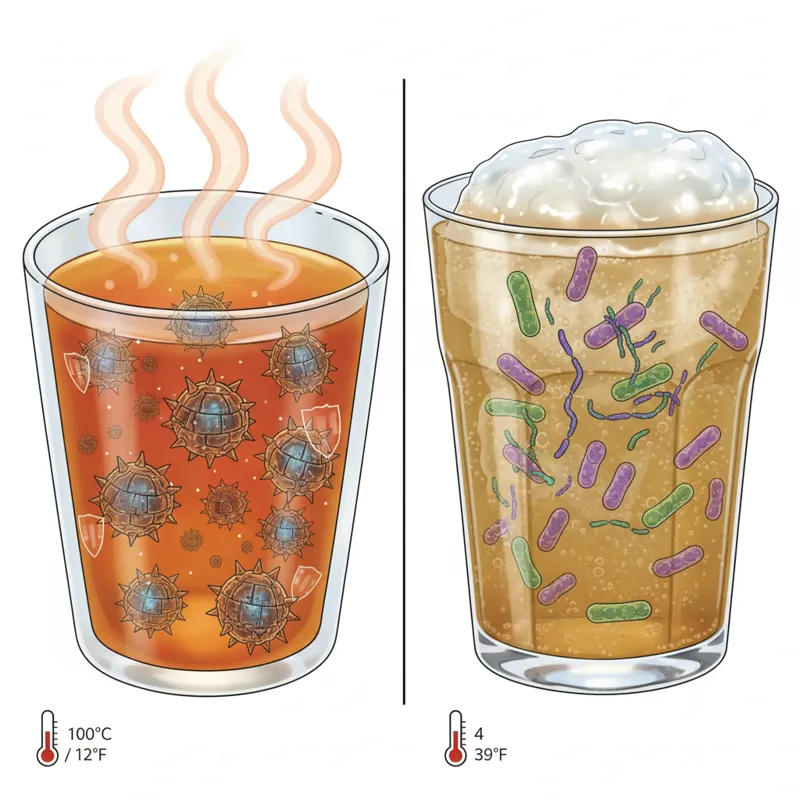
The fundamental challenge with “probiotic tea” is that most bacteria die at temperatures well below the boiling point of water. Traditional probiotics, such as the Lactobacillus and Bifidobacterium strains found in yogurt or refrigerated supplements, begin to degrade rapidly at temperatures above 115°F (46°C). Pouring boiling water (212°F/100°C) over them creates a sterile drink, not a probiotic one. To solve this, the industry utilizes two distinct delivery methods. If you are buying probiotic tea in 2026, you are choosing between:1. Fermented Cold Brews (Vegetative Cells): This includes Kombucha, Jun, and Kefir water. The bacteria are alive and active in the bottle. They require refrigeration (unless pasteurized, which kills them) and cannot be heated without destroying the colony.2. Fortified Hot Brews (Spore-Forming Bacteria): This involves specific strains, most notably Bacillus coagulans. These bacteria are dormant and encased in a natural, tough protein shell. This armor allows them to survive boiling water and the acidic environment of the stomach. They only “wake up” and colonize once they reach the intestines.
Why Spore-Forming Strains Changed the Market
The innovation that allows you to steep a tea bag without killing the probiotics relies heavily on soil-based organisms. Unlike the fragile bacteria in dairy, Bacillus coagulans (specifically strains like GBI-30, 6086) remains stable at room temperature and withstands extreme heat. When you drink a cup of hot probiotic tea, you aren’t consuming active bacteria; you are consuming spores. This is a crucial distinction for efficacy. The activation happens inside you, not in the cup. This stability makes them a practical choice for daily integration, especially if you enjoy routine beverages like Irish Breakfast Tea but want added digestive functional value without altering the flavor profile.
Analyzing the Health Claims: Energy and Immunity

The marketing behind probiotic tea often promises “boundless energy” and “bulletproof immunity.” While the mechanisms exist, the reality is more nuanced than an immediate caffeine-like boost.
The Immune Connection
Roughly 70% of the immune system resides in the gut-associated lymphoid tissue (GALT). A diverse microbiome strengthens the intestinal barrier, preventing “leaky gut” where toxins seep into the bloodstream and trigger systemic inflammation. Probiotic teas aim to support this barrier.
- Mechanism: Beneficial bacteria compete with pathogens for resources and adhesion sites on the gut wall.
- Result: Reduced systemic inflammation allows the immune system to focus on acute threats (viruses, bacteria) rather than chronic internal repair.
- Limitation: It takes weeks of consistent consumption to shift the microbiome profile. One cup will not cure a cold.
Energy Production
Bacteria do not provide energy in the same way sugar or caffeine does. Instead, they optimize how your body extracts energy from food. Certain strains synthesize B vitamins (B12, folate, and riboflavin) directly in the colon. These vitamins are essential for cellular energy production. Furthermore, by reducing digestive lethargy—that heavy feeling after eating—probiotics can indirectly improve perceived energy levels. If you are drinking a tea that uses a base high in antioxidants, such as the vibrant blue flowers used in pea flower tea, you also gain the benefit of anthocyanins, which support vascular health and blood flow.
Kombucha vs. Hot Probiotic Tea: Which is Superior?
Choosing between these two depends on your lifestyle and your tolerance for acidity and sugar.
Kombucha (The Fermented Option)
Kombucha is tea fermented with a SCOBY (Symbiotic Culture of Bacteria and Yeast).
- Pros: Contains a broader diversity of bacterial strains and organic acids (acetic acid, gluconic acid) which have antimicrobial properties.
- Cons: Often high in sugar (required for fermentation). The acidity can be harsh on sensitive tooth enamel. It must be kept cold.
- Best For: People who want a cold, carbonated soda alternative and don’t mind a sour, vinegar-like profile.
Hot Spore-Fortified Tea
This is standard tea leaves dusted with spore powder.
- Pros: Zero sugar. Zero calories. Shelf-stable. No sour taste—it tastes exactly like the base tea (Green, Black, or Herbal). Highly survivable strain.
- Cons: Limited bacterial diversity (usually single-strain).
- Best For: Daily hot tea drinkers who want a “set it and forget it” gut health habit without extra sugar.
What Most People Get Wrong
Even with the best products, user error often negates the benefits.
1. “Cooking” Your Kombucha
Some consumers try to heat their kombucha to drink it like a hot cider. This is a mistake. Once the temperature passes 115°F, you are killing the colony. You are left with a sugary, vinegary tea with no probiotic activity. If you want hot probiotic tea, you must buy the spore-fortified bags, not heat up a cold ferment.
2. The “Prebiotic” Gap
Probiotics are the seeds; prebiotics are the fertilizer. Pouring bacteria into a gut that lacks fiber is ineffective. The bacteria need something to eat. To maximize the effect of probiotic tea, it should be paired with fiber-rich foods. Some advanced tea blends now include inulin (a prebiotic fiber) directly in the bag to support the spores.
3. Storage Failures
While spore-forming bacteria are tough, moisture is their enemy before consumption. If humidity gets into your tea box, the spores may activate prematurely on the shelf, die, and become useless. Store these teas in airtight containers, similar to how you would protect the delicate aromatics of Persian Tea.
Navigating the Label: What to Look For
In 2026, regulation regarding probiotic labeling has tightened, but marketing fluff persists. Here is how to read the box like a professional.
- Look for the Strain ID: Don’t settle for the word “Probiotic.” Look for the specific alphanumeric code, such as Bacillus coagulans GBI-30, 6086 or Bacillus subtilis DE111. These codes indicate that the specific strain has been clinically studied for safety and efficacy.
- CFU Count: This stands for Colony Forming Units. For daily maintenance, a count of 500 million to 1 billion CFUs is standard. Anything less may not be sufficient to colonize the gut.
- Check the Sugar: For bottled teas, ensure the sugar content is reasonable (under 5-8g per serving). Many commercial “health” drinks carry as much sugar as a soft drink, which fuels the bad bacteria you are trying to fight.
A Note on Safety and Side Effects
When introducing exogenous bacteria to your system, a transition period is normal. Known as the Herxheimer reaction (or simply “die-off”), you might experience mild bloating, gas, or changes in bowel movements for the first few days. This usually indicates the bacteria are active and shifting the microbiome environment. However, if you are immunocompromised or have a central venous catheter, you should exercise caution. While Bacillus strains are generally recognized as safe (GRAS), introducing live cultures into a compromised system requires medical oversight. According to the National Institutes of Health (NIH), while probiotics are safe for the general population, the risk-benefit analysis changes for those with severe underlying health conditions.
Frequently Asked Questions
Can I add honey to my hot probiotic tea?
Yes. Honey has antimicrobial properties, but it will not kill the spore-forming bacteria used in hot teas (Bacillus coagulans). Just ensure the water isn’t boiling when you add raw honey if you want to preserve the honey’s own enzymes, though the probiotics themselves will survive the heat.
When is the best time to drink probiotic tea?
Consistency matters more than timing. However, drinking it with a meal is often recommended. The food raises the pH of your stomach (making it less acidic), which may help even more bacteria survive the transit to the intestines, although spore-forming strains are naturally resistant to acid.
Does probiotic tea contain caffeine?
It depends on the base. If the base is black, green, or oolong tea, it contains caffeine. If the base is herbal (like ginger, peppermint, or rooibos), it is naturally caffeine-free. Read the packaging carefully if you are sensitive to stimulants.
How long does it take to see results?
Microbiome shifts are slow. Clinical studies on Bacillus coagulans often measure results over a period of 14 to 30 days. You are unlikely to “feel” a difference after a single cup. It is a habit, not a fix.
Final Thoughts
Probiotic tea represents a convenient evolution in functional beverages, solving the historical problem of keeping bacteria alive outside of a refrigerator. By understanding the difference between the live cultures in Kombucha and the dormant spores in hot tea blends, you can choose the tool that fits your health goals. Whether you are looking to support digestion after a heavy meal or simply want to add a layer of immune support to your morning routine, the key is consistency. Treat these teas not as a medicine, but as a dietary inputs that slowly terraform your gut environment for the better.
For more insights on functional beverages and brewing techniques, explore our guides on Pea Flower Tea Benefits and the traditional methods behind Persian Tea.


