
Dining within a functioning library offers a specific type of atmosphere that standard luxury hotels cannot replicate. In the heart of Copley Square, the Boston Public Library Tea experience stands as a distinct intersection of civic history and high-end hospitality. Operated by The Catered Affair, this service utilizes the McKim Building’s architectural grandeur to elevate a traditional afternoon meal into an event that commands high demand. For visitors and locals navigating the hospitality landscape of 2026, understanding the mechanics of this venue—from the distinct room options to the reservation algorithms—is essential for securing a seat and assessing the value proposition.
The experience is not monolithic; it splits into two distinct environments: the Courtyard Tea Room and the Map Room Tea Lounge. Both reside within the historic 1895 structure, yet they serve different functions and offer different menus. While social media often conflates the two, a professional approach to planning requires knowing the difference between the prix-fixe formality of the Courtyard and the cocktail-forward flexibility of the Map Room. This guide analyzes the operational details, menu structures, and logistical realities of attending high tea at the BPL this year.
The Venue: A Beaux-Arts Masterpiece in Back Bay
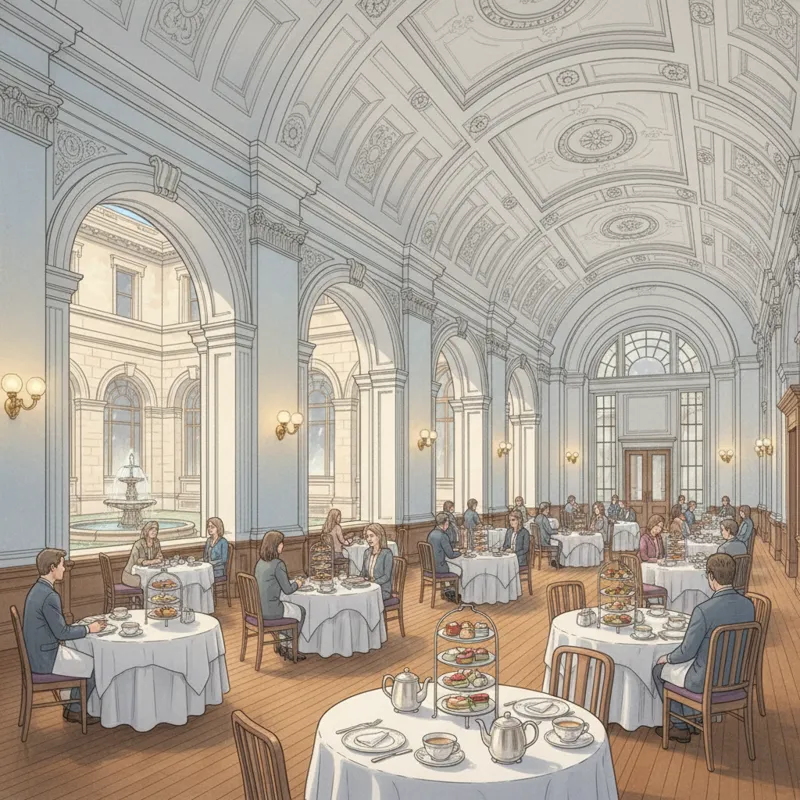
To understand the demand for this reservation, one must first look at the real estate. The McKim Building, designed by Charles Follen McKim, represents the peak of the American Beaux-Arts movement. The tea service operates adjacent to the Italianate courtyard, modeled after the Palazzo della Cancelleria in Rome. Unlike hotel tea rooms which often sit in windowless corridors or busy lobbies, this venue relies on natural light and historic masonry.
The atmosphere is intentionally subdued. The architecture absorbs sound, creating an acoustic environment where conversation remains private despite the high ceilings. For travelers interested in historic preservation and architecture, the setting offers value beyond the food service. You are essentially renting space in a National Historic Landmark for ninety minutes. The juxtaposition of the active library stacks nearby and the clinking of china creates a specific intellectual aesthetic that drives the location’s popularity.
Access requires entering through the Dartmouth Street entrance, navigating past the grand staircase and the famous lions. The physical journey to the restaurant sets a tone of reverence that most commercial restaurants struggle to manufacture. This specific context allows The Catered Affair to maintain price points that might otherwise face scrutiny in a standard storefront location.
Courtyard Tea Room vs. Map Room Tea Lounge
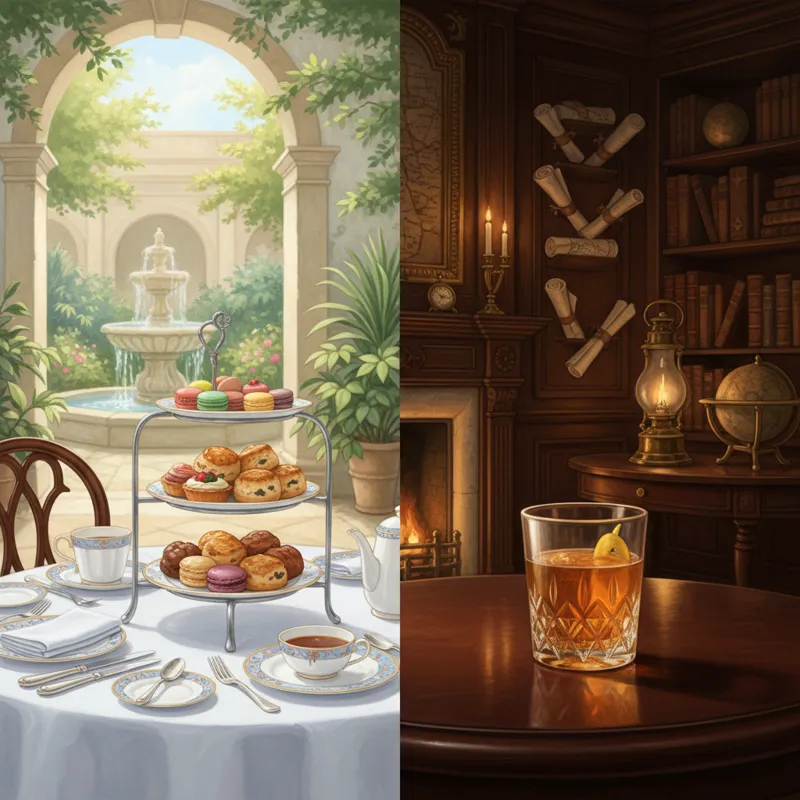
The primary confusion for first-time visitors stems from the existence of two separate venues within the same general footprint. They operate with different reservation lines and service styles.
The Courtyard Tea Room
This is the traditional “Afternoon Tea” experience. It operates on a prix-fixe basis. In 2026, the standard seating involves a set menu costing upwards of $70 per person (excluding tax and gratuity). The service follows the classic three-course progression: savory finger sandwiches, scones with accouterments, and petite sweets. The room itself is bright, featuring high arched windows that overlook the library’s internal open-air courtyard. It is formal, structured, and geared toward purists who want the full tower presentation.
The Map Room Tea Lounge
Adjacent to the Courtyard, the Map Room offers a moodier, lounge-style environment. Historically used for the delivery of maps and charts, this space retains the exposed brick and vaulted tile ceilings but employs lower lighting. The service here is à la carte. While you can order a tiered tea service, the menu leans heavily toward tea-infused cocktails and shareable plates. It serves as a viable alternative for those who cannot secure a reservation in the main room or those who prefer a single pot of tea and a snack rather than a full meal commitment.
The Menu Breakdown: Mechanistic Analysis of the Food
The culinary execution at the Boston Public Library Tea focuses on precision and ingredient sourcing. The Catered Affair manages the kitchen, and their approach favors consistency over experimental gastronomy. The menu changes seasonally, but the structural components remain static.
The Savory Course
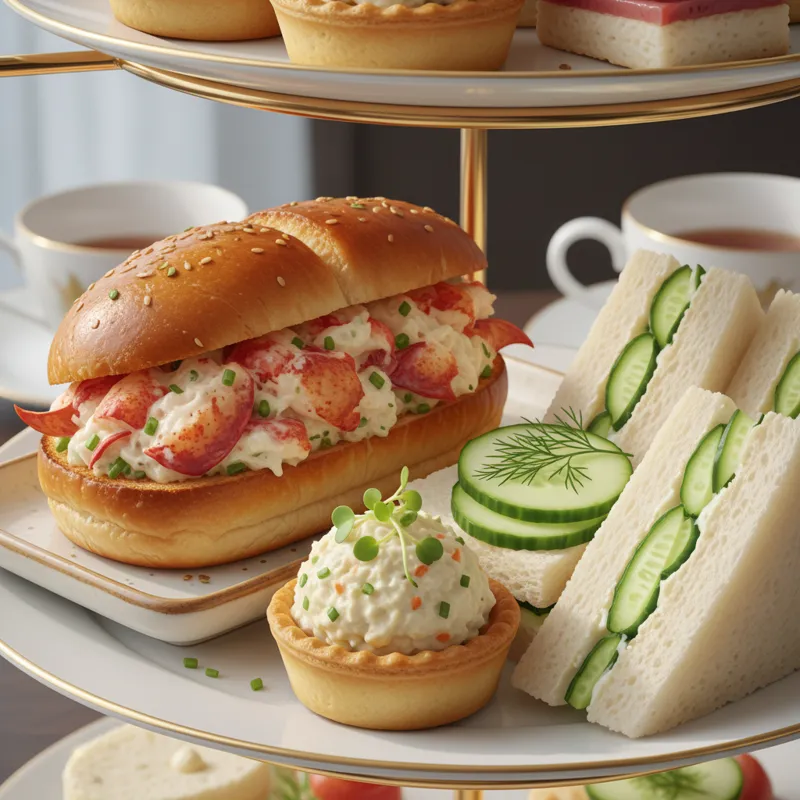
Expect four to five savory items per person. The kitchen typically anchors this course with a lobster salad tart or roll, capitalizing on the New England location. This is often the highest-value item on the stand. Other staples include the mandatory cucumber sandwich—usually elevated with herbed cream cheese or dill on white bread—and a protein-heavy option like coronation chicken or smoked salmon on dark rye. The bread requires freshness; stale edges are an immediate disqualifier in high tea reviews. The BPL kitchen generally maintains high turnover, ensuring bread remains soft.
The Scones
Scones serve as the litmus test for any tea service. The BPL typically serves two per person: a traditional plain cream scone and a seasonal variation (often currant, lemon-blueberry, or cranberry). The critical component here is the clotted cream. Authentic Devonshire or Cornish clotted cream is non-negotiable at this price point. Lemon curd and fruit preserves accompany the cream. Structurally, the scones should possess a crunchy exterior and a flaky, soft interior, avoiding the density of a muffin or the dryness of a biscuit.
The Sweets
The top tier consists of pâtisserie. These are visually intricate but small. Common items include macarons, opera cakes, fruit tarts, and mousses. The flavor profiles usually balance the acidity of fruit against the richness of chocolate to prevent palate fatigue. While collectors might look for antique presentation, the BPL uses durable, high-quality service ware. Those familiar with 10 ultimate silver tea set tips will notice the venue prioritizes high-grade commercial china over fragile silver antiques, a practical necessity for the volume of guests served daily.
The Tea Selection: Loose Leaf Logistics
The beverage program centers on loose-leaf tea, steeped to order. The menu divides into black, green, oolong, white, and herbal infusions. A signature “BPL Blend” usually leads the list—typically an Earl Grey variant with added floral notes or vanilla. The servers are trained to explain steep times, although in a busy service, the tea often arrives already steeped with the leaves removed to prevent bitterness.
Understanding the botanical origin is helpful. The tea used here comes from the Camellia sinensis plant. It is distinct from other botanical extracts consumers might encounter in different industries. For example, while the Melaleuca plant is discussed in guides regarding top 5 tea tree conditioner secrets for 2026, the “tea” served at the library is strictly for culinary consumption and shares no relation to the essential oils found in hair products. The focus here is on oxidation levels and terroir—Darjeelings for astringency, Assams for maltiness, and Assams for body.
Securing Reservations in 2026
Demand for the Courtyard Tea Room exceeds supply by a significant margin. Reservations open on a rolling basis, typically 30 to 60 days in advance depending on the current platform policy (OpenTable or Resy). In 2026, automated bots and concierge services often snatch prime weekend slots within seconds of release.
To secure a table, follow this protocol:
- Identify the Release Window: Determine exactly when the new block of dates opens (usually midnight or 9:00 AM EST).
- Prioritize Weekdays: Wednesday and Thursday afternoons offer the highest probability of availability.
- Use the “Notify Me” Feature: Enable alerts on the reservation app. Cancellations occur frequently 24 to 48 hours prior to the date as guests avoid cancellation fees.
- Check the Map Room: If the Courtyard is fully booked, check the Map Room. It often has availability for walk-ins or easier reservation slots, offering a similar culinary quality in a different setting.
Is It Worth the Price Tag? Cost vs. Value Analysis
The financial outlay for tea at the BPL is substantial. When you factor in the base price, tax, and a standard 20% gratuity, a couple can expect to spend over $200 for an afternoon snack. Is this justifiable?
From a strict caloric standpoint, the answer is no. You can purchase excellent sandwiches and pastries elsewhere in Boston for a fraction of the cost. However, luxury dining analysis requires pricing the intangible assets. You are paying for the overhead of maintaining a service team in a historic building, the linens, the china, and the exclusivity of the environment. According to Forbes Travel Guide, the value in high tea comes from the “time and space” afforded to the guest, distinct from the rush of a coffee shop.
If you value architectural history and a quiet, unhurried atmosphere in the center of a chaotic city, the price reflects the fair market value of that real estate rental. If you focus solely on the volume of food, you will likely leave feeling shortchanged.
What Most People Miss: Insider Observations
Visitors often focus so intently on the food tower that they miss the nuances of the room itself. The Tea Room features Guastavino tile vaulting—a structural technique used in major transit hubs like Grand Central Terminal but rarely seen in intimate dining spaces. Observing the ceiling is as much a part of the experience as eating the scones.
Additionally, the tea service includes access to the courtyard. While the general public can access the courtyard, tea guests have direct egress. During warmer months, this allows for a seamless transition from dining to strolling. Another overlooked detail is the cocktail menu in the Map Room. The mixologists use tea syrups and infusions that offer a complexity not found in standard bars. This isn’t just about collecting experiences or nostalgia like one might with 7 ultimate red rose tea figurines; it is about tasting how tannic structures in tea can replace bitters in modern mixology.
Finally, smart travelers time their reservation to coincide with the library’s free art and architecture tours. These tours usually run once a day. Booking a 2:00 PM tea after a 1:00 PM tour creates a comprehensive cultural afternoon that maximizes the trip to Copley Square.
Common Questions (FAQ)
Is there a dress code for the Boston Public Library Tea?
Technically, the BPL does not enforce a strict jacket-and-tie dress code. However, the venue implies “smart casual.” Most guests dress up to match the elegance of the room. Sneakers and athletic wear, while not banned, will feel out of place. Think of it as a nice brunch outfit.
Can I bring children?
Yes, The Catered Affair offers a children’s tea menu (often called the “Leopards Tea” or similar, referencing the library’s statues). It includes kid-friendly sandwiches (like ham and cheese or PB&J) and hot chocolate or fruit tea. However, the environment is quiet and echo-prone, so it is best suited for children who can remain seated for an hour.
Do they accommodate dietary restrictions?
The kitchen handles gluten-free, vegetarian, and vegan requests with advanced notice. You must note this at the time of booking. Because the pastries are prepared in batches, same-day requests for complex dietary needs are difficult for the kitchen to accommodate safely.
How long does the experience last?
Allocating 90 minutes is standard. The service is leisurely, but not slow. You will not be rushed, but tables are often rebooked, so lingering beyond two hours may not be possible on busy weekends.
Can I just order coffee?
In the Courtyard Room, the prix-fixe structure is mandatory. You can swap tea for coffee, but the price remains the same. In the Map Room, you have the flexibility to order just beverages, including coffee, cocktails, or wine, without purchasing food.
For more information on planning your visit to the city, reputable resources like Meet Boston provide current event calendars and alternative dining options in the Back Bay area.


