In 2026, home design continues its steady evolution, blending functionality with aesthetic appeal, and nowhere is this more evident than in the resurgence of intelligent door solutions. Among these, the double track barn door system stands out as a uniquely practical and stylish choice for optimizing space and enhancing interior flow. Gone are the days when a barn door was strictly a rustic accent; today’s double track configurations offer a sophisticated answer to common spatial challenges, allowing two doors to operate independently and bypass each other on parallel tracks. If you’re looking to transform a doorway, closet, or even an open-plan area, understanding these versatile systems is your first step towards a remarkably efficient and visually stunning upgrade.
Understanding the Double Track Barn Door System
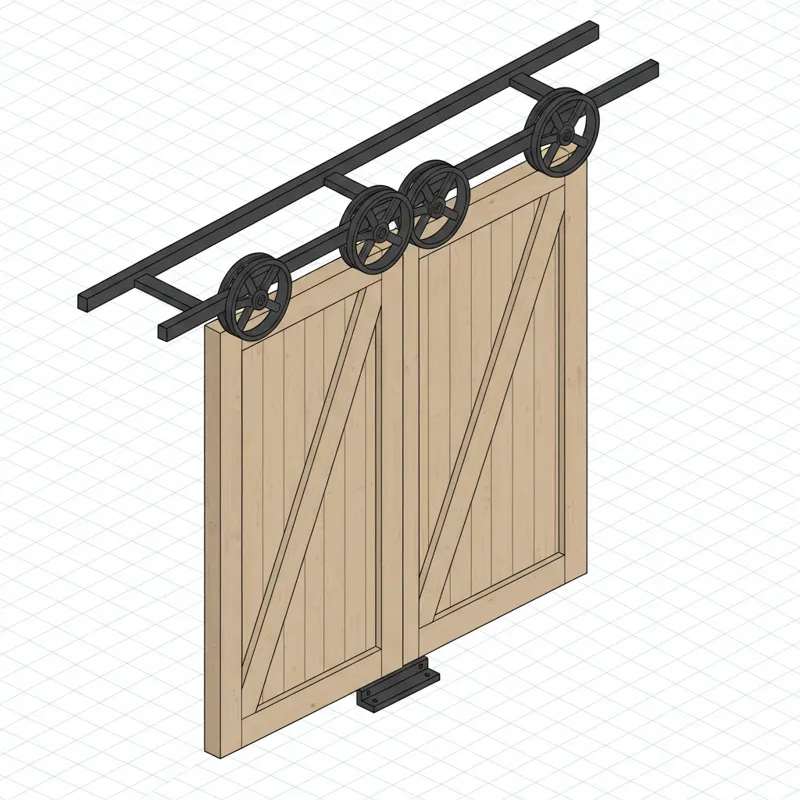
At its core, a double track barn door system isn’t just two barn doors side-by-side; it’s a specific hardware configuration that allows multiple doors to slide independently on parallel rails, effectively bypassing each other. Think of it as a sliding closet door setup, but with the robust aesthetic and smooth operation of a barn door. This contrasts sharply with a single track system, which can accommodate one door sliding over an opening, or two doors on one long track that meet in the middle but cannot pass one another. The key to the double track system is the dual rail design. One track sits slightly closer to the wall, carrying one door, while the second track is positioned further out, accommodating the other door. This offset is crucial, allowing the doors to overlap when open or closed, providing maximum flexibility in controlling access and visual separation. It’s an ingenious solution that maximizes accessibility without consuming valuable floor space, a common limitation with traditional swing doors.
Why Choose a Double Track Barn Door System?
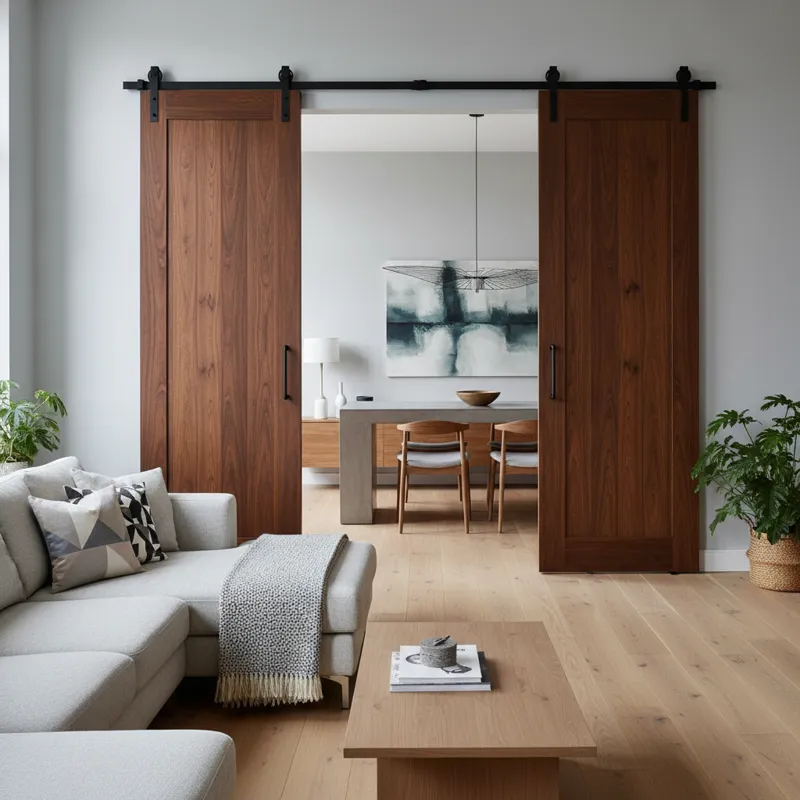
The appeal of a double barn door system extends far beyond its visual charm. For many homeowners and designers, it’s a strategic choice driven by practical needs in diverse living environments. First, consider space optimization. Traditional swing doors require a significant clearance arc to open and close, rendering the floor and wall space within that arc largely unusable. Double track barn doors eliminate this issue entirely, gliding horizontally along the wall. This is particularly advantageous in smaller rooms, tight hallways, or areas where furniture placement is critical. They reclaim square footage that would otherwise be wasted. Next, there’s the unparalleled flexibility in design and function. A double track setup allows you to create wide, open passageways when both doors are stacked to one side, or to partition a large room into two distinct zones. Imagine using them to separate a dining room from a living area, or to conceal a home office nook. For those with larger openings, like in a great room or a basement entrance, this system offers an elegant solution that maintains visual continuity while providing the option for privacy. While a single track with two doors can cover a wide opening, only a double track allows the doors to actually pass each other, giving you more granular control over the opening size. Finally, the aesthetic integration is a huge draw. Modern kits come in a vast array of styles, from sleek industrial steel to warm, rustic wood finishes, allowing them to complement virtually any interior design. They become a deliberate design statement rather than a mere utilitarian object, adding character and a custom feel to your home.
Mechanics of a Bypass Barn Door System
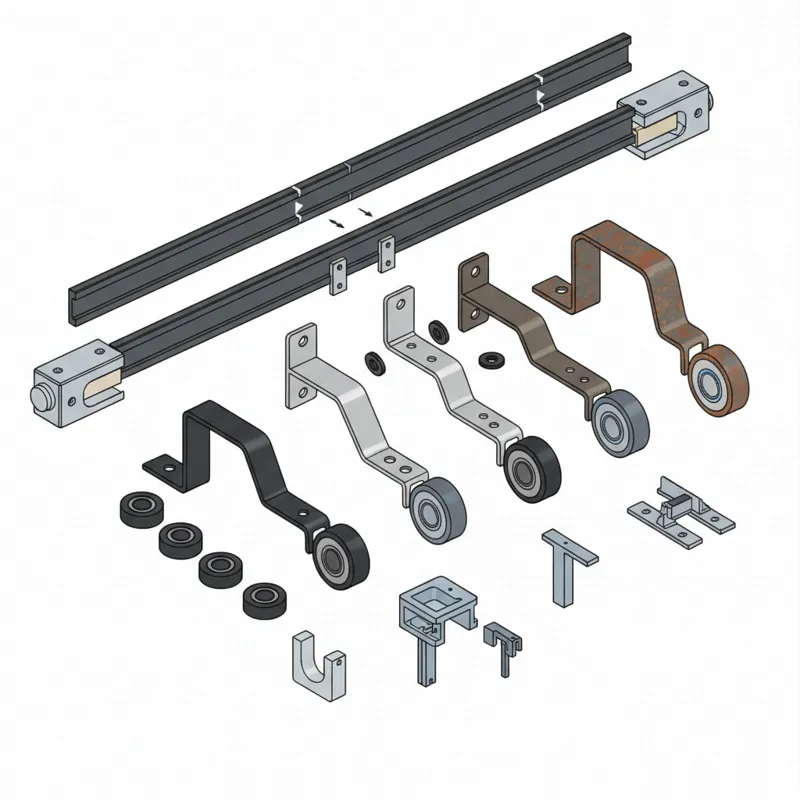
Understanding how a bypass barn door hardware kit works helps in selecting the right one and ensures a smooth installation. The system’s functionality hinges on a few core components:1. Parallel Tracks: These are the most distinctive feature. Typically, two lengths of track are mounted parallel to each other on a header board, or directly to wall studs. One track is offset from the other by a few inches, allowing the doors to slide past each other without collision. The length of the tracks dictates how far the doors can slide open, needing to be at least twice the width of one door plus the overlap amount.2. Hangers and Rollers: Each door attaches to a set of hangers, which house the rollers. These rollers are designed to glide effortlessly along the top edge of the tracks. Hangers come in various styles (e.g., J-shape, flat strap, spoke wheel) influencing the aesthetic and weight capacity. The quality of the rollers directly impacts the smoothness and longevity of the door’s operation.3. Floor Guides: Essential for stability, floor guides prevent the bottom of the doors from swinging outwards. They typically attach to the floor and embrace the bottom edge of each door. Some kits offer T-shaped guides that route into a groove cut into the bottom of the door, while others are flush-mount and simply capture the door’s edge. Correct placement is crucial for alignment and preventing wobble.4. Door Stops: Mounted at the ends of each track, these prevent the doors from sliding off the rail and help define the fully open or closed positions.5. Anti-Jump Disks: Small disks installed on the top edge of the doors, above the rollers, prevent the doors from accidentally lifting off the track during vigorous use. The mechanical simplicity is deceptive; precision in manufacturing and installation ensures that despite their weight, the doors glide with minimal effort and stay securely in place.
Navigating Your Options: Hardware Styles and Materials
When selecting a double track barn door kit, the hardware itself plays a dual role: it provides the essential mechanics and significantly contributes to the overall aesthetic.
Material Considerations
The material of your hardware kit impacts its durability, weight capacity, and visual presence.
- Steel: The most common material, offering excellent strength and durability. Often powder-coated in various colors for protection and finish.
- Stainless Steel: Ideal for high-moisture environments or for a sleek, contemporary look. It resists corrosion and provides a sophisticated sheen.
- Aluminum: Lighter than steel, typically used for lighter doors or where weight is a concern. Often anodized for a durable finish.
- Cast Iron: Provides a very heavy, rustic, or industrial feel. Visually impactful but can be more prone to surface rust if not properly finished.
Aesthetic Styles
The design of the hangers and track dictates the style.
- Modern/Minimalist: Often features sleek, flat strap hangers or discreet J-shape designs in matte black or brushed stainless steel. These integrate seamlessly into contemporary interiors, emphasizing clean lines.
- Farmhouse/Rustic: Characterized by classic strap hangers with large, exposed wheels, sometimes with a distressed or oil-rubbed bronze finish. Reclaimed wood doors pair perfectly with this style.
- Industrial: Often utilizes raw steel, black iron, or heavy-duty components, sometimes with exposed welds or a raw, unfinished look. Spoke wheel designs are common here.
- Traditional: More ornate hanger designs, perhaps with decorative finials on the track ends, can lend a timeless elegance.
Finishes
The finish is crucial for coordinating with your existing decor.
- Matte Black: A perennially popular choice that offers a bold contrast and works with almost any color palette, from modern farmhouse to industrial chic.
- Brushed Nickel/Stainless Steel: Provides a refined, contemporary look that pairs well with other stainless appliances or fixtures.
- Oil-Rubbed Bronze: Delivers a classic, warm, and often rustic or Mediterranean feel. It can appear dark and rich, sometimes with coppery undertones.
- Raw Steel/Clear Coat: For an authentic industrial or utilitarian aesthetic, often with a clear protective coating to prevent rust.
Double Track Barn Door Kits: 12 Stunning Options to Transform Spaces
In 2026, the market offers an impressive array of double track barn door kits, each designed to meet specific aesthetic and functional demands. Here’s a breakdown of 12 types or features you’ll commonly encounter, allowing you to tailor your choice to your specific project:1. The Modern Flat Strap Bypass Kit: Characterized by clean, flat steel straps that hang the door, paired with a sleek, minimalist track. Often found in matte black or brushed stainless steel, this kit is perfect for contemporary or transitional spaces seeking an understated elegance.2. Classic Farmhouse Spoke Wheel Systems: These kits feature large, exposed rollers with a distinctive spoke design, reminiscent of traditional wagon wheels. Usually in a raw steel, black, or oil-rubbed bronze finish, they complement rustic, farmhouse, or industrial interiors beautifully.3. Soft-Close Integrated Hardware Kits: A highly desirable feature for any door, soft-close mechanisms are integrated into the track, gently slowing the door before it reaches the end stop. This prevents slamming, reduces noise, and extends hardware longevity, making for a premium user experience.4. Heavy-Duty Industrial Parallel Track Kits: Designed for heavier, often solid wood or even metal doors, these kits boast thicker tracks and robust hangers with higher weight capacities. They typically feature a raw steel or black powder-coated finish, ideal for large openings or commercial applications.5. Glass Door Compatible Bypass Hardware: For those seeking light filtration or a more open feel, kits specifically designed for glass doors (often tempered glass, sometimes frosted) include specialized clamps or mounts that secure the glass panel without drilling, offering a sleek, contemporary aesthetic.6. Low-Profile Minimalist Track Systems: These kits aim for an almost invisible appearance. The tracks might be slimmer, or the hangers more discreet, reducing the visual impact of the hardware itself to let the door design shine. Excellent for ultra-modern or minimalist interiors.7. Top-Mount Hanger Double Track Kits: In this configuration, the hangers attach to the top edge of the door, allowing for a seamless face view of the door panel without visible straps extending down. This can create a cleaner look, particularly for contemporary door designs.8. Face-Mount Strap Hanger Kits: The most common design, where the hangers attach to the face of the door. This exposed hardware is a defining characteristic of many barn door styles, from rustic to industrial, and offers a strong visual statement.9. J-Shape Hanger Kits: These hangers curve into a ‘J’ shape, wrapping over the top of the track. They offer a slightly softer, more elegant profile compared to flat straps, often seen in transitional or modern farmhouse designs.10. Concealed Roller Bypass Systems: For the ultimate minimalist look, some advanced kits feature rollers and sometimes even the track itself partially concealed within the door or header. This creates an almost floating effect, where the door appears to glide without visible hardware. These are typically higher-end solutions.11. Exterior-Grade Double Track Hardware: While most barn doors are interior, specialized kits designed for outdoor use feature weather-resistant materials like marine-grade stainless steel and UV-resistant finishes. These are perfect for pergolas, outdoor kitchens, or covered patio enclosures.12. Budget-Friendly Starter Bypass Kits: Accessible options that still offer solid functionality. These often use standard steel with a basic powder-coat finish and simpler hanger designs, proving that you don’t need to break the bank to enjoy the benefits of a double track system.
Installation Insights: What DIYers Need to Know
Installing a double track barn door kit is a rewarding DIY project, but it demands precision and careful planning. Here’s what you need to know:1. Wall Structure is Paramount: The most critical step is ensuring your wall can support the combined weight of two doors and the hardware. Barn doors, especially solid wood ones, are heavy. You absolutely must locate wall studs to secure your header board. If studs don’t align perfectly with your desired track placement, a sturdy wooden header board (typically a 1×4 or 1×6) spanning at least two studs must be securely mounted first. This header board then provides a solid anchor point for your track. Ignoring this can lead to serious safety issues.2. Measure, Measure, Measure: Accuracy is non-negotiable.
- Opening Width: Your doors should typically be wider than your opening to ensure adequate coverage and privacy. For a double track system, each door will be slightly wider than half the opening’s width, plus an overlap for the bypass.
- Track Length: The track needs to be long enough to allow both doors to completely clear the opening when slid open. This usually means a track length of at least twice the width of one door plus some overlap.
- Ceiling Height: Ensure there’s enough clearance above the door opening for the track, hangers, and any decorative elements.3. Tools of the Trade: You’ll need a stud finder, a level (a long one is very helpful), a drill, appropriate drill bits, a tape measure, and potentially a miter saw if you’re cutting a header board.4. The Importance of Floor Guides: Don’t overlook these. They stabilize the bottom of the doors, preventing them from swinging out. Many kits come with T-shaped guides that require a channel routed into the bottom of the door. If you don’t want to rout, look for flush-mount or adjustable U-shaped guides that simply hold the door’s edge. Ensure they’re perfectly aligned with the track above. You’ll also want to consider how the door interacts with your floor registers if any are near the door’s path; planning is key to avoid obstructions.5. Consider Security and Privacy: While beautiful, barn doors are not as secure or soundproof as traditional hinged doors. They typically have gaps around the edges. If security or enhanced privacy is a concern, investigate specific double barn door lock options, often a hook-and-eye or specialty latch that secures the doors together or to the wall when closed. You may also need to add weatherstripping or brush seals to minimize light and sound transmission.6. When to Call a Pro: If you’re unsure about your wall’s integrity, uncomfortable with power tools, or dealing with an unusually large or heavy door, a professional carpenter or installer can ensure a safe and proper installation. It’s an investment in peace of mind.
What Most People Get Wrong About Double Track Barn Doors
Even with the best intentions, a few common missteps can detract from the functionality and aesthetic of your double track barn door system. Being aware of these helps you avoid them.
- Underestimating Wall Space Requirements: This is perhaps the most frequent oversight. A double track system requires an unbroken section of wall beside the opening for the doors to slide over when open. This wall space needs to be at least the width of one door for it to fully clear the opening. If you have light switches, outlets, or wall art in the way, they will either be covered or obstruct the door’s movement. Always measure the clear wall space meticulously.
- Neglecting Proper Header Support: As mentioned in installation, failure to adequately reinforce the wall where the track is mounted is a critical safety hazard. Drywall alone is insufficient. If you don’t hit studs, a robust header board is non-negotiable. A sagging track or even a falling door is a dangerous and costly mistake.
- Ignoring Door Overlap and Thickness: With bypass systems, the doors inherently overlap. If your doors are too thick, or the offset between the tracks isn’t sufficient, they might rub against each other. Conversely, insufficient overlap means potential gaps and reduced privacy when the doors are closed. Always check the kit’s specifications for maximum door thickness and recommended overlap.
- Forgetting Floor Guides or Misaligning Them: Without proper floor guides, your barn doors will swing out at the bottom, creating a wobbly, unsafe, and frustrating experience. Misaligned guides can cause friction, wear, and an awkward movement. They are small components but play a vital role in stability and smooth operation.
- Overlooking Privacy and Sound Issues: Barn doors, by design, are typically mounted proud of the wall, meaning there are gaps around the edges where light and sound can pass through. If you’re installing them on a bathroom or bedroom, understand that they won’t offer the same level of acoustic privacy or light blocking as a traditional hinged door. Planning for additional seals or choosing specific door styles can mitigate this, but it’s important to set realistic expectations. For a comprehensive look at historical and modern architectural uses, the Wikipedia page on barn door hardware offers valuable context.
- Mismatched Hardware to Door Weight: Every hardware kit has a maximum weight capacity. Using hardware designed for lighter doors on heavy, solid wood panels is a recipe for premature wear, sagging tracks, and potential failure. Always verify the weight of your doors and choose a kit rated for that capacity, adding a buffer for safety. Forbes also has some great insights into evolving home design trends, which often highlight the shift towards functional aesthetics like barn doors.
Maintenance and Longevity
Proper maintenance ensures your double track barn door system operates smoothly for years to come. Thankfully, it’s generally straightforward.
- Regular Cleaning: Dust and debris can accumulate on the tracks, impeding the rollers. A simple wipe-down with a damp cloth or a quick vacuum can prevent friction and extend the life of your rollers.
- Lubrication: Periodically, applying a silicone-based lubricant (avoid oil-based lubricants as they can attract more dust) to the rollers and track can keep the doors gliding effortlessly. Consult your hardware kit’s instructions for specific recommendations.
- Hardware Checks: Every few months, quickly check all screws and bolts for tightness. Vibration from normal use can sometimes loosen fasteners. Ensuring everything is secure prevents sagging or misalignment.
- Door Condition: Inspect the doors themselves for any warping or damage. While less common, extreme environmental changes can affect wood doors, potentially impacting their interaction with the hardware. The U. S. Department of Energy provides excellent resources on door maintenance and energy efficiency, which can be relevant for long-term care.
Frequently Asked Questions (FAQ)
You’ve got questions; we’ve got practical answers. Here are some of the most common inquiries about double track barn door systems:Q: Can any door be used with a double track system?A: Not necessarily. While many standard doors can be adapted, they need to be strong enough to hang from the top edge without warping or breaking. Custom doors are often built with the hardware in mind. Most importantly, ensure the doors are within the weight capacity specified by your hardware kit.Q: How much wall space is required for a double track barn door?A: You generally need a clear, unobstructed wall space on one side of the opening that is at least equal to the width of one door. This allows both doors to stack completely open on that side. If you want them to open fully on both sides, you’d need that clearance on both sides.Q: Are double track barn doors truly soundproof or private?A: No, not typically. Because they run on a track outside the wall, there are inherent gaps around the door edges. This means they won’t offer the same level of acoustic privacy or light blocking as a traditional hinged door that seals against a jamb. For bathrooms or bedrooms, this is a significant consideration.Q: How much weight can a double track barn door kit hold?A: Weight capacity varies significantly by kit. Most residential kits can support between 150 lbs to 250 lbs per door. Heavy-duty or commercial-grade kits can handle 300 lbs or more per door. Always check the manufacturer’s specifications and err on the side of caution.Q: Can I install a double track barn door kit myself?A: Yes, many DIY enthusiasts successfully install these kits. However, it requires careful measuring, precise drilling, and a good understanding of basic carpentry. Ensuring proper wall support (header board) is the most critical step. If you’re uncomfortable, a professional installation is recommended.Q: What’s the main difference between a double track and a single track with two doors?A: A single track with two doors means both doors share one long rail and meet in the middle. They cannot slide past each other. A double track system has two parallel rails, allowing the doors to bypass one another, offering more flexibility in opening configurations and space management.
Ready to Transform Your Space?
The double track barn door system is more than just a passing trend; it’s a smart, durable, and aesthetically versatile solution for modern homes in 2026. By understanding the mechanics, exploring the diverse range of kits available, and approaching installation with care, you can leverage these stunning doors to redefine functionality, optimize space, and add undeniable character to your interiors. Whether you’re aiming for a sleek contemporary vibe, a cozy farmhouse feel, or a robust industrial edge, there’s a double track kit waiting to bring your vision to life.