Double barn doors have cemented their place in contemporary home design, evolving from their agricultural roots into sophisticated, space-saving architectural features. In 2026, they continue to offer a compelling blend of rustic charm and modern functionality, addressing common challenges posed by traditional swing doors in wide openings. If you’re looking to transform a large doorway, create flexible living zones, or simply add a distinctive design element, understanding the nuances of these impressive sliding systems is crucial. This guide will walk you through the best picks and essential considerations, helping you choose double barn doors that truly elevate your living space.
Understanding the Appeal of Double Barn Doors
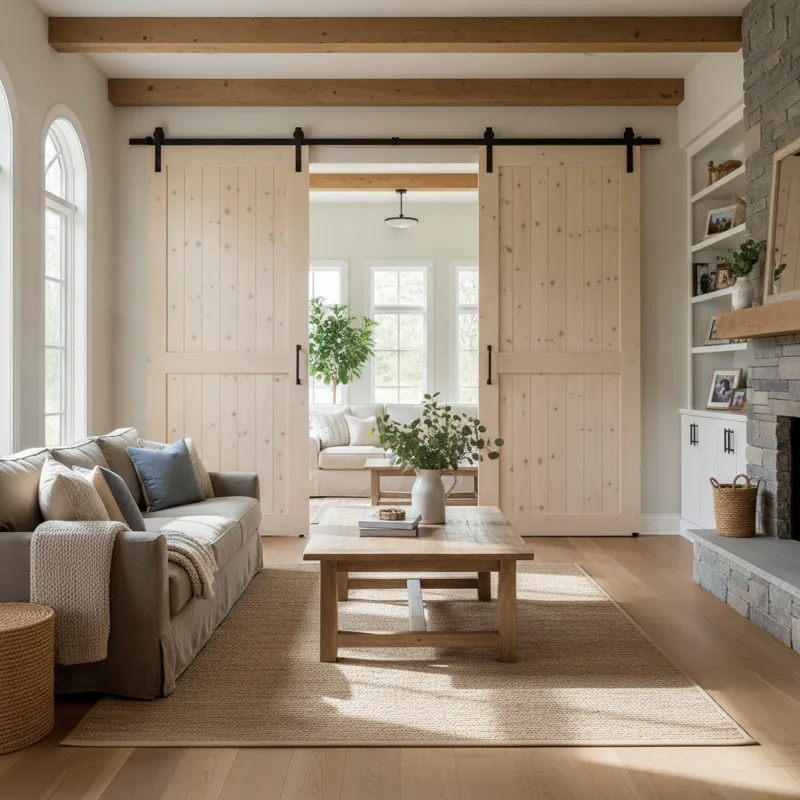
Double barn doors aren’t just an aesthetic statement; they’re a practical solution for specific architectural needs. Unlike their single counterparts, which are ideal for standard doorways, double barn doors are designed for broader entries, typically requiring two panels that slide open from the center. This configuration offers distinct advantages, particularly in homes where maximizing floor space and enhancing visual flow are priorities. They shine in open-concept layouts, serving as elegant room dividers between a living room and dining area, or enclosing a home office without permanently sealing it off. Their ability to glide along an overhead track means no floor space is consumed by a swinging arc, a significant benefit for smaller rooms or high-traffic areas.
Why Choose Double Barn Doors in 2026?
As we move further into 2026, home design trends emphasize flexibility, natural materials, and smart space utilization. Double barn doors align perfectly with these priorities. They allow for an adaptable environment, letting you open up or compartmentalize spaces on demand. Beyond their practical benefits, they offer a customizable focal point that can dramatically influence a room’s aesthetic. From sleek modern designs to classic farmhouse styles, the versatility in materials and finishes means there’s a solution for nearly any decor.
Key Considerations Before Investing in Double Barn Doors
Before you fall in love with a particular style, you need to address the practicalities. The success of your double barn door installation hinges on careful planning.
1. Wall Space and Clearance
This is the most critical factor. Double barn doors require significant wall space on either side of the opening for the panels to slide fully open. You generally need wall space equal to or greater than the width of each door panel. For example, if your opening is 72 inches wide and you’re using two 36-inch wide doors, you’ll need at least 36 inches of unobstructed wall space on both the left and right sides of the doorway. Don’t forget light switches, outlets, or existing trim that might obstruct the door’s path.
2. Wall Structure and Support
Barn doors, especially double barn doors, are heavy. The overhead track system needs to be securely mounted into wall studs or a robust header board spanning the entire length of the track. You can’t simply screw into drywall. If your wall isn’t adequately reinforced, you’ll need to add a header board for proper support. This is a non-negotiable safety and functional requirement.
3. Opening Dimensions
Measure your doorway opening precisely. Standard double barn door setups typically feature two panels that are each slightly wider than half of the opening width, providing proper overlap for privacy and aesthetics when closed. Factor in the height as well; most barn doors are taller than a standard interior door to cover the door frame and header.
4. Budget Allocation
Double barn doors vary widely in price based on material, complexity of design, and hardware. Solid wood, custom designs, and premium hardware finishes will naturally cost more. Factor in not just the doors themselves, but also the track system, hangers, floor guides, and any potential professional installation costs.
10 Best Picks for Double Barn Doors That Truly Impress
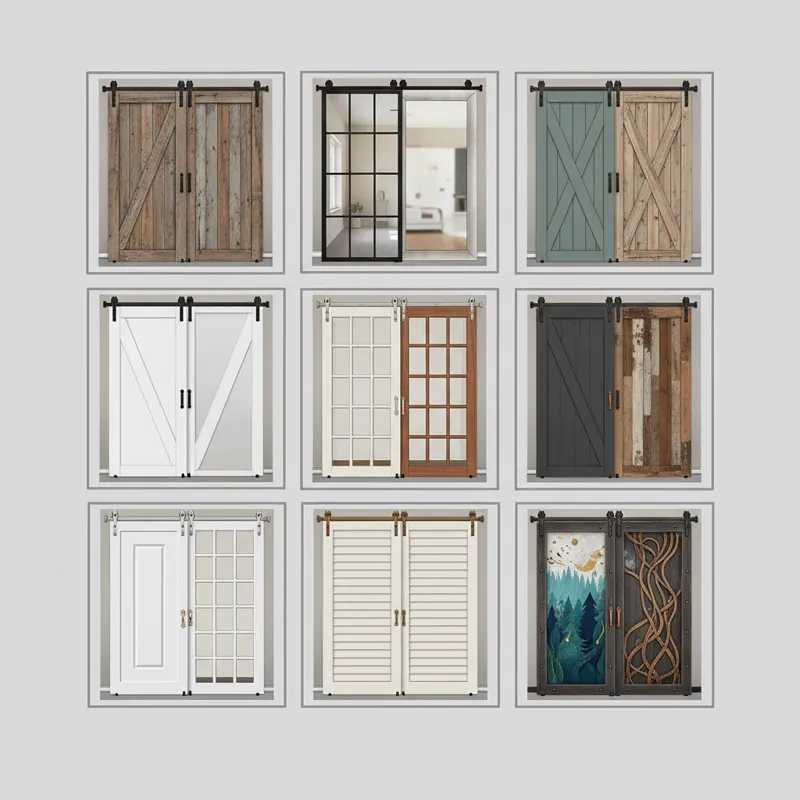
Choosing the “best” double barn doors isn’t about finding a universally superior product; it’s about selecting the perfect fit for your home’s aesthetic, functional requirements, and budget. Here are 10 distinct categories that offer impressive solutions, catering to a range of design preferences.
1. The Classic Solid Wood Plank Doors (Rustic Farmhouse & Traditional)
This is the quintessential barn door look. Solid wood panels, often featuring vertical planks, offer a warm, inviting feel. They come in various wood species like pine, alder, or oak, and can be stained to highlight natural grain or painted for a custom look. These doors are excellent for creating a rustic farmhouse style room divider, bringing a sense of heritage and solidity to a space.
- Best For: Farmhouse, rustic, traditional, craftsman homes.
- Pros: Durable, excellent sound dampening (when solid), timeless aesthetic, customizable finishes.
- Cons: Heavy, can be expensive, requires maintenance (staining/painting).
2. Modern Black Frame Glass Panel Doors (Contemporary & Industrial)
Sleek and sophisticated, these doors feature large glass panels (frosted, clear, or reeded) encased in minimalist black metal or wood frames. They allow light to pass through, maintaining an open feel even when closed, while providing visual separation. This style perfectly complements industrial, contemporary, and minimalist interiors.
- Best For: Modern, industrial, urban loft, minimalist designs.
- Pros: Maximizes light flow, visually expands space, chic contemporary look.
- Cons: Less privacy (depending on glass type), can be heavy, glass cleaning.
3. Mirrored-Inset Double Barn Doors (Glam & Space-Saving)
Incorporating mirrors into your double barn doors serves a dual purpose: it adds a touch of glamor and dramatically enhances the perception of space and light. These are particularly effective in bedrooms, dressing areas, or hallways where expanding the visual footprint is desired.
- Best For: Glam, art deco, small spaces, dressing rooms.
- Pros: Visually enlarges space, reflects light, adds a luxurious touch.
- Cons: Fragile, requires careful cleaning, can be very heavy.
4. Z-Brace or K-Brace Designs (Authentic Farmhouse & Cottage)
These designs feature the iconic diagonal or ‘X’ bracing patterns that are instantly recognizable as a barn door aesthetic. Often constructed from solid wood or engineered wood, they embody a true farmhouse spirit. The Z-brace is a single diagonal, while the K-brace adds a vertical element to form a ‘K’ shape.
- Best For: Authentic farmhouse, rustic, country cottage, casual interiors.
- Pros: Strong visual character, relatively lightweight options available (engineered wood), classic appeal.
- Cons: Can collect dust in crevices, style might not suit all decors.
5. Reclaimed Wood Double Barn Doors (Eco-Conscious & Unique)
For those who appreciate history and sustainability, reclaimed wood doors are a standout. Made from salvaged timber, each door tells a story with its unique imperfections, nail holes, and weathered patina. No two doors are exactly alike, offering unparalleled character and an eco-friendly choice.
- Best For: Eclectic, industrial, rustic, bohemian, sustainable design.
- Pros: Unique character, environmentally friendly, extremely durable.
- Cons: Can be very expensive, inconsistent sizing/texture, may require specialized care.
6. Paintable MDF or Engineered Wood Doors (Versatile & Budget-Friendly)
While solid wood is desirable, engineered wood products like MDF (Medium-Density Fiberboard) offer a more budget-friendly and equally versatile alternative. These doors provide a smooth, consistent surface perfect for painting any color, allowing for seamless integration into existing decor or a bold statement. They are often lighter than solid wood, simplifying installation.
- Best For: Modern, contemporary, transitional, custom color schemes, budget-conscious projects.
- Pros: Affordable, stable (less prone to warping), takes paint beautifully, lighter weight.
- Cons: Less durable than solid wood, susceptible to moisture damage if not properly sealed, less natural wood grain.
7. French Door Style Barn Doors (Elegant & Light-Filled)
Combining the elegance of traditional French doors with the space-saving functionality of a barn door, these models feature multiple glass panes set into a wooden frame. They are ideal for connecting spaces like a dining room to a kitchen, or a bedroom to a luxurious en-suite bathroom, allowing light to flood through while maintaining a sophisticated boundary.
- Best For: Transitional, traditional, elegant modern, areas needing light and visual connection.
- Pros: High aesthetic appeal, excellent light transmission, classic elegance.
- Cons: Less privacy than solid doors, glass requires cleaning, can be heavier.
8. Louvered or Slat Double Barn Doors (Ventilation & Texture)
Doors with louvered or slatted panels provide excellent ventilation, making them a smart choice for laundry rooms, pantries, or closets. They also add a unique textural element to a space, breaking up flat wall surfaces. While they offer less privacy than solid doors, their functional benefits are clear.
- Best For: Laundry rooms, closets, pantries, casual bedrooms, coastal styles.
- Pros: Excellent ventilation, adds visual interest and texture, can be lightweight.
- Cons: Limited privacy, allows sound through, dust can accumulate.
9. Industrial Metal Frame Doors (Loft & Urban Edge)
For a truly modern and edgy look, consider double barn doors with robust metal frames, often in black steel or aluminum, sometimes paired with glass or solid panels. These doors evoke a strong urban or industrial loft aesthetic. They are incredibly durable and make a bold statement in open-concept spaces.
- Best For: Industrial, urban loft, contemporary, minimalist designs.
- Pros: Extremely durable, strong visual impact, modern aesthetic.
- Cons: Can be very heavy and expensive, specific aesthetic might not suit all homes.
10. Custom-Designed Artistic Doors (Personalized Statement)
If you have a unique vision, a custom-designed double barn door allows for ultimate personalization. This could involve bespoke carvings, intricate inlay work, unusual material combinations (e.g., metal and wood, concrete panels), or even a painted mural. These are truly one-of-a-kind installations that serve as functional art.
- Best For: Unique spaces, bespoke interior design, artistic expression, luxury homes.
- Pros: Completely unique, reflects personal style, serves as a focal point.
- Cons: Most expensive option, long lead times, finding a skilled artisan.
The Unsung Hero: Double Barn Door Hardware Systems
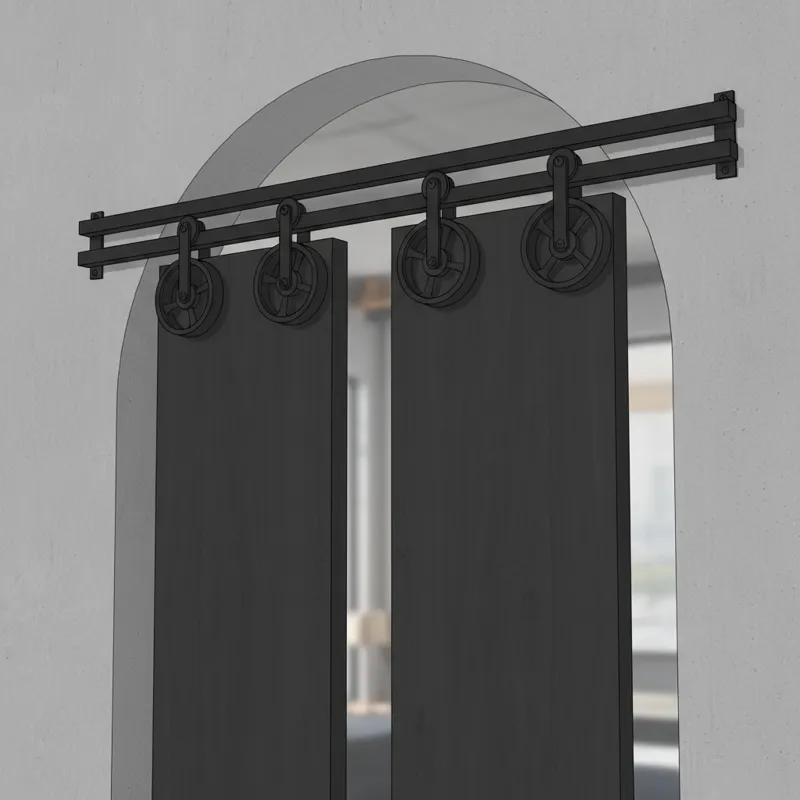
The doors themselves are only half the story; the hardware is equally critical for both functionality and aesthetics. For double barn doors, you’re primarily looking at bypass door hardware for large openings or a synchronized system.
Track Styles
- Face-Mount Tracks: These are the most common, where the track mounts directly to the wall above the doorway. They are visible and become part of the aesthetic.
- Top-Mount Tracks: Sometimes preferred for specific door types or when a cleaner look is desired, these tracks attach to the top edge of the door panels themselves, with hangers running along a track that can be concealed behind a fascia.
- Double Track Barn Door Systems: This is essential for double barn doors where both panels need to slide independently or bypass each other without hitting. A well-designed double track barn door system ensures smooth operation and alignment.
- Bypass Hardware: This setup involves two parallel tracks, allowing one door to slide in front of the other. It’s often necessary when wall space is limited, or when the opening is exceptionally wide.
Hardware Finishes
The finish of your hardware can significantly influence the overall look.
- Matte Black: A perennially popular choice in 2026, offering a modern, industrial, or farmhouse contrast.
- Brushed Nickel/Stainless Steel: Clean, contemporary, and versatile.
- Bronze (Oil-Rubbed or Antique): Adds warmth and a rustic or traditional touch.
- Polished Chrome/Brass: For a more classic, glamorous, or art deco feel. When coordinating finishes throughout your home, consider how elements like your double barn door hardware might complement fixtures such as a sleek gold bathroom faucet, creating a cohesive visual narrative.
Essential Components
- Hangers/Rollers: These attach to the top of the door panels and glide along the track. Quality rollers are crucial for smooth, quiet operation.
- Stops: Prevent the doors from sliding off the track.
- Floor Guides: These small, often U-shaped guides are installed on the floor to keep the bottom of the doors from swinging out, ensuring stable movement. Don’t skip these!
- Soft-Close Mechanisms: A premium addition that gently slows the door before it reaches the end of its travel, preventing slamming and adding a touch of luxury.
Installation Nuances for Wide Openings
Installing double barn doors, especially the wide interior sliding door systems, requires precision. Beyond the wall reinforcement mentioned earlier, consider these points:
- Header Board: For maximum safety and stability, a solid wooden header board (typically a 1×4 or 1×6) should be securely mounted into the wall studs above the opening. The barn door track then mounts to this header. This ensures the weight is distributed properly across multiple studs.
- Leveling: The track must be perfectly level. Even a slight incline will cause the doors to drift open or closed. Use a long level during installation.
- Door Overlap: When closed, the two door panels should overlap slightly in the middle to prevent gaps and ensure privacy. This is usually accounted for in the door’s width specification, but it’s important to verify.
- Professional Help: Given the weight and precision required for two panel sliding door installation, especially with bypass hardware or very heavy doors, professional installation is often a wise investment.
What Most People Get Wrong About Double Barn Doors
It’s easy to get excited about the aesthetic, but several common missteps can lead to frustration.
- Underestimating Wall Space: The biggest pitfall. Many people focus only on the opening width and forget the substantial clear wall space needed on either side for the doors to fully open.
- Ignoring Wall Structure: Mounting heavy doors to drywall without proper reinforcement is a recipe for disaster. Always assume you’ll need a header board unless you’re certain of stud placement and strength.
- Neglecting Floor Guides: Without floor guides, the bottom of your barn doors will swing freely, making them unstable and potentially damaging to walls or furniture.
- Expecting Full Soundproofing or Privacy: Barn doors, by their nature, don’t create an airtight seal. There will always be gaps around the edges and beneath the door, meaning they offer less sound and visual privacy than traditional swing doors. They’re excellent for dividing spaces but not for creating a truly quiet, private room.
- Mismatched Hardware: Choosing hardware that is too flimsy for the door’s weight, or a finish that clashes with the door’s style, diminishes the overall impact.
- Forgetting Maintenance: Solid wood doors need protection from humidity and occasional re-finishing. Hardware needs periodic lubrication. For serious DIY enthusiasts tackling major home improvements, the same dedication applied to selecting interior design elements like double barn doors might also extend to understanding fundamental exterior components, such as when to use roofing felt paper for weather protection.
Maintaining Your Double Barn Doors for Longevity
Proper care ensures your investment lasts.
- Wood Doors: Dust regularly. For stained or painted wood, occasionally wipe with a wood-safe cleaner. Check for any warping over time, especially in areas with fluctuating humidity.
- Metal/Glass Doors: Wipe metal frames with a damp cloth. Clean glass with a standard glass cleaner.
- Hardware: Periodically check the track and hangers for any debris. A light spray of silicone lubricant on the rollers can keep them gliding smoothly and quietly. Inspect all screws and fasteners to ensure they remain tight. The longevity of your system is greatly enhanced by choosing high-quality components from the start. For example, the United States Consumer Product Safety Commission offers resources on home product safety, emphasizing the importance of well-maintained installations for long-term use. You can often find general safety guidelines on their site, or similar governmental consumer resources, to ensure all your home projects meet safety standards.
Choosing the Right Double Barn Doors for Your Home
To narrow down your best pick, consider these questions:1. What’s the primary function? Room divider, closet alternative (addressing ‘sliding closet door alternatives’), or purely decorative?2. What’s your existing decor style? Match or thoughtfully contrast.3. How much light do you want to let through? Solid, frosted glass, or clear glass?4. What’s your budget? This will guide material choices.5. How much ongoing maintenance are you willing to do?By carefully evaluating these aspects, you’ll naturally gravitate towards the double barn door system that truly impresses and serves your needs.
Frequently Asked Questions (FAQ) About Double Barn Doors
How much wall space do double barn doors need?
You generally need clear wall space on each side of the doorway equal to or greater than the width of a single door panel. For example, if your opening is 6 feet wide and you’re using two 3-foot wide doors, you need at least 3 feet of clear wall space to the left and 3 feet to the right of the opening. This allows the doors to slide fully open.
Can double barn doors be locked for privacy?
Yes, some double barn door systems can be equipped with privacy locks. These are often surface-mounted latches or hook-and-eye closures. However, due to the inherent gaps around barn doors, they won’t offer the same level of security or soundproofing as a traditional swing door with a mortise lock.
Are double barn doors good for soundproofing?
No, generally not. Because barn doors hang from a track and have gaps around their perimeter, they are not effective for soundproofing. They offer visual privacy and some degree of sound dampening, but they won’t block significant noise.
How wide can double barn doors be?
Double barn doors can span quite wide openings, making them ideal wide interior sliding door systems. While standard sizes are common, custom options can accommodate openings upwards of 10-12 feet, sometimes even more, depending on the manufacturer and the structural support available. The limitation often lies more in the wall structure and available track length than in the door panels themselves.
Can double barn doors replace traditional closet doors?
Absolutely. Many people use double barn doors as a stylish and space-saving alternative to traditional sliding closet door alternatives or bi-fold closet doors, especially for wider closets. They eliminate the need for doors that swing out into the room, making them an excellent choice for bedrooms or hallways where space is at a premium.
Conclusion
Double barn doors are more than just a passing trend; they’re a versatile and impactful design element for modern homes. From enhancing spatial flow to adding significant character, their benefits are clear. By considering the practicalities of installation, exploring the diverse range of styles and materials, and understanding the crucial role of quality hardware, you can select a system that not only looks impressive but performs flawlessly for years to come. Choose wisely, and your double barn doors will truly transform your space.