Elevating your hairstyle doesn’t always require a complete overhaul or a new cut. Sometimes, the most impactful changes come from thoughtful, subtle additions. In the realm of hair adornment, few accessories offer the versatility and instant style boost quite like beads for hair. What was a major trend in 2025 continues to dominate in 2026, solidifying their place as a must-have for anyone looking to personalize their look, add a touch of glamour, or celebrate cultural heritage. From intricate braids to flowing locs and playful twists, the right beads can transform a simple style into a statement. We’re going to dive deep into the types, materials, and techniques that make hair beads an indispensable part of your beauty arsenal.
The Enduring Allure of Hair Beads

Hair beads are far from a new invention. Their history stretches back millennia across various cultures, particularly within African, Indigenous American, and Asian traditions, where they served not only as decoration but often carried significant social, spiritual, or status meanings. While contemporary use in the United States often focuses on aesthetics, the underlying principle of personal expression through adornment remains powerful. Today, hair beads offer a bridge between historical reverence and modern fashion, allowing individuals to customize their look with endless combinations of materials, colors, and textures. Their appeal lies in their ability to inject personality and sophistication without requiring permanent alteration to your hair. Whether you’re aiming for a subtle shimmer, a bold statement, or a connection to a specific aesthetic, there’s a bead out there to match. They work across a spectrum of hair types and styles, making them a democratic choice for anyone looking to enhance their appearance.
Choosing the Right Beads for Your Hair Type and Style
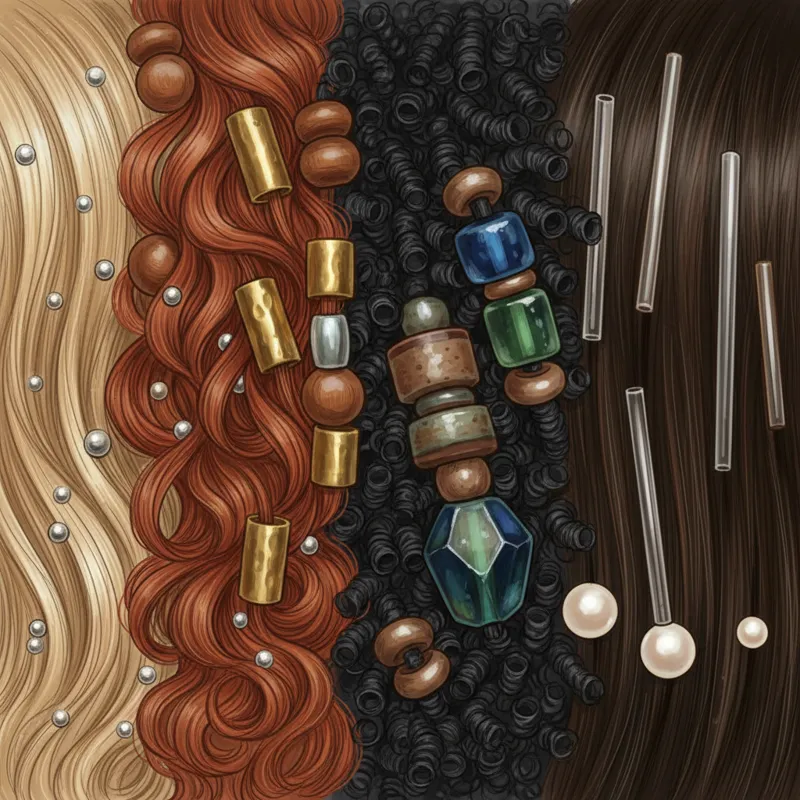
Selecting the perfect hair beads isn’t just about what looks good; it’s about what works structurally with your hair. The right choice ensures comfort, longevity of your style, and, crucially, hair health.
Hair Type Considerations
- Fine Hair: Opt for lighter, smaller beads made from materials like plastic, wood, or lightweight metal. Heavy beads can cause strain, breakage, or simply slip off. Delicate glass beads or thin metallic cuffs can add elegance without excessive weight.
- Thick/Coarse Hair: This hair type can generally support heavier and larger beads. Materials like ceramic, stone, or chunky metal work well. The greater density and strength of thick hair provide a stable foundation, allowing for more dramatic adornments.
- Natural Hair (Coily/Kinky): These textures often have excellent grip, making them ideal for a wide range of beads. The natural curl pattern helps secure beads in place. Consider beads with larger holes if threading onto very dense sections.
- Relaxed/Straightened Hair: While smoother, relaxed hair can still hold beads, particularly if incorporated into braids or twists. For loose hair, consider beads with silicone linings or those that clip on to prevent slipping.
Style Match
The style you’re wearing dictates the most appropriate type and placement of beads for hair.
- Braids (Box Braids, Knotless Braids, Cornrows): This is arguably the most common style for bead adornment. Smaller beads can be threaded onto the ends, while larger, more decorative beads can be placed along the length of individual braids. The tightly woven structure provides a secure anchor.
- Locs (Traditional, Sisterlocks, Microlocs): Locs are naturally suited for beads. Specially designed loc jewelry, which often includes springs or flexible cuffs, can be easily slipped onto or around locs. Beads can also be threaded directly onto the locs for a permanent, integrated look.
- Twists (Two-Strand Twists, Senegalese Twists): Similar to braids, twists offer a stable base. Beads can be added to the ends or strategically placed throughout the twist pattern.
- Loose Hair: While more challenging, beads can still be used. Small sections can be braided or twisted to create a secure point for beads. Clip-in beads or those integrated with hairpins are also options for temporary embellishment.
Materials Matter
The material of your beads for hair affects their weight, appearance, durability, and even how they feel against your scalp.
- Wood: Lightweight, natural, and earthy. Offers a warm, organic aesthetic. Available in various finishes and stains.
- Metal (Gold, Silver, Bronze, Copper): Provides a sleek, luxurious, or edgy look. Can be solid, hollow, or coiled. Consider potential allergic reactions to certain metals. High-quality metals resist tarnishing better.
- Glass: Delicate and can range from tiny seed beads to intricate lampwork designs. Offers sparkle and vibrant colors. Can be fragile.
- Plastic/Acrylic/Resin: Extremely lightweight, available in an endless array of colors, shapes, and sizes. Often more affordable and durable than glass for larger statement pieces.
- Ceramic/Clay: Handcrafted feel, unique textures and glazes. Often carry cultural designs and can be slightly heavier than wood or plastic.
- Gemstone/Crystal: Adds a touch of luxury and natural beauty. Each stone offers a unique color and pattern. Can be heavier and more expensive.
Sizing and Weight
Paying attention to the size and weight of beads for hair is paramount. Beads that are too heavy can pull on the hair follicle, leading to tension, discomfort, and potentially hair loss over time. Conversely, beads that are too large in diameter for the hair section might slip off. Always match the bead’s internal diameter to the thickness of the hair strand or braid it will adorn. Distribute weight evenly across your head when using multiple beads.
7 Stylish Beads for Hair That Instantly Elevate Your Look – Must-Have Picks for 2025 (and 2026!)

These picks, popular throughout 2025, are still very much in vogue and perfect for adding that extra touch in 2026.
1. Metallic Coil Cuffs and Beads
Metallic cuffs, often open-ended coils or seamless rings, offer a sleek, modern aesthetic. Available in gold, silver, rose gold, and even matte black finishes, they provide an instant touch of glamor. Their open design means they can be gently squeezed to fit various hair thicknesses, making them incredibly versatile. They add a refined sparkle to braids, twists, and even individual locs, reflecting light beautifully. You’ll often see them clustered for a more dramatic effect or spaced out for subtle accents.
2. Carved Wooden Accent Beads
For a more organic, earthy, or bohemian vibe, wooden beads are unparalleled. They come in a vast array of natural wood tones, from light maple to rich ebony, and are often intricately carved with geometric patterns, tribal motifs, or abstract designs. Wooden beads are lightweight, making them suitable for prolonged wear, and they age gracefully, often developing a unique patina. They pair exceptionally well with natural hair textures and neutral-toned outfits, providing a grounded elegance.
3. Delicate Glass Seed Beads & Bugle Beads
When subtlety and intricate detail are desired, tiny glass seed beads and longer bugle beads are the go-to. These can be woven directly into braids, used to create delicate patterns, or strung together to form longer decorative strands. They catch the light with a soft shimmer and come in every color imaginable, allowing for highly personalized and colorful designs. While delicate, their small size makes them incredibly lightweight, perfect for adding a touch of sparkle without bulk.
4. Bold Resin/Acrylic Statement Beads
If you’re looking to make a statement with vibrant colors and unique shapes, resin or acrylic beads are an excellent choice. These materials allow for much larger, bolder designs – think chunky geometric shapes, iridescent finishes, or beads embedded with glitter or dried flowers. Despite their size, they are surprisingly lightweight, preventing strain on your hair. They are perfect for adding a playful, artistic, or avant-garde touch to your look, often becoming the focal point of a hairstyle.
5. Polished Gemstone & Crystal Beads
For a touch of natural luxury and depth, gemstone and crystal beads are a sophisticated option. Beads made from materials like polished onyx, amethyst, tiger’s eye, jasper, or even quartz add unique patterns and energies (for those who believe in crystal properties). Each bead is distinct, offering a truly bespoke feel. They tend to be heavier than wood or plastic, so strategic placement and proper support are key, especially for styles like locs where they can be incorporated individually.
6. Handcrafted Ceramic or Clay Beads
These beads bring a sense of artistry and unique texture. Often handmade, ceramic and clay beads feature distinct glazes, hand-painted designs, and irregular shapes that celebrate craftsmanship. They might be earthy and rustic or vibrant and glossy, depending on the firing and glazing process. They are perfect for adding an artisanal touch to your look and often resonate with styles that embrace cultural patterns or a natural aesthetic.
7. Customizable Letter & Charm Beads
For ultimate personalization, letter beads and small charm beads are a fun and expressive choice. Spell out your initials, a meaningful word, or add a tiny charm that represents a hobby or passion. These beads are typically made from lightweight metals or acrylic and are designed to thread easily onto braids or twists. They are particularly popular for adding a youthful, personal touch and can be easily swapped out to reflect your mood or current interests.
Mastering Installation: Techniques for Every Style
Proper installation is crucial not only for the aesthetic appeal but for the health of your hair. Rushing this step can lead to damage.
Tools You’ll Need
- Hair Threading Tool (Beader/Latching Tool): This is a slender tool with a small hook or loop at one end, designed to pull hair through the bead. Essential for beads with smaller openings.
- Hair Cuffs/Pliers: For adjustable metal cuffs, small, soft-jawed pliers can help gently secure them without damaging the hair or bead.
- Rubber Bands/Hair Elastics: Tiny clear elastics can be used to secure beads at the ends of braids or twists, especially if the bead opening is slightly larger than the hair section.
- Hair Clips: To section off hair and keep it organized during the process.
Braids & Twists: Securing Your Adornments
1. Preparation: Ensure your braids or twists are fully formed and secure.2. Threading (for closed beads): For beads that need to be threaded, gather the end of the braid/twist. Use a hair beading tool: hook the very end of your braid (or a small section of it) through the tool’s loop. Push the bead onto the tool, then pull the tool and the hooked hair through the bead.3. Securing the End: Once the bead is at the desired position (usually the very end), you can either knot the braid below the bead (if possible without compromising the braid) or use a tiny, clear rubber band to secure the bead in place. This prevents it from sliding off.4. Cuffs: For open-ended cuffs, simply slide the cuff onto the braid or twist at the desired point. Gently pinch it closed if it’s adjustable, ensuring it’s snug but not tight.
Locs: Integrated Beauty
1. Threading (for loc beads): Many loc beads have larger openings or a spiraled design. Gently twist the loc and thread it through the bead. Some loc beads are designed to screw onto the loc.2. Loc Cuffs/Jewelry: These are often flexible or spring-loaded. Gently open the cuff and slide it onto the loc. Release to secure. They are designed to fit snugly without excessive pressure.3. Placement: Beads can be placed anywhere along the loc, from root to tip. Consider distributing them evenly to avoid undue stress on a single loc.
Loose Hair: Temporary Embellishment
For loose hair, the most secure method is to create a small, tight braid or twist within a section of your hair, then install the bead onto that braid/twist as described above. Alternatively, specialized clip-in hair jewelry or beads that are integrated into decorative hairpins can be used for less commitment.
Hair Health First
Always prioritize the health of your hair. Never pull too hard when threading beads. If a bead is too tight, it can restrict blood flow to the follicle, cause discomfort, and lead to breakage. Distribute the weight of heavier beads across multiple strands or sections of hair to avoid tension alopecia. If you feel any discomfort, the bead is likely too tight or too heavy for that section of hair. It’s often helpful to prepare your hair properly with conditioning treatments, just as you would before applying raw hair bundles for a protective style.
Maintaining Your Beaded Hairstyle
Once installed, proper maintenance ensures your beads stay beautiful and your hair remains healthy.
Cleaning Your Beads and Hair
You don’t need to remove your beads every time you wash your hair. Focus on cleansing your scalp and the exposed hair between the beads. For the beads themselves, a light wipe with a damp cloth (and mild soap if necessary for non-porous materials like glass or plastic) can remove product buildup or dust. For porous materials like wood or unsealed clay, avoid excessive moisture. Consider a light, non-greasy cleanser for your scalp that doesn’t leave heavy residue, as this can build up on your beads too.
Protecting Beads and Hair at Night
Just like with any intricate hairstyle, protecting your hair at night is vital. Sleep with a satin or silk scarf, bonnet, or pillowcase. This reduces friction, which can snag beads, pull on your hair, or cause frizz. It also helps prevent beads from getting caught on bedding or accidentally dislodged.
Longevity and Replacement
The lifespan of your beaded style depends on the hair type, bead material, and how well you maintain it. For braids and twists, beads can typically stay in for the duration of the style (e.g., 4-8 weeks). For locs, beads can remain for months or even years, especially if integrated securely. Regularly inspect your beads for any signs of loosening, damage, or wear. Remove and re-install if a bead feels loose or if it’s causing any strain on your hair.
Product Use
Be mindful of the products you apply to your hair. Heavy creams, gels, or oils can build up on beads, dulling their shine or accumulating residue, especially on intricate carvings or textured surfaces. Opt for lighter serums or sprays when possible, and apply them primarily to your scalp and hair shaft, avoiding direct contact with the beads themselves.
Things People Usually Miss When Using Hair Beads
It’s easy to get caught up in the visual appeal of beads, but a knowledgeable approach considers more than just style.
Underestimating Weight Distribution
This is perhaps the most critical oversight. A single heavy bead might be fine, but a cluster of them, or many heavy beads spread across a small section of hair, can create significant tension. Over time, this constant pulling can lead to thinning hair, breakage, and even a condition known as traction alopecia, where hair follicles are permanently damaged. Always feel for comfort and lightness; if it pulls, it’s too heavy for that specific section.
Ignoring Hair Texture Compatibility
Not all beads work equally well with all hair textures. A smooth, wide-holed bead might slip right off fine, straight hair unless secured. Conversely, forcing a bead with a very small opening onto dense, coily hair can cause snags and damage. Understanding how your hair’s unique texture interacts with different bead materials and hole sizes is key to a secure and healthy style.
The Pitfall of Over-Beading
While some styles benefit from an abundance of beads, a common mistake is simply adding too many without consideration for balance or design. This can lead to a cluttered look, excessive weight, and make the hair unmanageable. Often, a few strategically placed, high-quality beads can be far more impactful than dozens of mediocre ones. Less is frequently more when it comes to sophisticated adornment.
Neglecting Proper Cleaning and Hygiene
Just like your hair, your beads need attention. Product buildup, dust, and environmental pollutants can accumulate on and around beads. This not only dulls their appearance but can create an environment for scalp issues if hygiene is compromised. Regular, gentle cleaning of both hair and beads is essential for maintaining health and aesthetics. A steam hair brush can be effective for styling and refreshing, but for deep cleaning around beads, manual care is best.
Overlooking Cultural Significance (Respectful Use)
Many styles of beads for hair, especially those with specific patterns, materials, or placement, carry deep cultural and historical significance. While modern fashion often appropriates elements from various cultures, an informed and respectful approach involves understanding, appreciating, and honoring these origins rather than simply consuming them as trends. For instance, specific bead colors or patterns may hold specific meanings in certain African diasporic traditions. When choosing beads, a moment of consideration for their potential cultural roots adds depth to your personal expression. This perspective is vital for any fashion item that crosses cultural lines, much like understanding the nuances of 1B hair color in hair extension contexts.
Styling Inspiration: Beyond the Basics
Once you’ve got your favorite beads, how can you take your look to the next level?
- Layering Materials: Don’t be afraid to mix and match. A metallic cuff alongside a wooden bead, or a gemstone bead accenting a cluster of glass seed beads, can create a rich, textured look.
- Strategic Placement: Instead of just scattering beads randomly, consider where they will have the most impact. Frame your face with beads placed on braids around your hairline, or use them to accentuate a bun or ponytail.
- Color Play: Use beads to introduce contrasting colors to your hair or to complement your outfit. You can also create ombre effects with beads of varying shades.
- Asymmetrical Designs: Sometimes, an off-center or asymmetrical arrangement of beads can create a more dynamic and artistic statement than a perfectly symmetrical one.
- Incorporating Charms: Small charms, symbols, or even miniature bells can be added to your beaded style for extra flair and a unique auditory element.
Conclusion
The world of hair beads is rich with possibilities for personal expression, cultural connection, and instant style elevation. As we move further into 2026, the trends from 2025 demonstrate the enduring appeal of these versatile adornments. From the understated elegance of metallic cuffs to the bold statement of resin shapes or the earthy charm of wooden beads, there’s a perfect pick for every hair type, style, and occasion. By understanding the practicalities of material, size, installation, and maintenance, you can ensure your beaded hairstyle is not only stunning but also healthy and comfortable. So go ahead, experiment, and let your hair beads tell a story that is uniquely yours. It’s an accessible way to transform your look and embrace a truly individualized aesthetic.
People Also Ask (FAQ)
How do you put beads in hair without it falling out?
To prevent beads from falling out, choose beads with an internal diameter that matches your hair section’s thickness. For braids or twists, use a hair beading tool to thread the hair through, then secure the bead at the very end with a tiny, clear rubber band or by tying a knot in the braid below the bead. For locs, ensure the loc bead is specifically designed for locs, often with a spiral or tight-fitting mechanism.
What kind of beads do you use for hair?
You can use a wide variety of beads for hair, depending on your hair type and desired style. Common materials include wood, metal (gold, silver, brass), glass, plastic, acrylic, resin, ceramic, clay, and gemstones. Consider factors like weight, size, and your hair’s texture when making your selection to ensure comfort and hair health.
Are hair beads good for your hair?
When chosen and installed correctly, hair beads are generally not harmful. In fact, for protective styles like braids or locs, they can help protect the ends of your hair. The key is to avoid excessive weight, tight installation that causes tension or pulling, and neglecting proper hair and bead hygiene. If beads are too heavy or installed too tightly, they can lead to breakage or hair loss.
How do you put beads on thick hair?
Thick hair can often support larger and heavier beads. For installation, section your hair clearly. If braiding or twisting, ensure the individual sections are secure. Use a hair beading tool with a robust hook to thread the thicker section through the bead. For locs, opt for loc beads with larger openings or flexible designs that can accommodate the loc’s thickness. Always prioritize comfortable tension over a super-tight fit.
How long do beads stay in braids?
Beads typically stay in braids for the duration of the braided style, which usually ranges from 4 to 8 weeks. Their longevity depends on how securely they are installed, the quality of the beads, and how well you maintain your braids. If the braids start to loosen or the beads show signs of slipping, it’s often an indication that it’s time to take down the style or re-secure the beads.