Navigating the world of curly hair care in 2026 often feels like a constant quest for the right tools. For many with waves, curls, or coils, the brush is either a best friend or a sworn enemy. Using the wrong one can lead to a host of frustrations: tangled messes, excessive breakage, a halo of frizz, and a complete loss of curl definition. The goal isn’t just to detangle; it’s to nurture your unique curl pattern, encouraging it to spring to life without damage. Finding the best brush for curly hair is less about brand hype and more about understanding the mechanics of bristles, design, and how they interact with your specific hair texture. This isn’t about magical solutions, but rather applying practical knowledge to achieve defined, healthy curls.
Understanding Your Curls: Why the Right Brush Matters

Curly hair, by its very nature, is more prone to dryness and breakage than straight hair. The twists and turns in each strand create points of weakness, making it susceptible to damage from improper handling. Understanding your curl pattern – whether it’s wavy (2a-2c), curly (3a-3c), or coily (4a-4c) – and your hair’s porosity is fundamental. Highly porous hair, for instance, absorbs and loses moisture quickly, often feeling dry and needing extra care during detangling. The wrong brush can disrupt the natural curl cuticle, leading to frizz. Bristles that are too stiff or too closely packed can pull and snag, causing painful detangling and actual physical damage to the hair shaft. Conversely, a well-chosen brush glides through, gently separating strands, distributing natural oils, and encouraging curl clumps without causing friction. This mechanical interaction is key; the brush is a tool designed to work with your hair’s unique architecture, not against it.
The Science of Bristles: Material and Design for Optimal Care

The type of bristles on a brush dictates much of its functionality and how it interacts with your curls. It’s not just about what they’re made of, but also their flexibility, spacing, and tip design.
Boar Bristles
These natural bristles are excellent for distributing natural oils from the scalp down to the ends, adding shine, and smoothing the hair cuticle. They’re generally softer and ideal for styling, finishing, or gently detangling looser waves. For tighter curls, they might not penetrate deep enough to detangle effectively and could potentially cause friction if used improperly.
Nylon Bristles
Often found in paddle or vent brushes, nylon bristles are stiffer than boar bristles and excel at detangling. Look for nylon bristles with rounded, ball-tipped ends to prevent scratching the scalp and snagging hair. Their stiffness allows them to work through knots, making them a common choice for various curl types.
Mixed Bristles
Some brushes combine boar and nylon bristles. This fusion offers the detangling power of nylon with the smoothing and oil-distributing benefits of boar hair, providing a versatile option for those seeking both definition and shine.
Flexible Plastic/Silicone Bristles
These are a game-changer for wet detangling. Their flexibility allows them to bend and move with your curls, significantly reducing breakage and pain. Often widely spaced, they glide through conditioner-soaked hair, gently separating tangles without pulling. They are the cornerstone of many specialized detangling brushes.
Bristle Spacing and Tips
Wider bristle spacing is crucial for curly hair, as it allows the brush to work through larger sections of hair without getting stuck. Seamless, smooth bristle tips (whether ball-tipped or naturally rounded) are always preferred over sharp, unfinished edges, which can snag and break delicate strands.
Brush Anatomy: Beyond the Bristles
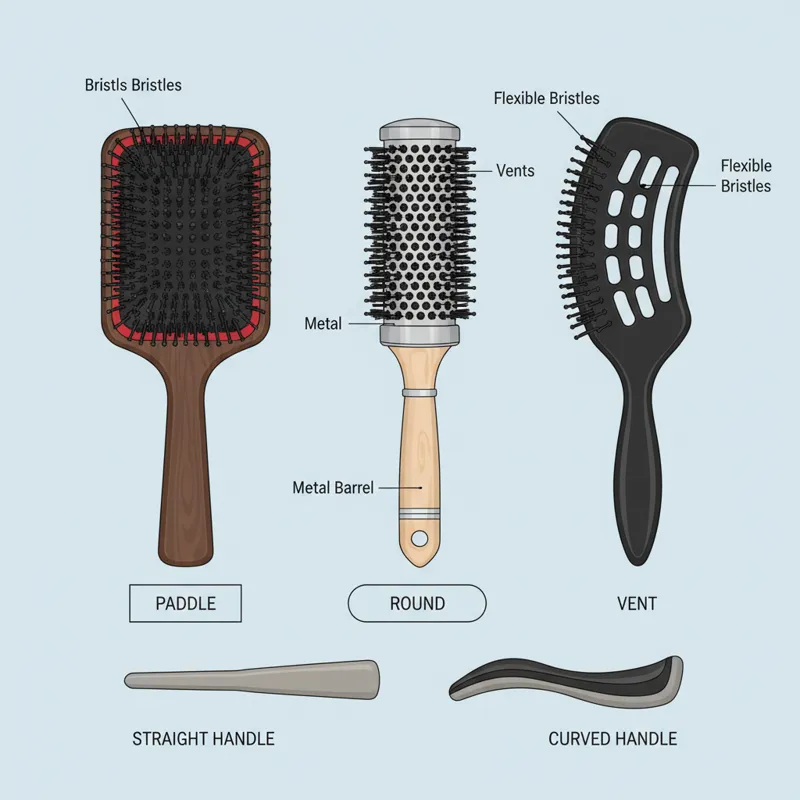
Beyond the bristles, a brush’s overall design contributes significantly to its effectiveness and user experience.
Handle Ergonomics
A comfortable, non-slip handle is paramount, especially when detangling wet hair in the shower. A good grip prevents hand fatigue and allows for better control, reducing the likelihood of accidental pulling or aggressive brushing. Some modern brushes feature ergonomic designs specifically for wet hands.
Cushion and Ventilation
Many brushes have a rubber or air-filled cushion base that allows the bristles to flex, providing gentler detangling and scalp massage. Vent brushes, with their open design, allow air to circulate, making them ideal for speeding up drying when used with a blow dryer.
Brush Head Shape
- Paddle Brushes: Large, flat head, great for smoothing and detangling larger sections, often with ball-tipped nylon bristles.- Round Brushes: Used for styling, adding volume, or creating specific curl patterns with heat. Less ideal for general detangling of curls.- Vent Brushes: Feature an open, vented design to allow airflow, making them suitable for blow-drying and faster styling.- Detangler Brushes: Specifically designed for curly and coily hair, often featuring flexible, widely spaced bristles and a contoured head to reduce stress on the hair.
Material Durability
Brushes come in various materials, from plastic to wood and bamboo. While plastic is common and often durable, consider bamboo or other sustainable options if environmental impact is a concern. The durability of the brush should match its intended use – a shower detangler needs to withstand water exposure. For instance, some highly durable, aesthetically pleasing brushes are made from materials as carefully selected as those found in a glass tea pot designed for daily use.
Things People Usually Miss: The Often-Overlooked Truths of Brushing Curly Hair
Many curly hair struggles stem not from the brush itself, but from how it’s used – or rather, misused. Here are crucial points often overlooked:1. Always Detangle Wet or Damp Hair, with Slip: Attempting to brush dry curly hair is a recipe for frizz, breakage, and pain. Curly hair should always be detangled when wet or at least damp, saturated with a conditioner, leave-in, or detangling spray. This provides “slip,” allowing the brush to glide through without snagging. Think of it like trying to untangle a knotted rope dry versus soaking it in water first.2. Sectioning is Non-Negotiable: Don’t try to tackle your entire head of hair at once. Divide your hair into manageable sections (four to six, depending on thickness and length). This isolates knots and allows you to work through them systematically, preventing larger tangles from forming and reducing overall stress on your hair.3. Start from the Ends, Work Your Way Up: This is perhaps the most critical rule. Begin detangling at the very ends of your hair, gently working out small knots. Once the ends are clear, move a few inches up the strand and repeat. Gradually work your way towards the roots. Brushing from the roots down pushes tangles further together, creating larger, more stubborn knots.4. Not Every Curl Needs a Brush Post-Styling: While a good brush is essential for detangling and creating initial curl clumps, many curly routines involve finger-coiling, raking, or scrunching for final definition, especially for tighter textures. Over-brushing dry hair after styling can disrupt the curl pattern and induce frizz. The brush primarily sets the stage.5. Clean Your Brush Regularly: Product buildup, shed hair, and dust accumulate on brushes. A dirty brush can redeposit grime onto your clean hair, reducing effectiveness and hygiene. Regularly remove hair from your brush and wash it with a gentle soap to maintain its performance and longevity.
Our Top 6 Picks for the Best Brush for Curly Hair: Defined Curls and Happy Scalps
In 2026, the market offers an impressive array of brushes tailored for textured hair. Based on mechanistic design principles, user feedback, and effectiveness in addressing common curly hair challenges, here are our top recommendations for the best brush for curly hair.
1. Denman Brush D3 Original Styler
- Key Features: This iconic brush features seven rows of perfectly spaced, sculpted nylon pins set in an anti-static rubber pad. The unique half-round shape of the pad and staggered pin pattern are engineered to create tension, encouraging curls to clump and define. The pins are designed to be smooth and gentle, minimizing snagging.
- Ideal For: Best for 2c-3b curl types looking for excellent curl definition and clumping. It’s also great for detangling medium-to-thick hair during styling. This brush excels as a styling tool, creating uniform curl patterns.
- Pros: Exceptional for curl definition, helps distribute styling products evenly, durable, easy to clean.
- Cons: Can be too firm for very fine or extremely fragile hair; pins might feel too stiff for some highly sensitive scalps.
2. Tangle Teezer Wet Detangler
- Key Features: The Tangle Teezer, particularly its Wet Detangler variant, uses two-tiered firm-flex teeth technology. The long, flexible teeth detangle, removing knots and reducing breakage, while the short teeth smooth the hair cuticle. Designed specifically for use on wet hair, it has an ergonomic handle for a secure grip in the shower.
- Ideal For: All curl types (2a-4c), especially for wet detangling and preventing frizz curly hair. It’s incredibly gentle and effective for fine to thick hair, minimizing pulling and pain.
- Pros: Super gentle, significantly reduces breakage and pain during wet detangling, compact, great for distributing conditioner.
- Cons: Not ideal for styling or creating curl clumps; some might prefer a more traditional handle for general use.
3. Manta Hair Brush
- Key Features: The Manta is unique for its incredibly flexible design, molding to the shape of your head and hand. Its bristles are designed to minimize breakage and maximize shine, with a focus on scalp health. It’s gentle enough for very fragile hair, including extensions.
- Ideal For: Those with extremely fragile hair, fine curls, or sensitive scalps. It’s an excellent wet detangling brush for natural hair of all curl types, offering a luxurious and gentle experience.
- Pros: Unparalleled flexibility, extremely gentle on hair and scalp, reduces breakage, promotes shine.
- Cons: Premium price point; its unique shape might take some getting used to for handling.
4. Pattern Beauty Shower Brush by Tracee Ellis Ross
- Key Features: Designed with widely spaced, firm-yet-flexible bristles, this brush is built for detangling in the shower. Its sturdy handle provides a good grip, and the bristle design aims to gently separate curls without pulling or causing undue stress.
- Ideal For: Medium to thick 3b-4c curl types, particularly for in-shower detangling with conditioner. It’s effective as a styling tool for textured hair, helping to define curls while distributing product.
- Pros: Excellent for shower detangling, robust construction, widely spaced bristles prevent snagging, good for thick hair.
- Cons: Can be too large for very short hair; bristles might feel too firm for very fine curls.
5. EZ Detangler Brush
- Key Features: This brush features distinct, widely spaced, flexible arms that can move independently. This design allows it to separate and glide through highly coiled and dense hair without pulling. It comes with a detachable control bar to adjust the firmness of the bristles.
- Ideal For: Extremely thick, coily (4a-4c) hair types that struggle with severe tangles and breakage. It truly lives up to its name as an effective detangling brush for natural hair.
- Pros: Exceptional for very dense and coily hair, significantly reduces detangling time and pain, flexible design prevents breakage.
- Cons: Can feel somewhat flimsy due to its flexible design; styling capabilities are limited beyond detangling.
6. Wet Brush Original Detangler
- Key Features: The Wet Brush uses IntelliFlex® bristles, which are ultra-soft and flexible, allowing them to glide through tangles without pulling or snagging. Its design makes it safe for use on wet hair, which is crucial for preventing frizz curly hair.
- Ideal For: A versatile option suitable for a wide range of curl types (2a-3c) and even fine hair. It’s an accessible and effective wet hair brush for detangling on a daily basis.
- Pros: Affordable, widely available, very gentle on wet hair, effective for various hair types, significantly reduces pain.
- Cons: Less effective for very thick or coily hair; not designed for heavy styling or curl clumping.
How to Properly Use Your Curly Hair Brush for Maximum Benefit
Even the best brush for curly hair won’t perform optimally without the right technique. Here’s a step-by-step guide:
- Pre-condition and Wet: Always start with thoroughly wet hair. Apply a generous amount of conditioner, a leave-in, or a detangling spray. Ensure your hair has plenty of “slip” – it should feel slick and easy to slide through with your fingers. This is the single most important step in preventing damage.
- Section Your Hair: Divide your hair into 4-6 manageable sections. Secure unbrushed sections with clips or hair ties. This isolates tangles and makes the process less overwhelming.
- Start from the Ends: Take one section. Begin brushing gently at the very ends of your hair. Work out any knots there first.
- Work Your Way Up: Once the ends are smooth, move a few inches up the strand and brush again, always working downwards. Continue this process, moving closer to the roots with each pass, until the entire section is tangle-free.
- Gentle Strokes: Use slow, deliberate, gentle strokes. If you encounter a stubborn knot, don’t yank. Apply more conditioner or detangler, and try to gently work it out with your fingers first before re-introducing the brush.
- Encourage Curl Clumps (Optional): If using a styling brush like the Denman, after detangling a section, you can use the brush to smooth and define curl clumps. Brush from the mid-shaft down, encouraging the hair to fall into its natural pattern. You can even twist the brush at the ends to further define the curl.
Maintaining Your Brush: Longevity and Hygiene
Just like any other tool, your curly hair brush requires maintenance to perform at its best and last longer.Regular Cleaning: After each use, or at least daily, remove any trapped hair from the bristles. For a deeper clean, especially if you use a lot of styling products, wash your brush weekly. Use warm water and a mild shampoo or soap. Gently scrub the bristles, rinse thoroughly, and let it air dry completely, bristle-side down, to prevent moisture from accumulating in the cushion. This simple step can prolong the life of your brush and keep your hair healthier.Proper Storage: Store your brush in a clean, dry place. Avoid leaving it in direct sunlight or in damp environments for extended periods, as this can degrade materials, especially wood or certain plastics.When to Replace: Even the best brush for curly hair won’t last forever. Replace your brush when the bristles start to bend, break, or lose their ball tips. Worn-out bristles become less effective and can snag hair, doing more harm than good. Generally, a good quality brush should last 6-12 months, though some durable models can last longer. The attention to detail required in maintaining brushes is similar to the care one might take for a fine Brown Palace Tea set, ensuring it always performs and looks its best.
Frequently Asked Questions (FAQ)
Can I brush curly hair when it’s dry?
Generally, no. Brushing dry curly hair disrupts the curl pattern, leading to frizz and significant breakage. It’s best to detangle when your hair is wet or damp and saturated with a conditioner or detangling product to provide slip and protect the hair shaft.
What’s the difference between a comb and a brush for curly hair?
Wide-tooth combs are excellent for initial detangling, especially for very tangled or fragile hair, as they cause less tension. Brushes, particularly those with flexible, widely spaced bristles, can offer more thorough detangling and also help with curl clumping and product distribution for styling. Many curly routines incorporate both.
How often should I brush my curly hair?
Most curly hair experts recommend brushing only on wash days, when your hair is wet and conditioned. For some, this might be once or twice a week. Daily brushing is generally not recommended as it can disrupt the curl pattern and lead to dryness and frizz.
Is it better to detangle with my fingers or a brush?
For initial, gentle detangling, especially for highly sensitive scalps or very fragile hair, finger detangling can be superior. It allows you to feel for knots and gently work them out without tools. A brush then helps to thoroughly remove remaining tangles and define curls. Many find a combination of both methods to be most effective. This careful consideration of tools and technique is often discussed in broader beauty and self-care conversations, similar to the health benefits associated with a refreshing cup of Matcha Milk Tea.
Conclusion
Finding the best brush for curly hair is a crucial step towards achieving healthy, defined, and manageable curls. It requires understanding your specific hair type, the mechanics of different bristle designs, and most importantly, mastering the proper technique. The right brush minimizes breakage, eliminates frizz, and encourages your natural curl pattern to flourish. By investing in the right tool and adopting mindful detangling practices, you can transform your hair care routine, moving from frustrating tangles to a joyous celebration of your unique textured hair.