
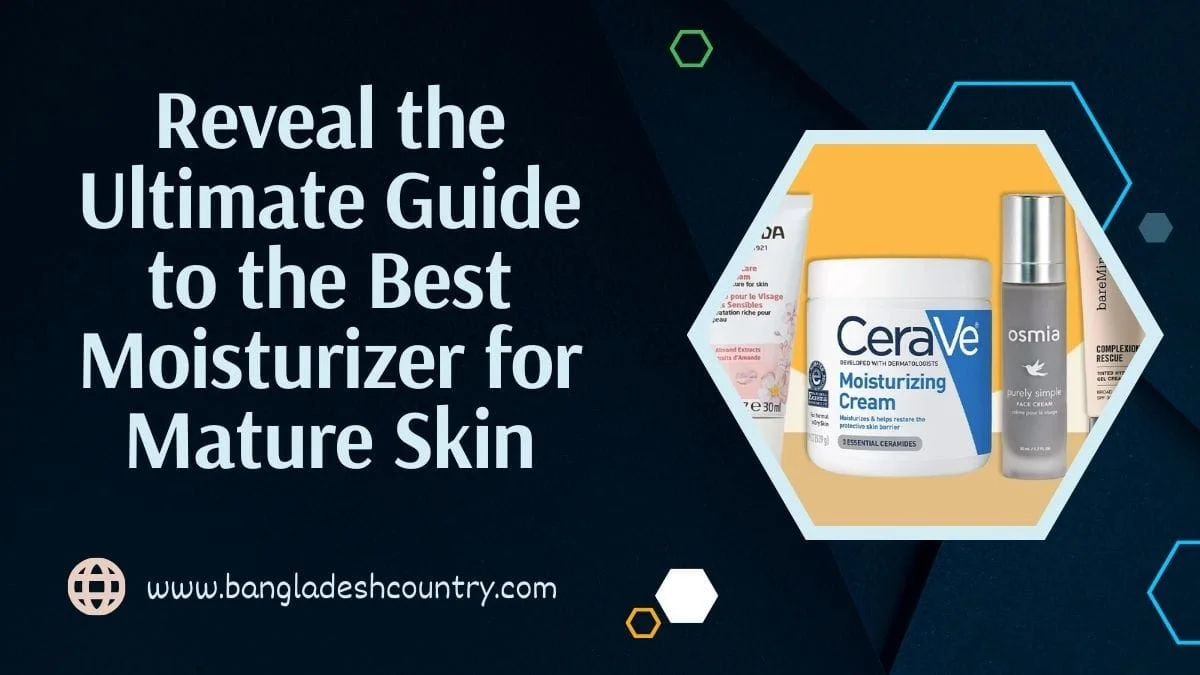
As we navigate 2026, the conversation around mature skin has evolved significantly. It’s no longer just about addressing visible lines but about understanding the intricate biological shifts that occur beneath the surface. Skin, like any complex organ, undergoes predictable changes with age: cellular turnover slows, collagen and elastin production diminish, and the natural lipid barrier weakens. These factors collectively contribute to increased dryness, loss of firmness, and a more pronounced appearance of wrinkles. Finding the right moisturizer isn’t merely a cosmetic choice; it’s a fundamental step in supporting skin health, maintaining its protective functions, and promoting a more resilient, hydrated complexion. The goal is to select a product that not only feels good but actively works to mitigate these age-related changes, providing genuine, observable benefits.
Understanding Mature Skin: More Than Just Wrinkles

Mature skin, typically observed from the late 40s onwards, is characterized by a series of physiological changes that impact its appearance and function. The most noticeable shifts include a reduction in epidermal lipids, which are crucial for maintaining the skin’s barrier integrity. This weakening of the barrier leads to increased transepidermal water loss (TEWL), resulting in chronic dryness, flakiness, and a feeling of tightness. It’s a common misconception that mature skin is simply “dryer”; rather, its ability to retain moisture becomes compromised.
Beneath the surface, the dermal layer undergoes significant transformation. Fibroblasts, the cells responsible for producing collagen and elastin, become less efficient. Collagen, which provides structural support, and elastin, which gives skin its snap-back quality, degrade faster than they’re synthesized. This imbalance leads to a loss of elasticity, sagging, and the formation of deeper wrinkles and fine lines. Think of it like a mattress losing its springs and padding over time—it doesn’t just wrinkle; it loses its overall structure and bounce.
Beyond these structural changes, mature skin also experiences a slower cell renewal rate. Younger skin sheds and renews its cells every 28 days or so, but this process can slow to 40-60 days in mature skin. This sluggish turnover contributes to a dull, uneven complexion and can make existing wrinkles appear more prominent. Reduced microcirculation can also play a role, diminishing the skin’s natural radiance and delivery of essential nutrients.
Furthermore, the skin’s natural antioxidant defenses may become less robust, leaving it more vulnerable to environmental damage from UV radiation and pollution. This cumulative damage, often manifesting as hyperpigmentation or “age spots,” further contributes to an uneven skin tone. Understanding these underlying mechanisms is crucial for selecting a moisturizer that provides comprehensive support, rather than just superficial hydration.
Key Ingredients for Mature Skin Moisturizers: What to Look For

When selecting the best moisturizer for mature skin, a discerning eye for ingredients is paramount. It’s not about marketing buzzwords, but about understanding how specific compounds interact with the skin’s biology to deliver tangible results. Here’s a breakdown of the powerhouse ingredients you want to see:
Hydrators (Humectants): Attracting and Binding Water
- Hyaluronic Acid (HA): A superstar hydrator. HA can hold up to 1,000 times its weight in water, drawing moisture from the environment and deeper skin layers to the surface. Look for formulations with different molecular weights – lower weights can penetrate deeper for sustained hydration, while higher weights sit closer to the surface to plump fine lines and smooth texture.
- Glycerin: A common and highly effective humectant that pulls moisture into the skin, preventing dryness and supporting barrier function. It’s often paired with other ingredients for a synergistic hydrating effect.
- Sodium PCA (Pyrrolidone Carboxylic Acid): A natural moisturizing factor (NMF) found in healthy skin. Sodium PCA helps maintain the skin’s hydration levels by attracting and holding water.
Emollients: Smoothing and Softening
- Ceramides: These are lipids (fats) that are naturally found in high concentrations in the skin’s outermost layer. They act like the “mortar” between skin cells, forming a protective barrier that prevents moisture loss and shields against environmental aggressors. Mature skin often has reduced ceramide levels, making ceramide-rich moisturizers essential for barrier repair and reducing dryness.
- Fatty Acids (e.g., Linoleic Acid, Oleic Acid): Crucial components of the skin’s lipid barrier. They help to replenish the skin’s natural oils, improving suppleness and reducing irritation. Essential fatty acids can also signal improved cellular function.
- Cholesterol: Another vital lipid component of the skin barrier, working in synergy with ceramides and fatty acids to restore structural integrity and enhance moisture retention.
Occlusives: Sealing in Moisture
- Petrolatum (Petroleum Jelly): While often maligned, petrolatum is one of the most effective occlusives. It creates a semi-permeable film on the skin’s surface, significantly reducing TEWL and sealing in hydration without clogging pores for most people.
- Squalane: A stable form of squalene, a lipid naturally produced by our skin. It’s an excellent emollient and a mild occlusive that mimics natural sebum, providing hydration and preventing moisture loss without feeling heavy or greasy.
- Shea Butter: Rich in fatty acids and vitamins, shea butter is a natural emollient and occlusive that intensely nourishes and protects the skin, ideal for very dry or compromised mature skin.
- Dimethicone: A silicone-based polymer that forms a breathable barrier on the skin, smoothing texture and minimizing moisture loss. It provides a silky feel without being heavy.
Active Ingredients for Targeted Concerns
- Antioxidants (Vitamin C, Vitamin E, Ferulic Acid, Green Tea Extract): These compounds neutralize free radicals generated by UV radiation and pollution, which contribute to collagen breakdown and premature aging. Vitamin C also plays a crucial role in collagen synthesis and can brighten the complexion.
- Peptides: Short chains of amino acids that act as signaling molecules. Different peptides have different functions; some can signal the skin to produce more collagen (e.g., Matrixyl, Palmitoyl Tripeptide-5), while others may relax facial muscles (e.g., Argireline). They’re vital for improving skin firmness and elasticity.
- Gentle Retinoids (Retinol, Retinaldehyde): While powerful, retinoids accelerate cell turnover, stimulate collagen production, and reduce the appearance of wrinkles. For mature skin, lower concentrations or encapsulated forms are preferred to minimize irritation, making them suitable for overnight renewal. It’s always best to introduce them slowly.
- Alpha Hydroxy Acids (AHAs – e.g., Lactic Acid): These can be incredibly beneficial for mature skin when used gently. Lactic acid, in particular, not only exfoliates the surface layer to reveal brighter skin but also acts as a humectant, drawing moisture into the skin. This dual action makes it excellent for improving skin texture and hydration simultaneously. If you’re looking to integrate an AHA, consider starting with a lactic acid toner.
- Niacinamide (Vitamin B3): A versatile ingredient that supports barrier function, reduces inflammation, improves skin elasticity, and can minimize the appearance of pores and uneven skin tone. It’s well-tolerated by most mature skin types.
Our Top 5 Powerful Picks: Best Moisturizers for Mature Skin in 2026
Choosing the best moisturizer for mature skin requires a targeted approach, addressing specific concerns like dryness, loss of firmness, and environmental damage. Based on the mechanistic understanding of mature skin and ingredient efficacy, here are five powerful archetypes of moisturizers that deliver comprehensive benefits.
1. The Ceramide-Rich Barrier Repair Cream
Ideal For: Severely dry, sensitive, or compromised mature skin experiencing flakiness, irritation, and tightness.
Why it’s a Power Pick: This type of cream focuses intensely on restoring the skin’s lipid barrier, which is often depleted in mature skin. Formulations are typically rich in a synergistic blend of ceramides (ideally a 3:1:1 ratio of Ceramides, Cholesterol, and Fatty Acids), often coupled with ingredients like Niacinamide. The ceramides act as the crucial “mortar” to mend gaps in the skin barrier, preventing transepidermal water loss and shielding against irritants. Niacinamide further supports this by boosting ceramide synthesis and calming inflammation. The result is skin that feels immediately soothed, deeply hydrated, and visibly smoother, with a significant reduction in dryness and sensitivity over time. It’s one of the best moisturizer for mature skin when barrier health is the primary concern.
2. The Peptide-Powered Firming & Lifting Elixir
Ideal For: Mature skin showing signs of sagging, loss of elasticity, and deeper lines, looking for improved firmness and contour.
Why it’s a Power Pick: This moisturizer type is engineered to stimulate the skin’s natural regenerative processes. It harnesses a potent blend of various peptides, such as Matrixyl (which signals collagen production) and Argireline (which can temporarily reduce muscle contraction-induced wrinkles), sometimes alongside epidermal growth factors (EGFs) or plant-derived stem cells. These ingredients work at a cellular level to encourage collagen and elastin synthesis, directly addressing the underlying cause of sagging and loss of firmness. While not a substitute for clinical procedures, consistent use of a well-formulated peptide cream can lead to a noticeable improvement in skin resilience, bounce, and a more defined facial contour. It often has a luxurious, slightly richer texture to deliver these actives effectively.
3. The Antioxidant-Dense Environmental Shield
Ideal For: Mature skin exposed to daily environmental stressors, prone to dullness, uneven tone, and premature aging from free radical damage.
Why it’s a Power Pick: Daily exposure to UV radiation, pollution, and even blue light generates free radicals that accelerate the breakdown of collagen and elastin. An antioxidant-dense moisturizer acts as a protective shield. These formulations typically combine a spectrum of potent antioxidants like Vitamin C (often in stable forms like Ascorbyl Glucoside or THD Ascorbate), Vitamin E, Ferulic Acid, Green Tea Extract, and Resveratrol. These work synergistically to neutralize free radicals, reduce oxidative stress, and prevent cellular damage. Many also contain brightening agents to address age spots and improve overall radiance. While not explicitly a sunscreen, this type of moisturizer complements sun protection by fighting unseen damage, making it an excellent choice for daytime use to maintain skin vitality and a more even, luminous complexion.
4. The Gentle Retinoid-Infused Overnight Renewal
Ideal For: Mature skin seeking significant improvement in fine lines, deep wrinkles, texture, and overall skin rejuvenation, particularly for those new to retinoids or with sensitive skin.
Why it’s a Power Pick: Retinoids remain the gold standard for anti-aging due to their proven ability to accelerate cell turnover and boost collagen production. For mature skin, however, the key is gentleness to avoid irritation. This category includes moisturizers formulated with encapsulated retinol, retinaldehyde, or bakuchiol (a plant-based retinoid alternative). Encapsulation allows for a slow, sustained release of the retinoid, minimizing irritation while maximizing efficacy. These products are designed for nighttime use, leveraging the skin’s natural repair cycle. They work to smooth skin texture, reduce the depth of wrinkles, and improve overall skin clarity. When chosen carefully and introduced gradually, this type of moisturizer can bring about profound, visible anti-aging benefits, making it a truly powerful choice among the best moisturizer for mature skin options.
5. The Hydrating HA Multi-Weight Gel-Cream
Ideal For: All mature skin types, especially those needing intense, multi-level hydration without heaviness, or those with combination mature skin.
Why it’s a Power Pick: While all mature skin benefits from hydration, some prefer a lighter feel, or need deep moisture without contributing to oiliness in certain zones. This gel-cream leverages various molecular weights of Hyaluronic Acid, along with other humectants like Glycerin and Sodium PCA. Lower molecular weight HA penetrates deeper to provide sustained hydration and improve elasticity from within, while higher molecular weight HA plumps the skin’s surface, softening the appearance of fine lines. The gel-cream texture provides ample hydration without occluding the skin too heavily, making it comfortable for daily use, even under makeup. It’s quickly absorbed, leaving a supple, refreshed feel. It’s an excellent foundational choice, providing comprehensive hydration that supports the function of other active ingredients in your routine.
When considering the best moisturizer for mature skin, remember that finding your personal “power pick” might involve trying a few options or even layering different types to address various concerns effectively. The key is to listen to your skin and observe how it responds to different formulations.
Crafting Your Mature Skin Skincare Routine: Beyond Just Moisturizer
While a powerful moisturizer is central, it’s only one component of an effective strategy for mature skin. A holistic routine amplifies the benefits and addresses the skin’s complex needs. Think of it as a multi-step defense system.
Start with a gentle cleanser. Mature skin’s barrier is often compromised, so harsh, stripping cleansers can exacerbate dryness and irritation. Opt for creamy, hydrating formulas that remove impurities without leaving your skin feeling tight or dry.
Next, consider targeted serums. These deliver concentrated active ingredients directly to the skin. An antioxidant serum in the morning protects against environmental damage, while a peptide or growth factor serum can further support collagen production. If you’re addressing specific concerns like hyperpigmentation, a Vitamin C serum can be particularly beneficial. Applying these potent treatments before your moisturizer allows them to penetrate effectively.
Sun protection is non-negotiable, every single day, regardless of the weather. UV radiation is the primary external factor in skin aging. A broad-spectrum SPF 30+ sunscreen protects against both UVA (aging) and UVB (burning) rays. Apply it as the very last step in your morning routine, over your moisturizer. This layer of protection safeguards your skin from further damage and allows your other anti-aging efforts to truly make a difference. For those looking for an added glow, some incorporate face tanning drops into their routine, but these don’t replace the need for SPF.
Finally, consistency is paramount. Skincare isn’t about quick fixes but about consistent, long-term care. Allow products time to work, typically 4-12 weeks, before evaluating their full effect. Adjust your routine as your skin’s needs change, which they inevitably will with time and seasons.
What Most People Get Wrong About Moisturizers for Mature Skin
Even with abundant information, several common misconceptions persist when it comes to moisturizing mature skin. Addressing these can significantly improve your skincare outcomes.
1. Believing “Anti-Wrinkle” Labels Are Enough: Many people buy products solely based on an “anti-wrinkle” claim without examining the ingredient list. The term itself is often a marketing catch-all. True efficacy comes from specific, research-backed ingredients like retinoids, peptides, or powerful antioxidants. Always look past the claim to the compounds doing the work.
2. Thinking Heavier is Always Better: While mature skin often needs rich hydration, not all heavy creams are beneficial. Some merely sit on the surface without delivering active ingredients or repairing the barrier. The best moisturizer for mature skin provides both deep hydration and barrier support without necessarily feeling like a thick paste. A heavy product might also exacerbate breakouts in those with combination mature skin.
3. Neglecting Sunscreen Because “The Damage Is Done”: This is a critical error. Even if you have existing sun damage, consistent daily sunscreen application prevents further damage, allows the skin to repair itself, and protects the collagen and elastin you’re trying to build with other products. It’s never too late to start protecting your skin.
4. Expecting Instant Miracles: Skincare, especially for mature skin, is a marathon, not a sprint. Cellular turnover, collagen production, and barrier repair all take time. Expecting profound results in a week or two often leads to disappointment and jumping between products too quickly, which prevents any single product from showing its full potential.
5. Using Too Many Actives at Once: While layering active ingredients can be beneficial, mature skin is often more sensitive. Over-exfoliating or using multiple strong actives (like high-strength retinoids and multiple acids) concurrently can compromise the skin barrier, leading to redness, irritation, and increased dryness. Introduce new actives one at a time and observe your skin’s response. Less can often be more.
6. Ignoring Seasonal and Environmental Changes: Your skin’s needs aren’t static. What works in a humid summer might not be enough in a dry winter. Mature skin is particularly susceptible to environmental shifts. Adjust your moisturizer’s richness and occlusive properties based on the climate, humidity levels, and even your home environment (e.g., dry indoor heating). The best moisturizer for mature skin adapts to these variables.
7. Forgetting the Neck and Decolletage: These areas often show signs of aging just as prominently as the face but are frequently neglected. The skin here is thinner and more delicate. Extend your moisturizer and sunscreen application to these areas to maintain continuity in skin health and appearance.
Practical Tips for Choosing and Applying Your Moisturizer
Selecting and applying the best moisturizer for mature skin effectively can make a significant difference in your results. Here are some actionable tips:
Patch Testing is Your Friend
Before slathering a new product all over your face, conduct a patch test. Apply a small amount to an inconspicuous area, like behind your ear or on your inner forearm, for a few days. Check for any redness, itching, or irritation. This is especially crucial for mature skin, which can be more prone to sensitivity.
Consider Your Specific Skin Type and Concerns
While mature skin generally leans dry, there are nuances. Is your skin very dry, combination, or prone to occasional breakouts? Are your primary concerns deep wrinkles, sagging, hyperpigmentation, or just overall dullness? Tailor your choice based on these specific needs. A person with very dry, sensitive mature skin will benefit more from a rich ceramide cream, while someone with combination mature skin might prefer a multi-weight HA gel-cream for daytime and a retinoid at night.
Apply to Damp Skin
For maximum efficacy, apply your moisturizer immediately after cleansing, while your skin is still slightly damp. This helps to trap the water on the skin’s surface, enhancing the hydrating effects of humectants and improving product absorption. You can even gently mist your face with water or a hydrating toner before applying.
Use Gentle, Upward Strokes
When applying, use light, upward, and outward strokes. Avoid dragging or pulling at your skin, especially around delicate areas like the eyes. A gentle massage can also promote circulation, but the primary goal is even coverage without stressing the skin.
Consistency is Key
The benefits of even the best moisturizer for mature skin accumulate over time. Make it a non-negotiable part of your morning and evening routine. Skipping days or weeks will hinder progress and prevent you from seeing the full potential of your chosen product.
Layer Appropriately
If you’re using serums or other targeted treatments, apply them first, from thinnest to thickest consistency. Your moisturizer should typically be the last step before sunscreen in the morning, or the final step in your evening routine.
Don’t Forget Beyond the Face
The neck, chest (decolletage), and backs of your hands are often the first areas to show signs of aging due to sun exposure and thinner skin. Extend your moisturizer application to these areas daily to maintain consistent skin health and appearance across your exposed skin. For instance, many people focus on their hands with products that also contribute to nail health, sometimes even using nail growth nail polish alongside hand creams.
When to Consult a Professional
While this guide provides comprehensive information on selecting the best moisturizer for mature skin, it’s important to recognize the limitations of over-the-counter products and general advice. Skin is a complex organ, and individual responses can vary widely.
If you’re experiencing persistent skin issues such as severe, unmanageable dryness, chronic irritation, unexplained rashes, or worsening skin conditions despite diligent skincare, it’s always best to consult a board-certified dermatologist. They can provide a personalized diagnosis, identify underlying medical conditions, and recommend prescription-strength treatments or in-office procedures that are beyond the scope of topical moisturizers. They can also offer tailored advice on integrating powerful actives like prescription retinoids or specific treatments for conditions like rosacea or severe hyperpigmentation. This article provides general information and recommendations and should not be considered a substitute for professional medical advice.
People Also Ask (FAQ)
How often should mature skin be moisturized?
Mature skin benefits significantly from consistent hydration, ideally at least twice daily: once in the morning after cleansing and applying any serums, and again in the evening as the final step in your skincare routine. Some individuals with extremely dry skin might benefit from a light reapplication mid-day, especially in very dry climates.
Can a good moisturizer really reduce deep wrinkles?
A good moisturizer, especially one formulated with active ingredients like peptides, gentle retinoids, or potent antioxidants, can significantly improve the appearance of deep wrinkles. It can plump the skin, improve elasticity, and smooth texture, making wrinkles look less pronounced. However, moisturizers cannot eliminate deep wrinkles entirely. For significant reduction, professional treatments like laser therapy or injectables are typically required. The best moisturizer for mature skin works to maintain and improve skin health, complementing these more invasive interventions.
What’s the difference between a cream, lotion, and ointment for mature skin?
These terms primarily refer to the product’s consistency and occlusive properties. Ointments are the thickest and most occlusive, containing the least amount of water (e.g., petrolatum). They’re best for very dry, cracked, or compromised skin. Creams are thicker than lotions, with a higher oil-to-water ratio, providing substantial hydration and barrier support; they’re generally ideal for mature skin. Lotions are lighter, with a higher water content, making them less occlusive and suitable for normal to slightly dry skin, or for those who prefer a less rich feel. For mature skin, creams are often the most effective choice, but a rich lotion can also work well.
Is fragrance in moisturizers bad for mature skin?
Fragrance, whether synthetic or natural (from essential oils), can be a common sensitizer and irritant for any skin type, but mature skin tends to be more delicate and reactive. It’s generally advisable to choose fragrance-free moisturizers, especially if you have sensitive skin, rosacea, or are prone to contact dermatitis. Unfragranced products minimize the risk of irritation and inflammation, helping to maintain a healthy skin barrier.
Should I use a separate eye cream with mature skin?
While not strictly necessary for everyone, a separate eye cream can be beneficial for mature skin. The skin around the eyes is thinner and more delicate, making it prone to fine lines, puffiness, and dark circles. Many facial moisturizers are formulated to be gentle enough for the eye area, but a dedicated eye cream often contains specific ingredients (like caffeine for puffiness, or targeted peptides) in concentrations suitable for this sensitive zone. If your facial moisturizer causes no irritation around your eyes, it might be sufficient; otherwise, an eye-specific product could offer targeted benefits.
Disclaimer: The information provided on bangladeshcountry.com regarding skincare routines, chemical exfoliants (such as lactic acid), hair treatments, and cosmetics is based on general internet research and is intended for general informational and educational purposes only.
We are independent publishers and are not licensed dermatologists, medical estheticians, or cosmetic chemists. The content on this site is strictly not a substitute for professional dermatological advice, diagnosis, or personalized skincare consultations.
Skincare and haircare products containing active ingredients, acids, or strong chemicals can cause severe allergic reactions, skin burns, breakouts, or sensitivity. Results and reactions vary significantly depending on individual skin and hair types.
We strongly advise carefully reviewing all product ingredient lists, performing a patch test for 24-48 hours before full application, and consulting with a board-certified dermatologist before introducing new active ingredients into your routine. Reliance on any product recommendations or information provided on this site is strictly at your own risk. We assume no liability for any adverse skin reactions, allergies, or damages resulting from the use of these products.


