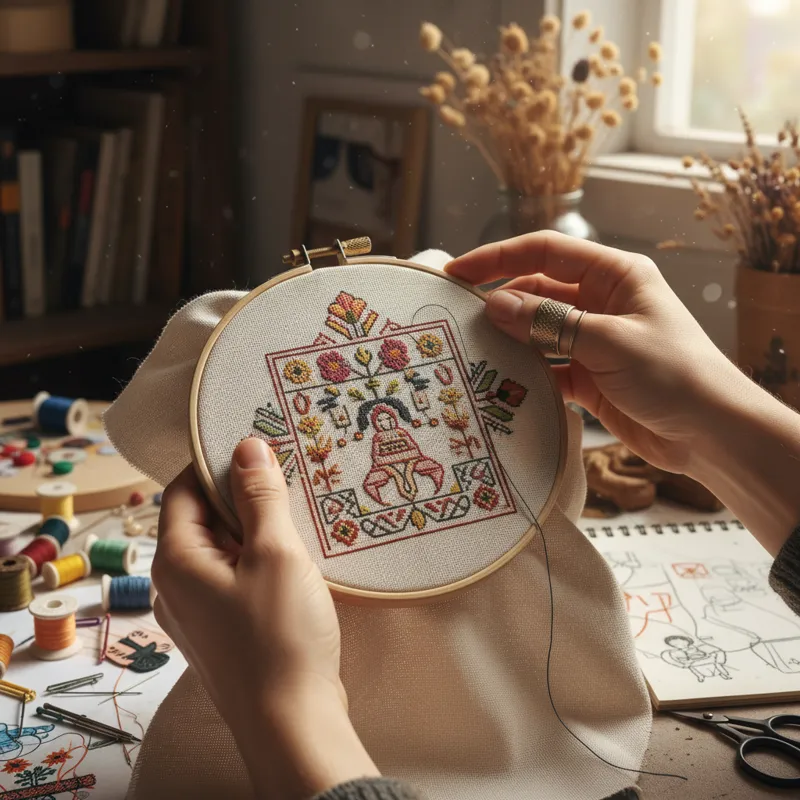
The question of “how hard is embroidery” is one many aspiring crafters ponder, and it’s a fair one. In an age where digital skills often overshadow manual dexterity, picking up a needle and thread, or even operating a specialized machine, might seem daunting. The reality is, embroidery is less about inherent talent and more about patience, practice, and the right approach. It’s a craft with a relatively low barrier to entry for basic techniques, but it offers boundless depth for those who wish to master it.
Deconstructing the “Difficulty”: What Makes Embroidery Seem Hard?
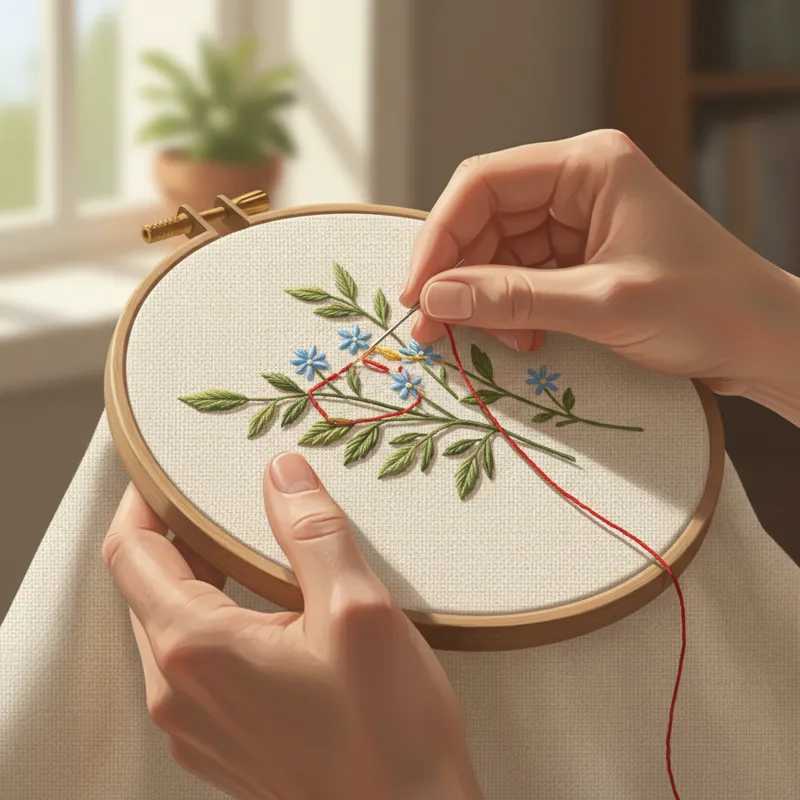
When people ask, “how hard is embroidery,” they’re usually wrestling with a few common concerns. These often include the perceived need for artistic ability, fear of intricate details, the time commitment, or the technical challenges associated with specialized equipment. It’s helpful to unpack these to get a clearer picture.
First, many imagine needing the drawing skills of an artist. While design is part of embroidery, much of the craft relies on tracing existing patterns or using predefined stitches. You don’t have to be a master illustrator to create beautiful embroidered pieces.
Second, the visual complexity of advanced embroidery can be intimidating. You see intricate tapestries or highly detailed portraits and immediately think, “I could never do that.” But these are the results of years of practice and layering simple techniques, not a single, insurmountable hurdle. Every elaborate piece starts with a basic stitch.
Finally, there’s the question of tools and technology. Hand embroidery seems simple enough, but what about thread types, fabric choices, and tension? And then there’s machine embroidery, which introduces an entirely new set of hardware and software considerations. Each layer adds to the perceived difficulty, but also offers different pathways into the craft.
Hand Embroidery vs. Machine Embroidery: Two Different Worlds
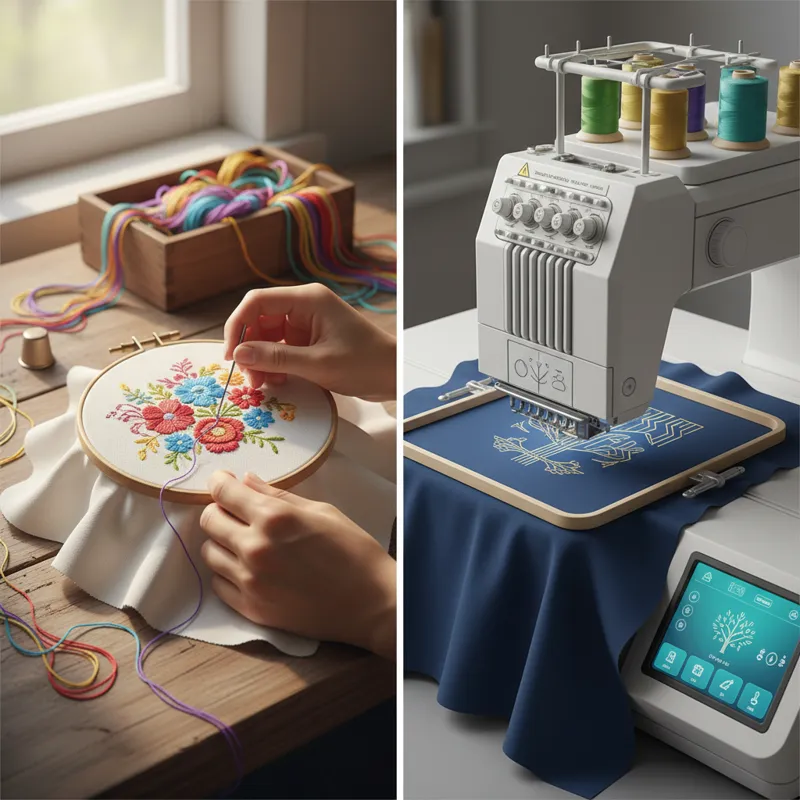
To truly understand how hard is embroidery, you need to differentiate between its two primary forms: hand embroidery and machine embroidery. They share the same goal – decorating fabric with thread – but the methods, skills, and initial investments are vastly different.
Hand Embroidery: A Deep Dive into the Learning Curve
Hand embroidery is often the entry point for many. It requires minimal initial investment and offers a direct, tactile connection to the craft.
Basic Stitches: Learning the foundational stitches isn’t particularly hard. Stitches like the running stitch, back stitch, stem stitch, satin stitch, and French knot form the bedrock of countless designs. You can typically learn the mechanics of these within a few hours of focused practice. Mastery, however, involves achieving consistency in stitch length, tension, and placement, which comes with repetition. Think of it like learning to tie your shoes: the basic motion is easy, but making a perfectly neat bow every time takes a bit more effort.
Fabric and Hoop Tension: A crucial, yet often overlooked, aspect of hand embroidery is maintaining proper fabric tension within the hoop. Too loose, and your stitches will pucker; too tight, and the fabric can distort permanently. Achieving that drum-tight but not overstretched feel takes some practice. It’s a fundamental skill that significantly impacts the final look of your work.
Thread Management: Dealing with embroidery floss can present its own small challenges. Tangling, knotting, and splitting threads are common frustrations for beginners. Learning how to properly separate strands, manage thread length, and avoid knots beneath your fabric becomes second nature with experience.
Design Transfer: Getting your chosen design onto the fabric neatly is another step that influences perceived difficulty. Techniques range from simple pencil tracing for light fabrics to using water-soluble pens, carbon paper, or lightboxes. Each method has its quirks, but none are inherently complex. You might even find embroidery on paper patterns useful for specific project types, which can simplify the transfer process by providing clear guides.
Patience and Precision: Ultimately, hand embroidery demands patience and an eye for detail. Each stitch is a deliberate action. While basic designs forgive minor imperfections, achieving neat, professional-looking results requires focused attention over time. This isn’t a quick craft, which can feel challenging for those accustomed to instant gratification.
Machine Embroidery: Unpacking the Technological Learning Curve
Machine embroidery, particularly with modern computerized home machines, offers incredible precision and speed. But it replaces some of the manual dexterity of hand embroidery with technical and software-based skills.
Machine Operation: Learning to operate an embroidery machine involves understanding its specific mechanics: how to thread it correctly, wind the bobbin, select the right needle, and attach the embroidery hoop. Each machine model has its own interface and quirks, requiring some study of the manual. It’s not exceptionally hard, but it’s a systematic process you need to follow precisely.
Software Learning: This is often the steepest part of the machine embroidery learning curve. While many machines come with pre-loaded designs, to truly customize or create your own, you’ll likely interact with embroidery software. This can range from basic design editing programs to complex digitizing software. Understanding file formats (like PES, JEF, DST), resizing designs, combining elements, and changing stitch densities requires a willingness to learn new software applications. There are many resources, including online tutorials, that walk you through these steps.
Stabilizer Selection: Stabilizers are critical to machine embroidery success, yet they’re often a source of confusion for beginners. Different fabrics and designs require different types of stabilizers (cut-away, tear-away, wash-away, heat-away) and hooping methods. Choosing the wrong one can lead to puckering, gaps, or distortion. It’s a skill that requires experimentation and understanding of material properties.
Troubleshooting: Machine embroidery inevitably involves troubleshooting. Thread breaks, tension issues, needle snapping, and bobbin problems are common. Learning to diagnose and fix these issues quickly is part of the process. It’s less about “how hard is embroidery” in terms of skill, and more about developing a methodical approach to problem-solving. This is where having access to resources for free machine embroidery designs can be helpful, as you can practice on simpler projects without the added pressure of expensive designs.
Design Sourcing and Customization: While you can buy ready-made designs, learning to find, download, and transfer them to your machine, or even to digitize your own, adds another layer of technical skill. Customizing designs, such as adding embroidery letters free patterns to personalize items, involves working with your machine’s software to combine and arrange elements effectively.
Essential Tools for the Beginner: Starting Simple, Not Overwhelmed
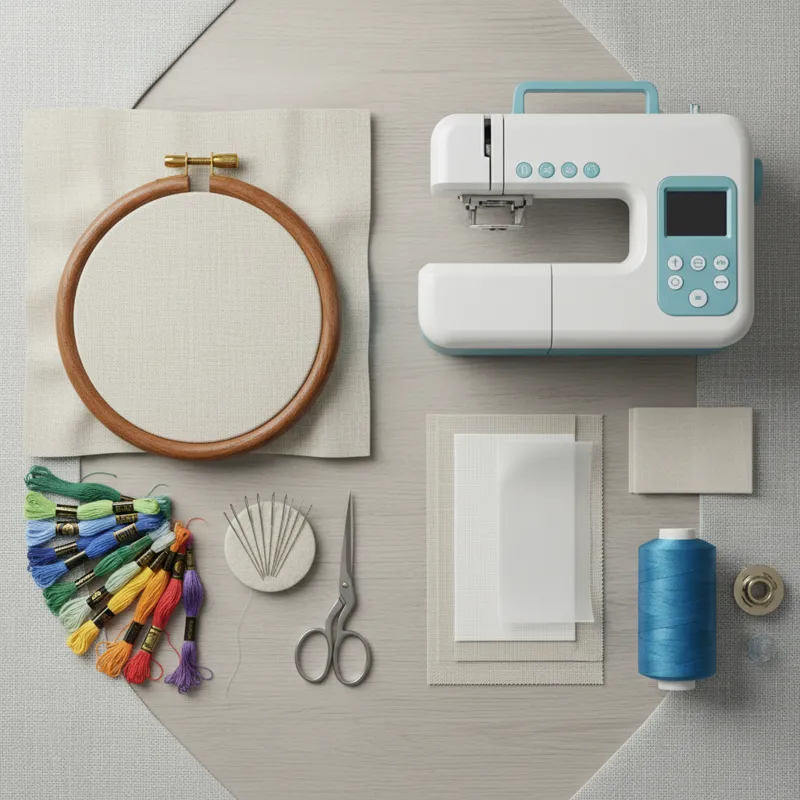
Getting started with embroidery doesn’t require a massive investment or an overflowing craft room. The key is to begin with the essentials and expand as your skills and interests grow. This approach helps demystify “how hard is embroidery” by making it accessible.
For Hand Embroidery:
- Embroidery Hoop: A simple wooden or plastic hoop, around 6-8 inches in diameter, will hold your fabric taut.
- Embroidery Needles: Sharps or crewel needles with a slightly larger eye for floss. A variety pack is useful.
- Embroidery Floss: DMC or Anchor brands are popular and widely available. Start with a small assortment of colors you love.
- Fabric: A plain-weave cotton or linen fabric is ideal for beginners. Muslin is also a good, inexpensive practice fabric.
- Small, Sharp Scissors: Essential for neat thread cuts.
- Thimble (Optional but Recommended): Protects your finger, especially when working with denser fabrics.
- Design Transfer Tools: A water-soluble pen or a simple pencil and light source are sufficient for transferring patterns.
You can easily find beginner kits that include many of these items, offering a low-stress entry point.
For Machine Embroidery:
- Embroidery Machine: A computerized home embroidery machine is the core investment. Models vary greatly in price and features, but many entry-level machines are very capable.
- Hoops: Your machine will come with at least one, usually a few different sizes.
- Stabilizers: A starter pack with tear-away, cut-away, and water-soluble options will cover most beginner projects.
- Embroidery Threads: Polyester or rayon embroidery thread is standard. Start with basic colors.
- Bobbin Thread: A specialized lighter-weight thread used in the bobbin.
- Sharp Embroidery Scissors: Including small snips for jumping threads.
- USB Drive: To transfer designs to your machine.
- Basic Software: Many machines include basic editing software, or you can use free online converters.
The initial cost for machine embroidery is higher, but it unlocks capabilities for complex, repeatable designs relatively quickly, reducing the manual effort, but shifting the learning to the technical side.
Common Hurdles and How to Overcome Them
Every embroiderer, regardless of experience, faces challenges. Understanding these common hurdles upfront can help you approach embroidery with realistic expectations and prevent frustration, making the answer to “how hard is embroidery” feel less intimidating.
Tension Issues (Fabric & Thread):
- Hand Embroidery: If your fabric isn’t taut enough in the hoop, stitches can pull and pucker. If your thread tension is too tight, it can distort the fabric. Practice makes perfect here. Keep your hoop drum-tight but not stretched, and pull your thread just enough to lay flat, not cinch the fabric.
- Machine Embroidery: Improper machine tension is a frequent culprit for loopy stitches or thread breaks. Consult your machine manual, do test stitches on scrap fabric with different stabilizers, and adjust the tension settings as needed. The type of thread and stabilizer significantly impact tension.
Knots and Tangles:
- Hand Embroidery: Long pieces of floss are prone to tangling. Use shorter lengths (around 18-24 inches) to minimize this. If you encounter a knot, gently work it out with a needle; don’t yank it, as that can make it worse. Keeping your thread untwisted also helps.
- Machine Embroidery: Thread breaking or knotting in the bobbin area often points to incorrect threading, a dull needle, or a bobbin wound too tightly or loosely. Re-thread your machine from scratch, check your bobbin, and consider changing the needle.
Inconsistent Stitches: This is almost exclusively a hand embroidery challenge. Achieving uniform stitch length and direction for stitches like the satin stitch or straight stitch takes practice. Don’t strive for perfection on your first few projects. Focus on consistency over speed. Use a grid or light pencil lines as guides initially.
Design Transfer Problems: Smudged lines or lines that don’t wash out can be annoying. Always test your transfer method on a scrap piece of your project fabric before committing to the main piece. Water-soluble pens are generally reliable, but some fabrics might absorb ink differently. For more complex designs, you might even look into bead embroidery templates, which often have very clear guidelines for placement.
Machine Errors: Thread breaks, skipped stitches, and “nesting” (a tangled mess of thread on the underside of your fabric) are common. These usually stem from incorrect hooping, using the wrong needle/stabilizer combination, or improper threading. A methodical approach to troubleshooting, often starting with re-hooping and re-threading, solves most issues. Many machine embroidery forums and manufacturer support channels offer excellent guides for specific problems.
The Time Commitment: Realistic Expectations
Understanding the time commitment is vital when considering “how hard is embroidery.” Neither hand nor machine embroidery is an instant craft, though their time requirements differ significantly for various stages.
Hand Embroidery:
- Learning Basic Stitches: You can learn the mechanics of 3-5 basic stitches in an hour or two.
- Small Project (e.g., a simple initial on a handkerchief): 2-5 hours for a beginner, including design transfer and execution, often spread over several sessions.
- Medium Project (e.g., a floral motif on a hoop): 10-30 hours, depending on complexity and stitch density.
- Large/Complex Project (e.g., detailed landscape): 50+ hours, potentially hundreds, for highly intricate pieces.
Hand embroidery is meditative. It’s about enjoying the process as much as the outcome. The time commitment is substantial for anything beyond the simplest designs, but the portable nature means you can pick it up and put it down easily.
Machine Embroidery:
- Learning Machine Operation & Software Basics: This initial setup and learning phase might take 5-10 hours, possibly more, depending on your tech comfort level.
- Small Project (e.g., a patch, simple monogram): Once the machine is set up and the design loaded, the actual stitch-out might take 10-30 minutes. However, design selection, hooping, and stabilizing could add another 15-30 minutes to that preparation.
- Medium Project (e.g., a shirt design, kitchen towel): Stitch-out time can be 30 minutes to 2 hours. Total project time, including preparation and minor troubleshooting, might be 1-4 hours.
- Large/Complex Project (e.g., a multi-hoop design, quilt block): Stitch-out could be several hours, often requiring multiple hooping steps. Total project time, including digitizing or extensive design editing, could easily stretch to 5-10+ hours.
Machine embroidery saves on the manual stitching time but shifts effort to design preparation, stabilization, and troubleshooting. It’s faster for production but has a higher upfront learning curve for the technical aspects.
In both cases, consistent practice is what truly reduces the perceived difficulty over time. Just like learning any new skill, regular engagement builds muscle memory and intuitive understanding.
What Most People Get Wrong About Embroidery’s Difficulty
The common misconceptions surrounding “how hard is embroidery” are often bigger hurdles than the actual techniques themselves. Clearing these up can provide a more encouraging starting point.
1. You Need to Be an Artist or Naturally Creative: This is perhaps the biggest myth. While artistic talent can certainly enhance your embroidery, it’s not a prerequisite. Many embroiderers thrive by following patterns, tracing designs, or utilizing digitized files. The craft is more about methodical execution and patience than raw drawing ability. You learn to “draw” with a needle and thread, following guides.
2. It Requires Pinpoint Perfection from Day One: New embroiderers often get discouraged by uneven stitches or minor flaws. The truth is, perfection is an ideal that even seasoned artists rarely achieve, and it certainly doesn’t happen immediately. Embrace imperfections as part of the handmade charm and as evidence of your learning journey. Each “mistake” is a lesson in tension, placement, or technique.
3. Expensive Tools Automatically Mean Better Results: While quality tools are beneficial, particularly for machine embroidery, you don’t need the most expensive gear to start. A basic hand embroidery kit can be very affordable, and many excellent entry-level embroidery machines produce fantastic results. Understanding how to use your tools effectively, rather than just owning the priciest ones, is what truly matters. For example, a simple, sharp pair of scissors is more important than a designer thread snip.
4. Machine Embroidery is Fully Automated and Requires No Skill: Some people view machine embroidery as a “cheat” or believe it entirely removes the human element. This is far from the truth. While the machine does the stitching, the embroiderer is responsible for selecting the right design, choosing appropriate fabric and stabilizer, hooping correctly, selecting threads, setting tension, and troubleshooting. It’s a technical skill set, different from hand embroidery, but still demanding precision and knowledge. You become the conductor of an intricate process, not just a bystander.
5. It’s a “Grandma’s Hobby” and Not Relevant Today: Embroidery, both hand and machine, is experiencing a massive resurgence. Contemporary artists are pushing boundaries, fashion designers are incorporating it into haute couture, and home crafters are personalizing everything from sneakers to wall art. It’s a vibrant, evolving craft with a huge online community. A quick search for “modern embroidery” on platforms like Pinterest or Instagram will quickly dispel this notion. For a deeper dive into the historical significance and cultural impact of textiles, including embroidery, you can explore resources like the Smithsonian Magazine archives, which showcases how these crafts have evolved and remained relevant.
Pathways to Success: Learning Resources in 2026
The good news is that in 2026, there are more resources than ever to help you learn embroidery, making the journey less about “how hard is embroidery” and more about “how quickly can I learn.”
Online Tutorials (YouTube, Dedicated Platforms): YouTube is a treasure trove of free embroidery tutorials. You can find step-by-step guides for every basic stitch, project ideas, and troubleshooting tips for both hand and machine embroidery. Beyond YouTube, platforms like Skillshare, Domestika, and Creativebug offer structured courses taught by professional embroiderers, often covering advanced techniques for a subscription fee.
Embroidery Classes for Beginners: Many local craft stores, fabric shops, and community centers offer embroidery classes for beginners. These provide hands-on instruction, immediate feedback, and a social environment. Online classes are also abundant, allowing you to learn from experts worldwide from the comfort of your home.
Books and Patterns: Traditional embroidery books remain excellent resources, providing detailed diagrams, project ideas, and historical context. Many come with iron-on or reusable patterns. Starting with a pre-printed kit can also remove the design transfer hurdle, allowing you to focus purely on stitching.
Online Communities: Forums, Facebook groups, and Reddit communities dedicated to embroidery are fantastic places to ask questions, share your work, and get advice. Seeing others’ projects, successes, and challenges can be incredibly motivating and provide solutions to common problems. These communities are invaluable for both moral support and practical guidance.
Local Guilds and Groups: Many cities have embroidery guilds or craft groups that meet regularly. These groups are excellent for networking, learning from experienced members, and participating in workshops. For example, the Embroiderers’ Guild of America (egausa.org) has chapters across the US, offering resources and community to embroiderers of all skill levels.
The Joy and Rewarding Nature of Embroidery
Beyond the mechanics and perceived difficulty, embroidery offers a rich array of personal rewards. These are often the true motivators that keep people coming back, long after they’ve figured out “how hard is embroidery” truly is.
Stress Relief and Mindfulness: The repetitive nature of stitching can be incredibly meditative. It’s a way to slow down, focus on a single task, and disconnect from digital distractions. Many find it a calming and mindful activity, reducing stress and anxiety.
Creative Outlet: Embroidery allows for immense creative expression. From choosing colors and stitches to designing your own patterns or customizing existing ones, you have the power to bring your unique vision to life. It’s a tangible way to make art.
Personalized Gifts and Decor: Creating something with your own hands for a loved one is incredibly special. Embroidered items, whether a personalized baby onesie, a custom tote bag, or a piece of wall art, carry a unique sentimental value that mass-produced items cannot match. Projects like a small framed art for shelf can be quick, satisfying gifts.
Sense of Accomplishment: Finishing an embroidery project, no matter how small, brings a profound sense of satisfaction. You started with raw materials and, through your effort and skill, transformed them into something beautiful and lasting. This tangible achievement is a powerful confidence booster.
Connection to Heritage: Embroidery is an ancient craft, woven into the cultural fabric of societies worldwide. Engaging with it connects you to a rich history of artisans and storytellers. Learning traditional techniques can be a way to honor and preserve cultural heritage.
Ultimately, while embroidery has its learning curves, the journey is rewarding. The initial question of “how hard is embroidery” often transforms into “how much joy can I find in this craft?”
Frequently Asked Questions About Embroidery Difficulty
Here are some common questions people ask when they’re trying to gauge the difficulty of embroidery:
Is embroidery hard for beginners?
No, embroidery is generally not hard for beginners, especially hand embroidery. You can learn a few basic stitches within an hour or two and start creating simple projects almost immediately. The initial learning curve is quite gentle, focusing on fundamental techniques. Machine embroidery has a steeper technical learning curve, but entry-level machines and readily available designs make it accessible too.
How long does it take to learn basic embroidery?
You can learn the foundational stitches and concepts of hand embroidery in a few hours of dedicated practice. To feel comfortable and confident in creating a simple project, plan for 5-10 hours of practice. For machine embroidery, mastering the basic operation and software might take 10-20 hours, plus additional time to understand stabilizer choices and troubleshoot common issues.
What’s easier: hand or machine embroidery?
This depends on your skill set. Hand embroidery is easier to start due to minimal equipment and low cost, relying more on fine motor skills and patience. Machine embroidery has a higher technical barrier to entry (machine operation, software, stabilizers) but can produce complex, consistent results much faster once you’ve mastered the setup. Neither is inherently “easier” across the board; they simply require different kinds of skills.
Do I need to be artistic to embroider?
Absolutely not. While artistic talent can certainly be an advantage, it’s not a requirement. Many embroiderers primarily follow patterns, use templates, or work with pre-digitized designs. The craft is more about methodical execution, patience, and practice than innate drawing ability. You learn to “draw” with thread.
What’s the hardest part of embroidery?
For hand embroidery, beginners often find maintaining consistent stitch tension, preventing knots, and achieving uniform stitch length to be the hardest parts. For machine embroidery, the steepest challenges usually involve mastering the specific machine’s operation, understanding different stabilizers, and troubleshooting common issues like thread breaks or tension problems. Ultimately, the “hardest” part often boils down to patience and persistence through initial frustrations.