

Navigating the challenge of furnishing a small kitchen often feels like a puzzle, especially when it comes to dining space. You want a functional area for meals, a spot for morning coffee, or perhaps a place for quick tasks, but without sacrificing crucial walkways or making the room feel cramped. The goal isn’t just to fit a table; it’s about integrating a piece that enhances the kitchen’s utility and aesthetic, making the most of every square inch. This deep dive will explore practical, intelligent solutions for finding the perfect kitchen tables for small kitchens, ensuring your compact space works harder and smarter for you.
Understanding Your Small Kitchen’s True Footprint

Before you even begin browsing options for kitchen tables for small kitchens, a precise understanding of your existing space is non-negotiable. This isn’t just about measuring walls; it’s about mapping out how you use the kitchen, where people walk, and what appliances need clearance. Skimping on this initial step almost guarantees frustration later.
Measuring Real Estate: Beyond the Wall-to-Wall
Grab a tape measure and graph paper, or a reliable digital planning tool. Start by drawing your kitchen’s layout, marking all fixed elements: counters, appliances (dishwasher, oven, refrigerator, sink), and doorways. Don’t forget window sills or radiator depths, as these can impact placement.
Crucially, measure not just the empty floor space, but the minimum required clearance around appliances. For example, a dishwasher needs space to fully open, and a refrigerator door swings wide. Ignoring these operational clearances means a “perfectly sized” table might render an appliance unusable.
Mapping Traffic Patterns: The Invisible Pathways
Think about how you move through your kitchen. Where do you walk to get from the refrigerator to the sink, or from the stove to the counter? These are your primary traffic patterns. Any table you introduce must not obstruct these routes.
As a general guideline, aim for at least 36 inches of clear pathway in high-traffic areas. In less critical zones, 30 inches might suffice, but any less than that risks constant bumping and an uncomfortable, inefficient kitchen. Observe your household’s habits: do multiple people cook at once? Do kids use the kitchen as a shortcut? These observations are invaluable.
Ergonomics and Comfort: How Much Room Do You Really Need?
It’s easy to cram, but uncomfortable dining leads to disuse. For comfortable seating at a table, each person needs approximately 24-30 inches of width at the table’s edge. Additionally, factor in chair depth. When someone is seated, a chair typically extends about 18 inches from the table. To allow people to pull out chairs and sit down comfortably, you need at least 30-36 inches behind the chair, especially if it’s against a wall. This often overlooked detail is critical for functional small kitchen table setups.
Types of Kitchen Tables Designed for Small Kitchens
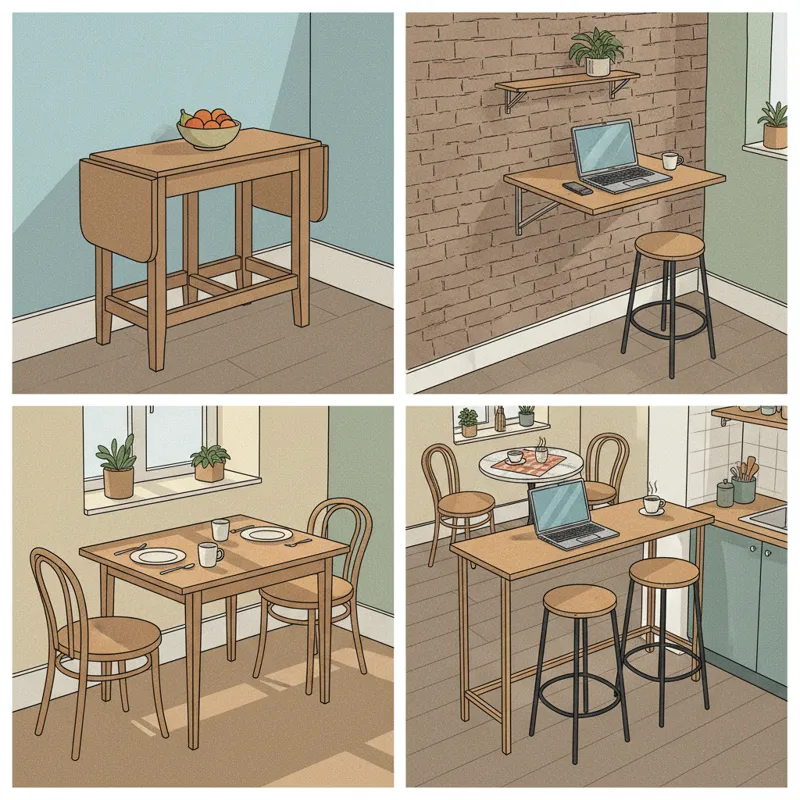
The market has responded to the demand for efficient dining solutions, offering a surprising variety of kitchen tables for small kitchens. Each type offers specific advantages, so selecting the right one depends on your specific needs and the exact nature of your compact space.
Drop-Leaf Tables: The Expandable Classic
Drop-leaf tables are a perennial favorite for good reason. They feature one or more hinged leaves that can be dropped down when not in use, significantly reducing the table’s footprint. When company arrives, or you need more workspace, simply raise the leaves and secure them.
- Pros: Highly versatile, offers a full-sized surface when needed, relatively stable.
- Cons: The mechanism can sometimes be visible; less aesthetic when leaves are down on some models.
- Best for: Households that occasionally host or need flexible surface area.
Gateleg Tables: Stable Versatility
Similar to drop-leaf tables, gateleg tables also feature hinged leaves. The key difference is the “gate” mechanism—a set of legs that swing out to support the extended leaves, offering greater stability than some simpler drop-leaf designs. This often means a more robust structure when fully open.
- Pros: Excellent stability when extended, can transform from a slim console to a full dining table.
- Cons: Can be heavier; the “gate” mechanism adds visual bulk.
- Best for: Those prioritizing stability and a larger surface area when extended, even if it means a slightly more substantial piece.
Fold-Down Wall-Mounted Tables: The Ultimate Space Saver
For extremely tight spaces, a table that literally disappears against the wall is often the best solution. These tables are hinged to the wall and fold down when needed, then fold back up flat when not in use. Some even double as a small shelf or decorative panel when folded.
- Pros: Frees up floor space entirely, ideal for single occupants or very occasional dining.
- Cons: Requires wall mounting, less stable than freestanding tables, typically seats one or two.
- Best for: Studio apartments, galley kitchens, or as a secondary eating surface.
Bar-Height Tables and Counters: Utilizing Vertical Space
When horizontal space is limited, going vertical can be a smart move. Narrow bar height table designs, often paired with backless stools that tuck completely underneath, maximize the use of a small footprint. They can also seamlessly integrate with existing kitchen islands or peninsulas.
- Pros: Visually lighter, stools tuck away, can extend counter space, offers a casual dining experience.
- Cons: Not suitable for all ages/mobility levels, requires specific bar stools.
- Best for: Modern kitchens, individuals or couples, casual dining.
Bistro Tables: Compact Charm
Bistro tables are inherently small, typically round or square, and designed to seat one or two people comfortably. Their compact dimensions and often minimalist designs make them a natural fit for corners or small wall niches.
- Pros: Smallest footprint for a permanent table, aesthetically pleasing, easy to move.
- Cons: Limited seating capacity, can feel less substantial.
- Best for: Single-person households, couples, or as a breakfast nook.
Nook Seating with Storage: Cornering the Market on Efficiency
Corner breakfast nooks are fantastic for small kitchens because they make efficient use of typically awkward corner spaces. By combining built-in bench seating with a compact table, you maximize seating capacity while often incorporating hidden storage underneath the benches. A well-designed corner breakfast nook with storage can be a game-changer.
- Pros: Maximizes seating in tight corners, often includes valuable storage, creates a cozy dining area.
- Cons: Less flexible in terms of layout once installed, can be harder to get in and out of for some.
- Best for: Families needing more seating, making use of unused corners, those seeking integrated storage.
Nesting Tables: The Flexible Duo (or Trio)
While traditionally side tables, some nesting table sets are designed with heights suitable for informal dining. A larger table is paired with one or more smaller tables that slide completely underneath. This allows you to pull out additional surfaces only when needed.
- Pros: Extremely flexible, takes up minimal space when nested, versatile for other uses.
- Cons: May not offer a cohesive dining surface, can feel less formal.
- Best for: Highly adaptable needs, multi-functional spaces, or as supplementary surfaces.
Console-to-Dining Tables: The Shapeshifters
These ingenious pieces of furniture masquerade as narrow console tables against a wall, but with a clever mechanism, they extend or unfold into a full-sized dining table. They are often more substantial than drop-leaf tables when fully opened, capable of seating 4-6 people.
- Pros: Transforms dramatically, offering significant dining capacity from a small console.
- Cons: Can be expensive, mechanisms vary in ease of use, often heavier.
- Best for: Those who rarely entertain but need a larger table for special occasions without permanent commitment.
Material Considerations for Kitchen Tables in Small Spaces

The material of your kitchen table for small kitchens isn’t just about aesthetics; it significantly impacts the feeling of space, durability, and maintenance. In a compact environment, these factors become even more critical.
Visual Weight: Lightness Matters
In a small kitchen, every item contributes to the overall visual impression. Opt for materials that have a “light” visual weight.
- Glass: A clear glass tabletop is often the top choice because it allows light to pass through and lets you see the floor underneath, tricking the eye into perceiving more open space. It literally vanishes visually.
- Light-Toned Woods: Birch, maple, light oak, or whitewashed finishes reflect light and prevent the table from feeling like a heavy block in the room.
- Metal: Thin metal frames (chrome, brushed nickel, matte black) offer structural support without bulk. Wrought iron can be an exception if it’s too ornate and heavy.
- Laminate/Melamine: Modern laminates come in light colors and wood-look finishes that are both practical and visually light.
Avoid dark, heavy woods or overly bulky bases unless your design specifically calls for a dramatic contrast, and even then, proceed with caution in truly tiny spaces.
Durability: Resisting the Daily Grind
Kitchens are high-traffic, high-activity zones. Your table needs to withstand spills, bumps, and constant use.
- Solid Wood: Extremely durable, can be refinished if scratched or stained. However, some woods are softer than others.
- Laminate/Melamine: Very resistant to scratches, heat, and moisture. Easy to clean. A practical choice for busy households.
- Glass: Tempered glass is strong but can chip or scratch. Fingerprints are also highly visible.
- Metal: Bases are very durable. Metal tops are less common but can be very robust.
- Engineered Wood (MDF/Particleboard with veneer): Generally less durable than solid wood, more susceptible to moisture damage if the veneer is compromised.
Maintenance: Practicality for Real Life
Consider how much time you want to spend cleaning and caring for your table.
- Laminate: Wipe clean with a damp cloth. Very low maintenance.
- Glass: Requires frequent cleaning to avoid smudges and streaks.
- Sealed Wood: Wipes clean, but spills left too long can stain. Requires occasional re-sealing or polishing depending on the finish.
- Metal: Easy to wipe down, but some finishes (like polished chrome) can show fingerprints.
Strategic Placement and Layout Tips for Small Kitchen Tables
The right table type is only half the battle; knowing where and how to place it is equally important. Strategic placement can make a significant difference in how functional and spacious your small kitchen feels.
Against a Wall: Maximizing Linear Space
One of the simplest and most effective strategies is to push one side of your table flush against a wall. This immediately frees up a significant amount of floor space and reduces the need for a traffic lane on that side of the table. You can seat two to three people comfortably this way, depending on table length.
- Benefit: Creates a clear aisle on the open side, makes the room feel less cluttered.
- Consideration: Access to seating against the wall requires people to slide in or the table to be pulled out for seating.
Corner Solutions: Embracing the Nook
Corners are often underutilized in small kitchens. This is where banquette seating or a dedicated corner breakfast nook with storage truly shines. By fitting a table snugly into a corner with L-shaped or U-shaped bench seating, you can often seat more people than a traditional free-standing table allows in the same footprint.
- Benefit: Highly efficient use of awkward corner space, can provide integrated storage.
- Consideration: Less flexible for rearrangement; once installed, it’s fairly permanent.
Near a Window: Light, Views, and Perceived Space
Placing your small kitchen table near a window offers several advantages beyond just a pleasant view. Natural light makes any space feel larger and more inviting. If the window offers a pleasant outlook, it distracts from the kitchen’s small dimensions.
- Benefit: Enhances ambiance, leverages natural light to expand the perceived space.
- Consideration: Ensure window coverings don’t interfere with seating or table placement.
Creating Flow: Don’t Obstruct Pathways
This goes back to understanding your kitchen’s traffic patterns. Your table must never impede the primary routes between your sink, stove, and refrigerator (the “kitchen triangle”). Test potential placements by walking through the space before committing. If you find yourself constantly bumping into the table or having to squeeze past it, it’s not in the right spot.
- Benefit: Ensures the kitchen remains functional and easy to navigate.
- Consideration: Be ruthless about minimum clearances. A comfortable kitchen means comfortable movement.
Beyond the Table: Smart Seating Solutions
A table is only half of the dining equation. In a small kitchen, your seating choices are just as critical, if not more so, for maintaining an open feel and maximizing utility.
Stools: The Tuck-Under Champions
Stools, particularly backless or low-back designs, are often the best choice for small kitchens. They can typically be pushed completely under the table or counter when not in use, freeing up valuable floor space.
- Backless Stools: Vanish under the table, ideal for bar-height or counter-height tables.
- Low-Back Stools: Offer a bit more support than backless but still tuck away more effectively than full chairs.
- Stackable Stools: If you need more than two, stackable options can be stored in a closet.
Benches: Dual-Purpose Dynamos
Benches are excellent for small spaces because they eliminate the need for individual chair backs and legs to protrude, creating a cleaner line. They can also be pushed flush against a wall. Many modern benches now feature built-in storage, offering a crucial spot for linens, rarely used kitchen gadgets, or even pet supplies.
- Benefit: Saves space, can provide storage, seats multiple people in a compact area.
- Consideration: Less individual comfort than chairs, harder to move once seated.
Folding Chairs: The Occasional Guest Savior
While not ideal for daily use, a couple of attractive folding chairs can be a lifesaver for unexpected guests. When not needed, they can be hung on a wall hook or stored flat in a pantry or closet.
- Benefit: Perfect for intermittent use, easily stored out of sight.
- Consideration: Can be less comfortable for extended periods; requires storage space when folded.
Integrated Seating: The Nook Advantage
As mentioned, built-in banquettes or nook seating effectively integrate the table and seating into a single, cohesive unit. This approach is highly space-efficient and often provides storage, making it one of the most effective strategies for kitchen tables for small kitchens.
Design Aesthetics: Making Small Spaces Feel Bigger
Beyond the functional aspects, the aesthetic choices you make for your small kitchen table and its surroundings play a significant role in how expansive or cramped the space feels.
Color Palettes: Light and Airy Dominance
It’s a well-known design principle: light colors reflect light, making a space feel larger and more open. This applies to your table, chairs, walls, and flooring.
- White, Off-White, Pale Greys, Light Blues/Greens: These colors create a serene, expansive backdrop.
- Monochromatic or Analogous Schemes: Using variations of the same color or colors next to each other on the color wheel creates harmony and prevents visual clutter.
A dark, heavy table in a small kitchen can act like a black hole, sucking up light and making the space feel smaller. If you love dark tones, use them as accents, not as the dominant color for large pieces.
Transparency: The Illusion of Emptiness
This is where materials like glass or acrylic truly shine.
- Glass Tabletops: As discussed, they allow light to pass through and expose the floor, making the table almost disappear visually.
- Clear Acrylic Chairs: Ghost chairs or clear plastic stools offer seating without adding visual weight. They provide functionality while maintaining an open, airy feel.
Reflectivity: Bouncing Light Around
Reflective surfaces amplify light and can make a room feel brighter and larger.
- Polished Chrome or Brushed Stainless Steel: For table bases, chair legs, or hardware.
- High-Gloss Finishes: On tabletops or cabinet fronts.
- Mirrors: A strategically placed mirror on a wall near the dining area can work wonders, reflecting light and creating the illusion of depth. However, be mindful of what the mirror reflects – you want it to reflect something appealing, not clutter.
Minimalist Design: Clean Lines, Less Clutter
A small modern dining table often embraces minimalism, which is inherently suited for small spaces. Simple, clean lines and an absence of ornate details prevent visual busyness. Every element should serve a purpose.
- Uncluttered Surfaces: Keep the table clear when not in use.
- Simple Shapes: Round or square tables with thin legs are usually better than bulky pedestals or intricate designs.
- Integrated Storage: Reduces visible clutter, making the space feel more serene.
For further exploration of how modern design principles enhance small living, the Museum of Modern Art’s design collection offers insightful examples of minimalist and functional furniture that have shaped contemporary spaces for decades.
What Most People Get Wrong When Choosing a Small Kitchen Table
Even with the best intentions, a few common missteps can derail your quest for the perfect kitchen table for small kitchens. Understanding these pitfalls can help you avoid them.
1. Underestimating Traffic Flow and Clearance
This is perhaps the most significant error. People often focus solely on the table’s dimensions without considering the necessary space around it for movement, pulling out chairs, and opening appliances. A table that “fits” but obstructs movement creates constant frustration and makes the kitchen feel smaller than it is. Always factor in chair pull-out space and at least 30-36 inches of clear path around functional areas.
2. Choosing Overly Bulky Designs
A table with a thick tabletop, heavy pedestal base, or elaborate leg structure will visually overwhelm a small kitchen, regardless of its footprint. Even a compact table can feel massive if its design is too chunky. Prioritize thin lines, open bases, and visually light materials.
3. Ignoring Multi-functionality (or lack thereof)
In a small kitchen, almost everything should ideally serve more than one purpose. If your table can’t double as a prep surface, a homework station, or offer storage, you might be missing an opportunity to maximize utility. Conversely, some people pick a multi-functional piece that they never actually use in its secondary function, adding complexity without benefit. Be honest about how you’ll really use it.
4. Forgetting About Seating Integration
The table and seating must work as a unified system. Buying a great small table but pairing it with chairs that don’t tuck underneath or are too wide defeats the purpose. Always consider the total footprint of the table with its seating when in use and when stored.
5. Prioritizing Aesthetics Over Practicality
While a beautiful table is desirable, in a small, hard-working kitchen, practicality must come first. A stunning glass table might look great, but if it shows every fingerprint and you have young children, it might become a source of daily stress. Similarly, an intricately carved wood table might be gorgeous but impractical to clean or prone to damage in a busy environment. A good resource for understanding practical design considerations is often found in discussions around ergonomic design principles, which apply universally to human-centered spaces. For example, insights from publications like “Human Factors” or resources like OSHA’s ergonomics guidelines (while focused on workplaces) provide foundational understanding of how design impacts usability and comfort.
6. Failing to Visualize in 3D
It’s hard to truly grasp how a piece of furniture will fit just by looking at pictures or dimensions. Use painter’s tape on the floor to mark out the table’s footprint. Cut out cardboard templates for chairs. Walk around these mockups. This simple step can prevent costly mistakes.
Maintenance and Longevity for Your Small Kitchen Table
Once you’ve invested in the perfect small kitchen table, proper care ensures it remains a functional and attractive centerpiece for years.
Regular Cleaning is Key
For most tables, a quick wipe-down after each meal is sufficient. Use a damp cloth with mild soap for daily cleaning. Avoid abrasive cleaners or harsh chemicals, especially on wood, glass, or delicate finishes. For specific materials:
- Glass: Use a glass cleaner and a microfiber cloth to prevent streaks.
- Wood: Use wood-specific cleaners or just a damp cloth. Avoid excess moisture.
- Laminate: Very forgiving; damp cloth and mild soap are usually all you need.
Protecting Surfaces
Coasters, placemats, and trivets aren’t just decorative; they are crucial for protecting your table from heat, scratches, and spills. Even durable materials can suffer from prolonged exposure to hot dishes or condensation rings. Consider a protective tablecloth for larger gatherings or messy projects.
Addressing Spills Immediately
The faster you clean a spill, especially on wood, the less likely it is to stain or cause damage. Blot, don’t rub, spills to prevent spreading.
Checking Mechanisms (for extendable tables)
If you have a drop-leaf, gateleg, or console-to-dining table, periodically check the hinges, latches, and extension mechanisms. Lubricate as needed according to the manufacturer’s instructions to ensure smooth operation and prevent wear and tear.
Future-Proofing Your Small Kitchen Dining Area (2026 Perspective)
As we look towards 2026 and beyond, the trends in home design, particularly for smaller living spaces, continue to evolve. While the core principles of space-saving remain constant, new considerations emerge.
Sustainability and Material Innovation
Consumers are increasingly prioritizing sustainable materials. Expect to see more kitchen tables made from reclaimed wood, recycled plastics, bamboo, or innovative composites that minimize environmental impact. Longevity and repairability will also be key. Investing in a durable, well-made piece that can be easily refurbished rather than replaced aligns with this trend. Forbes often covers trends in sustainable home goods and furniture, providing insights into consumer preferences and industry shifts. A quick search on Forbes Home Improvement can offer up-to-date perspectives on this.
Modular and Adaptable Designs
The demand for furniture that can adapt to various needs within a compact footprint will only grow. Tables with integrated charging ports, adjustable heights, or modular components that can be reconfigured will become more common. This flexibility caters to the hybrid work models and multi-functional living spaces that define modern homes.
Integrated Technology (Subtle)
While a “smart table” might sound futuristic, subtle technological integrations are already here. Think built-in, wireless charging pads seamlessly integrated into the tabletop surface, or discreet USB ports for powering devices. The goal is functionality without visual clutter.
Health and Wellness Focus
Ergonomics will continue to be a priority. Selecting chairs that offer good posture support, even in small, compact designs, will be important. Furthermore, materials that are easy to sanitize and resist bacterial growth might gain traction, especially in the kitchen environment.
By choosing smart designs, durable materials, and considering the full scope of functionality and aesthetics, your small kitchen table can be a powerful asset, making your compact kitchen a truly inviting and efficient space for years to come.
People Also Ask (FAQ)
What is the best type of table for a very small kitchen?
For very small kitchens, fold-down wall-mounted tables, narrow bistro tables, or drop-leaf tables are typically the best options. They offer dining functionality without permanently occupying floor space. Bar-height tables with stools that tuck completely underneath are also excellent for maximizing vertical space.
How do I make my small kitchen table look bigger?
To make your small kitchen table area feel larger, choose tables with light-colored or glass tops, thin legs, and minimalist designs. Pair them with clear acrylic or backless stools that visually disappear. Place the table near a window, and keep the surrounding area uncluttered. Light wall colors and reflective surfaces also help.
What size kitchen table fits 4 people comfortably in a small kitchen?
To seat 4 people comfortably, you generally need a table that is at least 30-36 inches wide and 48-60 inches long (rectangular) or 36-48 inches in diameter (round). However, in a small kitchen, prioritizing compact designs like square tables (36×36 inches) or drop-leaf tables that extend to these dimensions, paired with benches or stools, is crucial to maintain flow.
Should I choose a round or square table for a small kitchen?
Both round and square tables can work well in a small kitchen. Round tables often provide better flow as there are no sharp corners to bump into, and they can sometimes squeeze in an extra person. Square tables are excellent for pushing against a wall or into a corner, maximizing linear space. The best choice depends on your kitchen’s exact layout and traffic patterns.
How much space do I need around a kitchen table for chairs?
For comfortable seating and movement, aim for at least 30-36 inches of clearance between the edge of the table and any wall, cabinet, or other furniture. This allows enough room to pull chairs out and sit down without obstruction. In high-traffic areas, more space (up to 42 inches) is ideal.
Can I use an island as a dining table in a small kitchen?
Yes, an island can absolutely double as a dining table in a small kitchen. This is a highly efficient use of space. Look for islands with an extended countertop overhang to provide knee space for seating, or islands designed with a dedicated bar-height or counter-height dining section. This combines prep space, storage, and dining into one footprint.


