Choosing the right dining table is a significant decision for any home, serving as a focal point for meals, conversations, and countless memories. If you’re looking for real wood dining room table options, finding quality wooden dining table sets can be challenging, but an oak dining table consistently stands out as a top contender. Its timeless appeal, inherent durability, and remarkable versatility make it a favored choice among homeowners. This guide will help you navigate the nuances of selecting an oak dining table, exploring everything from wood types and construction to style, size, and finish, ensuring you find the perfect piece that not only complements your living space but also stands the test of time.
The Enduring Appeal of an Oak Dining Table
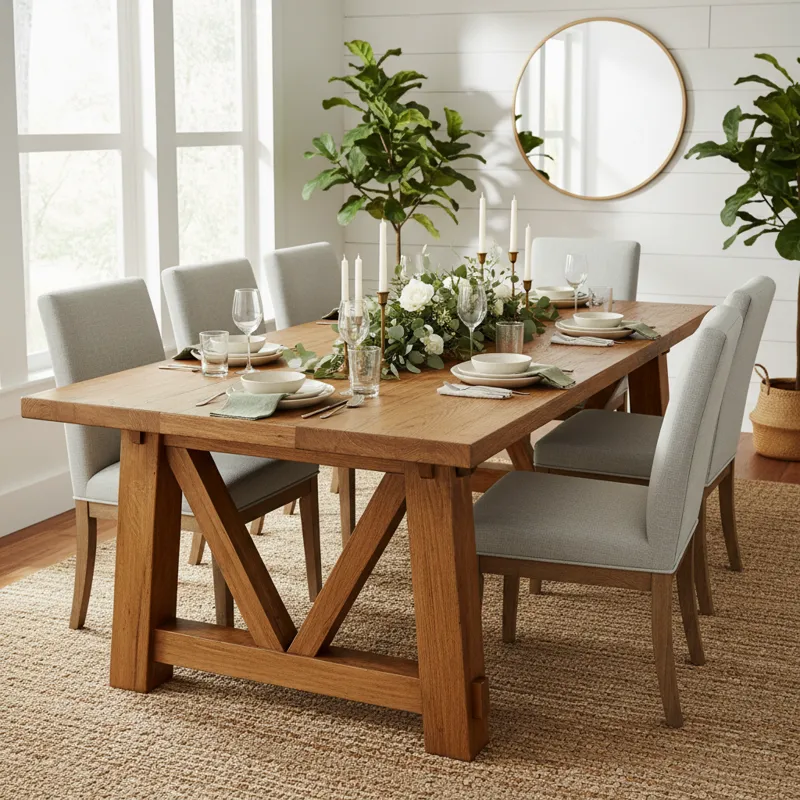
Oak has been a cornerstone of furniture making for centuries, and for good reason. Its inherent characteristics make it an ideal material for a dining table, a piece of furniture that experiences daily use and needs to withstand the rigors of family life.
Why Oak Remains a Top Choice
In 2026, as trends evolve, oak’s popularity endures. It’s not just about tradition; it’s about tangible benefits:
- Durability and Longevity: Oak is known for its strength and resistance to daily wear and tear. It’s a dense hardwood, meaning it can handle spills, bumps, and the general activity of a busy household without easily showing damage. A well-maintained solid oak dining table can last for generations, becoming a true heirloom.
- Timeless Aesthetic: The distinctive grain patterns and warm tones of oak lend themselves to a wide range of design styles. Whether you prefer a rustic farmhouse look, a minimalist modern aesthetic, or a classic traditional setting, an oak dining table can adapt beautifully.
- Versatility in Finish: Oak takes stains and finishes exceptionally well, allowing for significant customization. From a light, natural oak dining table that brightens a space to a darker, rich stain that exudes elegance, the possibilities are vast. This versatility ensures it can integrate seamlessly with existing décor or serve as an anchor for a new design scheme.
- Excellent Investment: Given its durability and enduring style, an oak dining table represents a sound investment. Unlike trendy pieces that might quickly fall out of favor, a quality oak table retains its value and appeal over many years.
Understanding Oak Varieties: Red vs. White Oak
While often generically referred to as “oak,” there are two primary types commonly used in furniture: red oak and white oak. Understanding the differences is crucial for selecting the right aesthetic for your home.
- Red Oak: This is the more common and generally more affordable of the two. It typically features a prominent, open grain pattern and tends to have reddish undertones, which become more apparent with natural finishes. Its pores are open, meaning it can absorb stains differently, often resulting in a slightly coarser texture. Red oak is a staple in traditional American furniture.
- White Oak: White oak is denser and slightly harder than red oak. Its grain is typically straighter and tighter, with a more subdued figure. The color can range from a light, almost gray-brown to a darker, golden-brown, without the strong reddish hues of red oak. White oak is also “closed-pored,” making it more resistant to moisture, which is why it’s historically been used for shipbuilding and whiskey barrels. This characteristic also allows it to take finishes very smoothly, resulting in a sleeker look often preferred in contemporary and mid-century modern designs. A solid white oak dining table often commands a higher price point due to its density and aesthetic qualities.
When you’re shopping for an oak dining table, inquire about whether it’s red or white oak. This detail significantly impacts the final look and feel of the piece.
Construction Matters: Solid Oak vs. Veneer

The longevity and quality of your real wood dining room table largely depend on its construction. For an oak dining table, the distinction between “solid oak” and “oak veneer” is paramount.
Solid Oak Dining Tables
A solid oak dining table is crafted entirely from pieces of solid oak wood. This means the tabletop, legs, and apron are all made from continuous sections of oak, sometimes joined together using techniques like mortise and tenon or dovetail joints. This construction offers several distinct advantages:
- Unmatched Durability: Solid oak is incredibly robust. It can withstand significant stress and can be refinished multiple times over its lifetime. Scratches, dents, or minor damage can often be sanded out and re-stained, restoring the table to its original beauty.
- Heirloom Quality: Because of its durability and the ability to repair and refinish, a solid oak dining table is an investment that can be passed down through generations. It develops a unique patina over time, telling the story of its use.
- Natural Beauty: The uninterrupted grain patterns of solid wood are unique and visually appealing. There’s a depth and character to solid oak that veneers can’t fully replicate.
- Weight and Stability: Solid oak tables are heavy, which contributes to their stability and presence in a dining room. This weight prevents wobbling and ensures a sturdy surface.
Oak Veneer Dining Tables
Oak veneer furniture consists of a thin layer of real oak wood (the veneer) glued onto a substrate material, such as MDF (medium-density fiberboard), particle board, or sometimes solid softwood. While often more affordable, veneer construction has different characteristics:
- Cost-Effectiveness: Veneer tables are generally less expensive than solid oak because they use less solid hardwood. This makes them an accessible option for those on a tighter budget.
- Stability in Climate: Engineered wood substrates are less prone to expanding and contracting with changes in humidity and temperature compared to solid wood, which can sometimes prevent warping or cracking.
- Lighter Weight: Veneer tables are typically lighter, making them easier to move.
- Limitations in Repair: While durable, veneer tables are more challenging to repair if the veneer layer is deeply scratched, chipped, or water damaged. Sanding too aggressively can go through the thin veneer, exposing the substrate.
When purchasing, always clarify whether you’re looking at a solid oak dining table or a veneered product. Both have their place, but understanding the difference ensures your expectations align with the product’s long-term performance and potential for repair.
Styling Your Oak Dining Table: From Farmhouse to Modern

The versatility of an oak dining table is one of its greatest strengths. It can anchor a wide array of interior design aesthetics, making it a truly adaptable piece of furniture for your dining room.
Classic & Traditional
For homes embracing classic or traditional décor, an oak dining table often features ornate carvings, turned legs, or a rich, dark stain. These tables evoke a sense of heritage and formality. Paired with upholstered chairs or classic ladder-back designs, they create an elegant dining room set. A grand, solid oak dining room table with an extension leaf is a perfect fit for formal entertaining.
Rustic & Farmhouse
The natural grain and robust nature of oak are perfectly suited for rustic and farmhouse styles. A distressed finish, visible knots, and a sturdy, often trestle-style base characterize these tables. A light oak dining table with a whitewashed finish can provide a charming, airy farmhouse feel. Combine it with spindle-back chairs or even a bench for a truly authentic aesthetic. This style often highlights the natural, unrefined beauty of the wood, sometimes even featuring a live edge tabletop.
Modern & Contemporary
Oak seamlessly transitions into modern and contemporary settings, particularly white oak. Sleek, clean lines, minimalist designs, and often a natural, clear finish define modern oak tables. Expect features like slim, tapered legs, geometric bases, or even a black walnut dining table with contrasting oak accents. These tables often emphasize the wood’s inherent beauty with less embellishment. Pair them with upholstered chairs in neutral tones or chairs with metal frames for a sophisticated, current look. A white and oak dining table, featuring a natural oak top and contrasting white legs, is a popular choice for a contemporary aesthetic.
Mid-Century Modern
With its emphasis on natural materials, clean lines, and functional design, mid-century modern style frequently incorporates oak. Look for tables with tapered legs, rounded edges, and a warm, inviting finish. The emphasis here is on craftsmanship and understated elegance. Consider a natural oak dining table paired with iconic molded plywood or upholstered chairs to complete the look.
Industrial
An oak dining table can also find its place in an industrial-inspired dining room. Often, these tables feature a thick, solid oak top paired with metal bases – think black steel legs or cast iron elements. The contrast between the warm wood and cool metal creates a compelling, urban aesthetic.
When selecting your oak dining table, consider the overall architectural style of your home and the existing furniture in your dining area. The goal is to create a cohesive and inviting space.
Sizing Your Oak Dining Table: A Practical Guide
Getting the size right for your oak dining table is paramount. A table that’s too large can overwhelm a room, while one that’s too small can feel cramped. Think about both the dimensions of your room and your lifestyle.
Key Considerations for Sizing
- Room Dimensions:
- Measure your dining room carefully. As a general rule, you need at least 36-48 inches of clearance between the edge of your dining table and any wall or furniture to allow for comfortable seating and movement. More space is always better if available.
- For example, if your dining room is 12 feet by 10 feet (144 inches by 120 inches), and you want 36 inches of clearance on all sides, your table should be no more than 72 inches (6 feet) long and 48 inches (4 feet) wide.
- Seating Capacity:
- Allow 24-30 inches of width per person: This ensures ample elbow room. A 60-inch rectangular table typically seats 4-6, a 72-inch table seats 6-8, and a 96-inch table can seat 8-10.
- Table width: A standard dining table width is usually between 36 and 48 inches. This allows enough space for place settings and serving dishes in the middle.
- Lifestyle and Usage:
- Daily Use: How many people will typically eat at the table every day? If it’s just a couple or a small family, you might prioritize a more compact oak kitchen table or a round table.
- Entertaining: Do you frequently host large gatherings? An extendable oak dining table with a self-storing leaf or an external leaf system is an excellent solution, offering flexibility to accommodate more guests when needed. Consider an oak dining table with storage if you need to keep extra leaves or other dining essentials close at hand.
- Table Shape:
- Rectangular: The most common shape, ideal for maximizing seating capacity in a long room. An 8-seater oak dining room table is often rectangular.
- Round: Great for smaller spaces and promoting conversation as everyone is equidistant. A round solid oak dining table with 4 chairs creates an intimate setting.
- Square: Works well in square rooms and for smaller groups, offering a cozy feel.
- Oval: Offers the seating capacity of a rectangular table but with softer edges, easing movement around the table in tighter spaces.
Don’t forget to account for your dining chairs! Chairs typically require about 18-22 inches of depth, plus the necessary push-back space. If you’re pairing an oak table and chairs, ensure they fit comfortably beneath the apron of the table and that there’s enough room to pull them out.
Finishes and Maintenance: Protecting Your Investment
The finish applied to your oak dining table plays a crucial role in its appearance, durability, and how you’ll maintain it over the years. Understanding common finishes will help you make an informed decision.
Common Types of Finishes
- Lacquer and Polyurethane: These are among the most common and durable finishes. They create a hard, protective layer on the surface of the wood, offering excellent resistance to scratches, spills, and general wear. They come in various sheens, from matte to high-gloss, and require minimal daily maintenance beyond wiping down. However, deep scratches or damage can be difficult to repair without professional help.
- Oil Finishes (e.g., Tung Oil, Linseed Oil): Oil finishes penetrate the wood fibers rather than forming a surface layer. They enhance the natural beauty of the wood, providing a soft, natural oak dining table look and feel. They are less resistant to scratches and spills than lacquers but are easier to repair. Minor damage can often be spot-repaired by re-oiling the affected area. However, they require more frequent reapplication (every 6-12 months, depending on use) to maintain protection.
- Varnish: Similar to lacquer, varnish forms a protective film but is typically slower drying and often offers a slightly warmer tone. It’s durable and provides good resistance.
- Wax: Wax finishes provide a very natural, low-sheen look and feel. They offer less protection against moisture and scratches than other finishes and require more frequent reapplication. They are often used over oil finishes for added depth and protection.
Maintenance Tips for Your Oak Dining Table
Regardless of the finish, proper care will extend the life and beauty of your oak dining table:
- Regular Cleaning: Wipe down your table daily with a soft, damp cloth and a mild detergent solution. Avoid harsh chemicals or abrasive cleaners, as these can strip the finish or damage the wood.
- Protect from Heat and Moisture: Always use placemats, coasters, and trivets to protect the table from hot dishes, wet glasses, and spills. Prolonged exposure to moisture can cause water rings or damage the finish.
- Avoid Direct Sunlight: Over time, direct sunlight can cause wood to fade or change color unevenly. If your table is near a window, consider using blinds or curtains during peak sunlight hours.
- Humidity Control: Wood naturally expands and contracts with changes in humidity. Extreme fluctuations can lead to cracking or warping, especially with a solid oak dining table. Maintain a consistent humidity level in your home (ideally between 35-55%) to protect your furniture. The Environmental Protection Agency provides guidance on indoor air quality, including humidity.
- Handle Scratches and Dents: For minor scratches on lacquered or varnished tables, furniture repair pens or touch-up kits can be effective. For oil-finished tables, a light sanding and reapplication of oil can often address scratches. Deep damage may require professional intervention.
- Avoid Harsh Cleaning Tools: Never use steel wool, scouring pads, or highly abrasive materials, as they will scratch the finish.
By understanding the characteristics of different finishes and committing to routine maintenance, you can ensure your oak dining set remains a stunning centerpiece for years.
What Most People Get Wrong When Buying an Oak Dining Table
Navigating the furniture market can be tricky, and for something as significant as an oak dining table, there are common pitfalls buyers often encounter. Understanding these can save you regret and ensure a truly satisfying purchase.
Confusing “Oak Finish” with “Solid Oak”
This is arguably the most widespread misconception. Many manufacturers will describe a table as having an “oak finish” or being “oak colored.” This almost always means the table is made from a different, less expensive wood (or even particle board/MDF) and simply stained to mimic the color of oak. True solid oak dining table pieces will explicitly state “solid oak” or “solid white oak dining table” in their description. Always read product specifications carefully. An “oak top table” might only refer to a veneer, so verify the core material.
Underestimating the Impact of Grain and Character
Every piece of solid oak wood is unique. The grain patterns, knots, and natural variations are what give oak its character. Some people expect a perfectly uniform, blemish-free surface, which is rarely the case with genuine solid wood, especially in more rustic styles. Embrace these natural imperfections; they are hallmarks of real wood. If you prefer a more uniform look, white oak typically has a straighter, less dramatic grain than red oak, but it will still have natural variations.
Ignoring the Apron and Leg Construction
While the tabletop is often the first thing people look at, the construction of the apron (the wood frame under the tabletop) and legs is just as vital for stability and longevity. Look for sturdy joinery like mortise and tenon or robust bolts and brackets. Flimsy legs or an insecure apron can lead to a wobbly table over time, regardless of how solid the top is. Some oak dining room table sets might compromise on leg quality to hit a lower price point.
Overlooking the Importance of Finish for Lifestyle
As discussed, different finishes offer varying levels of protection and ease of maintenance. A beautiful oil finish might look stunning, but if you have young children or frequently host large, boisterous dinners, a more durable lacquer or polyurethane might be a more practical choice. Many people prioritize aesthetics without fully considering how the table will actually be used day-to-day. Be honest about your lifestyle and choose a finish that can withstand it.
Forgetting About Seating Compatibility
It’s easy to fall in love with an oak wood table only to realize your existing chairs (or the chairs you plan to buy) don’t fit comfortably underneath. Always check the height from the floor to the bottom of the table’s apron. There should be enough clearance (typically at least 7-8 inches) for your thighs to fit comfortably, even with armchairs. Similarly, ensure the chairs don’t push too far under the table, colliding with the legs. If you’re buying an oak dining table chairs set, this issue is often pre-addressed, but it’s worth double-checking.
By being aware of these common mistakes, you can approach your purchase with greater confidence and make a choice you’ll be happy with for decades.
Pairing Chairs and Accessories with Your Oak Dining Table
Once you’ve chosen your perfect oak dining table, the next step is to select chairs and accessories that complement its style and your home’s aesthetic. The right pairings can elevate the entire dining experience.
Choosing Dining Chairs
Your chairs should offer comfort, support the table’s style, and provide practical functionality. Here are some popular pairings:
- Matching Oak Chairs: Many oak dining room sets come with matching chairs. This creates a cohesive and classic look. Ensure the chairs are well-constructed and comfortable.
- Upholstered Chairs: For added comfort and a touch of elegance, upholstered chairs are an excellent choice. They can introduce color, texture, and a softer element to the dining space. Consider fabrics like linen, velvet, or a durable performance fabric depending on your lifestyle. A natural oak dining table pairs beautifully with neutral-toned upholstered chairs. For a sophisticated touch, consider pairing your oak dining table dining room with dining room table and leather chairs.
- Mixed Materials: Don’t be afraid to mix materials. Metal chairs (black steel, brass, chrome) can offer an industrial or modern contrast to the warmth of oak. Woven rattan or wicker chairs can bring a natural, bohemian feel.
- Bench Seating: For a casual, communal, or farmhouse vibe, benches are a fantastic addition. They can be pushed neatly under the table when not in use and accommodate more people. An oak kitchen table and chairs often benefits from one or two matching benches.
- Color Contrast: If you have a light oak dining table, consider chairs in a darker wood tone (like walnut or espresso) or a bold color to create visual interest. Conversely, a darker oak table can be brightened with lighter chairs.
Always consider the scale of the chairs relative to the table and the room. Avoid chairs that are too bulky for a smaller table or too delicate for a grand, solid oak dining table.
Accessorizing Your Oak Dining Table
Less is often more when accessorizing an oak table, allowing the beauty of the wood to shine through. However, thoughtful accents can enhance the overall aesthetic.
- Centerpieces: A simple vase of fresh flowers, a bowl of fruit, or a sculptural object can serve as an elegant centerpiece. Avoid overly tall arrangements that obstruct views across the table. For a rustic look, consider natural elements like branches or pinecones.
- Table Linens: Placemats and runners can protect the table and add texture or color. Choose natural fibers like linen or cotton for a relaxed feel, or silk for a more formal setting. A tablecloth is also an option for protection and changing the table’s look.
- Lighting: Proper lighting above your oak dining table is crucial. A well-chosen pendant light or chandelier can complement the table’s style and provide warm, inviting illumination.
- Wall Art and Rugs: Consider how wall art in the dining area interacts with the table’s style. An area rug can define the dining space, add warmth, and absorb sound. Ensure the rug is large enough for chairs to remain on it even when pulled out.
The goal is to create a harmonious and functional dining area where your oak table solid wood piece is the star.
Investing in Quality: Price Points and Where to Buy
Purchasing an oak dining table is an investment, and like any investment, understanding the price points and reputable sources is essential. The market offers a wide range, from budget-friendly options to high-end, artisan-crafted pieces.
Understanding Price Tiers
- Entry-Level (Typically under $800 – $1,500): At this range, you’re likely looking at an oak dinette table and chairs set, possibly a smaller table, or one featuring oak veneer over an engineered wood core. The construction might be simpler, and finishes may be less refined. While still attractive, these tables might not have the longevity of solid oak pieces.
- Mid-Range (Typically $1,500 – $4,000): This is where you start finding truly solid oak dining table options, often with good craftsmanship and a variety of styles. You’ll see both red and white oak, potentially with extension capabilities. The finish quality will be better, offering more durability and aesthetic appeal. Many independent furniture stores and larger retailers offer excellent options in this category.
- High-End & Artisan (Typically $4,000+): In this tier, you’re investing in premium solid white oak, expert craftsmanship, often custom sizes or designs, and superior finishes. These tables are typically heirloom quality, made with attention to detail, and sometimes feature unique design elements or ethically sourced wood. You might find these at specialty furniture boutiques, high-end design showrooms, or directly from custom furniture makers.
Keep in mind that prices are influenced by the type of oak (white oak often being more expensive), the thickness and amount of solid wood used, the complexity of the design, and the finish quality. A significant portion of furniture cost comes from materials and labor.
Where to Purchase Your Oak Dining Table
- National Furniture Retailers: Stores like Pottery Barn, Crate & Barrel, Restoration Hardware, and even larger stores like Ashley Furniture or Bob’s Discount Furniture (depending on the specific collection) offer a range of oak dining tables. They provide convenience, often have showrooms to see items in person, and frequently run sales.
- Independent Furniture Boutiques: These stores often carry curated collections, focusing on quality and unique designs. They might specialize in solid wood furniture and can offer more personalized service and knowledgeable staff.
- Online Retailers: Websites like Wayfair, Houzz, Etsy (for custom makers), and various brand-specific sites offer an extensive selection. The challenge here is not being able to physically inspect the table before purchase, so pay close attention to reviews, material descriptions, and return policies.
- Custom Furniture Makers: If you have specific dimensions, a unique design in mind, or want to ensure local, sustainable sourcing, working with a custom furniture maker is an excellent option. While often at the higher end of the price spectrum, you get a truly bespoke piece.
- Used Market & Antiques: Don’t overlook antique shops, estate sales, or online marketplaces. You can often find well-built, vintage solid oak pieces at a fraction of the cost, which can then be refinished to your taste.
Always inspect the joinery, the consistency of the finish, and the overall stability of the table before making a purchase. Ask about the type of oak, the construction methods, and the warranty. A reputable seller will be transparent about these details.
FAQ: Common Questions About Oak Dining Tables
Q: Is an oak dining table durable enough for a busy family with kids?
A: Absolutely. Oak is one of the most durable hardwoods available, making a solid oak dining table an excellent choice for active households. It resists dents and scratches better than many other woods. With a good protective finish and proper maintenance (using placemats, coasters, and promptly cleaning spills), it can withstand daily family life for decades.
Q: How do I clean my oak dining table without damaging it?
A: For most finishes, simply wipe your table with a soft, damp cloth and a mild soap solution (like diluted dish soap). Always dry it immediately to prevent water spots. Avoid abrasive cleaners, harsh chemicals, and furniture polishes that contain silicone, as these can break down the finish over time. For oil-finished tables, use cleaners specifically designed for oiled wood.
Q: Can I refinish an old oak dining table?
A: Yes, one of the significant advantages of a solid oak dining table is its ability to be refinished multiple times. This involves sanding down the existing finish and applying a new one. This process can remove years of wear and tear, change the table’s color, and completely refresh its appearance. Veneered tables are much harder to refinish as the veneer layer is very thin and can easily be sanded through.
Q: What’s the difference between red oak and white oak in terms of appearance?
A: Red oak typically has a more pronounced, open grain pattern with reddish undertones. White oak has a tighter, straighter grain, with colors ranging from light brown to olive, often without the reddish hue. White oak is generally denser and slightly more resistant to moisture, making it a popular choice for modern and minimalist designs due to its cleaner look.
Q: How do I protect my oak dining table from heat rings and water marks?
A: Prevention is key. Always use coasters under drinks and trivets or hot pads under hot dishes. Avoid placing anything wet directly on the table. If a spill occurs, wipe it up immediately. For stubborn water rings on certain finishes, sometimes a gentle application of mayonnaise or a mixture of olive oil and white vinegar can help, but always test in an inconspicuous area first.
Q: Is an oak dining table a good investment?
A: Yes, a well-made solid oak dining table is generally considered an excellent investment. Its superior durability, timeless aesthetic, and the ability to be repaired and refinished mean it can last for generations. While the initial cost might be higher than tables made from softer woods or engineered materials, its longevity and enduring appeal often make it more cost-effective in the long run. Many families consider it a centerpiece that adds significant value to their home’s functionality and style.