
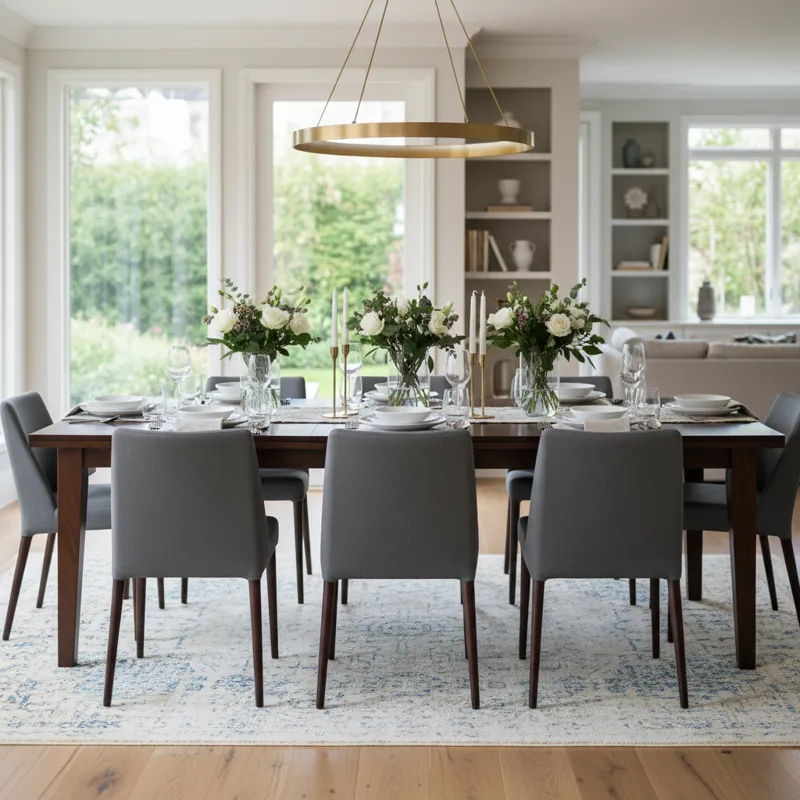
When you’re seeking to furnish a dining area, especially if you’re looking for big family dining tables, finding the right rectangular table for 6 can be both a practical necessity and a design opportunity. This isn’t just about picking a surface to eat on; it’s about defining a central gathering space in your home. A rectangular table for six offers a versatile footprint, often fitting well into various room layouts, from open-plan kitchens to dedicated dining rooms. Understanding the critical measurements, material science, and design considerations is key to making an informed decision that will serve your household well for years to come in 2026 and beyond.
Understanding the Ideal Dimensions for a Rectangular Table For 6

Selecting a rectangular table for 6 starts with getting the dimensions right. This isn’t just about the table’s footprint, but also how it interacts with the chairs and the surrounding room. Standard sizing provides a good baseline, but individual needs and the specific chairs you choose will always influence the optimal fit.
Standard Length and Width Specifications
For six people to dine comfortably, a rectangular table typically needs to be between 60 to 72 inches (5 to 6 feet) in length. This range allows for approximately 24 inches of personal space per person along the long sides, which is generally considered the minimum for comfortable elbow room without constant bumping.
The width of the table is equally important, usually falling between 36 to 40 inches. A 36-inch width provides enough space for place settings and serving dishes down the center. Going up to 40 inches offers a bit more generosity, which can be particularly useful if you frequently host dinners with multiple courses or larger serving platters.
Calculating Seating Capacity: More Than Just Length
While length is a primary factor, the effective seating capacity isn’t just a simple division. You need to consider the actual size of your dining chairs. Chairs with wider seats or armrests will naturally take up more linear space.
For a 60-inch table, you’ll typically place two chairs along each long side and one at each head, totaling six. If your chairs are particularly bulky, a 60-inch table might feel a bit snug, pushing you towards the 72-inch mark for a more relaxed setting. A 72-inch rectangular table for 6 provides ample space, ensuring everyone can dine without feeling cramped.
Room Clearance: The Unsung Hero of Dining Comfort
This is where many people underestimate the requirements. Beyond the table’s dimensions, you need sufficient space around it for chairs to be pulled out and for people to walk past comfortably.
Aim for a minimum of 36 inches (3 feet) of clearance between the edge of your table and any wall or obstruction (like a sideboard, kitchen island, or another piece of furniture). This allows guests to pull their chairs out, sit down, and get up without hitting anything.
Ideally, if you want comfortable passage behind seated guests, you should aim for 42 to 48 inches (3.5 to 4 feet) of clearance. This wider margin is crucial for high-traffic dining areas or if you frequently have people moving in and out of the dining space during a meal.
The Impact of Chair Design on Space
The chairs you pair with your rectangular table for 6 play a huge role in the overall footprint.
- Armchairs: While comfortable, armchairs are wider and require more space between chairs. Measure the width of the chair including arms to ensure it fits the table’s length without feeling squished.
- Armless Chairs: These are more space-efficient and allow for tighter arrangements. You might even be able to squeeze an extra person at a 72-inch table if chairs are slim.
- Bench Seating: A popular choice for a rectangle dining table set for 6, a bench along one long side can save space and add a casual, communal feel. You can often fit more people on a bench than in individual chairs.
- Chair Depth: Don’t forget the depth. Deeper chairs take up more space when pulled out, impacting your required clearance.
Materials Matter: Durability, Aesthetics, and Maintenance for Your Dining Table

The material of your rectangular table for 6 dictates not only its appearance but also its longevity, maintenance requirements, and overall feel. As of 2026, sustainable sourcing and durable finishes continue to be significant considerations.
Solid Wood: Timeless Appeal and Robustness
Solid wood tables remain a perennial favorite due to their natural beauty, strength, and ability to be refinished over time.
- Hardwoods (Oak, Maple, Walnut, Cherry): These are exceptionally durable, resistant to dents and scratches, and offer beautiful grain patterns. Walnut, for example, is highly sought after for its rich, dark tones and fine grain.
- Softwoods (Pine, Fir): More affordable but also more susceptible to dings and scratches. They can be a great option for a rustic or farmhouse aesthetic, especially if you appreciate the character that develops with age.
- Maintenance: Solid wood requires protection from moisture and extreme temperatures. Regular dusting and occasional polishing with appropriate wood cleaner will maintain its luster. Many solid wood tables are heirloom pieces, capable of lasting generations with proper care.
Engineered Wood: Practicality and Versatility
Engineered wood products offer cost-effective and often more stable alternatives to solid wood.
- MDF (Medium-Density Fiberboard) & Particleboard: These core materials are made from wood fibers or particles bonded with resin. They provide a stable base for veneers and laminates, resisting warping better than some solid woods. However, they are susceptible to water damage if not properly sealed.
- Wood Veneer: A thin layer of real wood glued onto an engineered wood core. Veneers allow for the look of expensive hardwoods at a lower cost. Quality veneers are quite durable, but deep scratches can be harder to repair than on solid wood.
- Laminate: A synthetic material printed with a wood grain or other pattern, then bonded to a core. Laminate tables are highly resistant to scratches, stains, and heat, making them very practical for busy households.
Glass: Modern, Light, and Expansive
A glass table for 6 offers a sleek, modern aesthetic that can make a room feel larger and brighter by allowing light to pass through.
- Tempered Glass: This is the standard for dining tables due to its strength and safety. If it breaks, tempered glass shatters into small, blunt pieces rather than sharp shards.
- Thickness: Look for at least 10mm (about 3/8 inch) thickness for a sturdy top. Thicker glass indicates higher quality and durability.
- Maintenance: Easy to clean, but prone to fingerprints and smudges, requiring frequent wiping. Glass can also scratch if not cared for properly, though it’s generally resilient.
Metal: Industrial Edge and Durability
Metal bases and sometimes metal tops (though less common for a full surface) offer an industrial, contemporary, or even minimalist look.
- Steel (Stainless, Powder-Coated): Extremely durable, easy to clean, and resistant to dents. Powder-coated steel offers a range of color options and added protection.
- Iron: Often used for more traditional or ornate bases, offering significant weight and stability.
- Maintenance: Generally low maintenance. Stainless steel resists rust, but fingerprints can be an issue. Powder-coated metals are very resilient.
Stone and Concrete: Bold Statements and Robustness
These materials provide a substantial, luxurious, or avant-garde feel.
- Marble/Quartz: Luxurious and naturally cool to the touch. Marble is porous and prone to staining and etching from acidic foods, requiring sealing and careful maintenance. Quartz, an engineered stone, is more durable, stain-resistant, and requires less maintenance while mimicking natural stone.
- Concrete: Offers a modern, industrial, and raw aesthetic. Concrete tops are incredibly heavy and durable, but can be porous and may require sealing to prevent stains. They can also chip if subjected to heavy impact.
- Maintenance: Varies significantly. Natural stones like marble need regular sealing and immediate spill cleanup. Concrete also often benefits from sealing.
Design Styles and Trends for a Rectangular Table For 6 in 2026

The aesthetic of your rectangular table for 6 plays a crucial role in defining your dining space. In 2026, we’re seeing a continued emphasis on blending functionality with sophisticated, yet approachable, design.
Modern & Contemporary
Characterized by clean lines, minimalist forms, and often an interplay of different materials like glass, metal, and polished wood. These tables often feature thin profiles, geometric bases, and a lack of ornate detailing. Colors tend to be neutral, with pops of accent hues in seating or decor. The modern rectangle dining table set for 6 is all about sleek simplicity.
Farmhouse & Rustic
These styles celebrate natural materials, distressed finishes, and a warm, inviting atmosphere. Farmhouse tables are typically solid wood, often with visible grain and imperfections that add character. Bench seating is a common companion, reinforcing a communal, relaxed feel. Color palettes lean towards natural wood tones, whites, and muted earth tones.
Industrial
Drawing inspiration from factories and urban lofts, industrial tables often feature robust metal bases (think wrought iron or steel) paired with solid wood or concrete tops. Exposed fasteners, raw textures, and a utilitarian aesthetic are hallmarks. This style brings a strong, grounded presence to a dining area.
Mid-Century Modern
A perennial favorite that continues to thrive. Mid-century modern rectangular tables often feature tapered legs, organic curves, and rich wood tones like walnut or teak. They’re about understated elegance and functional design. This style often pairs well with chairs that have a similar design language.
Transitional
This style bridges the gap between traditional and contemporary, offering a balanced and timeless look. Transitional tables might have classic silhouettes but with updated finishes or materials. They are versatile, fitting into many decor schemes without feeling overly trendy or dated. Think a sturdy wood top with a slightly more refined base than a pure farmhouse style.
Sustainability and Multi-Functionality: Key Trends in 2026
As of 2026, conscious consumerism is guiding design choices. Look for tables made from sustainably harvested wood, recycled materials, or those with non-toxic finishes. Brands emphasizing transparency in their supply chains are gaining traction.
Multi-functional designs are also increasingly popular, especially for smaller homes. While not all rectangular tables for 6 are inherently expandable, many designs offer features like hidden storage or modular elements. For a smaller footprint, an expandable counter height table could even double as a dining option in a pinch, though a dedicated dining table is usually preferred for regular seating.
Pairing Chairs with Your Rectangular Dining Table Set for 6
The chairs are not an afterthought; they are integral to the functionality and aesthetic of your rectangle dining table set for 6. Getting the pairing right ensures comfort, complements the table’s style, and maintains the room’s flow.
Ergonomics and Comfort
- Seat Height: Most dining chairs have a seat height between 17 and 19 inches. This is designed to work with standard dining table heights (29-30 inches), allowing for comfortable legroom. You should aim for about 12 inches between the top of the chair seat and the underside of the table apron (the decorative strip under the tabletop).
- Back Support: Consider whether you prefer a high back for more support or a low back for a more open feel. Upholstered chairs offer more padding and comfort for longer meals.
- Chair Width and Depth: As mentioned before, wider chairs require more table length. Also, consider the chair’s depth – how far it extends from the table when pushed in. This impacts your clearance space.
Matching Materials and Style
- Complement, Don’t Clone: You don’t need chairs that perfectly match your table’s material or color. Often, a contrast creates more visual interest. For instance, metal chairs can look striking with a solid wood table, or upholstered chairs can soften an industrial-style metal table.
- Cohesive Aesthetic: Ensure the overall style aligns. Pairing ornate traditional chairs with a minimalist modern table will likely clash. However, mixing modern chairs with a rustic table can create a chic transitional look if done thoughtfully.
- Playing with Texture: If your table is smooth (like glass or polished wood), consider chairs with texture, such as woven fabric, rattan, or velvet, to add warmth and depth to the dining area.
The Versatility of Bench Seating
For a rectangular table for 6, a bench along one side can be a fantastic option.
- Space Saving: Benches can often tuck completely under the table when not in use, freeing up valuable floor space.
- Flexibility: You can often fit more people on a bench than in individual chairs, making it great for casual gatherings or families with children.
- Aesthetic: Benches lend a relaxed, communal, and often more contemporary or farmhouse feel to a dining space.
Budget Considerations: Investing in Your Rectangular Dining Table
Purchasing a rectangular table for 6 is an investment, and understanding what influences price can help you allocate your budget wisely. Prices for a quality rectangle dining table set for 6 vary significantly based on materials, construction, brand, and design complexity.
Economy (Under $500 – $800)
- Materials: Typically engineered wood with laminate or low-quality veneer finishes, sometimes paired with basic metal legs.
- Construction: Often flat-pack furniture requiring assembly. Joins may be less robust, and finishes can be more prone to wear over time.
- What to Expect: Functional and aesthetically pleasing for short-term use or if budget is the primary concern. Might not hold up to heavy daily use for many years without showing significant wear.
Mid-Range ($800 – $2,500)
- Materials: Better quality engineered wood with thicker veneers, solid wood components (like legs or aprons), or tempered glass tops with sturdy metal bases. Some entry-level solid hardwoods might appear here.
- Construction: More substantial construction, often with reinforced joints and better quality hardware. May still require some assembly but often features pre-assembled components.
- What to Expect: Good balance of durability, aesthetics, and value. These tables are generally robust enough for daily family use and can last for many years with proper care. You’ll find a wider range of styles and finishes.
High-End ($2,500+)
- Materials: Primarily solid hardwoods (oak, walnut, cherry), high-quality natural stone (marble, granite), or heavy-gauge metals with intricate detailing. Often feature unique design elements.
- Construction: Superior craftsmanship, often handcrafted with mortise-and-tenon joints or other traditional woodworking techniques for exceptional durability and stability. Factory-assembled with premium finishes.
- What to Expect: An heirloom-quality piece designed to last for generations. These tables offer unparalleled beauty, durability, and a distinct design statement. They are often backed by extensive warranties.
Factors Influencing Price Beyond Materials
- Brand Reputation: Established furniture brands with a reputation for quality and design often command higher prices.
- Design Complexity: Tables with intricate bases, unique joinery, or custom features will naturally cost more than simple, mass-produced designs.
- Finish Quality: High-quality lacquers, stains, and sealants not only look better but also provide superior protection and durability, adding to the cost.
- Shipping and Assembly: Factor in these costs. Larger, heavier tables, particularly those made of solid wood or stone, can have significant delivery and professional assembly fees.
What Most People Get Wrong When Buying a Rectangular Table For 6
It’s easy to focus solely on the table’s appearance or price, but neglecting a few key practicalities can lead to buyer’s remorse. Here are common pitfalls people encounter:
Underestimating Room Clearance
As mentioned earlier, the biggest mistake is often underestimating the space required around the table. People measure the tabletop and think “it fits!” but forget about pulling out chairs, walking behind seated guests, or opening nearby doors or cabinets. Always measure your room and map out the table and chair footprint with painter’s tape on the floor. A 24 wide dining table, for instance, might technically seat six if it’s long enough, but it would be extremely cramped width-wise, making serving and comfortable dining impossible.
Ignoring Chair Compatibility
Many buyers pick a beautiful table only to struggle finding chairs that fit both aesthetically and functionally. Issues include:
- Arm Height: Arms that are too high prevent chairs from tucking under the table, leaving them sticking out and obstructing walkways.
- Chair Design Clashing: A heavy, traditional chair with a sleek, minimalist table can look mismatched.
- Insufficient Seating Space: Six chunky armchairs won’t fit comfortably around a 60-inch table. Always measure your chairs and factor them into your table length calculation.
Forgetting About Lifestyle and Durability
A family with young children and frequent spills needs a different table than a couple who rarely eats at home.
- Material Choice: A stunning marble table might be impractical for a busy family due to its high maintenance and susceptibility to stains. Laminate or certain treated woods might be far more suitable.
- Finish Quality: A cheap finish on an otherwise decent table will quickly show wear and tear, especially if used daily.
Overlooking Lighting and Rugs
The table doesn’t exist in a vacuum.
- Lighting: A large rectangular table for 6 often needs appropriate overhead lighting, usually a chandelier or pendant fixture, centered over the table. The size and style of the light fixture should complement the table.
- Rugs: If you plan to use a rug, it should be large enough so that when chairs are pulled out, all four legs remain on the rug. A common rule of thumb is that the rug should extend at least 24 inches beyond the table’s edge on all sides. A rug that’s too small makes the space feel disjointed. For more information on rug sizing, the interior design resource Wikipedia’s entry on area rugs provides useful context.
Not Considering Table Height
While most dining tables are standard height, some might be slightly taller or shorter. This impacts comfort, especially if you have very tall or short family members. Always verify the height and compare it to your preferred chair height. An 8ft dining table, while offering more length, would still be within this standard height range.
Maintenance and Care for Your Rectangular Table for 6
Proper care can significantly extend the life and beauty of your rectangular table for 6, regardless of its material. Understanding specific needs will prevent damage and keep it looking its best.
General Guidelines for All Tables
- Immediate Spill Cleanup: Always wipe up spills immediately. Even water can damage finishes or wood over time.
- Use Coasters and Placemats: These are your first line of defense against heat rings, scratches, and spills.
- Avoid Harsh Cleaners: Steer clear of abrasive cleaners, ammonia-based products, or anything containing harsh chemicals, as they can strip finishes or damage surfaces.
- Protect from Direct Sunlight: Prolonged exposure to direct sunlight can fade wood finishes, dry out natural materials, and even warp some tabletops.
- Even Weight Distribution: Avoid placing excessively heavy items on one spot for extended periods.
Material-Specific Care
- Solid Wood and Veneer:
- Dust regularly with a soft, dry cloth.
- Use a wood-specific cleaner or a damp cloth followed by a dry one.
- Avoid silicone-based polishes, which can build up and attract dust.
- For scratches, touch-up pens or professional refinishing may be needed depending on depth.
- Laminate:
- Wipe with a damp cloth and mild dish soap solution.
- Highly resistant to stains and scratches, but avoid cutting directly on the surface without a cutting board.
- Glass:
- Use a glass cleaner and a microfiber cloth for streak-free shine.
- Protect from heavy impacts to prevent chipping or shattering (even tempered glass has limits).
- For stubborn marks, a vinegar and water solution can work wonders.
- Metal:
- Wipe down with a damp cloth and mild soap.
- For stainless steel, use a stainless steel cleaner and wipe with the grain to prevent streaks.
- Check for rust on painted or untreated metals, especially in humid environments. The National Institute of Standards and Technology (NIST) offers guides on metal corrosion for those interested in deeper material science.
- Stone (Marble, Quartz, Concrete):
- Marble: Extremely porous. Requires regular sealing (every 6-12 months) and immediate cleanup of acidic spills (wine, lemon juice) to prevent etching. Use pH-neutral cleaners specifically designed for stone.
- Quartz: Non-porous and highly stain-resistant. Easy to clean with mild soap and water. Avoid extreme heat, which can damage the resin.
- Concrete: Often sealed. Clean with mild soap and water. Reseal as recommended by the manufacturer, typically every few years, to maintain stain resistance.
Frequently Asked Questions About Rectangular Tables for 6
What is the best size for a rectangular table for 6?
The ideal length for a rectangular table for 6 is typically 60 to 72 inches (5 to 6 feet), with a width of 36 to 40 inches. A 72-inch table provides more comfortable elbow room, especially if your chairs have arms or are particularly wide. Always factor in the dimensions of your specific chairs when determining the optimal length.
How much space do I need around a rectangular dining table for 6?
You should aim for a minimum of 36 inches (3 feet) of clearance between the edge of your table and any wall or furniture for comfortable movement and pulling out chairs. Ideally, 42 to 48 inches (3.5 to 4 feet) provides even more generous space for walking behind seated guests.
Can a 60-inch rectangular table seat 6 people comfortably?
Yes, a 60-inch rectangular table can seat 6 people, usually with two on each long side and one at each head. However, it can feel a bit snug, especially if your chairs are wide or have arms. For more generous spacing, a 72-inch table is often preferred for six diners.
What materials are most durable for a dining table?
Solid hardwoods like oak, maple, and walnut are highly durable and can last for generations. Engineered stones like quartz are also extremely durable and resistant to scratches and stains. Tempered glass tops with sturdy bases offer good durability, as do metal tables. Your choice will also depend on your lifestyle and aesthetic preferences.
How do I choose the right chairs for my rectangular dining table?
When choosing chairs, consider their style to complement the table (not necessarily match), their dimensions (width, depth, and arm height) to ensure they fit comfortably under and around the table, and their comfort level for extended use. Aim for about 12 inches between the top of the chair seat and the underside of the table apron.
Are rectangular tables better than round tables for 6 people?
Rectangular tables are often more space-efficient in elongated or narrow rooms and can typically be pushed against a wall when not in use. They also provide a clear head-of-the-table position. Round tables, conversely, promote more intimate conversation and can fit well in square rooms, but they can sometimes take up more perceived space and are less adaptable to room corners. The “better” choice depends on your room shape, family dynamics, and aesthetic preference.
What’s the average cost of a good quality rectangular table for 6?
The cost varies significantly based on material and craftsmanship. You can find entry-level tables for $500-$800, good quality mid-range options for $800-$2,500, and high-end, solid wood or stone tables starting from $2,500 and going upwards. Factor in shipping and assembly costs as well.
Choosing the right rectangular table for 6 is about balancing functional needs with your desired aesthetic. By carefully considering dimensions, materials, style, and chair pairings, you can create a dining space that is both practical and inviting.


