
Woven textile art stands as a profound testament to human creativity and ingenuity, an ancient craft that continually reinvents itself within the contemporary art landscape. Far from being relegated to historical archives or purely functional textiles, woven works are experiencing a significant resurgence, captivating collectors, interior designers, and art enthusiasts across the United States in 2026. This medium, which involves interlacing threads to create a cohesive fabric, offers an unparalleled depth of texture, color, and form, making it a compelling category of fabric art for wall display and artistic expression. Understanding woven textile art requires looking beyond simple definitions, delving into its rich history, diverse techniques, and its vibrant presence in today’s cultural conversation.
What Exactly is Woven Textile Art?
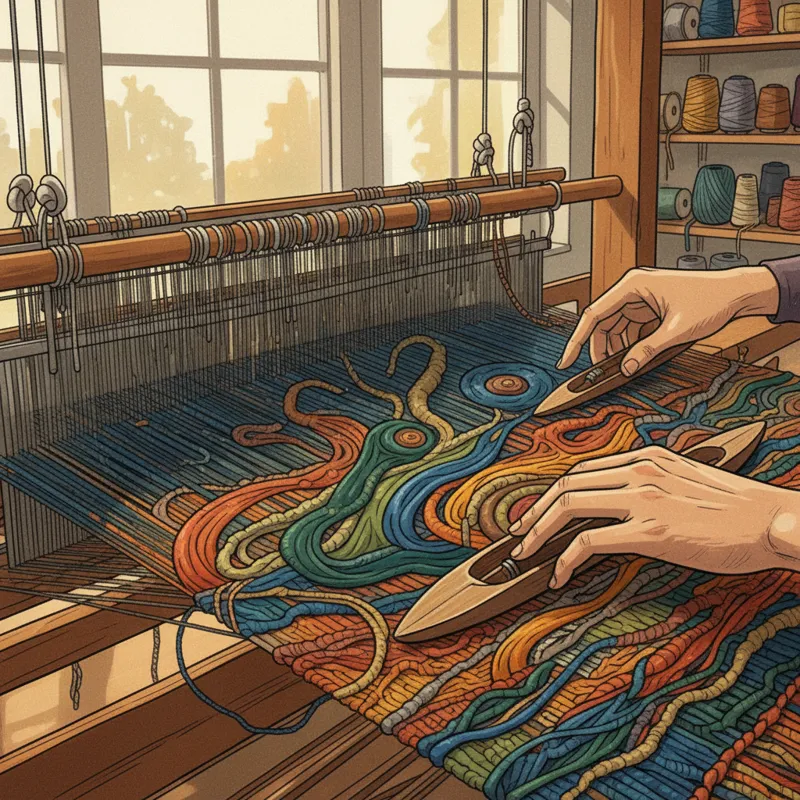
At its core, woven textile art involves the creation of a fabric or an artistic object by interlacing two distinct sets of threads or yarns – the warp (running lengthwise) and the weft (running crosswise) – typically on a loom. The ‘art’ aspect elevates it beyond mere craft or utility. Here, the artist’s intent moves beyond producing a functional item, such as clothing or blankets, towards creating a piece that evokes emotion, tells a story, or explores aesthetic principles. It’s about composition, color theory, texture, and often, conceptual depth.
Think of it as painting with fiber. Instead of applying pigments to a canvas, artists construct their visions by building up layers of threads, choosing specific colors, materials, and weaving patterns to achieve a desired visual and tactile effect. This isn’t mass-produced fabric; each piece of woven textile art is often unique, bearing the distinct hand and artistic voice of its maker. The process is inherently slow and meditative, contributing to the perceived value and unique character of the finished work.
Distinguishing Woven Art from Other Fiber Arts
It’s easy to group all fiber creations under one umbrella, but woven textile art has specific characteristics that set it apart. While it shares the use of fiber with techniques like knitting, crocheting, embroidery, or macrame, the fundamental structural approach is different.
- Knitting and Crocheting: These involve creating fabric from a single continuous strand of yarn using needles or a hook, forming loops that interlock. The fabric structure is inherently stretchy.
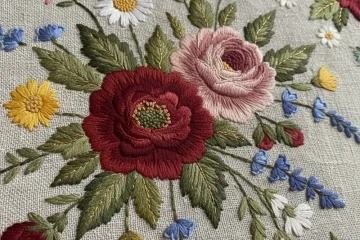
- Embroidery: This technique adds decorative stitches to an existing fabric base. It’s an embellishment rather than the creation of the fabric itself. While an artist might use embroidery patterns, the underlying material isn’t woven as the art.
- Macrame: A knotting technique where cords are manipulated into decorative patterns. It doesn’t use a loom or interlacing warp and weft, focusing instead on structural knots to create form, often seen in macrame wall hanging art.
Woven textile art, by contrast, relies on the systematic intersection of two thread systems, creating a robust and often visually complex matrix that can range from flat tapestries to sculptural forms. This structured, methodical approach is central to its identity.
A Thread Through Time: The Enduring Legacy of Woven Art

The act of weaving is one of humanity’s oldest technologies, predating agriculture in some regions. Early humans used woven structures for shelter, baskets, and rudimentary clothing, leveraging natural fibers like reeds, grasses, and animal hair. Over millennia, this practical skill evolved into an art form, driven by cultural significance, spiritual beliefs, and the desire for beauty.
Ancient Roots and Cultural Significance
From the intricate Coptic textiles of ancient Egypt to the vibrant weavings of pre-Columbian Americas and the exquisite silks of imperial China, woven textile art has always been deeply embedded in human culture. These weren’t just decorative items; they served as historical records, religious artifacts, symbols of status, and even currency. The narratives woven into tapestries often depicted myths, battles, and daily life, preserving stories for future generations. For example, the Bayeux Tapestry, a famous embroidered cloth, chronicles the Norman conquest of England, showcasing how textile art served as a powerful medium for storytelling.
The Industrial Revolution and Its Impact
The 18th and 19th centuries brought the Industrial Revolution, mechanizing textile production and shifting weaving from a widespread household skill to factory work. This period saw the rise of complex loom technologies, like the Jacquard loom, which could automate intricate patterns. While this made textiles more accessible and affordable, it also paradoxically pushed hand-weaving further into the realm of specialized craft and art, preserving the unique value of human touch and individual artistic expression. The distinction between mass-produced fabric and artisan-crafted woven art began to sharpen.
The 20th Century Revival and Beyond
The Arts and Crafts movement in the late 19th and early 20th centuries championed traditional craftsmanship against industrialization, fostering a renewed appreciation for hand-woven textiles. Later, mid-century modernism embraced abstract forms and natural materials, bringing textile artists like Anni Albers and Sheila Hicks to prominence. These artists pushed the boundaries of weaving, treating it not just as a decorative craft but as a serious medium for abstract expression and sculptural exploration. This period laid the groundwork for the diverse and dynamic woven textile art scene we see today, recognizing it fully as a fine art.
The Anatomy of a Weave: Core Techniques and Materials

Creating woven textile art involves a foundational understanding of looms, weaving structures, and materials. Each choice an artist makes in these areas contributes significantly to the final aesthetic and tactile qualities of the artwork.
The Loom: Artist’s Framework
A loom is essentially a frame or machine that holds the warp threads under tension, allowing the weft threads to be interlaced. Looms vary greatly in complexity and scale:
- Frame Looms: Simple, portable looms often used for small-scale projects, tapestry weaving, or educational purposes. They are excellent for beginners.
- Table Looms: More complex than frame looms, these have multiple shafts (mechanisms to lift warp threads) allowing for more intricate patterns. They are suitable for medium-sized works and offer greater versatility.
- Floor Looms: Large, robust looms that provide exceptional tension control and often have many shafts, enabling complex weaving patterns and larger artworks. They are the workhorses for serious textile artists.
- Backstrap Looms: Ancient and versatile, these looms use the weaver’s body tension, connecting one end of the warp to a fixed point and the other to a strap around the weaver’s back. They are still used globally for intricate, portable weaving.
The type of loom often dictates the scale and complexity of the woven textile art piece an artist can create.
Weaving Structures: The Building Blocks
The way warp and weft threads interlace defines the weaving structure, which in turn determines the fabric’s appearance, texture, and drape.
- Plain Weave: The simplest structure, where each weft thread passes over one warp thread and under the next, creating a checkerboard pattern. It’s strong and durable, often the base for tapestries.
- Twill Weave: Characterized by diagonal ridges, twill is created by passing the weft over two or more warp threads, then under one or more. Denim is a common example.
- Satin Weave: Produces a smooth, lustrous surface by floating weft threads over several warp threads before interlacing, with staggered interlacings.
- Tapestry Weave: A weft-faced plain weave where the weft threads completely cover the warp. Artists use different colored weft threads to build up images, similar to painting. This is a primary technique for pictorial woven textile art.
- Jacquard Weave: While originally a mechanical loom innovation, the Jacquard principle allows for highly complex, detailed patterns (think damask or brocade), offering immense artistic possibilities in modern digital weaving.
- Basket Weave: A variation of plain weave where two or more warp threads are treated as one, and two or more weft threads are treated as one, creating a checkerboard pattern with a more open, basket-like texture.
Artists often combine these structures or develop unique variations to achieve specific visual and tactile effects.
Materials: The Artist’s Palette
The choice of fiber is critical, impacting not only the color and texture but also the way the art piece interacts with light and space.
- Natural Fibers:
- Wool: Versatile, dyes well, offers warmth and textural variety. Excellent for tapestry due to its bulk and resilience.
- Cotton: Strong, absorbent, takes dye well, provides a crisp feel.
- Linen: Lustrous, strong, creates a crisp, cool fabric.
- Silk: Luxurious, smooth, shiny, and strong. Adds elegance and drape.
- Plant Fibers: Beyond cotton and linen, artists use ramie, hemp, jute, sisal, and even bark fibers for earthy, textural works.
- Synthetic Fibers:
- Nylon, Polyester, Acrylic: Offer durability, colorfastness, and often unique textures or light-reflecting qualities.
- Metallics: Lurex and other metallic threads can add sparkle and visual interest.
- Mixed Media: Contemporary woven textile art frequently incorporates unexpected materials like wire, recycled plastics, paper, leather strips, beads, and even found objects directly into the weave. This expands the possibilities for texture, dimensionality, and conceptual messaging.
The interaction of these materials, their colors, and the chosen weave structure results in the unique visual language of each artwork.
Beyond the Loom: Contemporary Approaches to Woven Textile Art
Today, woven textile art is thriving, pushed forward by artists who blend tradition with innovation. The boundaries between craft, design, and fine art continue to blur, allowing for exciting experimentation.
Sculptural Weaving and Installation Art
Many contemporary textile artists are moving beyond flat tapestries, creating three-dimensional woven forms that challenge traditional notions of sculpture. These works can hang freely in space, interact with their environment, or even become immersive installations that viewers can walk through. Artists might use unconventional loom setups, off-loom techniques, or combine weaving with other construction methods to achieve these sculptural qualities. Think of large-scale pieces that drape, swell, or twist, inviting interaction and contemplation of space.
Digital Weaving and Technology
The integration of digital technology has opened new frontiers for woven textile art. Computer-aided design (CAD) software allows artists to create intricate patterns and visualize their work before it’s even on the loom. Digital Jacquard looms, once industrial machines, are now accessible to artists, enabling them to weave complex imagery, including photographic reproductions, with incredible precision and detail. This blend of ancient craft and cutting-edge technology highlights the medium’s enduring adaptability.
Conceptual and Social Engagement
Contemporary woven textile art often serves as a powerful medium for conceptual expression and social commentary. Artists use fiber to explore themes of identity, memory, environmental concerns, social justice, and cultural heritage. The tactile nature of textiles, their historical association with domesticity and human touch, lends itself well to these narratives, making the artwork resonate on a deeply personal and universal level. For instance, a piece might incorporate recycled materials to speak to sustainability, or traditional patterns to address cultural identity.
Woven Art in Home Decor and Collectible Markets
In 2026, woven textile art is increasingly sought after for both high-end interior design and the collectible art market. Its unique blend of texture, warmth, and visual interest makes it a compelling alternative or complement to traditional paintings and sculptures.
- Home Decor: Designers leverage woven pieces to add softness, acoustic properties, and a focal point to modern and minimalist spaces. From large-scale tapestries creating dramatic statements to smaller, intricately woven hangings adding artisanal flair, these works infuse spaces with character.
- Collectible Art: Galleries and private collectors are recognizing the significant artistic merit and investment potential of woven textile art. Established artists command strong prices, and emerging artists are finding new platforms to showcase their work, from curated online marketplaces to international art fairs. The unique, often labor-intensive nature of each piece contributes to its exclusivity and value.
The growing appreciation for handcrafted, authentic objects in an increasingly digital world fuels this demand, particularly in the U. S. market, where there’s a strong emphasis on unique, story-driven pieces.
Things People Usually Miss About Woven Textile Art
When encountering woven textile art, many people tend to focus solely on the visual impact. However, some crucial aspects often go unnoticed, which deepen appreciation for the medium.
The Time and Intent Behind Each Thread
Unlike painting, where a brushstroke is immediate, weaving is inherently a slow process. Every single weft thread is deliberately placed, interlaced over and under hundreds, sometimes thousands, of warp threads. A large-scale tapestry might take hundreds or even thousands of hours to complete. This immense investment of time and focused intention isn’t just a byproduct; it’s an integral part of the artwork’s value and meaning. Each thread placement is a decision, building the image and texture line by line, much like pixels forming an image, but with tangible fiber.
The Unsung Engineering
Weaving is as much an act of engineering as it is of artistic expression. The artist must understand thread tension, fiber properties, and structural integrity to create a stable and lasting piece. A poorly engineered weave can distort, unravel, or lack the desired drape. The choice of warp material, its density, and the way it’s prepared are all critical, often invisible decisions that underpin the entire artwork’s success. It’s a delicate balance between artistic vision and technical mastery.
The Tactile Dimension
While all art engages our senses, woven textile art uniquely invites touch. Even if we can’t physically touch a piece in a gallery, our brains instinctively register its texture – the softness of wool, the crispness of linen, the roughness of jute, the sheen of silk. This tactile quality adds a profound layer to the viewing experience, differentiating it from purely visual mediums. It speaks to our primal connection with materials and craftsmanship, evoking warmth, comfort, or even a sense of wonder.
The Preservation Challenges (and Solutions)
Textiles are organic materials, susceptible to light, dust, insects, and humidity. People often forget that woven art requires specific care for its longevity. This isn’t a limitation but rather a consideration. Reputable galleries and collectors understand the importance of proper display conditions (away from direct sunlight, in stable environments) and professional conservation. Organizations like the American Institute for Conservation of Historic and Artistic Works provide guidelines for textile care, ensuring these intricate works can be enjoyed for generations.
The Future and Enduring Appeal of Woven Textile Art
The future for woven textile art in 2026 looks bright and dynamic. Its ability to bridge ancient techniques with modern sensibilities ensures its continued relevance. We can expect to see further integration of digital tools, expansion into even larger-scale architectural installations, and continued exploration of sustainable and unconventional materials.
The enduring appeal of woven textile art lies in several key factors:
- Human Connection: In an increasingly digital world, people yearn for tangible, handcrafted objects that carry the mark of human effort and skill. Woven art offers this deep, authentic connection.
- Tactile Richness: The inherent texture and dimensionality of woven pieces provide a sensory experience unmatched by flat mediums.
- Versatility: From delicate miniatures to monumental installations, woven textile art can adapt to various scales and contexts, fitting into diverse artistic practices and environments.
- Narrative Potential: The ability to embed stories, cultural heritage, and conceptual ideas within the fabric itself makes it a powerful medium for communication.
- Environmental Consciousness: Many artists are drawn to weaving for its potential to utilize natural, renewable, or recycled fibers, aligning with growing ecological awareness.
As collectors and the public alike continue to seek out unique, meaningful, and visually compelling artworks, woven textile art will undoubtedly maintain its prominent place in the global art scene, enchanting and inspiring with every carefully interlaced thread.
Frequently Asked Questions About Woven Textile Art
Is woven textile art considered fine art?
Yes, absolutely. For decades, particularly since the mid-20th century, woven textile art has been recognized and exhibited in major museums and galleries worldwide as a legitimate and significant form of fine art. Artists working in this medium explore complex aesthetic, conceptual, and technical challenges, elevating it far beyond mere craft.
How do I care for a piece of woven textile art?
Proper care is essential. Keep woven textile art away from direct sunlight, which can fade dyes and degrade fibers. Maintain stable humidity and temperature to prevent mildew or brittleness. Avoid touching the piece directly to prevent oil transfer and damage. For cleaning, gentle dusting with a soft brush or vacuum with a screen attachment is usually sufficient. For significant cleaning or restoration, always consult a professional textile conservator.
Can I collect woven textile art on a budget?
Yes, you can! While established artists’ works can command high prices, the market also offers numerous opportunities for collectors on a budget. Look for emerging artists, attend local craft fairs and open studios, or explore online platforms specializing in handcrafted art. Smaller pieces or works by newer artists often provide an accessible entry point into collecting.
What’s the difference between a tapestry and woven textile art?
A tapestry is a specific type of woven textile art. It’s typically a weft-faced plain weave where the weft threads completely cover the warp, and different colored wefts are used to create pictorial or decorative designs. So, all tapestries are woven textile art, but not all woven textile art is tapestry. Woven textile art encompasses a much broader range of techniques, structures, and artistic expressions, including sculptural forms, abstract pieces, and experimental material use.
Where can I see woven textile art in the United States?
You can find woven textile art in a variety of venues across the U. S. Major art museums often have textile collections, like the Metropolitan Museum of Art in New York or the Art Institute of Chicago. Contemporary art galleries frequently feature textile artists. Specialized craft museums, university galleries, and even high-end interior design showrooms also showcase woven pieces. Look for local art fairs or fiber art guilds in your area for emerging talent. The Smithsonian American Art Museum is another excellent resource for historical and contemporary examples.