

Finding effective solutions for thinning hair requires navigating a market saturated with exaggerated claims and “miracle” cures. For the consumer in 2026, the distinction between marketing fluff and clinical efficacy has never been more important. Hair thinning is rarely a singular issue; it is usually a combination of biological factors (hormones, genetics, aging) and mechanical factors (styling damage, product buildup). Therefore, the “best” product depends entirely on whether your goal is to physically widen the diameter of existing strands for immediate volume or to biologically stimulate the follicle for long-term density.
A professional approach to hair thickening does not rely on hope. It relies on understanding hair architecture. Cosmetic thickeners work by depositing polymers or proteins onto the cuticle layer, artificially increasing the strand’s circumference. Regrowth treatments, conversely, work at the scalp level to prolong the anagen (growth) phase of the hair cycle. The most effective regimens often combine both approaches: treating the scalp to encourage future growth while styling the existing hair to maximize its visual impact. This guide categorizes the top solutions available in the United States, prioritizing products with verified mechanisms of action over viral trends.
The Science of Thickness: Diameter vs. Density
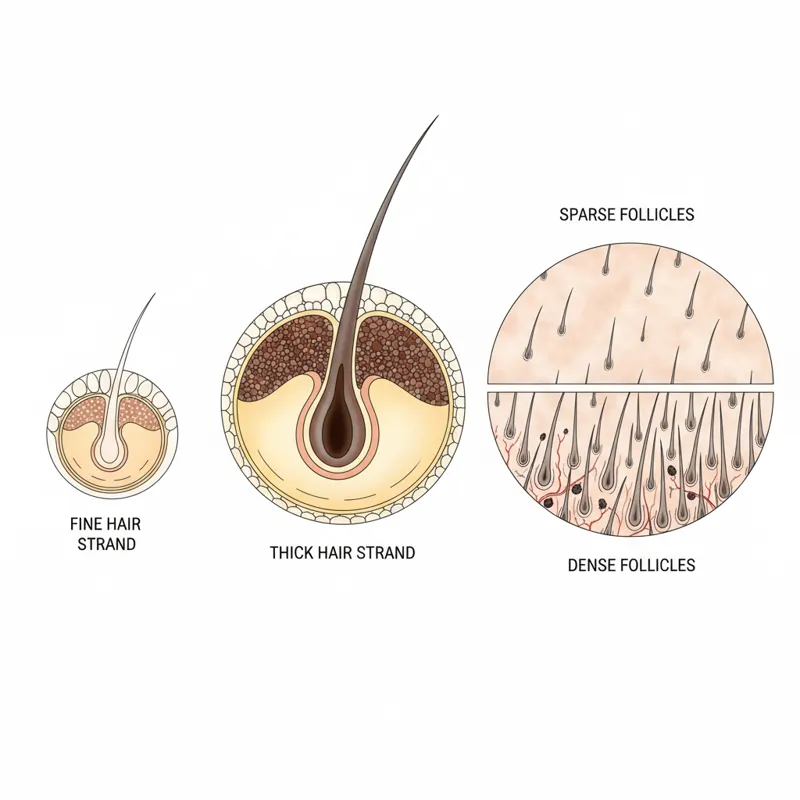
Before investing in a regimen, you must identify the root of the cosmetic issue. “Thin” hair usually refers to one of two distinct conditions, and they require completely different ingredients.
Low Density (Thinning Hair): This refers to the number of active follicles on your scalp. If you can see your scalp clearly through your hair, you are likely dealing with reduced density. This is often hormonal or genetic. The solution here requires pharmaceutical or bioactive intervention to wake up dormant follicles.
Fine Texture (Low Diameter): This refers to the width of the individual hair shaft. You may have a lot of hair (high density), but because each strand is microscopic, it lacks volume and falls flat. The solution here is structural—using products that bind to the surface to create stiffness and space between strands.
By understanding this distinction, you avoid the common pitfall of buying a volumizing shampoo (which treats diameter) when you actually need a minoxidil treatment (which treats density).
1. The Gold Standard for Regrowth: 5% Minoxidil Foam
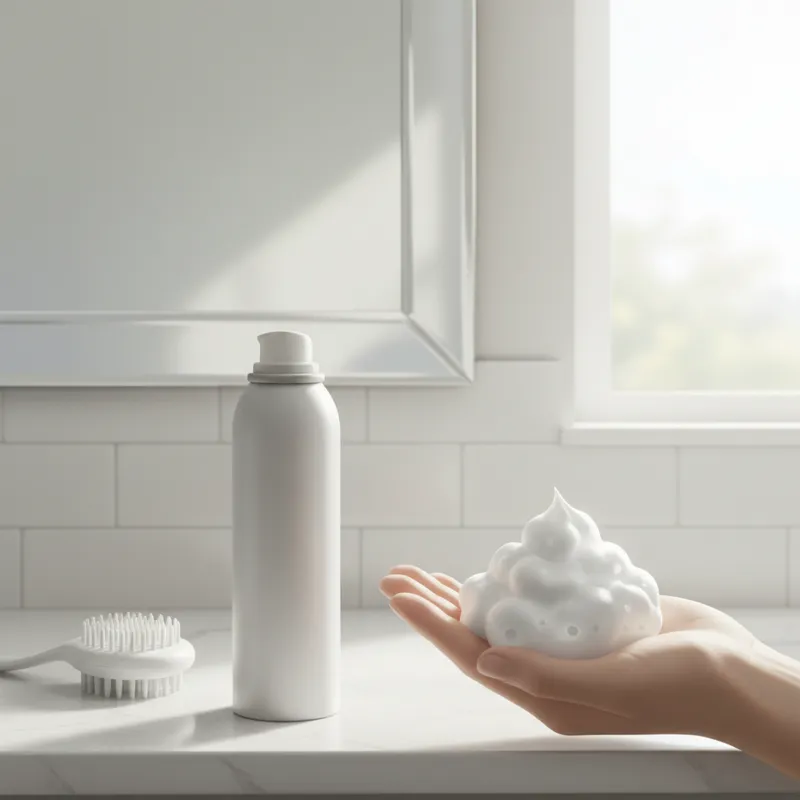
Despite the influx of new biotech in 2026, Minoxidil remains the only FDA-approved topical ingredient for regrowing hair in both men and women. It works as a vasodilator, widening blood vessels around the follicle. This increases nutrient delivery and oxygen flow, which can shift follicles from the telogen (resting) phase back into the anagen (growth) phase.
For most users, the 5% foam formulation is superior to the liquid. The liquid version often contains propylene glycol, which frequently causes contact dermatitis or itchy scalp. The foam is generally less irritating and dries faster, making it easier to incorporate into a morning routine. While brand names like Rogaine are ubiquitous, generic 5% minoxidil available at major US retailers offers the exact same active molecule at a fraction of the cost.
Best for: Individuals noticing a widening part or receding hairline who want clinically proven regrowth.
2. The Peptide Powerhouse: Multi-Peptide Serums
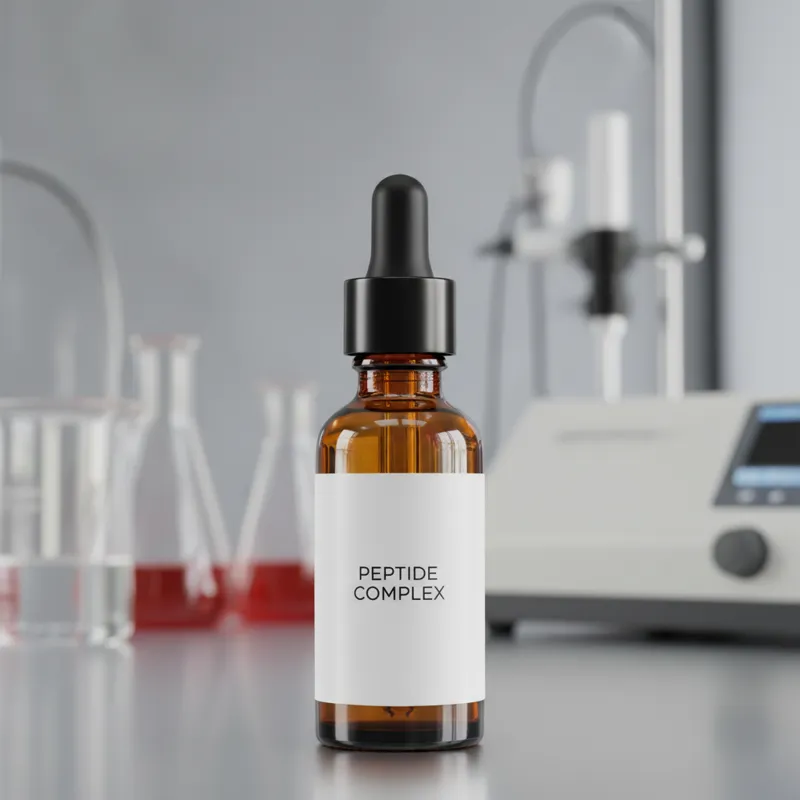
For those who cannot tolerate minoxidil or prefer a non-drug approach, peptide-based serums have matured into a viable alternative. Modern formulations utilize ingredients like Redensyl, Capixyl, and Procapil. These compounds target the stem cells in the hair follicle to promote growth and reduce inflammation.
Clinical data suggests that Redensyl, for example, targets the outer root sheath stem cells to trigger the anagen phase. Unlike minoxidil, these serums are often formulated with caffeine and botanical extracts to support overall scalp health. They are excellent for maintenance and early-stage thinning. Interestingly, global beauty trends often borrow from dietary antioxidants. Just as specific Tea in Spanish varieties utilize distinct leaves for health benefits, hair formulations now frequently use fermented tea extracts and caffeine to energize the scalp micro-circulation.
Best for: Early signs of shedding and those seeking a gentle, non-hormonal daily treatment.
3. Instant Diameter: Polyacrylate Volumizing Sprays
If you need your hair to look thicker today, biological treatments won’t help immediately. You need “scaffolding” products. The most advanced volumizers in 2026 have moved away from sticky resins that glue hair together. Instead, they use “elastomeric polymers” or modified corn starch.
Products like the Color Wow Xtra Large Bombshell Volumizer represent this category well. They utilize a polymer complex that sits on the surface of the hair, pushing strands apart from one another. This creates “airiness” and volume without the crunchiness associated with 1990s mousses. By roughening the cuticle slightly and creating space, the overall ponytail circumference increases instantly.
Best for: Fine hair that falls flat immediately after blow-drying.
4. The Bond Builder: Bis-Aminopropyl Diglycol Dimaleate Treatments
Breakage is a silent thief of volume. If your hair breaks before it reaches full length, your mid-lengths and ends will look straggly and thin. Bond-building technology, popularized by Olaplex (specifically No. 0 and No. 3), works on a molecular level to repair disulfide bonds broken by heat and chemical styling.
When the internal structure of the hair is reinforced, the strand creates a stiffer, stronger silhouette. It doesn’t “grow” more hair, but it retains the hair you have, keeping the density consistent from root to tip. In 2026, we also see competitors like K18 using biomimetic peptides to reconnect keratin chains, offering a faster alternative for busy professionals.
Best for: Bleached, colored, or heat-damaged hair that feels thin due to breakage.
5. The Scalp Microbiome Balancer: Salicylic Acid Exfoliators
You cannot grow healthy plants in poor soil. A scalp clogged with sebum, dead skin, and product residue can physically impede hair growth and lead to inflammation. Chronic inflammation (micro-inflammation) is a known contributor to hair miniaturization.
Chemical exfoliants containing Salicylic Acid or Glycolic Acid help dissolve the “cement” holding dead skin cells to the scalp. Products like the The Inkey List Salicylic Acid Exfoliating Scalp Treatment remove build-up without physical scrubbing, which can cause breakage on fragile thin hair. Keeping the follicle opening clear ensures that any topical growth treatments you apply are actually absorbed rather than sitting on a layer of oil.
Best for: Oily scalps or those who use dry shampoo frequently.
6. Weightless Cleansing: Hydrolyzed Protein Shampoos
Many “thickening” shampoos fail because they rely on heavy silicones (like dimethicone) to coat the hair. While this feels smooth, the weight eventually drags fine hair down, exposing the scalp. The superior choice for 2026 is a shampoo utilizing hydrolyzed proteins (wheat, rice, or silk).
These proteins are broken down into small enough molecules to penetrate the hair shaft temporarily, swelling it with moisture and reinforcing the cuticle. Look for clear formulations rather than pearlescent ones, as pearlescent agents often indicate heavier conditioning ingredients that fine hair should avoid. Diet plays a role here too; high glycemic spikes can trigger androgen production which impacts scalp oil. While we all love treats like 10 Ultimate Fruit Bubble Tea Recipes, moderation is essential for maintaining an anti-inflammatory environment for hair follicles, and using a balancing shampoo helps mitigate external oil issues.
Best for: Daily cleansing for fine, limp hair types.
7. The Internal Support: Nutrafol and DHT Blockers
Supplements are a controversial category because they are not FDA-regulated like drugs. However, for thinning related to stress or mild hormonal shifts, certain nutraceuticals have shown promise. Nutrafol has dominated this space by conducting clinical studies on their formulations.
Key ingredients to look for include Saw Palmetto (which may inhibit the conversion of testosterone to DHT, the hormone responsible for shrinking follicles) and Ashwagandha (a sensoril adaptogen for stress). Stress is a major killer of hair density (telogen effluvium). While topical products help, managing cortisol is key. Some trichologists recommend lifestyle shifts, similar to the relaxation effects sought in 7 Best Passionflower Tea Benefits for 2026, to lower systemic stress levels that trigger shedding.
Best for: Hair loss related to stress, postpartum recovery, or mild age-related thinning.
8. Optical Density: Root Cover-Up Powders
While not a treatment, root cover-up powders are an essential tool in the thickening arsenal. They work by reducing the color contrast between the hair and the scalp. When the scalp is white and the hair is dark, any gap is highly visible. By shading the scalp to match the hair color, hair immediately appears twice as dense.
Mineral-based powders are water-resistant and stay put until shampooed. This is a “cosmetic camouflage” technique used frequently on movie sets and by dermatologists to help patients feel confident while waiting for long-term treatments like Minoxidil to kick in.
Best for: concealing wide parts or thinning patches instantly for events.
9. The Texture Maker: Dry Texture Sprays
Unlike hairspray, which locks hair into a stiff shape, dry texture sprays use invisible powders (often zeolite or silica) to add grit. Fine hair is often too “slippery”—strands slide past each other and lie flat. Texture spray introduces friction.
This friction allows strands to stack on top of one another and hold that vertical volume. It creates a “lived-in” look that occupies more physical space than freshly combed, slippery hair. It is arguably the most important styling product for creating the illusion of thickness on a bob or lob haircut.
Best for: Styling fine hair to hold waves and volume.
10. Low-Level Laser Therapy (LLLT): The LaserCap
Once relegated to doctor’s offices, LLLT is now available for home use. Devices like the Capillus or HairMax use medical-grade lasers (not LEDs) to deliver light energy to the hair follicles. According to the National Institutes of Health (NIH), this light energy stimulates cellular metabolism and improves blood flow.
It is a significant investment and requires consistency (usually 6 to 30 minutes daily, forever). However, for those who cannot use chemical topicals due to sensitivity, LLLT is a validated, non-invasive option for stabilizing hair loss.
Best for: Individuals looking for a chemical-free, FDA-cleared device to support follicle health.
What Most People Get Wrong About Thickening
There is a persistent myth that washing thinning hair frequently makes it fall out. This is false. The hair you see in the shower drain was already detached from the follicle (telogen phase); the mechanical action of washing just liberated it. Avoiding washing leads to sebum buildup, which contains DHT and inflammatory cytokines that can accelerate hair loss.
Furthermore, many consumers believe “biotin” is the cure-all. While Biotin deficiency causes hair loss, true deficiency is rare in the United States. Taking massive doses of Biotin without a deficiency will not make hair thicker and can interfere with lab test results (specifically thyroid and cardiac troponin tests). Always consult a physician before high-dose supplementation.
How to Choose a Regimen
To summarize, successful hair thickening requires a multi-pronged approach tailored to your specific biology. Do not rely on a single shampoo to solve a hormonal issue.
- For Genetic Thinning: Prioritize Minoxidil (5%) and perhaps an LLLT device.
- For Fine Texture: Focus on Polyacrylate sprays and Hydrolyzed Protein shampoos.
- For Breakage: Use Bond Builders (Olaplex/K18) weekly.
- For Stress/Postpartum: Look into adaptogenic supplements and peptide serums.
Frequently Asked Questions
Does cutting hair make it grow back thicker?
No. This is an optical illusion. Hair is tapered at the end (like a pencil tip). When you cut it, you remove the thin tip, exposing the thicker base of the shaft. This makes the ends look blunt and full, but it does not alter the biological production of the hair follicle.
How long does it take to see results from Minoxidil?
Patience is critical. Most users experience a “dread shed” in the first 2-4 weeks, where old hair is pushed out by new growth. Visible thickening usually takes 3 to 6 months of daily use. According to the American Academy of Dermatology, stopping the treatment will result in the loss of any new hair gained within a few months.
Are silicone-free shampoos better for thinning hair?
Generally, yes. While silicones add shine, they are hydrophobic and heavy. They can weigh down fine strands, causing them to separate and reveal more scalp. Water-soluble conditioning agents or lightweight oils are better alternatives for volume seekers.
Can stress really cause hair thinning?
Absolutely. Telogen effluvium is a condition where significant stress pushes large numbers of follicles into the resting phase. This usually manifests as shedding 2-3 months after the stressful event. Managing stress is a tangible medical intervention for hair health. See more on stress management techniques at Mayo Clinic.
Disclaimer: The information provided on bangladeshcountry.com regarding skincare routines, chemical exfoliants (such as lactic acid), hair treatments, and cosmetics is based on general internet research and is intended for general informational and educational purposes only.
We are independent publishers and are not licensed dermatologists, medical estheticians, or cosmetic chemists. The content on this site is strictly not a substitute for professional dermatological advice, diagnosis, or personalized skincare consultations.
Skincare and haircare products containing active ingredients, acids, or strong chemicals can cause severe allergic reactions, skin burns, breakouts, or sensitivity. Results and reactions vary significantly depending on individual skin and hair types.
We strongly advise carefully reviewing all product ingredient lists, performing a patch test for 24-48 hours before full application, and consulting with a board-certified dermatologist before introducing new active ingredients into your routine. Reliance on any product recommendations or information provided on this site is strictly at your own risk. We assume no liability for any adverse skin reactions, allergies, or damages resulting from the use of these products.


