If you’ve ever followed a coffee recipe perfectly only to end up with a cup that’s disappointingly weak or aggressively bitter, the culprit probably isn’t your beans or your brewer. It’s almost certainly your grind. For many of the most popular at-home brewing methods, from the classic French press to the trendy cold brew, the secret to a rich, aromatic, and balanced cup lies in using coarse ground coffee. This specific grind size is engineered to slow down water extraction, preventing the harshness of over-brewing while allowing the deep, complex flavors of the bean to emerge. Understanding how and when to use a coarse grind is the single biggest upgrade you can make to your home coffee game, transforming muddy, underwhelming brews into something bold and consistently delicious.
What Exactly Is Coarse Ground Coffee?
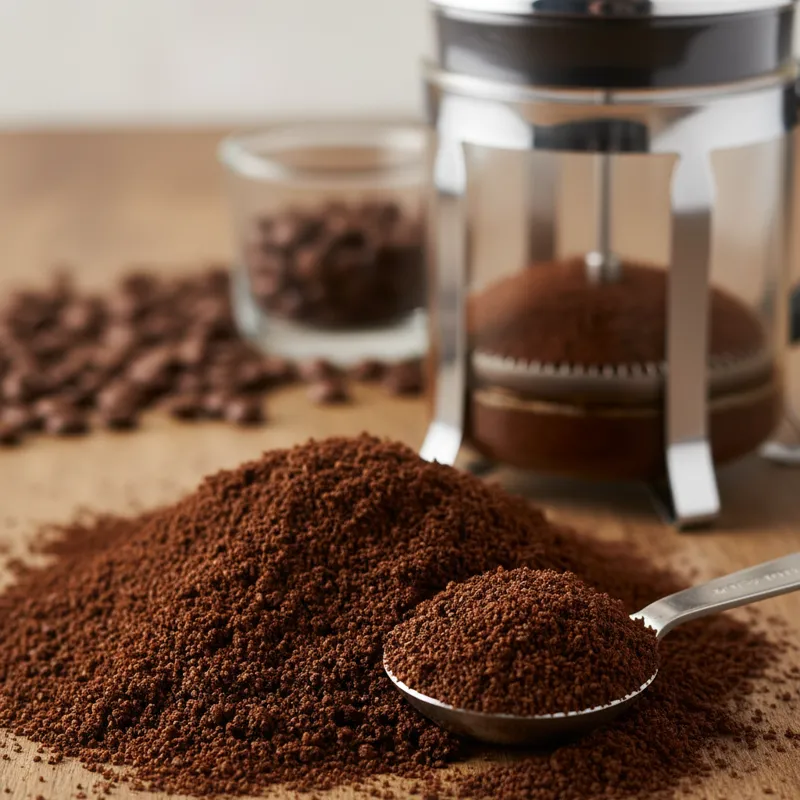
At its core, coarse ground coffee refers to coffee beans that have been broken down into large, distinct particles. Think of the texture of chunky sea salt or raw sugar. If you were to pinch some between your fingers, you’d feel individual, gritty pieces rather than a fine powder. This is the largest practical grind size you’ll use for brewing coffee.
On a coffee grind size chart, which ranges from extra fine (like powdered sugar) to extra coarse, coarse grinds sit squarely on the larger end of the spectrum. The visual difference is unmistakable. Fine grinds look uniform and powdery, while coarse grinds look jagged, uneven, and three-dimensional. This physical structure isn’t just for looks; it fundamentally dictates how water interacts with the coffee.
The large particle size creates more space between each fragment of coffee. When you add water, it flows through these channels relatively quickly and with less resistance compared to a finer grind. This slower, less aggressive extraction is precisely what makes coarse ground coffee the ideal choice for brewing methods that rely on full immersion and longer contact times.
Why Grind Size Is the Most Overlooked Variable in Brewing

Making coffee is essentially a process of chemical extraction. Hot water acts as a solvent, dissolving solids and oils from the coffee grounds to create the beverage you drink. The total surface area of those grounds determines the speed and efficiency of this extraction. This is where grind size becomes the master variable.
A fine grind creates a massive amount of surface area. Think of a single coffee bean as a block. When you shatter it into a fine powder, you expose all of its interior surfaces. Water can attack it from all sides, rapidly dissolving compounds. This is perfect for methods with very short contact times, like espresso, where water is forced through the coffee in under 30 seconds.
A coarse grind, conversely, has significantly less surface area. The water can only work on the outside of each large particle. This dramatically slows down the rate of extraction. The goal is to match this slow extraction rate with a brewing method that uses a long contact time.
The Twin Sins: Under- and Over-Extraction
When the grind size and brew time are mismatched, you get an unbalanced cup. This is almost always the reason for bad homemade coffee.
- Under-extraction: This happens when water passes through the grounds too quickly or doesn’t have enough time to dissolve the desirable flavor compounds. The first compounds to dissolve are acidic and fruity. If the extraction stops there, you get coffee that tastes sour, thin, and underdeveloped. Using a coarse grind with a short brew time (like in a drip machine) is a classic recipe for under-extraction.
- Over-extraction: This is the opposite problem. The water sits with the coffee for too long, pulling out not just the good stuff (sweetness, body, complex acids) but also the undesirable, bitter compounds that are the last to dissolve. The result is a harsh, astringent, and bitter cup that coats your tongue. Using a fine grind in a French press, where the coffee steeps for four minutes, is a guaranteed way to over-extract.
Using coarse ground coffee with the right method allows you to steep the coffee for a long time, pulling out all the deep sweetness and body without crossing the line into bitterness.
The Best Brewing Methods for Coarse Ground Coffee

Coarse grinds aren’t for every brewer, but for the methods they suit, they are non-negotiable. These brewers are all defined by one thing: prolonged contact time between the water and the coffee grounds.
French Press: The Classic Immersion Brewer
The French press is perhaps the most well-known method that demands a coarse grind. It’s a full-immersion brewer, meaning the coffee grounds are steeped directly in hot water for a set period, typically around four minutes. At the end of the steep, a mesh plunger separates the grounds from the brewed coffee.
Using a fine or medium grind here is a disaster. First, the massive surface area will lead to severe over-extraction in that four-minute window, creating a brutally bitter brew. Second, the fine particles will slip right through or clog the metal mesh filter, leaving you with a cup full of unpleasant sludge. The best grind for French press is unequivocally coarse. The large particles allow for a slow, gentle extraction and are easily held back by the filter, resulting in a full-bodied, rich cup with a satisfyingly heavy mouthfeel.
Cold Brew: The Ultimate Slow Extraction
Cold brew coffee takes the principle of slow extraction to the extreme. Instead of hot water, it uses room temperature or cold water to steep grounds for 12 to 24 hours. Because the water isn’t hot, the extraction process is incredibly slow and gentle. This method is famous for producing coffee that is smooth, low in acidity, and naturally sweet.
A coarse grind is absolutely essential for cold brew. A finer grind would turn into a muddy mess over a 12-hour steep, making it impossible to filter cleanly. More importantly, it would over-extract even with cold water, creating a bitter concentrate. When looking for pre-ground coffee for cold brew or grinding your own, you want a very coarse consistency to ensure the water can slowly and evenly saturate the grounds, yielding a clean, flavorful concentrate that’s never harsh.
Percolators: A Vintage Powerhouse
Though less common today, the percolator is a classic American brewing method that also benefits from a coarse grind. A percolator works by continually cycling boiling water up through a tube and over a basket of coffee grounds. This process is aggressive and involves very hot water.
Using a medium or fine grind in a percolator is a recipe for scorched, bitter coffee. The fine grounds will over-extract almost instantly, and many will fall through the brew basket holes into the final pot. Percolator coffee grounds need to be coarse to withstand the repeated passes of boiling water and to stay put in the basket. This allows for a strong, robust, and piping hot cup of coffee, which some people, perhaps after a long day dealing with a noisy appliance like a Hot Point washer, find deeply satisfying.
Getting the Perfect Coarse Grind at Home
While you can buy pre-ground coffee, grinding your beans fresh right before you brew provides an unmatched level of aroma and flavor. Coffee’s volatile aromatic compounds begin to dissipate the moment it’s ground. For the best results, grinding at home is the way to go.
Burr Grinders vs. Blade Grinders: No Contest
When it comes to grinding, not all machines are created equal. The choice between a burr grinder and a blade grinder is one of the most significant you’ll make for your coffee quality.
- Blade Grinders: These are the less expensive, more common grinders that work like a blender. A spinning blade at the bottom smashes the beans into pieces. The problem is a complete lack of control and consistency. It produces a mix of fine powder (fines) and large chunks (boulders). This unevenness means the fine dust will over-extract and turn bitter, while the large boulders will under-extract and taste sour, all in the same brew.
- Burr Grinders: These grinders use two revolving abrasive surfaces (burrs) to crush coffee beans into a consistent size. You set the distance between the burrs, and the machine produces a uniform grind at that specific setting. For coarse ground coffee, a quality burr grinder is essential. Finding the right burr grinder coarse setting on your machine allows you to produce a uniform particle size that extracts evenly, giving you a clean, balanced, and predictable cup every single time. As Forbes notes in their reviews, the consistency from a burr grinder is a game-changer.
Can You Use Pre-Ground Coffee?
Absolutely. The convenience of pre-ground coffee is undeniable. If you’re buying it, look for bags specifically labeled “Coarse Grind,” “French Press Grind,” or “Cold Brew Grind.” Reputable roasters understand these brewing methods and grind accordingly.
The main trade-off is freshness. As mentioned, ground coffee loses its aromatic vibrancy much faster than whole beans. To mitigate this, buy smaller bags more frequently and store the coffee in an airtight container away from light, heat, and moisture. While it won’t have the explosive aroma of freshly ground beans, a good quality, pre-ground coarse coffee can still produce a delicious cup.
What Most People Get Wrong About Coarse Grinds
Even with the right equipment, a few common misunderstandings can derail your brewing efforts. Avoiding these simple mistakes is key to success.
The most common error is a simple mismatch: using coarse ground coffee in a brewer designed for a finer grind. Putting coarse grounds in a standard drip coffee machine is a perfect example. The machine is calibrated for water to pass through the grounds in 2-3 minutes. With a coarse grind, the water will rush through far too quickly, barely extracting anything. The result will be a watery, sour, and thoroughly disappointing cup of coffee-flavored water.
Another issue is failing to adjust the brew time. If your French press coffee tastes weak, the instinct might be to grind finer. A better first step is to increase the steeping time. Try extending it from four minutes to five. The larger particles in a coarse grind can handle a longer extraction time without becoming bitter, allowing you to dial in the strength perfectly.
Finally, people often underestimate the importance of the water-to-coffee ratio. Because coarse grounds are less dense and take up more volume than fine grounds, measuring by scoops can be inaccurate. Using a simple kitchen scale to weigh your coffee and water (a common starting ratio for French press is 1:15, or 1 gram of coffee for every 15 grams of water) removes the guesswork and ensures a consistent brew every time.
Choosing the Right Beans for a Bold, Aromatic Brew
The grind is the method, but the bean is the soul of the coffee. Brewing methods that use coarse ground coffee, like French press and cold brew, are excellent at highlighting body and deep, rich flavors. You can lean into this by selecting the right beans.
Medium to dark roasts often shine in these applications. The roasting process develops sugars and oils that contribute to a heavier body and notes of chocolate, nuts, and caramel. These are the exact flavors that full-immersion brewing excels at extracting. A light roast, known for its bright, delicate acidity and floral notes, can sometimes taste a bit thin or muted in a French press, though it can be fantastic as a flash-chilled cold brew.
When you want to buy whole bean for cold brew, look for beans from regions known for their full body and lower acidity, such as Brazil, Sumatra, or Mexico. These beans are often described with flavor notes like “dark chocolate,” “syrupy,” or “earthy,” which translate beautifully to a smooth, powerful cold brew concentrate. It’s a flavor profile that stands in stark contrast to the sometimes sharp, spicy notes you might find in something like the cinnamon flavor of Red Hots candy.
Frequently Asked Questions (FAQ)
Can I use coarse ground coffee for my drip coffee maker?
It’s generally not recommended. Standard automatic drip machines are designed for a medium grind. Using a coarse grind will cause the water to flow through the filter basket too quickly, leading to weak, sour, under-extracted coffee. You need the greater resistance of a medium grind to allow for proper contact time.
How coarse should coffee be for a French press?
The ideal grind should resemble coarse sea salt or breadcrumbs. The particles should be distinct and fairly uniform. If you’re seeing a lot of fine powder along with the coarse chunks (a sign of a blade grinder), your coffee will likely taste muddy and bitter. Aim for consistency.
What’s the best way to store coarse ground coffee?
Whether you grind it yourself or buy it pre-ground, the rules are the same. Store it in an opaque, airtight container at room temperature. Avoid the refrigerator or freezer, as condensation can damage the coffee. Keep it away from direct sunlight and heat. For a vibrant and bold fashion statement that does love the sun, you might be interested in a guide to styling hot pink shoes, but for your coffee, darkness and a good seal are key.
How can I grind coffee coarse without a grinder?
While a burr grinder is best, you can get a coarse grind in a pinch. You can use a blender in short, sharp pulses (not a continuous blend) to crack the beans. Another manual method is to place the beans in a plastic bag, cover it with a towel, and crush them carefully with a rolling pin or the bottom of a heavy pan. The result won’t be perfectly uniform, but it will be coarse enough for methods like cold brew. As the Wikipedia page on coffee preparation shows, humans have been creatively grinding beans for centuries.
Is extra coarse ground coffee the same as coarse?
They are very similar, but “extra coarse” is a step larger. Extra coarse grounds are typically recommended for long-steep cold brew (18-24 hours) or for use in large-batch cowboy coffee, where grounds are mixed directly with water in a kettle over a fire. For most home uses like French press, a standard coarse grind is perfect.