

When you’re standing in the appliance aisle, the sheer number of washing machines can be overwhelming. You have high-efficiency front-loaders with Wi-Fi, massive top-loaders with steam cycles, and sleek, colorful units that cost more than a used car. And then, off to the side, you’ll likely find the Hotpoint. It looks simpler, the price tag is noticeably lower, and the brand might feel like a throwback. In 2026, where technology is in everything, it’s easy to dismiss a brand like Hotpoint as “basic.” But that’s precisely where its hidden strength lies. For a huge number of American households, a Hot Point washer isn’t just a budget option; it’s the smarter, more practical choice. It’s built on a foundation of proven technology, prioritizing the core function of cleaning clothes over expensive, and often fragile, bells and whistles.
Reason 1: A Price Point That Respects Your Budget

Let’s start with the most obvious and compelling reason: the cost. In a market where flagship washing machines from premium brands easily surpass the $1,000 mark, you can often find a brand new Hot Point washer for under $500. This isn’t a sale price or a clearance model; it’s their standard retail position.
This price point makes it an incredibly attractive option for several key groups:
- First-Time Homeowners: When you’ve just drained your savings on a down payment, the last thing you want is another four-figure expense for a laundry pair.
- Landlords and Property Managers: For rental units, you need an appliance that is durable, inexpensive to replace, and simple enough for any tenant to operate without a manual. Hotpoint checks every box.
- Budget-Conscious Families: If your washer suddenly dies, you may not have a “new appliance” fund ready to go. Hotpoint provides a reliable new-machine warranty and performance without forcing you into debt.
Crucially, this affordability doesn’t come from an unknown, off-brand manufacturer. Hotpoint is a long-standing American brand that is part of GE Appliances. This means you’re getting a machine backed by one of the largest and most established appliance networks in the country, not a gamble on an unfamiliar import.
Reason 2: The Power of Simplicity and Proven Mechanics
Modern washers are packed with complex electronics. They have digital displays, touch-sensitive buttons, and circuit boards that control dozens of functions. While these features are great when they work, they are also the most common points of failure—and the most expensive to repair. A failed motherboard can easily cost $300-$400, often making it more economical to replace the entire machine.
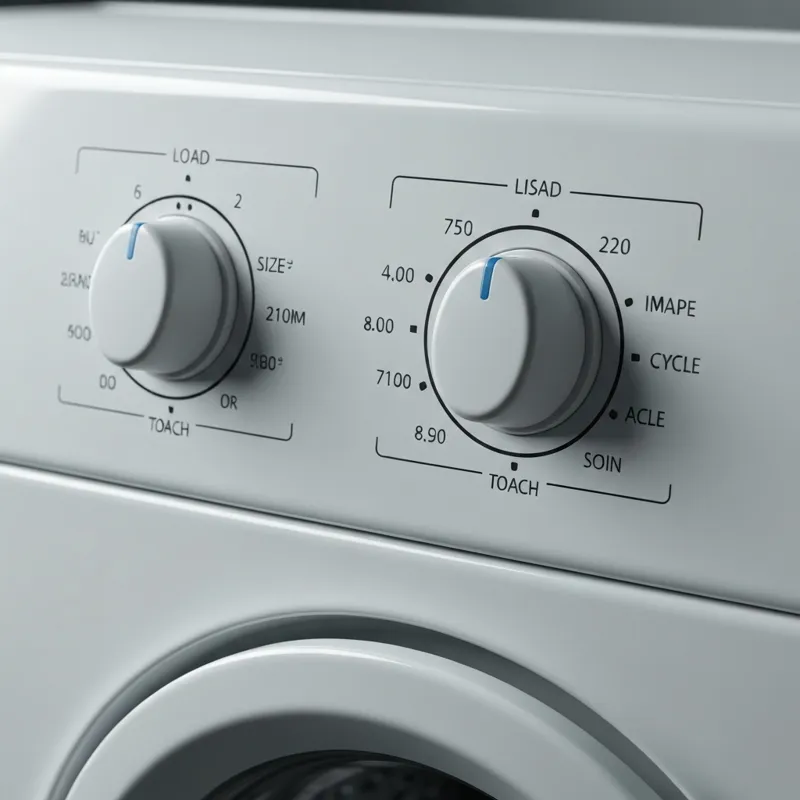
A Hot Point washer deliberately avoids this complexity. Most of their popular top-load models still use robust, straightforward rotary-electro-mechanical controls. You turn a physical dial, and it clicks into place, engaging a specific set of mechanical actions. There’s no complex software to glitch or a sensitive touch panel to stop responding because your hands are damp.
This “less is more” philosophy is a significant advantage. It means fewer things can go wrong. You won’t be troubleshooting Wi-Fi connectivity or wondering why a firmware update bricked your machine. This approach is a stark contrast to the ever-increasing complexity of other home systems, like a smart thermostat boiler, where digital controls are essential. For a washer, that level of tech is often a luxury, not a necessity.
Reason 3: It Delivers Where It Counts: Core Cleaning Performance

Does it actually clean clothes? Yes, absolutely. A Hot Point washer, particularly the classic top-load models with an agitator, provides a powerful and effective clean for the vast majority of laundry.
The agitator—the central post that twists and turns—creates a strong washing action by physically moving clothes through the water and against each other. This mechanical scrubbing is highly effective at removing everyday dirt, grime, and odors from durable fabrics like cotton, denim, and synthetics. The Heavy Duty cycle on a Hotpoint is a workhorse for things like towels, kids’ play clothes, and work uniforms.
While this traditional agitator design might be a bit harsher on delicate fabrics compared to an impeller model or a front-loader, the trade-off is its sheer cleaning power on sturdy items. For the bulk of what an average family washes, it performs exceptionally well. You get multiple water levels to match the load size, a choice of water temperatures, and a deep rinse option to ensure detergent is thoroughly removed.
Reason 4: The GE Advantage: Unmatched Parts Availability and Repairability
This is arguably the most underrated reason to buy a Hot Point washer. Because Hotpoint is part of the GE appliance family, its core components—motors, pumps, belts, switches—are some of the most widely available and affordable appliance parts in the United States.
What does this mean for you as an owner?
- Faster Repairs: Local appliance repair technicians are almost guaranteed to have common GE/Hotpoint parts on their truck or be able to get them the same day. You won’t be waiting weeks for a component to be shipped from overseas.
- Lower Repair Costs: The massive supply of parts keeps prices competitive. A replacement water pump for a Hotpoint might cost a fraction of what a similar part for a niche European brand would.
- DIY-Friendly: The simple, mechanical nature of these machines makes them far more approachable for do-it-yourself repairs. With a few basic tools and a YouTube tutorial, a reasonably handy person can often fix common problems like a faulty lid switch or a worn-out belt, saving hundreds on a service call.
This ease of service stands in stark contrast to some of the more complex or obscure brands, where finding a qualified technician or the right part can be a frustrating and expensive ordeal.
What Most People Get Wrong About a Value-Priced Washer
The biggest mistake consumers make is comparing a Hotpoint to a machine that costs two or three times as much. They are built for different purposes and different buyers. A Hot Point washer is a tool, not a lifestyle gadget.
You have to manage your expectations. It will be louder than a premium direct-drive inverter model. The spin cycle won’t be as whisper-quiet. The finish might be a basic white enamel, not a fancy brushed graphite. It won’t have a steam cycle, an automatic detergent dispenser, or a “pet hair” mode. It is designed to do one primary job: wash clothes reliably for years with minimal fuss.
If you judge it on that metric, it excels. The error is in expecting it to deliver the features and refinement of a high-end machine at a budget price. If you prioritize simplicity and function over features, you won’t be disappointed.
Reason 5: Predictable and Low Long-Term Operating Costs
Your total cost of ownership for an appliance isn’t just the purchase price. It also includes energy, water, and repair bills over its lifespan. Hotpoint shines here as well. Modern Hotpoint models are significantly more efficient than the washers of a decade ago. It’s always wise to check the yellow EnergyGuide label to see the estimated annual operating cost.
While it may not win the top spot for the most energy-efficient machine on the market (those titles often go to pricier front-loaders), its consumption is very reasonable. When you combine that with the extremely low probability of an expensive electronic repair and the low cost of mechanical parts, the total cost of owning a Hot Point washer over a 7-10 year period is often much lower than that of a feature-rich but less reliable competitor.
This focus on a single, dedicated function contrasts with combination appliances. For instance, a 2 in 1 washer dryer unit saves space but often comes with compromises in both washing capacity and drying efficiency, potentially leading to higher long-term energy use per pound of laundry.
Reason 6: Built on a Tried-and-True Platform
Let’s look at a popular model like the Hotpoint HTW240ASKWS. This is a classic top-load agitator washer that embodies the brand’s philosophy. It features a stainless steel wash basket for durability and to prevent rust or chipping. It has a heavy-duty agitator for powerful cleaning action. Its controls are simple knobs: load size, temperature, cycle type, and options like a second rinse.
The underlying platform for these machines has been refined by GE over decades. The motor, transmission, and suspension system are evolutions of a design that has proven its durability in millions of homes. It’s not a radical new technology; it’s a perfected old one. This is the same philosophy that makes certain commercial appliances so reliable; for example, the robust build of machines meant to be paired with a heavy-duty Speed Queen dryer also prioritizes proven mechanics over unproven tech.
This legacy design means that any weaknesses have long been identified and engineered out. The result is a predictable, reliable machine that does its job without surprises.
Reason 7: A Simple Guide to DIY Troubleshooting
One of the best things about a simpler machine is that you can often diagnose and fix minor issues yourself. Before you ever call for service, here are a few common problems and their likely solutions for a typical Hot Point top load washer.
CRITICAL SAFETY WARNING: Always unplug your washing machine from the electrical outlet before attempting any inspection or repair. Water and electricity are a dangerous combination. If you are ever unsure, call a qualified appliance repair professional.
- Issue: Washer won’t start or fill.
Likely Cause: The lid switch has failed. This is a safety feature that prevents the machine from running with the lid open. It’s a small plastic part that gets clicked thousands of times and can wear out.
DIY Check: You’ll hear a distinct “click” when you close the lid. If you don’t, the switch may be broken or out of alignment. You can typically access it by removing a few screws on the top console. A replacement is inexpensive and often easy to install. - Issue: Washer is very loud or shakes violently during spin cycle.
Likely Cause: An unbalanced load or worn suspension rods.
DIY Check: First, just try redistributing the clothes. Heavy items like towels or jeans can get clumped on one side. If it happens with every load, the suspension rods that support the tub may be worn. You can check them by pushing down on the tub when the machine is empty. If it bounces excessively, the rods may need replacing. This is a more involved, but still very doable, DIY repair. - Issue: Washer won’t drain the water.
Likely Cause: Clogged drain pump filter or hose. Small items like socks, coins, or lint can get past the drum and clog the pump.
DIY Check: After unplugging the machine and draining any remaining water manually, you can usually access the drain pump from the front or back of the machine. Disconnect the hoses (have a bucket ready!) and check for obstructions. Often, simply clearing a clog is all it takes to get it running again.
Frequently Asked Questions about Hotpoint Washers
Who makes Hotpoint appliances in 2026?
Hotpoint is a brand of GE Appliances. Since 2016, GE Appliances has been owned by Haier, a global appliance giant. This gives Hotpoint the stability and manufacturing scale of a major international company while retaining its American design and parts distribution network.
How long does a Hot Point washer typically last?
With regular use and proper care (i.e., not consistently overloading it), a Hotpoint top-load washer can realistically be expected to last 7 to 10 years, and sometimes longer. Because its mechanical parts are so easy and cheap to replace, its functional lifespan can often be extended well beyond that of a more complex machine with a failed computer board.
Are Hotpoint and GE washers the same thing?
They are very similar and share many of the same core parts and engineering platforms. Think of it like cars: GE is the main brand with more features and higher price points, while Hotpoint is their value-focused line that uses the same reliable engines and transmissions but with fewer luxury options.
Is a Hotpoint washer a good choice for a large family?
It can be. While they may not offer the mega-capacity tubs of some high-end models, their standard capacity (typically 3.8 to 4.2 cubic feet) is perfectly adequate for most families. The powerful agitator action is excellent for heavily soiled kids’ clothes, and the machine’s durability can stand up to the high demands of daily loads.
The Verdict: A Smart Purchase for the Practical Consumer
A Hot Point washer isn’t trying to be the most technologically advanced or feature-packed machine on the market. It’s not for the person who wants to control their laundry from their smartphone. Instead, it serves a more fundamental need: It’s an affordable, reliable, and easy-to-repair tool for cleaning clothes.
In 2026, by deliberately resisting the trend of adding fragile complexity, Hotpoint has carved out a powerful niche. If you value a low purchase price, straightforward operation, and the peace of mind that comes with knowing a potential repair will be simple and inexpensive, then a Hot Point washer isn’t just worth buying—it’s one of the smartest appliance decisions you can make.


