In 2026, the idea of smart home technology has moved well beyond novelties and into essential tools for managing household efficiency and comfort. For homeowners with boiler heating systems, the integration of a smart thermostat is no longer a niche upgrade but a practical step towards optimizing one of the most critical aspects of their home environment. While air-forced systems often dominate the smart thermostat conversation, boilers, with their unique operational characteristics, benefit immensely from intelligent controls. Understanding how these sophisticated devices interact with hydronic and steam systems can unlock significant energy savings and deliver a more consistent, comfortable living space.
Why a Smart Thermostat is Different for Boilers
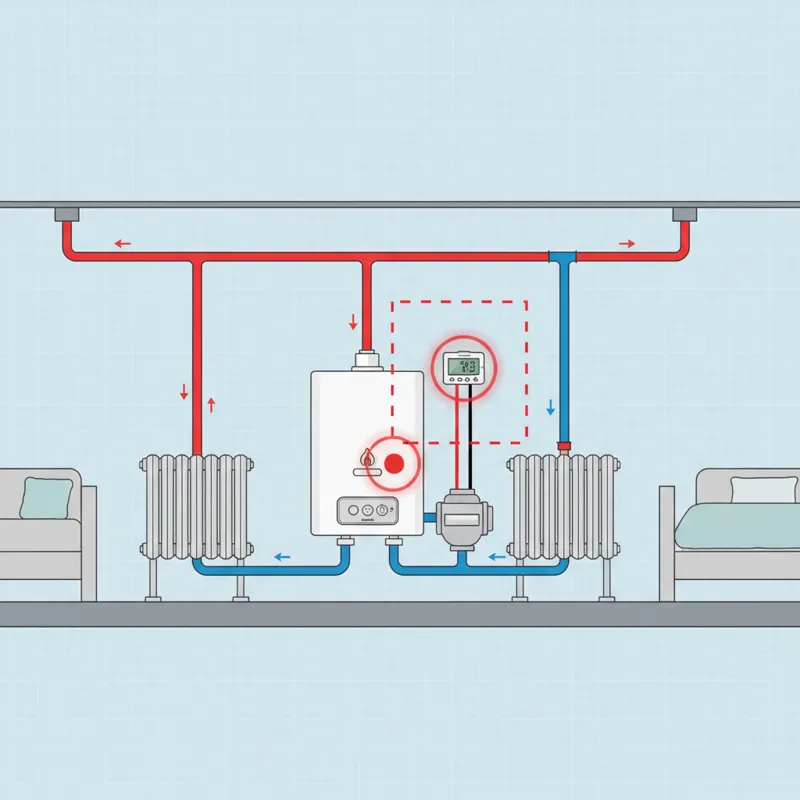
Boiler heating systems operate fundamentally differently from forced-air furnaces. Forced air delivers heat quickly, cycling on and off to maintain a set temperature. Boilers, particularly hydronic systems, involve heating water and circulating it through pipes to radiators or radiant floor systems. This process has significant thermal mass and inherent inertia; it takes longer to heat up and longer to cool down. This inherent lag means a smart thermostat for a boiler needs to employ more sophisticated algorithms. It can’t just react to an immediate temperature drop like a conventional thermostat might. Instead, it must “learn” the thermal characteristics of your home and your boiler system, anticipating heating needs and pre-heating to prevent discomfort, or scaling back proactively to avoid overshooting the target temperature. This predictive capability is where the real intelligence of a smart thermostat boiler system comes into its own. Standard thermostats, designed for simpler on/off cycles, often lead to temperature swings and wasted energy in a boiler setup.
The Core Benefits of Upgrading Your Boiler to a Smart Thermostat
Upgrading your boiler’s control system with a smart thermostat offers tangible advantages, making your home more comfortable, efficient, and easier to manage. It’s about more than just convenience; it’s about intelligent energy management.
Enhanced Comfort and Precision Control
Modern smart thermostats excel at maintaining consistent temperatures. They use advanced sensors and algorithms to minimize temperature fluctuations that can be common with older, less responsive thermostats on boiler systems. This means fewer cold spots and less overheating, creating a more stable and pleasant indoor climate. The ability to precisely schedule heating, often down to half-degree increments, also contributes significantly to comfort.
Significant Energy Savings
This is often the primary driver for homeowners. Boilers, while efficient in their operation, can be costly to run if not managed intelligently. An energy saving boiler thermostat can dramatically reduce your heating bills. Features like geofencing (adjusting temperature based on your proximity to home), occupancy detection, and optimized scheduling ensure that you’re only heating your home when and where it’s needed. Learning algorithms also refine these schedules over time, constantly seeking the most efficient way to heat your space. Studies often show typical savings of 10-15% or more on heating costs.
Remote Management and Zonal Control Potential
Imagine being able to adjust your home’s temperature from anywhere using your smartphone. This remote control boiler heating system capability is a cornerstone of smart thermostats. Whether you’re on vacation and want to prevent pipes from freezing, or you’re on your way home and want to arrive to a warm house, the control is in your hands. Furthermore, many smart thermostat systems support multiple sensors and can be integrated into multi-zone heating setups, allowing you to heat different areas of your home to different temperatures, further enhancing comfort and efficiency.
Integration with Smart Home Ecosystems
A key advantage in 2026 is seamless integration. Your smart thermostat boiler can become part of a larger connected home ecosystem. It can work with voice assistants like Alexa or Google Assistant, smart lighting, and even security systems. This unified control simplifies home management and allows for more complex automations, like dimming lights and lowering the thermostat when you say “Goodnight.” This level of connectivity extends beyond just heating; for instance, you might link it with your smart laundry appliances. While your thermostat won’t directly control a Hot Point Washer, the overarching smart home platform can manage both, offering a more integrated user experience.
Key Compatibility Considerations for Boiler Systems
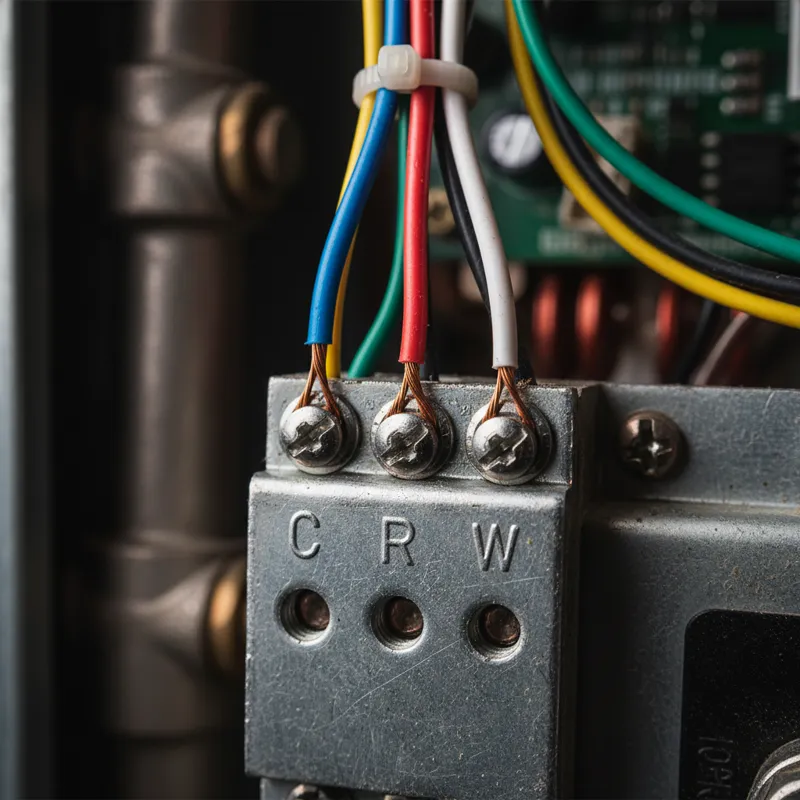
Before diving into specific models, understanding compatibility is paramount. Boilers have specific wiring and control requirements that differ from standard forced-air systems. Ignoring these can lead to installation headaches or even damage.
C-Wire (Common Wire) Necessity
Most modern smart thermostats require a continuous 24V power supply, which is typically provided by a C-wire. This wire provides power for the thermostat’s Wi-Fi, display, and advanced features. Many older boiler systems, especially those with basic mechanical thermostats, may only have two wires (R and W), which are sufficient for basic on/off switching but don’t provide continuous power. If your boiler system lacks a C-wire, you’ll need to consider a thermostat that can operate without one (often by battery or power stealing, which isn’t ideal for boilers due to potential cycling issues), or you’ll need to install a C-wire adapter or have an electrician run a new wire. This is one of the most common hurdles for smart thermostat compatibility with boilers.
System Voltage (Low Voltage vs. Line Voltage)
The vast majority of residential boiler systems in the US operate on low voltage (24V AC) control circuits. However, some older systems, especially electric baseboard heaters or certain types of radiant floor heating, might use line voltage (120V or 240V). It’s critical to identify your system’s voltage. Most smart thermostats are designed for low voltage; installing one on a line voltage system can be dangerous and damage both the thermostat and your heating system. Always check your existing thermostat wiring and your boiler’s manual.
Boiler Type (Combi, Conventional, Steam, Hydronic Radiant)
Different boiler types can have subtle compatibility nuances:
- Conventional Boilers: Typically straightforward, requiring a simple on/off signal (R and W wires).
- Combi Boilers: Often include domestic hot water heating. Smart thermostats primarily control space heating, but some advanced models can integrate with combi boiler features if they support OpenTherm or similar protocols.
- Steam Boilers: These systems are often found in older homes and have unique characteristics. They heat water to produce steam, which then rises to radiators. The control logic for steam boilers can be different, often involving pressure rather than just temperature. Some smart thermostats are specifically designed or optimized for steam systems; ensure the model you choose explicitly states compatibility.
- Hydronic Radiant Floor Heating: These systems have even greater thermal mass and lag. A smart thermostat’s learning algorithm is particularly beneficial here, allowing for very stable temperatures.
OpenTherm vs. On/Off Control
Most US residential boilers use simple on/off control, meaning the thermostat tells the boiler to either run at full capacity or turn off. OpenTherm is an increasingly common communication protocol, especially in Europe, that allows a thermostat to modulate the boiler’s flame and water temperature. While less prevalent in the US, some higher-end boilers and smart thermostats are starting to support it. OpenTherm can lead to even greater efficiency and comfort by allowing the boiler to run at lower, more consistent levels. If your boiler supports it, consider a smart thermostat that also does for optimal performance.
5 Best Smart Thermostat Models for Boiler Systems in 2026
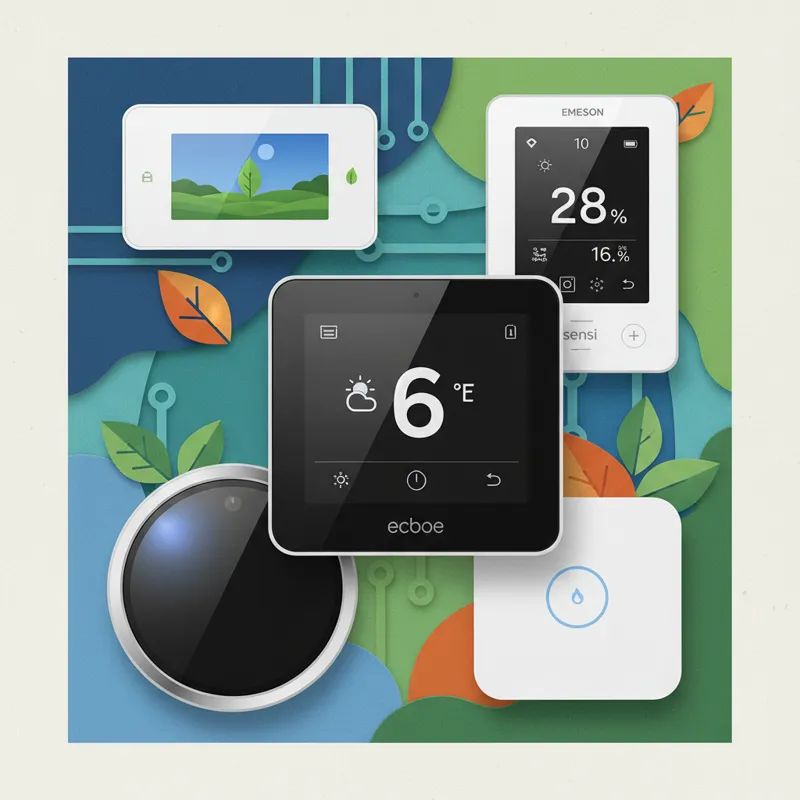
Choosing the right smart thermostat for your boiler involves balancing features, compatibility, and ease of use. Here are five top contenders that work well with boiler systems, widely available in the US market in 2026.
1. Google Nest Learning Thermostat (3rd Generation)
The Nest Learning Thermostat remains a strong contender due to its intuitive interface, elegant design, and robust learning capabilities.
- Pros:
- Learning Algorithms: Excels at learning your schedule and preferred temperatures, adapting over time.
- Sleek Design: Iconic, modern aesthetic that blends into most interiors.
- Energy History: Provides detailed insights into energy usage, helping you understand and save.
- Compatibility: Generally good compatibility with 24V boiler systems, including multi-stage.
- Farsight: Displays time or temperature when it senses you in the room.
- Cons:
- C-Wire Preference: While it can sometimes “power steal,” a C-wire is highly recommended for stable operation with boilers. Without it, you might encounter issues.
- Cost: One of the more expensive options upfront.
- Boiler Specifics: The Nest’s learning capability is particularly beneficial for boilers due to their slow response times, helping to smooth out temperature swings. Its detailed energy reports help homeowners pinpoint periods of high usage, which can be critical for an energy saving boiler thermostat.
2. Ecobee Smart Thermostat Premium
Ecobee is renowned for its comprehensive feature set, especially its external room sensors, making it ideal for managing comfort across larger or unevenly heated homes.
- Pros:
- Room Sensors: Comes with a remote sensor to detect temperature and occupancy in other rooms, addressing cold spots.
- Advanced Scheduling: Highly customizable scheduling with geofencing and occupancy detection.
- Voice Control: Built-in Alexa for voice commands, music, and smart home control.
- Smart Home Integration: Excellent integration with various smart home platforms.
- HVAC Monitoring: Provides insights into your boiler’s performance and maintenance reminders.
- Cons:
- C-Wire Required: Absolutely requires a C-wire. Ecobee includes a Power Extender Kit (PEK) if you don’t have one, which simplifies installation for 4-wire systems by converting them to function like 5-wire.
- Interface Learning Curve: Slightly more complex interface due to its many features.
- Boiler Specifics: The external room sensors are a game-changer for homes with boilers, particularly hydronic systems that often have varying temperatures across rooms. This allows for a more even and targeted heat distribution, greatly improving comfort. Its robust remote control boiler heating system functionality is also a major plus.
3. Honeywell Home T9/T10 Pro Smart Thermostat
Honeywell has a long-standing reputation in HVAC controls, and their T9 and T10 Pro models offer a robust, professional-grade smart thermostat solution.
- Pros:
- Reliability: Built on Honeywell’s legacy of HVAC controls, offering solid performance.
- Room Sensors: Similar to Ecobee, the T9/T10 supports wireless room sensors for accurate temperature sensing across the home.
- Geofencing: Uses your phone’s location to adjust temperature when you leave or return.
- Humidity Sensor: Tracks indoor humidity, which is useful for overall home comfort.
- Simple Installation: Often straightforward for existing Honeywell users or those with a C-wire.
- Cons:
- C-Wire Required: Like Ecobee, a C-wire is typically needed, though some models may offer workarounds or require a PEK.
- Design: More functional than aesthetically striking compared to Nest.
- Boiler Specifics: The T9/T10 Pro’s strong focus on multi-room temperature sensing and precise control makes it an excellent Wi-Fi thermostat for hydronic systems. Its professional-grade build inspires confidence for long-term boiler smart heating controls.
4. Google Nest Thermostat (Entry-Level)
For those looking for Nest’s smarts at a more accessible price point, the standard Google Nest Thermostat is a compelling option.
- Pros:
- Affordable: Significantly cheaper than the Learning Thermostat.
- Google Home Integration: Seamlessly integrates with Google Assistant and the Google Home ecosystem.
- Sleek Design: Still maintains a modern, clean aesthetic.
- Soli Sensor: Uses Soli radar to detect presence and adjust accordingly.
- Cons:
- No Learning Feature: This model doesn’t “learn” your schedule like its more expensive sibling. You program it.
- C-Wire Requirement: Strongly recommends a C-wire. Can operate on 2 wires with a power-sharing feature, but this can cause flicker or operational issues with some boiler systems.
- Fewer Sensors: Doesn’t support external room sensors.
- Boiler Specifics: While it lacks the learning prowess of the 3rd Gen Nest, its smart scheduling and remote control still offer a significant upgrade for programmable boiler thermostat installation, especially at its price point. Ensure you have a stable power supply for consistent operation with a boiler.
5. Sensi Predict Smart Thermostat (Emerson Sensi)
Emerson’s Sensi thermostats have quietly built a reputation for robust performance, broad compatibility, and user-friendly interfaces, with the Predict model adding advanced diagnostics.
- Pros:
- Broad Compatibility: Known for excellent compatibility with a wide range of HVAC systems, including many boiler configurations, often working with 2-wire systems (though C-wire is still best).
- User-Friendly App: Very intuitive and easy-to-navigate mobile application.
- Predictive Maintenance: The Predict model offers insights into HVAC system health, detecting potential issues early.
- No Subscription Fees: Many advanced features don’t require ongoing subscriptions.
- Cons:
- Design: More utilitarian than stylish compared to Nest or Ecobee.
- Fewer High-End Features: Doesn’t have built-in voice assistants or advanced learning algorithms as sophisticated as Nest’s.
- Boiler Specifics: Sensi’s strength lies in its wide compatibility and reliable performance. For a basic programmable boiler thermostat installation that still offers smart features and remote control, the Sensi models are a solid choice. The Predict’s diagnostic capabilities can be valuable for monitoring your boiler’s health.
Installation Insights: What to Expect When Connecting to Your Boiler
Installing a smart thermostat for a boiler isn’t inherently complex, but it does require careful attention to detail, especially regarding wiring.
DIY vs. Professional Installation
Many smart thermostats are designed for DIY installation, complete with step-by-step app guides. If you have a basic 24V boiler system with a C-wire and are comfortable with basic electrical work (like turning off power at the breaker), you might manage it yourself. However, if your boiler wiring is old, complex, lacks a C-wire, or you’re dealing with a multi-zone system, professional installation is strongly recommended. An HVAC technician or electrician can ensure proper wiring, safety, and optimal system configuration. Don’t hesitate to seek professional help if you’re unsure; incorrect wiring can damage your boiler or the thermostat.
Wiring Challenges (No C-wire solutions)
As discussed, the C-wire is a common sticking point. If your existing wiring only has two wires (R and W), you have a few options:
- C-Wire Adapter/Power Extender Kit (PEK): Many smart thermostats (like Ecobee’s) include or offer an adapter that can convert a 4-wire system to function like a 5-wire system. This usually involves connecting the adapter at the boiler’s control board.
- Transformer: A separate 24V AC transformer can be wired into the system to provide the necessary power. This often requires professional installation.
- Battery-Powered/Power-Stealing Models: Some thermostats are designed to run on batteries or “power steal” by briefly drawing power during heating cycles. While some work, power-stealing with boilers can sometimes lead to inconsistent operation or thermostat display issues due to the boiler’s slower cycles.
- Run a New Wire: The most robust, albeit labor-intensive, solution is to have an electrician run a dedicated C-wire from the boiler to the thermostat location.
Testing and Configuration
Once wired, the smart thermostat will usually guide you through an initial setup process. This includes connecting to your Wi-Fi, configuring heating stages, and potentially identifying your specific boiler type. It’s crucial to follow these steps carefully. After installation, test the heating thoroughly to ensure the boiler responds correctly to temperature changes and schedule adjustments. Observe how the system behaves over a few cycles to confirm everything is working as expected.
Optimizing Your Smart Thermostat Boiler for Maximum Efficiency
Installing a smart thermostat is just the first step. To truly maximize its benefits, especially for an energy saving boiler thermostat, you need to leverage its intelligent features.
Understanding Learning Algorithms
For thermostats like the Nest Learning Thermostat, the key is to let it learn. Don’t constantly override its schedule in the first few weeks. Live with it, adjust the temperature when you’re uncomfortable, and it will begin to understand your preferences and the thermal dynamics of your home. Over time, it will build an optimized schedule.
Geofencing and Presence Detection
Activate geofencing if your thermostat supports it. This feature uses your smartphone’s location to know when you’re home or away, automatically adjusting the temperature. Similarly, thermostats with occupancy sensors (like Ecobee’s room sensors or Nest’s Soli radar) will detect if rooms are empty and adjust heating accordingly, preventing unnecessary heating of unoccupied spaces. This is a powerful tool for a remote control boiler heating system.
Smart Scheduling and Zoning
Take advantage of detailed scheduling. Set different temperatures for different times of day, matching your family’s routine. If you have a multi-zone boiler system, use multiple smart thermostats or additional room sensors (if supported) to create separate heating zones. This allows you to heat occupied areas while keeping less-used rooms cooler, dramatically improving efficiency. This could be akin to how you manage the cycles of a 2 in 1 Washer Dryer – setting specific programs for specific needs.
Regular Maintenance Checks
While smart thermostats provide insights, they don’t replace physical boiler maintenance. Ensure your boiler receives its annual service. A well-maintained boiler runs more efficiently, allowing your smart thermostat to perform its best. Clean radiators, bleed air from hydronic systems, and check for leaks. The smart thermostat will optimize the control of your boiler, but the boiler itself needs to be in good working order.
What Most People Get Wrong About Smart Thermostats and Boilers
Despite the benefits, some common misconceptions and pitfalls can lead to frustration or underperformance when integrating smart thermostats with boiler systems. Being aware of these helps set realistic expectations and ensures a smoother experience.
Assuming Universal Compatibility
Many assume all smart thermostats work with all heating systems. This is simply not true. Boiler systems, especially older ones, have unique electrical requirements (like the C-wire or different voltage outputs) that can trip up an otherwise compatible thermostat. Always double-check the manufacturer’s specifications for boiler system compatibility and wiring requirements. Don’t assume that because it works for a friend’s forced-air system, it will work for your hydronic setup.
Neglecting the C-Wire
This is probably the single biggest source of DIY installation problems. While some smart thermostats claim to operate without a C-wire, relying solely on power-stealing from a boiler circuit can lead to inconsistent behavior, such as screen flicker, Wi-Fi drops, or even short cycling of the boiler. For reliable, long-term performance of a Wi-Fi thermostat for hydronic systems, a dedicated C-wire or a robust C-wire adapter is almost always preferable. Skipping this step often causes more headaches than it solves.
Expecting Instantaneous Heat Changes
Unlike forced-air systems that can blast hot air almost immediately, boilers (especially hydronic radiant systems) have significant thermal mass. Heating an entire house with a boiler takes time. A smart thermostat for boiler systems is designed to anticipate this lag and pre-heat, but it cannot defy the laws of physics. Don’t expect your home to go from 60°F to 70°F in 15 minutes. Understanding this inherent characteristic of boiler heating is crucial for managing expectations and appreciating the smart thermostat’s predictive capabilities.
Overlooking Boiler System Nuances
Some boiler systems, particularly steam boilers or those with complex multi-zone valve controls, have specific operational characteristics that a generic smart thermostat might not fully address without careful configuration. For example, some steam boiler systems require precise pressure control or specific cycling patterns that differ from simple temperature setpoints. Always read your boiler’s manual and the smart thermostat’s boiler-specific instructions. If you have a unique or complex boiler setup, consulting an HVAC professional is the smartest move to ensure proper programmable boiler thermostat installation.
Frequently Asked Questions (FAQ)
Can a smart thermostat really save money on boiler heating?
Absolutely. By providing precise control, learning your schedule, utilizing geofencing, and optimizing heating cycles, a smart thermostat can significantly reduce energy waste. While specific savings vary based on home insulation, boiler efficiency, and usage habits, many homeowners report 10-20% savings on their heating bills annually. The investment often pays for itself within a few years through these energy savings.
Do I need a C-wire for my smart thermostat and boiler?
In most cases, yes, a C-wire is highly recommended for stable and reliable operation of a smart thermostat with a boiler system. While some models may attempt to function without one (via batteries or power-stealing), this can lead to intermittent issues. If you don’t have a C-wire, consider using a power extender kit (PEK), a 24V transformer, or having a new wire run by a professional.
How do I know if my boiler is compatible?
First, check your existing thermostat for wiring. If you have 24V wiring (typically R and W, possibly C, G, Y for a more complex system), most low-voltage smart thermostats will be compatible. Verify your boiler type (e.g., conventional, combi, steam). Most smart thermostats work with conventional and combi boilers. For steam boilers or line voltage systems, you’ll need a specialized smart thermostat explicitly designed for that purpose. When in doubt, consult your boiler’s manual or an HVAC professional.
What’s the difference between a conventional thermostat and a smart thermostat for a boiler?
A conventional thermostat provides basic on/off control based on a set temperature. It reacts directly to temperature changes. A smart thermostat, on the other hand, adds intelligence: it learns your schedule, can be controlled remotely via Wi-Fi, uses geofencing and occupancy sensors, and offers energy usage insights. For boilers, this means more efficient, predictive heating that adapts to your lifestyle, unlike the reactive nature of a traditional unit.
Can I control multiple zones with one smart thermostat?
A single smart thermostat typically controls one heating zone. To control multiple zones with a boiler system, you’ll generally need a smart thermostat (or a smart sensor connected to a central thermostat) for each zone. Many smart thermostat brands offer ecosystem solutions that allow multiple thermostats to be managed from a single app, providing comprehensive zonal control for your boiler smart heating controls.
The Future of Smart Boiler Heating
Looking ahead from 2026, smart boiler heating is poised for even deeper integration and predictive capabilities. Expect to see more thermostats leveraging AI for hyper-personalized heating, integrating with external weather data more proactively, and potentially even communicating directly with utility grids for demand-response programs. The focus will continue to be on maximizing comfort while minimizing energy consumption. As other home appliances like Speed Queen Dryer units become increasingly smart and interconnected, the holistic smart home experience will only become more seamless and efficient, making the intelligent management of your boiler an indispensable component.
- **Disclaimer: This article provides general information and recommendations. HVAC systems, especially boiler systems, can be complex. For specific advice, installation, or troubleshooting, always consult with a qualified HVAC professional or licensed electrician to ensure safety and proper operation.