In 2026, buying a major appliance feels like a gamble. You’re navigating a sea of smart features, glossy finishes, and ever-shorter lifespans. We’ve all heard the stories—or lived them—of a washing machine’s motherboard failing a month after the warranty expires or a dryer that suddenly needs a $400 repair after just four years. It’s created a sense of “appliance fatigue” where the lowest price often feels like the smartest move because you assume it’s going to break anyway. The Speed Queen dryer stands in stark opposition to this trend. Its high upfront cost is an immediate shock to most shoppers, but looking past the price tag reveals a fundamentally different approach to building an appliance. This isn’t about the latest tech; it’s about unapologetic, long-term reliability. The question isn’t just “is it a good dryer?” but rather, “is investing in a Speed Queen dryer a financially sound decision in an era of disposable machines?” For a growing number of people, the answer is a resounding yes.
Reason 1: True Commercial-Grade DNA in Your Home
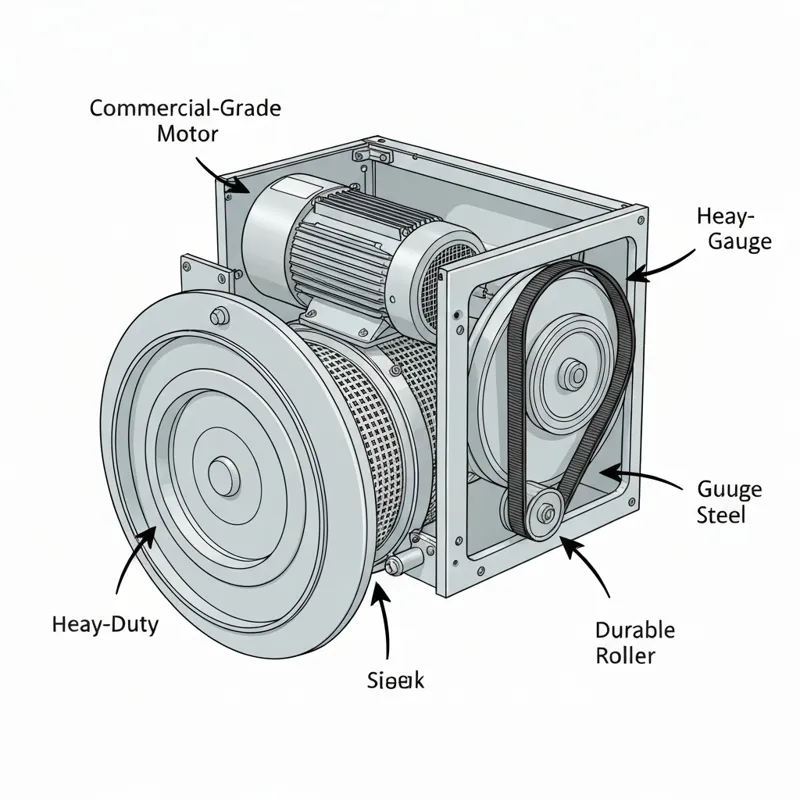
The term “commercial-grade” gets thrown around a lot in marketing, often meaning little more than a stainless steel finish. With Speed Queen, it’s the core of their design philosophy. This isn’t a consumer machine with a few beefed-up parts; it’s a commercial machine adapted for home use. The company’s primary business is building washers and dryers for laundromats, hotels, and hospitals—environments where machines run constantly and downtime is not an option.
What does this mean in practice? Let’s look at the mechanics. Inside a Speed Queen dryer, you’ll find a heavy-duty motor with a 25,000-hour design life. Do the math: if you run your dryer for an hour every single day, that’s over 68 years. The cabinet is made of heavy-gauge galvanized steel, not the thinner metal or plastic common on many consumer models. The drum is supported by premium metal rollers, not plastic ones that can crack and cause that awful thumping sound over time.
This construction difference is immediately obvious if you see one next to a typical big-box store dryer. The door feels heavier and closes with a solid thud. The control knobs—especially on mechanical models like the DR3—have a satisfying, tactile click. These aren’t just aesthetic choices; they are physical indicators of a machine built to withstand relentless use. You are paying for metal where others use plastic, and for an overbuilt motor and belt system designed for a laundromat, not a laundry room.
Reason 2: The Total Cost of Ownership Is Surprisingly Low
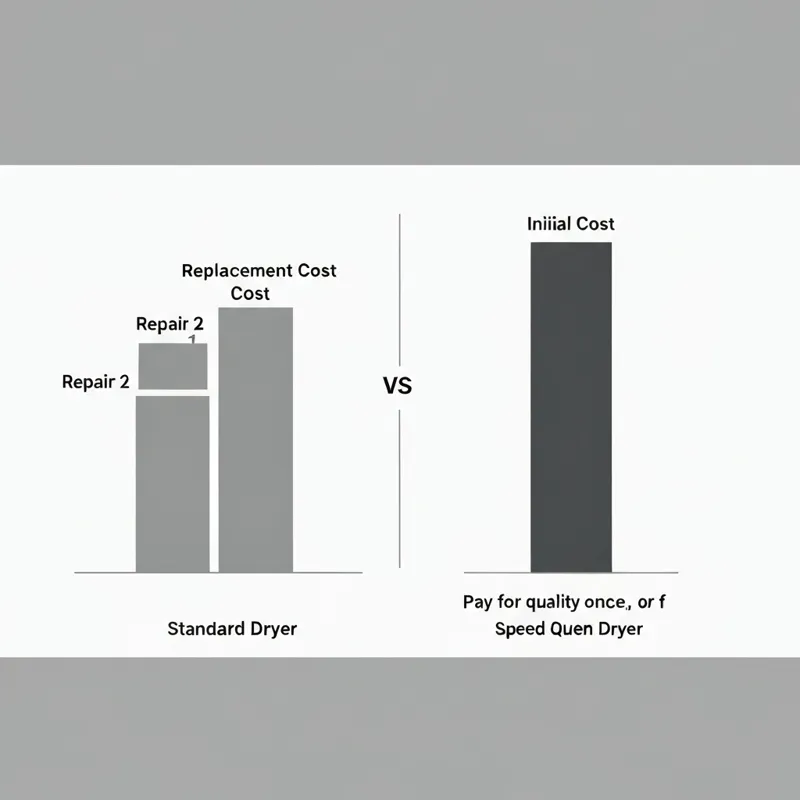
The sticker price is the biggest hurdle for any potential Speed Queen buyer. It can be double, or even triple, the cost of a promotional model from another brand. However, the initial purchase price is only one part of an appliance’s total cost. The true cost of ownership includes repairs and potential replacement costs over its lifespan.
Let’s model a realistic 15-year scenario in 2026:
- Standard Dryer: Costs $700. The average lifespan for a modern dryer is about 8-10 years, but major repairs are common after year 3. Over 15 years, you can realistically expect at least one major repair (e.g., a heating element or control board, ~$300-$450) and a full replacement of the unit. Your total cost could easily be $700 (initial) + $350 (repair) + $800 (replacement) = $1,850. This doesn’t even account for the hassle, lost time, and potential damage to clothes from a malfunctioning unit.
- Speed Queen Dryer: Costs $1,400. It’s designed to last 25 years and comes with an industry-leading 5 or 7-year parts and labor warranty. The likelihood of a major repair in the first 15 years is extremely low. Your total cost over 15 years is overwhelmingly likely to be just the initial $1,400.
When you extend the timeline to 20 years, the financial argument for the Speed Queen dryer becomes even more compelling. You would likely be on your third standard dryer by then. This long-term math is why many people who have been through the cycle of buying cheaper, failure-prone appliances eventually switch. They are tired of the “appliance churn” and recognize the value in buying something once.
Reason 3: Superior, Fabric-Safe Drying Performance
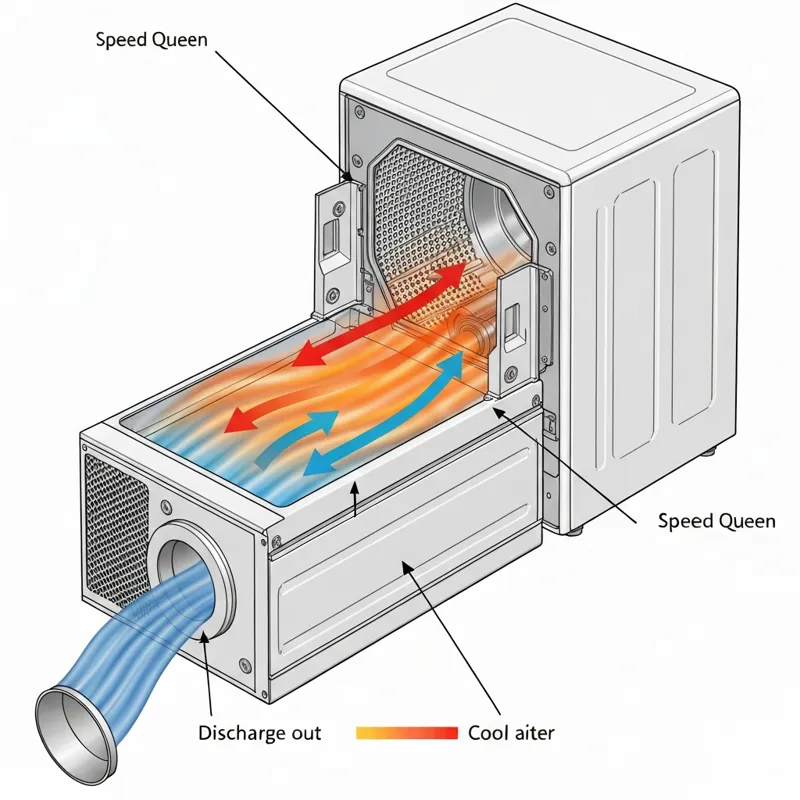
A dryer’s only job is to dry clothes, but how it does that job matters. Many modern dryers use a top-down airflow system where heat is blasted onto the tumbling clothes. This can lead to hot spots, uneven drying (where the outside of a bundle is dry but the inside is damp), and over-drying, which damages fabric fibers over time and leads to premature wear and tear on your clothing.
Speed Queen employs a different method: axial airflow. The air is drawn in from the back of the drum, heated, and then flows through the entire load in a pattern that mirrors the axis of the drum’s rotation. This, combined with a very specific tumbling pattern, ensures every item is evenly exposed to the warm air. The result is faster, more uniform drying without the damaging hot spots.
Furthermore, their moisture sensors are exceptionally well-calibrated. On automatic cycles, the dryer stops precisely when the clothes are dry, not when a timer runs out. This prevents the energy waste and fabric damage caused by running a cycle for an extra 15 minutes “just in case.” You’ll notice less lint in the trap, which is a direct indicator of less fabric being shed from your clothes. In the long run, a Speed Queen dryer can extend the life of your wardrobe.
Reason 4: Simplicity by Design—Fewer Failure Points
Modern appliances are often burdened by complexity. Touchscreens, Wi-Fi connectivity, and dozens of specialized cycles are marketed as premium features, but from an engineering perspective, they are potential points of failure. The complex electronic control board is now one of the most common and expensive repairs on any major appliance.
Speed Queen intentionally rejects this trend. Their models, particularly the DR3 and DR5, prioritize simple, robust controls. The DR3 uses electromechanical controls—durable knobs and timers that are far less susceptible to power surges and electronic glitches. The DR5 and DR7 have digital controls, but they are straightforward and built to a higher commercial standard than typical consumer electronics.
This focus on simplicity is not about being “low-tech.” It’s a deliberate engineering choice to maximize reliability. Every complex feature adds a new circuit, a new sensor, and new software that can fail. In an era where even your refrigerator needs a software update, there’s a certain genius to a machine that just does its job perfectly without needing an internet connection. This is a key difference in philosophy compared to a complex 2 in 1 washer dryer, which must pack extensive technology into a single unit to manage both functions. The Speed Queen is a purpose-built tool.
Reason 5: An Industry-Leading Warranty That Signals Confidence
A manufacturer’s warranty is a direct statement about how much confidence they have in their own product. The standard appliance warranty in the United States is one year for parts and labor. After that, you’re on your own. Some brands offer 10-year warranties on specific parts, like the motor or drum, but not the labor to install them, which is often the most expensive part of a repair.
As of 2026, Speed Queen offers a 5-year warranty on their DR5 models and a 7-year warranty on their top-of-the-line DR7 models. Crucially, this covers both parts and in-home labor for the entire machine. This is virtually unheard of in the appliance industry. It means that for the first five or seven years, your cost of ownership is fixed at the purchase price. No surprise repair bills.
This isn’t a marketing gimmick; it’s a financial calculation. The company knows, based on decades of data from the commercial sector, that the failure rate of their machines within that window is so low that they can afford to offer such a comprehensive guarantee. The warranty isn’t just a promise; it’s a data-driven vote of confidence in their own engineering.
Reason 6: Long-Term Repairability and Parts Availability
Even the best-built machine will eventually need a part. The problem with many consumer brands is a practice known as “planned obsolescence.” Parts for a specific model may become unavailable just a few years after it’s discontinued, forcing you to buy a whole new machine for a single failed component. It’s a frustrating and wasteful cycle.
Because Speed Queen’s home dryers share so much of their architecture with their commercial machines, parts are standardized and kept available for far longer. The company has a reputation for supporting their products for decades. This means that in 15 or 20 years, when a simple wear-and-tear item like a belt or a roller finally gives out, you can actually get the part and make the repair.
Furthermore, the simple design makes many repairs more straightforward for technicians (or handy homeowners). There are no complex, layered electronics to navigate. Accessing the motor, heating element, or belt is typically a simple matter of removing a front panel. This long-term repairability is a cornerstone of true sustainability and a key reason why a Speed Queen dryer can be the last dryer you buy for a very long time.
Reason 7: Unusually High Resale Value
Try selling a 10-year-old dryer from almost any other brand. You’ll be lucky to get $50 for it, if you can even find a buyer. Used appliances are generally considered to have little to no value. Speed Queen is the exception.
Their reputation for longevity is so strong that used models command a significant price on the secondhand market. A well-maintained 10-year-old Speed Queen can easily sell for several hundred dollars. People who know the brand understand that a decade of use is barely breaking it in. This high resale value acts as a form of insurance on your investment.
While most people buy a Speed Queen with the intention of keeping it for life, circumstances can change. If you move or remodel your laundry room, you can recoup a meaningful portion of your initial investment. This is a powerful testament to the dryer’s perceived and actual durability in the marketplace. It’s an asset, not just a disposable commodity.
What People Often Get Wrong About Speed Queen
Despite their reputation, some misconceptions persist. It’s important to address them to have a complete picture.
First is the idea that they are energy hogs. While it’s true that a Speed Queen gas dryer won’t have the same ENERGY STAR rating as an ultra-high-efficiency ventless heat pump dryer, that’s not the full story. Because of their efficient axial airflow and properly calibrated sensors, they dry clothes faster. This means they run for a shorter duration, often using a comparable amount of total energy per load. The real energy savings come from not having to run a second cycle because the first one didn’t get the job done.
Second, some people worry about the lack of features. They see no steam cycle (available on the DR7), no Wi-Fi, and no delicate “cashmere” setting. This is a matter of perspective. Are you paying for a dozen cycles you’ll never use, or are you paying for a machine that perfectly executes the four or five cycles you use every week? The argument for a Speed Queen is that it’s better to master the fundamentals of drying than to offer a list of gimmicks. This is a different approach than what’s needed for a smart thermostat boiler, where intelligent, connected features are core to its value.
Finally, there’s the noise. A Speed Queen sounds…different. It has the solid, industrial hum of a commercial machine at work. It’s not necessarily louder in decibels than many competitors, but it doesn’t have the high-tech, insulated whir. It sounds like a powerful tool, which is exactly what it is.
Speed Queen Dryer Models in 2026: A Quick Breakdown
Speed Queen keeps their product line simple. For electric and gas dryers, you’re primarily looking at three models:
- DR3: The purist’s choice. It features classic electromechanical rotary controls. It’s the most basic, most traditionally reliable option. It has three cycles and a simple temperature selector. If you want a dryer that feels like it could survive a zombie apocalypse, this is it.
- DR5: The most popular model. It upgrades to a digital display and electronic controls but maintains a simple, intuitive layout. It offers more cycle options, including a “Pet Plus” cycle, and four temperature settings. It comes with a 5-year warranty.
- DR7: The top-of-the-line model. It includes everything the DR5 has plus an Over-dry Protection feature and a steam option for sanitizing and de-wrinkling. It carries the full 7-year parts and labor warranty.
Is a Speed Queen Dryer Worth It For You?
After weighing all the evidence, the decision comes down to your personal priorities and financial situation. A Speed Queen dryer is probably the right choice for you if:
- You are a “buy it for life” type of consumer and despise the disposable nature of modern products.
- You have a large family and do laundry constantly, placing a high demand on your appliances.
- You’ve been burned by unreliable appliances in the past and are willing to pay a premium for peace of mind.
- You value simplicity and raw performance over trendy features and “smart” connectivity.
- You see the higher upfront cost as an investment that will pay for itself in longevity and avoided repairs.
However, it might not be the best fit if you’re on a tight budget, plan on moving soon, or genuinely enjoy having the latest tech features in your appliances. Its quality is undisputed, but its value is defined by the owner’s needs. When you see brands like the Hot Point washer line, they are aiming for a completely different market segment focused on initial affordability over long-term durability.
Frequently Asked Questions
- How long does a Speed Queen dryer really last?
- Speed Queen designs its home laundry products to last 25 years under typical household use. This is based on their engineering, commercial-grade components, and extensive testing that simulates decades of operation.
- Are Speed Queen dryers hard on clothes?
- No, quite the opposite. Their axial airflow system and excellent moisture sensors provide even, efficient drying that stops when clothes are dry. This prevents over-drying, which is a primary cause of fabric wear and damage.
- Is the Speed Queen DR7 worth the extra cost over the DR5?
- For most people, the DR5 is the sweet spot, offering the core Speed Queen reliability with a modern digital interface. The DR7 is worth the upgrade if you specifically want the steam function for sanitizing or de-wrinkling and value the extra two years on the warranty.
- Who makes Speed Queen appliances?
- Speed Queen is the flagship brand of Alliance Laundry Systems, a U. S.-based company headquartered in Ripon, Wisconsin. They are the world’s largest manufacturer of commercial laundry equipment and their machines are assembled in the USA.
- Can I repair a Speed Queen dryer myself?
- While you should always rely on a qualified technician for repairs under warranty, their simple mechanical design makes them more accessible for out-of-warranty DIY repairs than many other brands. Common parts like belts, rollers, and thermostats are relatively easy to access and replace for those with mechanical aptitude.
Choosing a Speed Queen dryer in 2026 is a deliberate step away from the mainstream appliance market. It’s an investment in steel, simplicity, and the peace of mind that comes from owning a tool built to do one job perfectly for a very, very long time. While the initial cost is high, the long-term value proposition—zero repairs, extended clothing life, and freedom from the appliance replacement cycle—makes a compelling case that the most expensive dryer might just be the cheapest one you’ll ever own.