In the world of DIY and professional construction, materials evolve. Yesterday’s staples can become today’s specialty items, or even fade into obscurity. Luan plywood, for decades a ubiquitous and affordable option in the United States, stands as a prime example of this evolution. If you’re planning a project in 2026 and looking for the “10 best Luan plywoods tested by experts” from 2024, you’re likely grappling with a significant shift in the market. The reality is, what was once broadly available and generically termed “Luan” has become a much more nuanced, and often higher-priced, category. As knowledgeable professionals in 2026, we understand that finding specific brands of Luan is less the point than understanding the material itself, its historical role, and the superior alternatives that have taken its place.
What Exactly Is Luan Plywood? Unpacking the Names

Luan isn’t a single tree species but a trade name encompassing various species of the Shorea genus, primarily sourced from Southeast Asia. These trees are broadly categorized as “Lauan,” “Meranti,” or sometimes “Philippine Mahogany” in commercial lumber circles. Historically, the term “Luan plywood” in the US typically referred to a relatively inexpensive, thin, utility-grade panel known for its light weight, smooth face, and ease of cutting. It filled a crucial niche as a budget-friendly material. Many homes built decades ago feature Luan as underlayment beneath resilient flooring like vinyl or linoleum, or as the thin backing for cabinets and drawer bottoms. It was the go-to for many craft projects and non-structural applications where cost and a smooth surface were primary concerns. However, its low cost often came with inconsistent quality, particularly concerning core voids and glue line integrity.
The Fading Promise: Why Luan Plywood Isn’t What It Used To Be (and What That Means for 2026)

The landscape for Luan plywood has changed dramatically over the last couple of decades, a trend that was clearly evident in 2024 and continues into 2026. The shift stems from several factors:
- Environmental Concerns and Logging Restrictions: Much of the original Luan (Shorea) timber came from old-growth forests. Increased environmental awareness and stricter regulations in source countries have significantly curtailed unsustainable logging practices. This reduced supply naturally drove up prices and encouraged a move towards more sustainable or domestically sourced alternatives. For detailed information on regulations affecting timber imports, you might consult resources like the USDA’s Lacey Act information, which governs illegal logging and timber trade.
- Supply Chain Shifts: Global trade dynamics, shipping costs, and geopolitical factors have further complicated the importation of these specific Asian hardwoods.
- Quality Consistency Issues: Historically, cheaper Luan plywood often suffered from significant internal voids, delamination issues, and inconsistent veneer quality. As consumer expectations for plywood performance increased, these deficiencies became more apparent, especially when compared to better-engineered alternatives.
- Rise of Engineered Alternatives: Manufacturers developed and refined plywoods from more readily available, often faster-growing species (like birch, poplar, or pine) or engineered wood products (like MDF, HDF, or specialty particle boards) that offered better consistency, performance, and environmental profiles for specific applications.
By 2026, finding the “Luan” you might remember from years past in its traditional role as a cheap, general-purpose panel is increasingly difficult. What’s available is usually a higher-grade “Meranti” or “Philippine Mahogany,” often at a premium, or it’s a non-Shorea alternative entirely.
10 Key Considerations for Luan Plywood (and its Functional Equivalents) in 2024: An Expert’s Look Back from 2026
While a “top 10 list” for generic Luan plywood is practically impossible given its commodity nature and varied sourcing, we can outline the key factors experts considered when evaluating Luan-type products in 2024. These considerations remain critical when evaluating modern alternatives in 2026. This isn’t about brand names, but about characteristics that define a quality panel.
1. Veneer Grade and Face Quality
The face veneer determines the panel’s appearance. In 2024, just like today, you needed to look for an A or B grade for projects needing a smooth, defect-free finish. Utility Luan often had C or D grade faces with knots, patches, and color variations, acceptable only for hidden applications. For any exposed work, the smoothness and uniformity of the face veneer are paramount.
2. Core Construction and Voids
Perhaps the most critical factor. Traditional, cheap Luan was notorious for internal voids—gaps between the veneer layers. These voids weaken the panel, cause soft spots, and make fastening difficult. Experts in 2024 prioritized “solid core” or “veneer core” panels with minimal voids. Today, this remains a key differentiator from lesser-quality, composite-core alternatives.
3. Species Type (Red vs. White Meranti)
“Meranti” itself encompasses various Shorea species, broadly categorized by color. Red Meranti is generally denser and harder, offering better durability and a more pronounced grain. White or Yellow Meranti is softer and lighter. Understanding the specific sub-species if available, helps match the material to the project’s requirements for strength and appearance.
4. Thickness and Consistency
Luan was popular in thin gauges (1/8″, 1/4″). However, nominal thickness often differs from actual thickness. For underlayment, consistent thickness across the entire sheet is crucial to prevent uneven flooring. Experts measured panels to ensure they met specifications.
5. Glue Type
The adhesive used impacts the panel’s moisture resistance and indoor air quality. In 2024, interior-grade (urea-formaldehyde based) glue was standard for most Luan, limiting its use to dry environments. For better performance, especially regarding formaldehyde emissions, CARB2 compliant glues were (and still are) preferred. For outdoor use or high-humidity areas, an exterior-grade (phenolic resin) glue would be essential, though uncommon for traditional Luan.
6. Certifications
In 2024, increasingly, and certainly by 2026, certifications like FSC (Forest Stewardship Council) for sustainable forestry or CARB2 (California Air Resources Board Phase 2) for low formaldehyde emissions were indicators of a more responsibly sourced and safer product. While generic Luan rarely carried these, higher-quality Meranti often did. You can check the USDA website for details on the Lacey Act and its implications for timber products, ensuring compliance and responsible sourcing.
7. Manufacturer Reputation and Origin
Because “Luan” is a broad term, the specific mill and country of origin mattered. Some regions or manufacturers had reputations for better quality control. While not always easily identifiable at a retail level, asking suppliers about their sourcing could provide insights.
8. Intended Application Match
Experts always match the material to the task. Luan was never structural. For cabinet backing, light-duty drawer bottoms, or craft projects, its light weight and smooth face were assets. For flooring underlayment, flatness and void-free cores were critical. Misapplying the material often led to project failure.
9. Price Point vs. Value
The appeal of Luan was its low cost. In 2024, if a Luan-type product was priced significantly higher, experts scrutinized its quality more closely. Often, the increase in price brought it into competition with superior alternatives like birch or poplar ply, making the “value” proposition of Luan diminish.
10. Availability and Sourcing
In 2024, finding high-quality “Luan” consistently was already a challenge. Big-box stores carried less of it, and specialty lumberyards offered more precise “Meranti” options. This trend has only intensified in 2026. If you’re looking for cheap Luan today, you’re more likely to find a non-Shorea substitute.
What Most People Get Wrong About Luan Plywood
Many DIYers and even some professionals hold outdated assumptions about Luan plywood, especially now in 2026. Here are common misconceptions:
- “All Luan is the same quality.” Absolutely not. The quality spectrum for anything labeled “Luan” or “Meranti” is vast, ranging from void-riddled junk to surprisingly decent veneer-core panels. Always inspect sheets thoroughly.
- “It’s always the cheapest option.” While it was historically cheap, its price has climbed significantly due to supply constraints and demand for higher quality. Often, domestic alternatives like pine or poplar plywood can now be more cost-effective for similar applications.
- “Luan is good for structural support or high-moisture areas.” This is a dangerous myth. Luan is never structural. Its softwood-like characteristics and interior glue lines make it unsuitable for any load-bearing applications or environments exposed to moisture.
- “It’s ideal for all flooring underlayment.” While used for underlayment, poor quality Luan with voids or inconsistent thickness can telegraph imperfections through finished flooring, leading to premature wear or uneven surfaces. Better, purpose-made underlayment panels often provide superior results. For general information on plywood, including its history and manufacturing processes, Wikipedia offers a comprehensive overview of plywood.
Recommended Alternatives to Luan Plywood in 2026
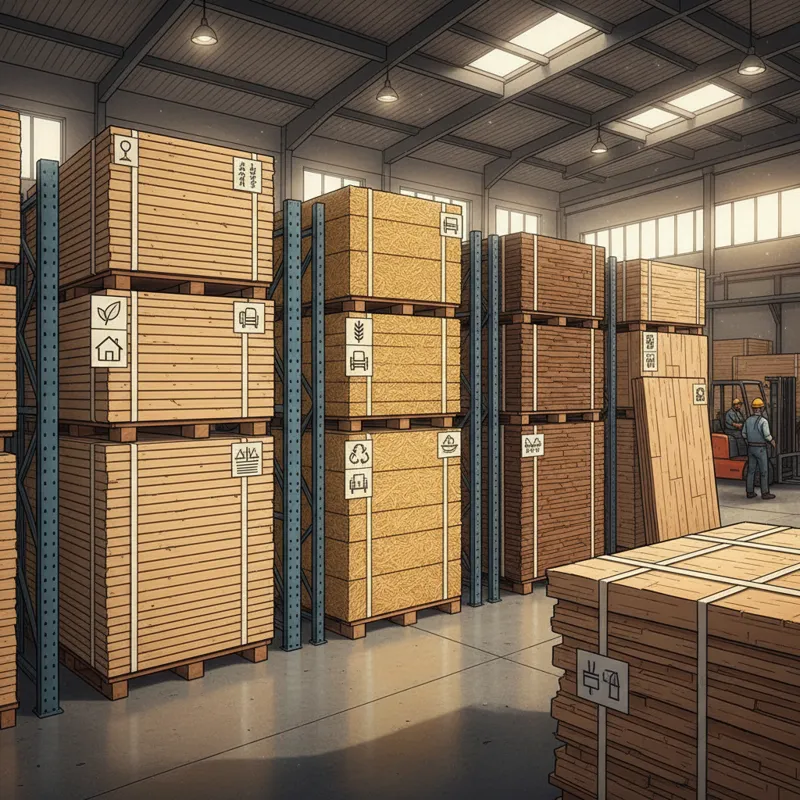
Given the challenges with traditional Luan, experts in 2024 (and even more so in 2026) routinely recommended superior alternatives for most applications:
For Underlayment:
- Baltic Birch Plywood: Excellent stability, minimal voids, and consistent thickness. It’s more expensive but delivers a far superior, durable base for resilient flooring.
- Poplar Plywood: Lighter weight than birch, good stability, and often has fewer voids than older Luan. A solid choice for underlayment where cost is a factor.
- Specialty Underlayment Panels: Many manufacturers produce specific plywood or composite panels engineered for flooring underlayment, often with moisture resistance and a smooth face. These are typically the most reliable choice.
For Cabinet Backing & Drawer Bottoms:
- Thin Birch Plywood: Available in 1/8″ or 1/4″ thicknesses, birch ply offers strength, a clean appearance, and good screw-holding capabilities.
- Maple or Poplar Veneer Core Plywood: Similar to birch, these offer good aesthetics and workability for non-structural components.
- MDF or HDF (Medium/High-Density Fiberboard): For cost-sensitive projects where weight isn’t a primary concern and minimal structural support is needed, MDF provides a perfectly smooth, stable panel for cabinet backs. Just ensure it’s not exposed to moisture.
For Crafts & Hobby Projects:
- Baltic Birch Plywood: Its fine grain, consistent layers, and stability make it ideal for laser cutting, scroll saw work, and other detailed crafts.
- Specialty Hardwood Plywoods: Maple, cherry, or walnut veneer plywoods offer beautiful finishes for exposed craft items.
Key Properties: Understanding Lauan Wood and its Modern Counterparts
Understanding the inherent properties of Lauan wood helps explain its former popularity and current limitations.
- Density and Weight: Original Luan was relatively low-density and lightweight, making it easy to handle and cut. This was a major advantage for DIYers. Many modern alternatives, like poplar ply, retain this benefit.
- Grain Characteristics and Appearance: Luan typically has a straight, relatively open grain, ranging from light pink to reddish-brown. It often lacks the distinctive figure of other hardwoods, which was fine for utilitarian purposes. It takes stains unevenly without proper conditioning.
- Workability: It cuts easily with hand or power tools and sands smoothly. However, due to its softness, edges can fray, and tear-out can be an issue if not properly supported during cutting.
- Moisture Resistance: Generally poor. Without significant sealing, Luan plywood will absorb moisture, swell, and delaminate. It is not suitable for outdoor use or high-humidity environments. For demanding outdoor material handling, you’d certainly opt for something far more durable than Luan plywood; think heavy-gauge steel for a reliable wheelbarrow, not a flimsy wood panel.
- Fastener Holding Capability: Due to its relatively soft nature and potential for voids, Luan’s screw and nail holding power is mediocre compared to denser plywoods. Predrilling is often advised to prevent splitting.
Practical Project Suitability: Where Luan (or its Spirit) Still Shines (and Where It Doesn’t)
While the generic “Luan” of yesteryear is largely gone, its functional niche still exists, now filled by its modern equivalents.
Good for:
- Temporary Formwork: For concrete or plaster molds where the panel isn’t exposed long-term and doesn’t need to be structural.
- Hidden Components: Backing for picture frames, temporary dust covers, or sub-panels within non-structural assemblies.
- Very Basic Cabinet Backing: In cost-driven projects where strength and long-term durability are not primary, thin, good-quality Meranti can still serve as lightweight cabinet backs.
- Non-Exposed Craft Projects: Basic scroll saw projects, internal components of models, or elements that will be painted and hidden.
Less Ideal for:
- High-Moisture Areas: Bathrooms, basements, or outdoor applications are a definite no-go. For anything related to water management, like housing sensitive equipment near a submersible well pump, selecting robust, moisture-resistant materials is critical, making Luan an unsuitable choice.
- Structural Applications: It has no structural rating and should never be used where strength is required. You wouldn’t consider it for anything supporting weight, let alone high-temperature use like supporting a fire pit ring. For those, fire-rated steel or concrete is the only safe option.
- Exposed Finished Surfaces: Unless extensively prepped, filled, and painted, Luan’s inconsistent grain and potential for surface defects make it a poor choice for visible furniture components.
- Projects Requiring High Dimensional Stability: For applications where precise dimensions and resistance to warping are crucial, Luan is a risky choice.
Sourcing Luan Plywood in 2026: What to Expect
If you’re looking for what was once called “Luan plywood” in 2026, here’s what you’ll likely encounter:
- Labels will be “Meranti” or “Philippine Mahogany”: Generic “Luan” is rare. Expect to see more specific labeling, indicating a higher-grade product.
- Higher Cost: The days of Luan being the cheapest plywood on the shelf are largely over. You’ll pay more for quality Meranti than you would have for basic Luan years ago. This reflects increased demand, reduced supply, and often better manufacturing standards. For global timber market insights, resources like Forbes often cover supply chain shifts and pricing trends.
- Emphasis on Certifications: Reputable suppliers will highlight FSC or CARB2 compliance, indicating responsible sourcing and lower formaldehyde emissions. These are important quality markers.
- Specialty Lumberyards vs. Big-Box Stores: While big-box retailers might carry a limited range of thin utility panels, often made from other species (like pine or poplar), true Meranti or higher-quality veneer-core alternatives are more consistently found at dedicated lumberyards or specialty wood suppliers. These places also offer better expertise.
The Verdict from 2026: Navigating the Plywood Landscape
The idea of a “10 Best Luan Plywoods of 2024” list, when viewed from 2026, highlights a significant market transformation. Luan, as a cheap, generic utility plywood, is largely a product of the past. What remains, under the names “Meranti” or “Philippine Mahogany,” is often a more refined, more expensive product that competes with other domestic and imported hardwood plywoods. For anyone undertaking a project today, the takeaway is clear: don’t chase the ghost of cheap Luan. Instead, focus on understanding your project’s specific needs and choose the best material for the job. This almost invariably means opting for purpose-built underlayment panels, high-quality birch or poplar plywood, or appropriate engineered wood products. These alternatives offer superior consistency, performance, and often better environmental profiles, making them the truly “best” choices for your projects in 2026. Making an informed decision means prioritizing material properties, quality, and suitability over outdated perceptions of a once-ubiquitous, but now transformed, product.
People Also Ask
Is Luan plywood still available in 2026?
Yes, but not in the same way it used to be. Generic, cheap “Luan” is largely replaced by higher-grade panels typically labeled “Meranti” or “Philippine Mahogany.” These are often more expensive and of better quality, though inconsistent supplies can still be an issue. You’re more likely to find them at specialty lumberyards than big-box stores.
What is the best alternative to Luan plywood for underlayment?
For flooring underlayment, experts recommend Baltic Birch plywood, Poplar plywood, or specialized underlayment panels designed for this purpose. These options offer superior stability, fewer voids, and more consistent thickness, reducing the risk of issues with your finished flooring.
Is Luan plywood waterproof or moisture-resistant?
No, Luan plywood is generally not waterproof or moisture-resistant. It typically uses an interior-grade glue, making it susceptible to swelling, delamination, and degradation when exposed to humidity or water. It’s unsuitable for outdoor applications or high-moisture indoor environments like bathrooms.
Can I use Luan plywood for outdoor projects?
No, you should not use Luan plywood for outdoor projects. Its poor moisture resistance means it will quickly degrade, warp, and delaminate when exposed to the elements. For outdoor applications, always choose exterior-grade plywood (like marine-grade) or treated lumber.
What is the difference between Luan and Meranti plywood?
“Luan” (or Lauan) is a broad, somewhat generic trade name that historically referred to various light, relatively soft hardwood plywoods from Southeast Asia, often of inconsistent quality. “Meranti” is a more specific trade name, typically referring to various species within the Shorea genus, which includes many of the trees that were traditionally used to make “Luan” plywood. In current markets, “Meranti” often implies a higher-grade, more consistently manufactured product than the cheap “Luan” of decades past.
Is Luan plywood considered a hardwood or softwood?
Despite its common usage, the trees from the Shorea genus (Lauan/Meranti) are technically hardwoods. However, many Luan plywoods have properties closer to softwoods in terms of density and workability, especially the lighter varieties. It’s not a hardwood in the same dense, durable sense as oak or maple.
What thickness is Luan plywood typically sold in?
Historically, Luan plywood was commonly available in thin gauges such as 1/8 inch (3mm) and 1/4 inch (6mm), which made it popular for underlayment and cabinet backing. While these thicknesses are still produced, they are often made from other wood species or are sold as higher-grade Meranti.