
The difference between a chore and a craft often comes down to the tool in your hand. In the kitchen, that tool is the knife. By 2026, the cutlery market has become saturated with direct-to-consumer brands and high-concept marketing, making it increasingly difficult to separate high-performance engineering from aesthetic gimmicks. For the home cook, the goal remains unchanged: finding a blade that balances edge retention, ease of maintenance, and ergonomic comfort. A dull knife is not just frustrating; it is a safety hazard that requires excessive force, leading to slips and injuries. The best kitchen knives function as an extension of the arm, offering precise control and reducing fatigue during prep work.
Selecting the right cutlery requires looking past the brand prestige and understanding the metallurgy and geometry of the blade. It involves choosing between the durability of German steel and the razor-like precision of Japanese alloys. It requires understanding how a handle feels when your hand is wet or greasy. This guide cuts through the marketing noise to present a mechanistic, practical analysis of the top-performing knives available today. Whether you are upgrading a college starter set or looking for a specific tool to refine your knife skills, these selections represent the intersection of value, performance, and longevity in the modern American kitchen.
Understanding Blade Geometry and Metallurgy
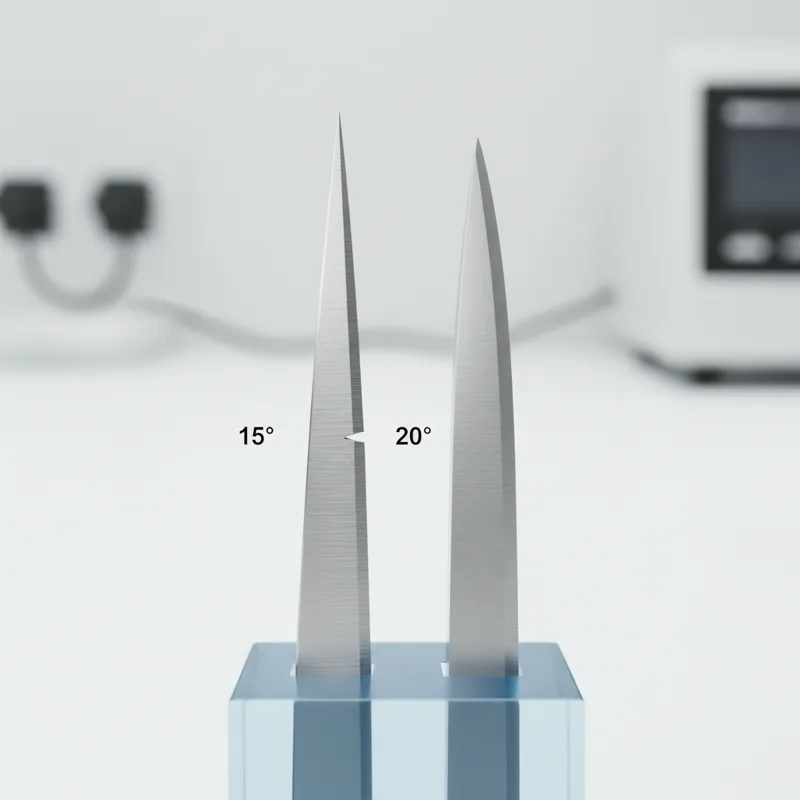
Before analyzing specific models, you must understand what makes a knife cut. The performance of a kitchen knife depends largely on two factors: the steel hardness and the edge angle. These two variables usually share an inverse relationship. Harder steel can hold a sharper, thinner edge, but it becomes more brittle and prone to chipping. Softer steel is tougher and more resistant to abuse, but it dulls faster and cannot sustain an extremely acute angle.
Most professional grade cutlery utilizes high-carbon stainless steel. The “carbon” provides hardness, while the “chromium” provides rust resistance. In the current market, you will typically encounter two distinct schools of thought:
- German/Western Style: typically hardened to 56-58 on the Rockwell Scale (HRC). These blades are ground to a 20-degree angle. They are robust, heavy, and can handle tasks like cutting through chicken joints or hard squash without chipping. They are the workhorses of the kitchen.
- Japanese Style: Typically hardened to 60-62+ HRC. These are ground to a finer 15-16 degree angle. They move through food with significantly less resistance but require better technique. You cannot twist these blades or use them on bones, or the sharpest Japanese steel will chip.
In 2026, we are also seeing the rise of powdered steels (like SG2) in mainstream kitchens, which offer incredible hardness without being quite as fragile as traditional high-carbon options. Understanding this trade-off is the first step in buying the right tool.
1. The All-Rounder: Wüsthof Classic Ikon 8-Inch Chef’s Knife
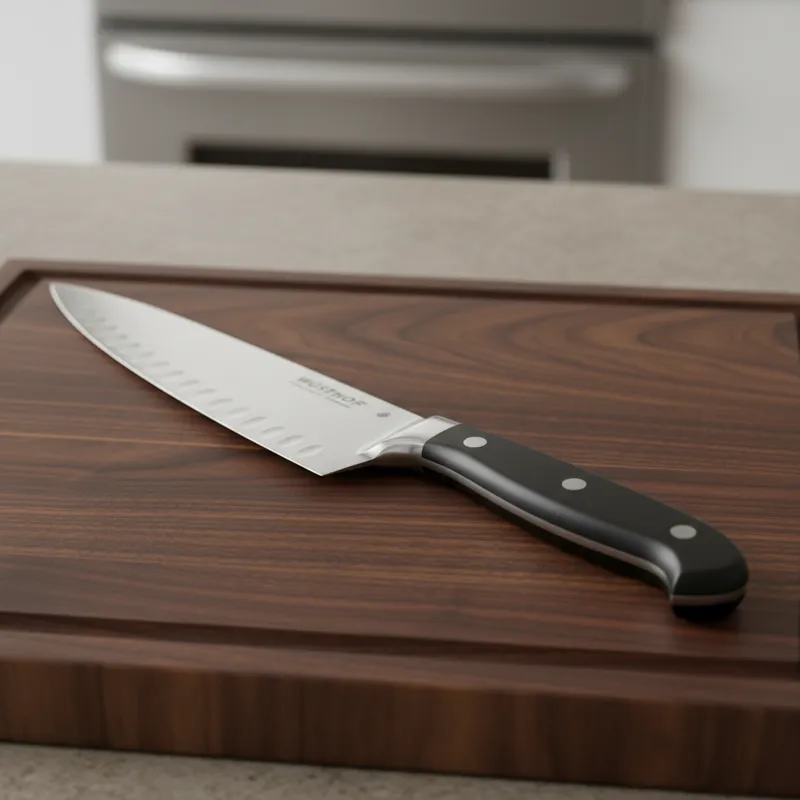
If you ask a professional chef to recommend a single knife that can survive a nuclear fallout and still mince garlic, the Wüsthof Classic Ikon is frequently the answer. This is the quintessential German workhorse. Unlike the older “Classic” line, the Ikon features a half-bolster design. This is a critical mechanical improvement because it allows you to sharpen the entire length of the blade, from tip to heel, which was impossible with full-bolster knives that developed a “recurved” gap over time.
The blade uses X50CrMoV15 steel, a formula that prioritizes durability. You will not get the terrifying sharpness of a laser-thin Japanese blade, but you gain reliability. The handle is made of Polyoxymethylene (POM), a synthetic material that resists fading and discoloration. The ergonomic dip in the handle fits the curvature of the palm, making the pinch grip—the standard grip for safe cutting—feel natural. For the average American kitchen, this offers the highest utility with the lowest risk of damage.
2. The Japanese Hybrid: MAC MTH-80 Professional Series
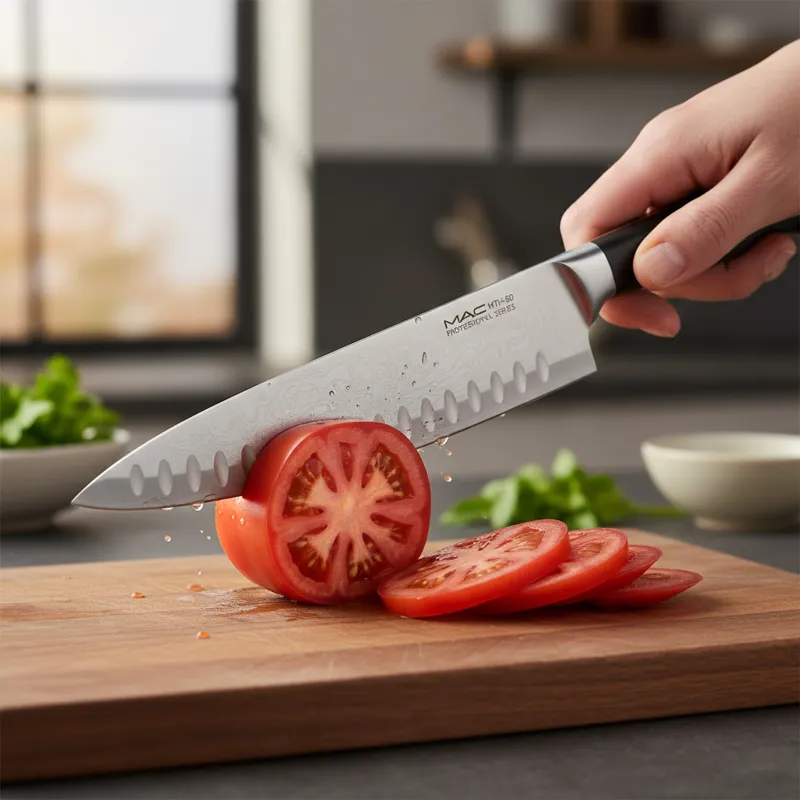
The MAC MTH-80 occupies a unique space in the cutlery world. It is technically a Japanese knife, but it is designed with Western durability in mind. The steel is harder than Wüsthof’s, allowing for a steeper edge, but the blade is slightly thicker than traditional Japanese knives, giving it more weight and authority.
The defining feature here is the geometry. The blade is thin enough to pass through dense vegetables like carrots without “wedging” (cracking the vegetable open before the cut is finished). It features dimples (grantons) along the side, intended to reduce surface tension so food falls away from the blade. While the effectiveness of grantons is often debated, the overall balance of the MAC MTH-80 is indisputable. It is sharp, agile, and lacks the intimidating maintenance requirements of traditional carbon steel. It represents one of the best kitchen knives for cooks ready to step up from European steel.
3. The Value King: Victorinox Fibrox Pro 8-Inch
Mechanically speaking, a knife does not need to be forged (hammered from a single bar of steel) to be excellent. Stamped knives, which are cut from a sheet of steel, have historically been viewed as inferior, but the Victorinox Fibrox Pro proves this bias wrong. This is the knife you will find in commercial kitchens across the United States. It is not pretty, but it cuts exceptionally well.
The steel is relatively soft, which means it loses its edge faster than a $200 knife. However, it is incredibly easy to sharpen back to a razor edge using a basic honing rod. The handle is made of a textured, non-slip thermoplastic elastomer. Even if your hands are covered in oil or chicken fat, you will maintain a secure grip. For college students or home cooks on a budget, this is the most practical entry point into professional grade cutlery.
4. The Aesthetic Performer: Shun Classic 8-Inch
Shun is largely responsible for popularizing Japanese knives in the West. The Shun Classic features a core of VG-MAX steel, clad in 34 layers of Damascus stainless steel on each side. The Damascus pattern does not enhance the cutting performance—it is purely aesthetic—but the VG-MAX core is a legitimate high-performance super steel.
The handle is D-shaped, designed to fit into the curve of the right hand (though left-handed versions exist). The cutting angle is 16 degrees, making it significantly sharper out of the box than European counterparts. However, potential buyers must be aware of the brittleness. This knife demands respect. If you twist it while cutting a squash or hit a bone, you risk micro-chipping the edge. It requires a different cutting motion—more of a slice than a chop—to maintain the edge integrity.
5. The Artisan Choice: Messermeister Meridian Elite
While Wüsthof dominates the German market, Messermeister remains the choice for those who prefer a more traditional, handcrafted feel. The Meridian Elite is one of the few German knives that is still hot-drop hammer forged. This manufacturing process aligns the grain structure of the steel, theoretically increasing strength.
What separates this from other German knives is the lack of a full bolster. The heel of the blade is open, allowing for easy sharpening and full use of the cutting edge. The weight distribution is slightly handle-heavy, which some cooks find offers better control during fine tasks like mincing shallots. It is a robust tool that tolerates the heavy workload of an American family dinner.
Why Handle Ergonomics Matter More Than You Think
When reading affordable knife block reviews, consumers often obsess over steel hardness and ignore the handle. This is a mistake. The handle is your interface with the tool. A knife with a “perfect” blade that causes hand cramps after five minutes is useless.
Ergonomics is not just about comfort; it is about safety and energy conservation. A handle that is too small forces you to grip tighter to maintain control, leading to forearm fatigue. Just as you wouldn’t rely on the caffeine in Arizona Green Tea and its caffeine content to power through physical exhaustion, you shouldn’t rely on grip strength to compensate for poor design. A well-designed handle does the work for you.
- Western Handles: Usually contoured and riveted. Great for “hammer grips” or heavy chopping.
- Japanese Wa-Handles: Octagonal or D-shaped wood. They are lighter, shifting the balance point forward into the blade for precision.
- Synthetic Handles: Often textured for grip (like the Victorinox). Essential for messy tasks involving fats or fish.
6. The High-Tech Cutter: Global G-2
The Global G-2 is instantly recognizable. It is unique because the handle and blade appear to be a single piece of steel. In reality, the hollow handle is filled with sand to achieve a precise weight balance. Global knives use CROMOVA 18 steel, which is tempered to be tough yet holds a steep edge.
The main advantage of Global knives is hygiene and maintenance. There are no rivets or crevices for food bacteria to hide. However, the metal handle can be slippery if your hands are wet, and the distinct shape is polarizing—you either love how it fits or you hate it. It is a favorite in high-volume prep kitchens because it is lightweight, reducing the physical toll of chopping hundreds of onions.
7. The Serrated Essential: Mercer Culinary Millennia Bread Knife
You should not spend $200 on a bread knife. Serrated knives are difficult to sharpen, and once the teeth wear down, the knife is generally replaced. Therefore, the goal is to find the best performance at the lowest price point. The Mercer Culinary Millennia is widely considered the best value in this category.
The blade is long enough to handle wide artisan loaves, and the serrations are spaced widely (a design called “wavy edge”). This prevents the knife from tearing soft bread while still biting into hard crusts. The handle is chunky and rubberized, providing excellent leverage. It is a purely functional tool that outperforms knives five times its price.
8. The Precision Tool: Zwilling Pro Paring Knife
A chef’s knife handles 90% of the work, but the paring knife handles the detail. The Zwilling Pro stands out because of its curved bolster. When peeling an apple or coring a strawberry, you often choke up on the blade. The curved bolster supports the thumb and index finger, preventing the callous formation common with sharp-spined knives.
This knife uses Zwilling’s friodur ice-hardened steel, which is exceptionally corrosion-resistant. This is important for a paring knife, which is frequently used on acidic fruits like lemons and tomatoes. High-carbon blades can react to these acids, developing a patina or transferring a metallic taste—a chemical process loosely similar to how people wonder does green tea stain your teeth over time. The stainless nature of the Zwilling Pro ensures your fruit tastes like fruit, not steel.
9. The Heavy Duty: Tojiro DP Gyuto
For those seeking the performance of high carbon stainless steel blades without the price tag of a Shun or Miyabi, the Tojiro DP is the industry standard. It features a VG10 core clad in softer stainless steel. It is less refined than its more expensive cousins—the spine might be a bit sharp, and the handle is basic—but the steel is the real deal.
It holds an edge incredibly well and is easy to sharpen. It serves as a fantastic bridge for home cooks wanting to experience Japanese geometry. Just be aware that VG10 steel can be brittle; it is not a tool for hacking through frozen foods or bones.
10. The Luxury Pick: Miyabi Birchwood SG2
If budget is of no concern and you want the pinnacle of performance and beauty, the Miyabi Birchwood SG2 is a top contender. The core is SG2 micro-carbide powder steel, hardened to a massive 63 HRC. This steel can take a screamingly sharp edge and hold it for months of home use.
The handle is made of Masur Birch, which is prized for its erratic grain pattern. It feels warm and organic in the hand. This is a knife that cuts by “falling” through food; the weight of the blade alone is often sufficient. It is a high-maintenance tool that requires careful cleaning and storage, but the cutting experience is unmatched.
Common Mistakes That Ruin Good Knives
Even the best kitchen knives will fail if mistreated. The most common way American home cooks destroy their cutlery is through the dishwasher. The high heat expands the handle material, potentially cracking it, while the abrasive detergent dulls the edge. Furthermore, the water jets can bang the blade against other utensils, causing chips.
Another critical error is the cutting surface. Glass, granite, and ceramic cutting boards are death sentences for knife edges. They are harder than the steel, meaning the steel will roll or chip every time it makes contact. Stick to wood, rubber, or soft plastic. Finally, never use your knife as a pry bar. Don’t try to open a frozen burger patty or pry the cap off a bottle of Snapple Peach Tea with the tip of your chef’s knife. The tip is the most fragile part of the anatomy and will snap under lateral pressure.
What Most People Get Wrong About Sharpening
There is a distinct difference between honing and sharpening, yet the terms are often used interchangeably. Honing is what you do with the long steel rod that comes with most top rated chef knife sets. It does not remove metal; it realigns the microscopic “teeth” of the edge that get bent during use. You should hone your knife almost every time you use it.
Sharpening, typically done on whetstones or pull-through sharpeners, actually removes metal to create a new edge. You only need to sharpen a home knife 2-3 times a year. If you over-sharpen, you reduce the lifespan of the knife by grinding away the steel prematurely. For the majority of users, a simple ceramic pull-through sharpener is sufficient for German knives, while Japanese knives benefit significantly from water stones.
FAQ: Quick Answers for Smart Buyers
What is the best steel for kitchen knives?
There is no single “best” steel, only the best steel for your habits. VG10 and SG2 (Japanese) hold an edge longer but are brittle. X50CrMoV15 (German) is tougher and easier to sharpen but dulls faster. For most generalists, high-carbon stainless steel offers the best balance.
Are full sets worth the money?
Generally, no. Large block sets often include “filler” items like unnecessary utility knives or shears to inflate the piece count. You are usually better off buying a high-quality chef’s knife, a paring knife, and a bread knife individually. This yields higher quality tools for the same total price.
What does “Full Tang” mean?
Full tang means the metal of the blade runs through the entire length of the handle. This construction provides better balance and structural integrity. While essential for heavy German knives, many high-end Japanese knives use “partial tangs” to keep the weight forward, which is a design choice, not a flaw.
Can I put these knives in the dishwasher?
Absolutely not. The heat, moisture, and vibration will ruin the handle and the edge. Hand wash with mild soap and dry immediately to prevent rust and handle warping. According to food safety guidelines from the USDA, proper cleaning is essential, but dishwashers are too aggressive for fine cutlery.
How often should I sharpen my knife?
For a home cook preparing meals 4-5 times a week, a full sharpening is needed every 4 to 6 months. However, you should use a honing rod weekly to maintain the edge alignment between sharpenings. Detailed metallurgy data from Wikipedia explains how different alloys degrade at different rates.
Investing in the best kitchen knives is an investment in your daily quality of life. By choosing a blade that fits your hand and your cooking style—and maintaining it with simple discipline—you transform meal preparation from a chore into a satisfying ritual. Whether you choose the rugged reliability of the Wüsthof or the laser precision of the Miyabi, the right knife makes you a better, safer, and happier cook. For more insights on product durability and testing standards, resources like Consumer Reports offer independent data that backs up these mechanical observations.


