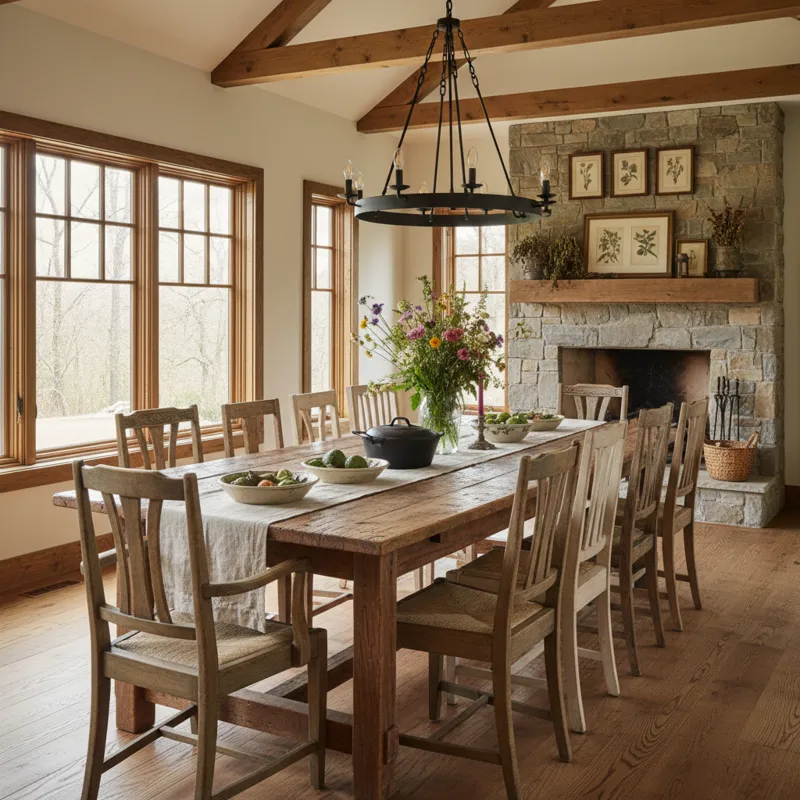
The farmhouse dining room table remains a cornerstone of home design in 2026, embodying a blend of warmth, hospitality, and enduring style. It’s more than just a piece of furniture; it’s often the heart of the home, a gathering place for family meals, lively conversations, and milestone celebrations. While trends in interior design constantly evolve, the fundamental appeal of a well-crafted farmhouse table persists, adapting gracefully to modern aesthetics while retaining its classic charm. Choosing the right one, however, involves more than just liking a picture. You need to consider its material, size, construction, and how it will genuinely function within your living space for years to come. This guide helps you navigate the options to find a farmhouse dining table that not only looks perfect but also serves your household practically and durably.
What Defines a Farmhouse Dining Room Table?
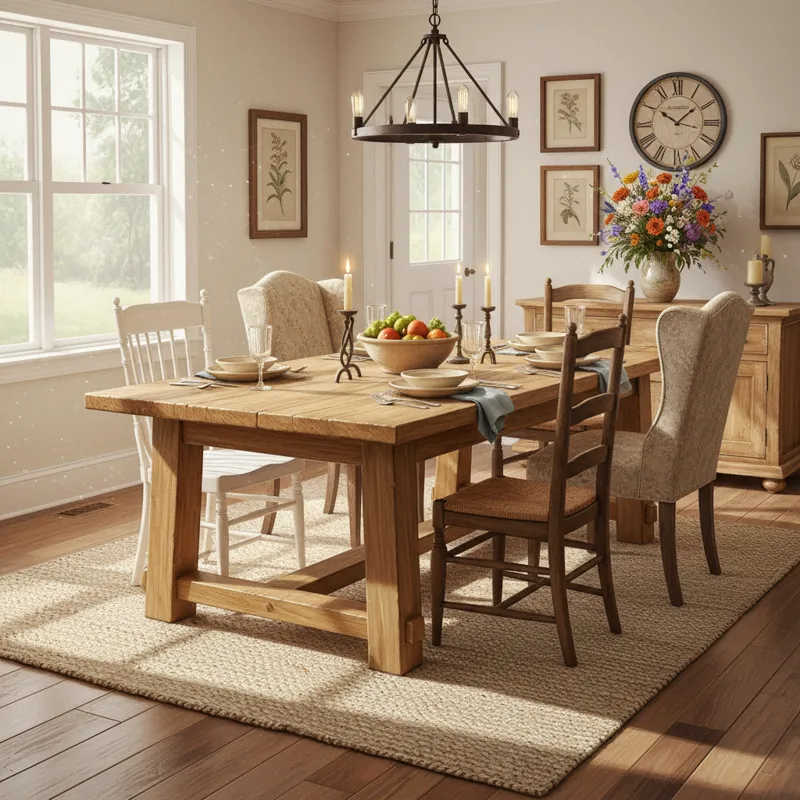
At its core, a farmhouse dining room table is characterized by its substantial, often rustic, appearance and its connection to traditional rural living. Historically, these tables were built for utility and longevity, designed to withstand daily use by large families. In 2026, while the function might be less about literal farm work, the aesthetic principles remain: solidity, natural materials, and an inviting, unpretentious feel.
Typically, you’ll see them crafted from solid wood – often pine, oak, maple, or reclaimed timbers – showcasing natural grains, knots, and sometimes a distressed finish that speaks to character and history. Legs are usually robust, ranging from simple straight posts to turned, trestle, or even pedestal designs. The construction prioritizes stability and durability, ensuring the table can handle everything from a quiet breakfast to a bustling holiday feast. It’s about a comfortable, lived-in elegance, not formal rigidity.
Sizing Up Your Space: How to Choose the Right Dimensions
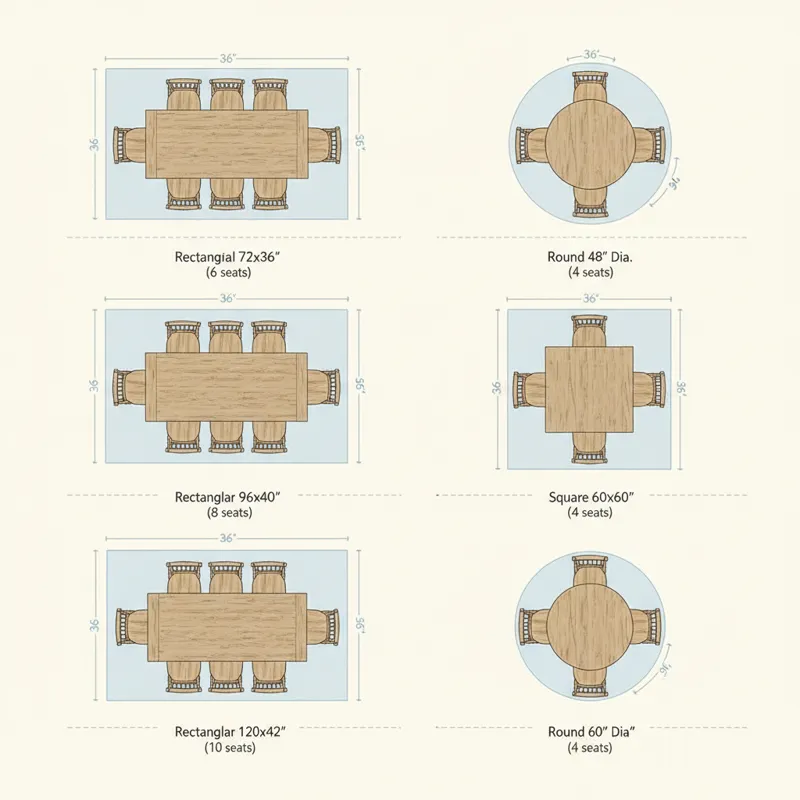
One of the most crucial steps in selecting a rectangle farmhouse table or any other shape is ensuring it fits comfortably within your dining area. An oversized table will make the room feel cramped, while one that’s too small can look lost and disproportionate.
Here’s a practical approach:
- Measure Your Room: Get the exact length and width of your dining space. Don’t just eyeball it.
- Allow for Clearance: You need at least 36-48 inches (90-120 cm) of clear space around all sides of the table from any wall or furniture. This allows people to pull out chairs, sit comfortably, and walk around without bumping into things.
- Consider Seating Capacity: A good rule of thumb is to allow about 24-30 inches (60-75 cm) of table edge per person for comfortable dining.
Common table dimensions and their typical seating capacities:
- Small (4 people): Roughly 48-60 inches (120-150 cm) long.
- Medium (6 people): A popular size, often 60-72 inches (150-180 cm) long. This size is often paired with a farmhouse dining table 6 chairs configuration.
- Large (8 people): Expect lengths around 80-96 inches (200-240 cm).
- Extra-Large (10+ people): These can be 100 inches (250 cm) or longer, sometimes requiring custom builds or extension leaves.
If your space is flexible, consider a table with extension leaves. These allow you to adjust the table’s length for different occasions, offering versatility without committing to a permanently massive footprint.
Materials Matter: Durability, Aesthetics, and Maintenance
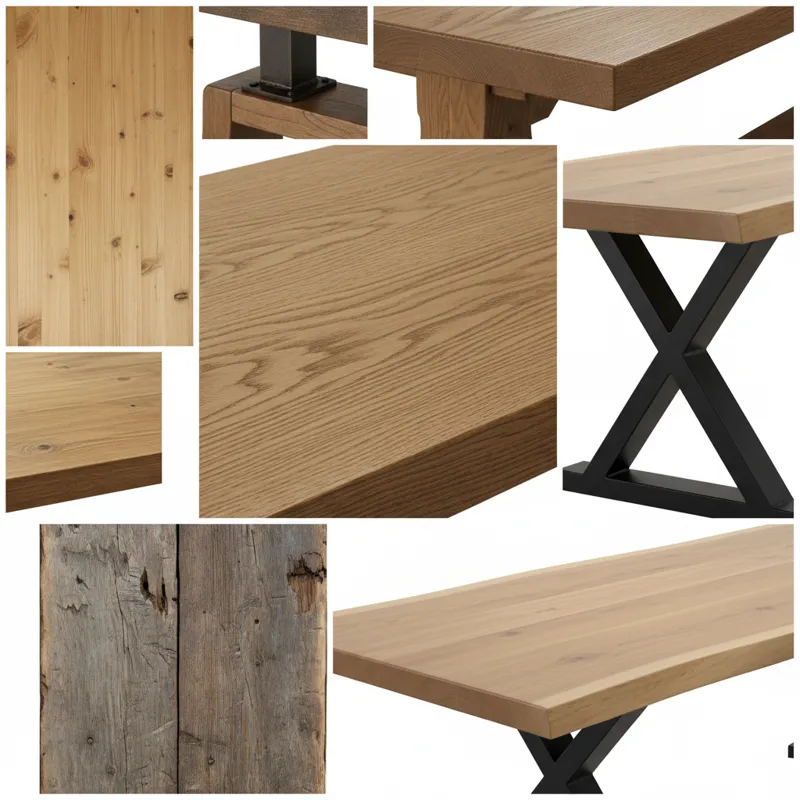
The material you choose for your farmhouse dining room table profoundly impacts its look, feel, longevity, and how much effort you’ll put into its upkeep. In 2026, sustainability and durability are key considerations.
Solid Wood: The Enduring Classic
Solid wood remains the gold standard for farmhouse tables due to its inherent strength, natural beauty, and ability to be refinished over time. Each species offers distinct characteristics:
- Oak: Known for its prominent grain and exceptional hardness. Red oak is slightly warmer, white oak a bit cooler. It’s highly durable and resistant to dents.
- Pine: A softer wood, pine is often chosen for its rustic charm and affordability. It readily takes on dents and scratches, which many consider part of its authentic farmhouse appeal, especially when opting for a distressed finish. It’s a common choice for old farmhouse tables due to its historical use.
- Maple: Denser and harder than pine, maple has a fine, less pronounced grain. It’s very durable and can be stained to mimic other woods.
- Walnut: A premium hardwood with a rich, dark brown color and beautiful, often wavy grain patterns. Walnut is strong and durable but comes at a higher price point.
- Reclaimed Wood: Sourced from old barns, factories, or other structures, reclaimed wood offers unparalleled character with its existing patina, nail holes, and imperfections. It’s also an eco-friendly choice, giving new life to old timber.
Maintenance: Solid wood tables require regular dusting and occasional polishing or oiling, depending on the finish. They’re susceptible to scratches, dents, and water rings if not properly protected, but these can often be repaired or sanded out.
Engineered Wood with Veneer: Practicality and Affordability
Engineered wood, such as MDF (medium-density fiberboard) or particleboard, topped with a real wood veneer, offers a more budget-friendly alternative to solid wood. Veneers are thin slices of real wood applied to a stable core.
- Pros: More stable in varying humidity (less prone to warping), lighter weight, and significantly more affordable than solid wood.
- Cons: Cannot be deeply sanded or refinished like solid wood. Damage to the veneer can be difficult or impossible to repair seamlessly.
Maintenance: Generally easier to clean, but you must be careful not to use abrasive cleaners or saturate the surface, as moisture can damage the veneer or its adhesive.
Metal Bases/Accents: Industrial Edge
While the tabletop is typically wood, many contemporary farmhouse designs incorporate metal elements, particularly for the base or leg supports. Steel or wrought iron bases offer an industrial edge, providing robust support and a striking contrast to the warmth of the wood. This blend is often seen in rustic modern farmhouse dining room settings.
Other Considerations: Glass and Concrete
Purely traditional farmhouse tables rarely feature glass or concrete. However, in more modern or eclectic farmhouse styles, you might see:
- Glass Tops: Sometimes used over a wooden base for a lighter, more contemporary feel. They’re easy to clean but show fingerprints and scratches more readily.
- Concrete Tops: Growing in popularity for an ultra-modern farmhouse or industrial farmhouse aesthetic. Concrete is incredibly durable and unique but can be very heavy and porous if not properly sealed.
Exploring Farmhouse Styles: From Traditional to Modern Interpretations
The term “farmhouse” isn’t monolithic. It encompasses a spectrum of styles, each with its own nuances. Understanding these variations helps you pick a table that truly complements your home’s overall aesthetic in 2026.
Traditional Farmhouse
This is the quintessential image most people conjure: sturdy construction, often solid wood with visible grain and knots, and a slightly distressed or antique finish. Legs are typically turned or chunky straight posts. The overall feel is warm, inviting, and a bit rugged, celebrating imperfections and the passage of time. Think classic, comforting, and deeply rooted in its origins.
French Farmhouse
More refined than its traditional counterpart, French farmhouse tables often feature lighter wood tones, elegant curves, and sometimes delicate carvings. Pedestal bases or cabriole legs are common. The finishes are usually softer, often bleached or limewashed, creating a chic, understated elegance that leans into shabby-chic without losing its robust character. It’s about rustic charm with a touch of sophistication.
Industrial Farmhouse
Marrying the warmth of wood with the starkness of metal, industrial farmhouse tables are characterized by solid wood tops paired with strong metal bases, often in black or dark gray steel. Exposed bolts and raw finishes are common. This style appeals to those who appreciate a utilitarian aesthetic combined with organic elements, perfect for urban lofts or homes seeking a bolder statement.
Modern Farmhouse
Clean lines, minimalist forms, and a focus on natural materials define the modern farmhouse aesthetic. Tables in this style tend to have smoother finishes, often in lighter or contrasting wood tones, sometimes combined with black or white accents. The legs are typically straight, blocky, or simple trestle designs, eschewing ornate details. It’s a sophisticated, less cluttered take on the rustic look, perfectly blending with a rustic modern farmhouse dining room theme.
Shaker Farmhouse
Rooted in the Shaker principle of “form follows function,” these tables emphasize simplicity, utility, and exquisite craftsmanship. They feature clean lines, minimal ornamentation, and a focus on honest materials and joinery. Shaker farmhouse tables are often made from cherry, maple, or pine with natural oil or clear finishes, highlighting the wood’s inherent beauty. It’s a timeless style that never feels dated.
Construction and Joinery: Built to Last
Beyond the visible aesthetics, the way a farmhouse dining room table is constructed dictates its strength and longevity. Understanding basic joinery can help you evaluate quality.
Here’s what to look for:
- Solid Wood Throughout: The best tables use solid wood for the tabletop, legs, and aprons (the horizontal pieces connecting the legs). This provides the most durability and allows for future repairs or refinishing.
- Robust Joinery:
- Mortise and Tenon: A classic woodworking joint where a projection (tenon) on one piece fits into a recess (mortise) in another. It’s incredibly strong and durable, often seen in high-quality pieces.
- Dovetail Joints: Primarily used for drawers, but also for attaching table aprons to legs in some designs. They offer exceptional resistance to pulling apart.
- Dowel Joints: Wooden pegs (dowels) are inserted into corresponding holes to join two pieces. They’re strong when executed precisely.
- Corner Blocks: Triangular blocks of wood glued and screwed into the inside corners where legs meet the apron provide significant reinforcement.
- Avoid Weak Points: Be wary of tables that rely heavily on screws directly into end grain, cam locks, or flimsy metal brackets for major structural connections. While some hardware is necessary, it shouldn’t be the sole source of structural integrity.
- Tabletop Thickness: A thicker tabletop (1-1.5 inches or more) generally indicates better quality and stability, and is less prone to warping over time.
- Leg Attachment: Legs should be securely bolted or mortise-and-tenoned to the apron, not simply screwed into the underside of the tabletop.
Finishing Touches: Protecting Your Investment
The finish applied to your farmhouse dining room table isn’t just for looks; it’s a critical protective layer against daily wear, spills, and environmental factors.
Common types of finishes:
- Polyurethane/Lacquer: These are durable, plastic-like coatings that sit on top of the wood. They offer excellent protection against scratches, moisture, and heat. Available in matte, satin, or gloss levels, with satin being a popular choice for farmhouse styles as it provides protection without an overly shiny appearance.
- Oil Finishes (e.g., Tung Oil, Linseed Oil): These penetrate the wood, enhancing its natural grain and providing a more “natural” feel. They are less durable against scratches and spills than polyurethane but are easier to repair locally (you can often re-oil a damaged spot). They require more frequent reapplication.
- Wax Finishes: Offer a soft, low-sheen look but provide the least protection against moisture and abrasion. Often used over paint or other sealants for a subtle, aged look.
- Distressed Finishes: Not a type of sealant, but a technique. This involves intentionally creating marks, dents, or worn spots to mimic age and character. It’s often followed by a protective topcoat.
- Paint: Some farmhouse tables, particularly those in French country or shabby-chic styles, feature painted bases or even entire tabletops. A durable paint (like chalk paint or milk paint) followed by a strong sealant is essential.
Consider your lifestyle when choosing a finish. A busy family home with kids might benefit more from a robust polyurethane, while a less trafficked space might allow for the natural beauty of an oil finish.
What Most People Get Wrong When Buying a Farmhouse Dining Room Table
It’s easy to get swept up in the aesthetic appeal of a beautiful farmhouse dining room table. However, many buyers overlook practical aspects that can lead to disappointment.
Here are common missteps:
- Underestimating Room Clearance: As mentioned, not leaving enough space around the table is a frequent error. A table might look perfect online, but in your room, it can block pathways or make sitting uncomfortable. Always measure, measure, measure.
- Ignoring the Weight and Assembly Challenge: Farmhouse tables, especially solid wood ones, are heavy. Very heavy. If you’re buying online, factor in delivery logistics and potential assembly. Some tables come fully assembled, others require significant effort. Don’t assume you can move it solo or assemble it quickly without help.
- Choosing Aesthetics Over Practicality: A beautiful, raw, unfinished wood table might look stunning, but if you have young children or frequently host messy dinners, it will show every spill and scratch. Delicate finishes or porous surfaces might require more maintenance than your lifestyle allows. Be realistic about how you’ll use the table.
- Forgetting About the Chairs: The table and chairs are a system. Many people buy a table they love, then struggle to find chairs that fit under it comfortably or complement its style. Ensure chair armrests clear the table apron, and that the seat height is appropriate for the table height. For a farmhouse dining table 6 chairs set, ensuring harmonious seating is crucial.
- Overlooking Return Policies and Warranty: Large furniture purchases are significant. Understand the retailer’s return policy, especially for large, heavy items. Check the warranty for manufacturing defects or material issues. This is your safeguard if something isn’t right upon arrival.
- Not Testing the “Feel”: If possible, sit at a similar table in a showroom. Is the tabletop height comfortable? Are the legs positioned so they don’t impede seating? Does the finish feel good to the touch? Online shopping is convenient, but tactile experience is valuable.
Budgeting for Your Farmhouse Dining Table: What to Expect in 2026
The cost of a farmhouse dining room table can vary wildly depending on materials, craftsmanship, brand reputation, and whether it’s mass-produced or custom-made. In 2026, you’ll find options across a broad spectrum.
- Entry-Level ($300 – $800):
- Typically features engineered wood with veneer tops, or solid pine with basic construction.
- Finishes may be less durable.
- Often requires self-assembly.
- Good for those on a tight budget or temporary setups.
- Mid-Range ($800 – $2,500):
- Solid wood (pine, rubberwood, some oak or maple) tops and bases.
- Better construction methods, potentially some mortise and tenon joinery.
- More durable finishes and a wider range of styles.
- Often from established furniture brands.
- High-End ($2,500 – $10,000+):
- Premium solid hardwoods (oak, walnut, cherry, high-quality reclaimed wood).
- Exceptional craftsmanship with hand-finished details and superior joinery.
- Custom-made options, often from artisan workshops.
- Exceptional durability and heirloom quality.
- Investing in well-made, solid wood furniture can be a lasting value, similar to appreciating antiques.
Don’t forget to factor in shipping costs, especially for large items, and potential white-glove delivery or assembly services, which can add hundreds of dollars but save you a lot of hassle. Exploring old farmhouse tables from antique dealers or specialty shops can sometimes offer high-quality, character-filled pieces at a mid-range price point, often with a unique story and an environmentally friendly aspect.
Installation and Care: Ensuring Longevity
Once your farmhouse dining room table is in place, proper care is essential to maintain its beauty and ensure its longevity.
Assembly (If Required):
If your table arrives disassembled, follow the manufacturer’s instructions carefully. Having a second person to help is almost always a good idea, both for safety and ease. Don’t overtighten bolts initially; get everything in place, then tighten uniformly. Check bolts periodically (every 6-12 months) to ensure they haven’t loosened with use.
Daily Care:
- Dust Regularly: Use a soft, dry cloth or a slightly damp cloth (if the finish allows) to remove dust and crumbs.
- Wipe Spills Immediately: Liquid spills, especially acidic ones, can damage finishes quickly. Blot them up, don’t wipe, to avoid spreading.
- Use Protection: Coasters, placemats, and trivets are your best friends. They protect against heat, moisture, and scratches. For larger surfaces during meals or crafts, consider a table pad or a thick tablecloth.
Periodic Maintenance:
- Clean Gently: For most finishes, a mild soap and water solution is sufficient. Avoid harsh chemical cleaners, abrasive scrubbers, or silicone-based polishes unless specifically recommended by the manufacturer, as these can build up or damage the finish over time.
- Polish/Oil (as needed): If your table has an oil finish, you’ll need to reapply oil periodically (every 6-12 months, or as needed) to nourish the wood. For sealed finishes, a good quality furniture polish (non-silicone) can be used sparingly to restore luster.
- Address Scratches/Dents: Minor scratches can often be buffed out with specific wood repair kits or by reapplying an oil finish. Deeper damage may require professional repair or sanding and refinishing, especially for solid wood.
Environmental Considerations:
Wood is a natural material that reacts to its environment. Extreme changes in temperature and humidity can cause wood to expand, contract, or even warp and crack. Try to keep your dining room’s temperature and humidity stable. Avoid placing the table directly next to heat sources (radiators, vents) or in direct, prolonged sunlight, which can fade finishes. You can learn more about wood care from trusted sources like the USDA Forest Service.
FAQs About Farmhouse Dining Room Tables
How much space do I need around a dining table?
Aim for at least 36 inches (about 90 cm) of clearance between the table’s edge and any wall or other furniture. For more comfortable movement, especially if there’s a walkway behind the chairs, 42-48 inches (105-120 cm) is ideal.
Can a farmhouse table be modern?
Absolutely. Modern farmhouse designs combine the rustic warmth of traditional farmhouse elements with clean lines, minimalist aesthetics, and often contrasting materials like metal. This contemporary interpretation is very popular in 2026, offering a fresh take on a classic style. It’s often referred to as rustic modern farmhouse dining room style.
What’s the best wood for a farmhouse table?
It depends on your priorities. For durability and a classic look, oak or maple are excellent. For rustic charm and affordability, pine is a common choice. Walnut offers a premium, darker aesthetic. Reclaimed wood provides unique character and sustainability. Each has its own appeal and maintenance considerations.
Are farmhouse tables out of style in 2026?
No, quite the opposite. Farmhouse tables have evolved beyond a passing trend. Their emphasis on natural materials, durability, and a welcoming atmosphere makes them a timeless choice. While specific finishes or leg styles might shift in popularity, the core appeal of a substantial, handcrafted-looking dining table remains strong, adapting into modern, industrial, and even coastal farmhouse iterations. The enduring quality of an old farmhouse table speaks to this longevity.
How do I protect my farmhouse table?
Use coasters and placemats, wipe spills immediately, and use a durable finish (like polyurethane) for high-traffic tables. Clean with mild soap and water, avoiding harsh chemicals. For oil finishes, periodic reapplication of oil is key. Consistent, gentle care prevents most damage.
Can I use different chairs with a farmhouse dining room table?
Yes, mixing and matching chairs is a hallmark of modern farmhouse design and adds personality. You can combine benches with individual chairs, use different styles, or even vary colors. The key is to ensure they all work together visually and ergonomically with your specific farmhouse dining table 6 chairs setup. Ensure chair heights are compatible and that there’s enough room for legs and armrests under the table apron. For inspiration, consider exploring interior design blogs or Pinterest for ideas on how to create a cohesive yet eclectic look.
Choosing a farmhouse dining room table is an investment in your home’s functionality and aesthetic. By considering these practical aspects of size, material, style, construction, and care, you’ll find a table that not only beautifully anchors your dining space but also becomes a cherished centerpiece for years to come.